When Were You Saved?

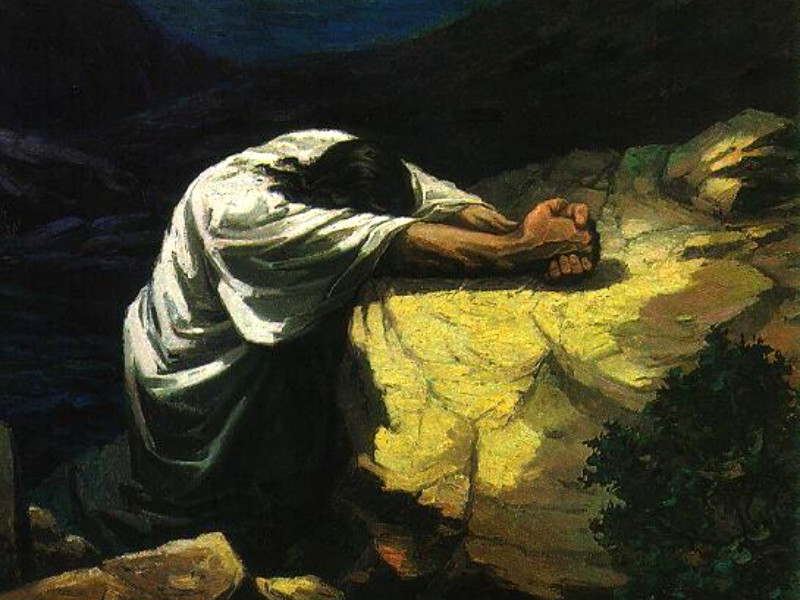
PrayingA couple of weeks ago we took a look at what our Testimony is. Today, I’d like to discuss the question of “When were you saved”. In an effort to answer this question, we will be searching the Scriptures. As we work through this, a question I’d like to ask of you is, “what is the thought driving the question of the moment of salvation?”

What is Salvation? From What are We Saved?

As we have seen already, the ultimate Salvation is from the penalty of Adam’s sin in the Garden. That sin that plunged all of creation into a curse of sin and bound it for judgement and destruction.

Genesis 3:17-24 (ESV)
17 And to Adam [God] said, “Because you have listened to the voice of your wife and have eaten of the tree of which I commanded you, ‘You shall not eat of it,’ cursed is the ground because of you; in pain you shall eat of it all the days of your life; 18 thorns and thistles it shall bring forth for you;and you shall eat the plants of the field. 19 By the sweat of your face you shall eat bread, till you return to the ground, for out of it you were taken; for you are dust, and to dust you shall return.” 20 The man called his wife’s name Eve, because she was the mother of all living. 21 And the Lord God made for Adam and for his wife garments of skins and clothed them. 22 Then the Lord God said, “Behold, the man has become like one of us in knowing good and evil. Now, lest he reach out his hand and take also of the tree of life and eat, and live forever—” 23 therefore the Lord God sent him out from the garden of Eden to work the ground from which he was taken. 24 He drove out the man, and at the east of the garden of Eden he placed the cherubim and a flaming sword that turned every way to guard the way to the tree of life.

Man was forced out of the Garden of Eden, the ground was cursed, and death entered the world (Romans 5:12-14). Sadly, now that sin had laid claim to mankind, things became much, much worse as sin worked its will in our flesh, so all of creation was cursed.

Genesis 6:5-8 (ESV) 5 The Lord saw that the wickedness of man was great in the earth, and that every intention of the thoughts of his heart was only evil continually. 6 And the Lord regretted that he had made man on the earth, and it grieved him to his heart. 7 So the Lord said, “I will blot out man whom I have created from the face of the land, man and animals and creeping things and birds of the heavens, for I am sorry that I have made them.” 8 But Noah found favor in the eyes of the Lord.

Judgement. It is here we see how our sin affects the heart of God. Up until this point in Genesis, we see how sin has affected mankind, and how sin has affected creation. But here, in this passage we see that our sin has grieved the very heart of God. To the point that He regretted making man on the earth, for the weight of their sin and the judgement that was due man for his sin was exceedingly and abundantly great and terrible. But Noah found favor in the eyes of the Lord. God had promised salvation in His judgement on the serpent (Gen 3:15). What follows is our first picture (a foreshadowing) of God’s plan of Salvation for mankind. To highlight that understanding of the text, let’s turn to 1 Peter 3:

1 Peter 3:18-22 (ESV) 18 For Christ also suffered once for sins, the righteous for the unrighteous, that he might bring us to God, being put to death in the flesh but made alive in the spirit, 19 in which he went and proclaimed to the spirits in prison, 20 because they formerly did not obey, when God’s patience waited in the days of Noah, while the ark was being prepared, in which a few, that is, eight persons, were brought safely through water. 21 Baptism, which corresponds to this, now saves you, not as a removal of dirt from the body but as an appeal to God for a good conscience, through the resurrection of Jesus Christ, 22 who has gone into heaven and is at the right hand of God, with angels, authorities, and powers having been subjected to him.

Ultimately, God’s Salvation is from His wrath which we rightly deserve. Christ bore the punishment for our sin so that in Him we are made righteous.

At What Point Was Noah Saved?

Getting back to the topic for the day, think about the flood. Think about Noah. At what point was Noah and his family saved? How you initially answer this question will reflect your fundamental theology. Regardless of your initial answer, I want to encourage you to look at some possible answers based on some of the differing Christian viewpoints regarding the moment of salvation.

  1. When God told Noah and his family to leave the ark. The argument here being that Salvation isn’t complete until the Judgement is fulfilled. God did not permit Noah and his companions to leave the ark until “it was finished”.
    • Genesis 8:15-22 (ESV) 15 Then God said to Noah, 16 “Go out from the ark, you and your wife, and your sons and your sons’ wives with you. 17 Bring out with you every living thing that is with you of all flesh—birds and animals and every creeping thing that creeps on the earth—that they may swarm on the earth, and be fruitful and multiply on the earth.” 18 So Noah went out, and his sons and his wife and his sons’ wives with him. 19 Every beast, every creeping thing, and every bird, everything that moves on the earth, went out by families from the ark. 20 Then Noah built an altar to the Lord and took some of every clean animal and some of every clean bird and offered burnt offerings on the altar. 21 And when the Lord smelled the pleasing aroma, the Lord said in his heart, “I will never again curse the ground because of man, for the intention of man’s heart is evil from his youth. Neither will I ever again strike down every living creature as I have done. 22 While the earth remains, seed time and harvest, cold and heat, summer and winter, day and night, shall not cease.”
  2. When Noah completed the ark according to God’s commandment. God spoke to Noah and commanded Noah to build an ark according to His plan. Noah had to finish the ark, make the provisions commanded of him by God, and then he and his family had to enter the ark when God commanded. Once Noah entered the ark his salvation was assured for the Hand of the Lord was upon the ark.
    • Genesis 7:1-5 (ESV) 7 Then the Lord said to Noah, “Go into the ark, you and all your household, for I have seen that you are righteous before me in this generation. 2 Take with you seven pairs of all clean animals, the male and his mate, and a pair of the animals that are not clean, the male and his mate, 3 and seven pairs of the birds of the heavens also, male and female, to keep their offspring alive on the face of all the earth. 4 For in seven days I will send rain on the earth forty days and forty nights, and every living thing that I have made I will blot out from the face of the ground.” 5 And Noah did all that the Lord had commanded him.
  3. When the Word of God came to Noah, he was saved by God. God, in His regret and grieved heart, saw Noah and called him to be saved so that His Will for creation might be both preserved and fulfilled. In calling to Noah, God already planned to save him and his family and was ready to establish a covenant with Noah and his family.
    • Genesis 6:11-18 (ESV) 11 Now the earth was corrupt in God’s sight, and the earth was filled with violence.12 And God saw the earth, and behold, it was corrupt, for all flesh had corrupted their way on the earth. 13 And God said to Noah, “I have determined to make an end of all flesh, for the earth is filled with violence through them. Behold, I will destroy them with the earth. 14 Make yourself an ark of gopher wood. Make rooms in the ark, and cover it inside and out with pitch. 15 This is how you are to make it: the length of the ark 300 cubits, its breadth 50 cubits, and its height 30 cubits. 16 Make a roof for the ark, and finish it to a cubit above, and set the door of the ark in its side. Make it with lower, second, and third decks. 17 For behold, I will bring a flood of waters upon the earth to destroy all flesh in which is the breath of life under heaven. Everything that is on the earth shall die. 18 But I will establish my covenant with you, and you shall come into the ark, you, your sons, your wife, and your sons’ wives with you.

I believe that neither of these answers is more correct than the other, provided we understand this foreshadowing correctly. The Way of Salvation was provided by God, not Noah. Salvation belongs to the Lord God.

Psalm 3:7-8 (ESV)
7 Arise, O Lord!
Save me, O my God!
For you strike all my enemies on the cheek;
you break the teeth of the wicked.
8 Salvation belongs to the Lord;
your blessing be on your people! Selah

Revelation 7:9-12 (ESV) 9 After this I looked, and behold, a great multitude that no one could number, from every nation, from all tribes and peoples and languages, standing before the throne and before the Lamb, clothed in white robes, with palm branches in their hands, 10 and crying out with a loud voice, “Salvation belongs to our God who sits on the throne, and to the Lamb!” 11 And all the angels were standing around the throne and around the elders and the four living creatures, and they fell on their faces before the throne and worshiped God, 12 saying, “Amen! Blessing and glory and wisdom and thanksgiving and honor and power and might be to our God forever and ever! Amen.”

When Were You Saved?

By now you probably know where I am headed. As long as the Way of Salvation is clear (the Gospel of Jesus Christ) then the “when” might have a few good answers, differing in perspective rather than substance. I will again offer a few Biblical answers of “when” in a manner similar to how we broke down the question of Noah’s salvation from the flood. However, since the account of the flood is a type and shadow of the Way of Salvation, they won’t match exactly.

  1. At the Cross. Since the Way of Salvation was made by Jesus Christ as He bore the punishment for our sin, presenting Himself as the pure and spotless Lamb of God, the final sacrifice, there is no mistaking the Truth of this as an answer to “when” we were saved.
    • John 19:28-30 (ESV) 28 After this, Jesus, knowing that all was now finished, said (to fulfill the Scripture), “I thirst.” 29 A jar full of sour wine stood there, so they put a sponge full of the sour wine on a hyssop branch and held it to his mouth. 30 When Jesus had received the sour wine, he said, “It is finished,” and he bowed his head and gave up his spirit.
    • Hebrews 10:8-14 (ESV) 8 When he said above, “You have neither desired nor taken pleasure in sacrifices and offerings and burnt offerings and sin offerings” (these are offered according to the law),9 then he added, “Behold, I have come to do your will.” He does away with the first in order to establish the second. 10 And by that will we have been sanctified through the offering of the body of Jesus Christ once for all. 11 And every priest stands daily at his service, offering repeatedly the same sacrifices,which can never take away sins. 12 But when Christ had offered for all time a single sacrifice for sins, he sat down at the right hand of God, 13 waiting from that time until his enemies should be made a footstool for his feet. 14 For by a single offering he has perfected for all time those who are being sanctified.
  2. When we first believed in the Gospel of Jesus Christ. Placing ourselves for a moment into the sandals of those gathered on the Day of Pentecost, pierced through the heart by power of the Holy Spirit and the preaching of the Gospel by Peter, we find that moment when we ask, “Brothers, what shall we do?”
    • Acts 2:38-41 (ESV) 38 And Peter said to them, “Repent and be baptized every one of you in the name of Jesus Christ for the forgiveness of your sins, and you will receive the gift of the Holy Spirit. 39 For the promise is for you and for your children and for all who are far off, everyone whom the Lord our God calls to himself.” 40 And with many other words he bore witness and continued to exhort them, saying, “Save yourselves from this crooked generation.” 41 So those who received his word were baptized, and there were added that day about three thousand souls.
  3. At the Resurrection / The Day of Christ’s Return. While the Way of Salvation was completed by Christ on the cross, we must stand until the end to know we will be Saved. Not that we do it by our strength or by our works, but by faith. We must remain in Christ to the end.
    • Revelation 20:4-6 (ESV) 4 Then I saw thrones, and seated on them were those to whom the authority to judge was committed. Also I saw the souls of those who had been beheaded for the testimony of Jesus and for the word of God, and those who had not worshiped the beast or its image and had not received its mark on their foreheads or their hands.They came to life and reigned with Christ for a thousand years. 5 The rest of the dead did not come to life until the thousand years were ended. This is the first resurrection. 6 Blessed and holy is the one who shares in the first resurrection! Over such the second death has no power, but they will be priests of God and of Christ, and they will reign with him for a thousand years.

Conclusion

In the same way that we hold all biblical answers to the question of Noah’s salvation as accurate, we also hold to each of the affirmations of when we are saved. All of this academic search is aimed at one conclusion, that our salvation is an eternal event that should not be pin-pointed to a singular event in time and space. The only moment in time that transcends time is when Jesus declared “It is finished” and died on the cross. That moment transcends time, in that His sacrifice paid for the sin of mankind from the time of Adam to the Day of His return. As such, Christ’s work on the cross is not limited to a one-time application of faith locked into a moment in your brief sojourn through this life. Christ’s work on the cross is timeless and His forgiveness is assured and His atonement for your sin is available today in the same way that it was yesterday. In fact, until the day we finally put off this sinful flesh, we will need to be forgiven of our sin every hour of every day, by the same once-and-for-all act of Christ on the cross.

1 John 1 (ESV) 1 That which was from the beginning, which we have heard, which we have seen with our eyes, which we looked upon and have touched with our hands, concerning the word of life— 2 the life was made manifest, and we have seen it, and testify to it and proclaim to you the eternal life, which was with the Father and was made manifest to us— 3 that which we have seen and heard we proclaim also to you, so that you too may have fellowship with us; and indeed our fellowship is with the Father and with his Son Jesus Christ. 4 And we are writing these things so that our joy may be complete. 5 This is the message we have heard from him and proclaim to you, that God is light, and in him is no darkness at all. 6 If we say we have fellowship with him while we walk in darkness, we lie and do not practice the truth. 7 But if we walk in the light, as he is in the light, we have fellowship with one another, and the blood of Jesus his Son cleanses us from all sin. 8 If we say we have no sin, we deceive ourselves, and the truth is not in us. 9 If we confess our sins, he is faithful and just to forgive us our sins and to cleanse us from all unrighteousness. 10 If we say we have not sinned, we make him a liar, and his word is not in us.


2 Corinthians 6:1-2 (ESV) 6 Working together with him, then, we appeal to you not to receive the grace of God in vain. 2 For he says,

“In a favorable time I listened to you,
and in a day of salvation I have helped you.”
Behold, now is the favorable time; behold, now is the day of salvation.


Luke 9:22-27 (ESV)22 saying, “The Son of Man must suffer many things and be rejected by the elders and chief priests and scribes, and be killed, and on the third day be raised.” 23 And he said to all, “If anyone would come after me, let him deny himself and take up his cross daily and follow me. 24 For whoever would save his life will lose it, but whoever loses his life for my sake will save it. 25 For what does it profit a man if he gains the whole world and loses or forfeits himself? 26 For whoever is ashamed of me and of my words, of him will the Son of Man be ashamed when he comes in his glory and the glory of the Father and of the holy angels. 27 But I tell you truly, there are some standing here who will not taste death until they see the kingdom of God.”

Faith is more important than a date marked on a calendar of a singular prayer or confession. Faith in the Gospel of Jesus Christ is a daily walk of self-denial, repentance, and acceptance of the Grace and Forgiveness of God through the blood of Jesus Christ. Today is the day of Salvation, repent from the works of the flesh, and live by the Spirit. So that when your time on earth is drawing to a close, you will be able to declare what the Apostle Paul wrote in his closing chapter of 2 Timothy:

2 Timothy 4:5-8 (ESV) 5 As for you, always be sober-minded, endure suffering, do the work of an evangelist,fulfill your ministry. 6 For I am already being poured out as a drink offering, and the time of my departure has come. 7 I have fought the good fight, I have finished the race, I have kept the faith. 8 Henceforth there is laid up for me the crown of righteousness, which the Lord,the righteous judge, will award to me on that Day, and not only to me but also to all who have loved his appearing.

May the Lord bless you and keep you until the Day of His return,
In Christ Jesus,
Jorge
Knowledge is Power?

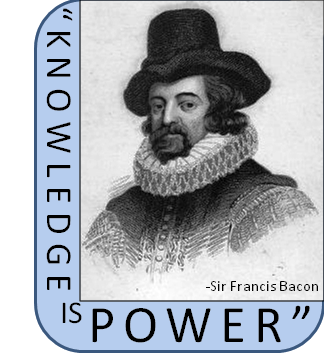
BaconQuoteThis past Labor Day I spent a little over 9 hours on the road unaccompanied. There was a billboard sign promoting some college or university that caught my attention and all it said was “Knowledge is Power”. A quote often attributed to Sir Francis Bacon, one of the so-called “great philosophers” you will undoubtedly study if you take a Philosophy or History of Philosophy class.

The thought that immediately came to mind was, “not all knowledge is power”. So, let’s take this oft-quoted truism and test it against the Word of God.

Did God Actually Say…?

Let’s start with the first appearance of “knowledge” in the Scriptures. For this, we reach all the way back to the Garden of Eden.

Genesis 2:8-9 (ESV) 8 And the Lord God planted a garden in Eden, in the east, and there he put the man whom he had formed. 9 And out of the ground the Lord God made to spring up every tree that is pleasant to the sight and good for food. The tree of life was in the midst of the garden, and the tree of the knowledge of good and evil.

Genesis 2:15-17 (ESV) 15 The Lord God took the man and put him in the garden of Eden to work it and keep it.16 And the Lord God commanded the man, saying, “You may surely eat of every tree of the garden, 17 but of the tree of the knowledge of good and evil you shall not eat, for in the day that you eat of it you shall surely die.”

Genesis 3:1-5 (ESV) 3 Now the serpent was more crafty than any other beast of the field that the Lord God had made. He said to the woman, “Did God actually say, ‘You shall not eat of any tree in the garden’?” 2 And the woman said to the serpent, “We may eat of the fruit of the trees in the garden, 3 but God said, ‘You shall not eat of the fruit of the tree that is in the midst of the garden, neither shall you touch it, lest you die.’” 4 But the serpent said to the woman, “You will not surely die. 5 For God knows that when you eat of it your eyes will be opened, and you will be like God, knowing good and evil.

Genesis 3:22-23 (ESV) 22 Then the Lord God said, “Behold, the man has become like one of us in knowing good and evil. Now, lest he reach out his hand and take also of the tree of life and eat, and live forever—” 23 therefore the Lord God sent him out from the garden of Eden to work the ground from which he was taken.

God forbade Adam to eat of one tree, the tree of the knowledge of good and evil. Satan steps in to tempt Eve to eat of the fruit of that tree, and notice how he did it. He offers Eve a “why” that was a lie. In so doing, he accuses God of withholding power from her. Satan tells her that the reason she is not allowed to eat of the fruit isn’t that she will die; rather, it is so that she will not have the power of knowledge thus keeping her from being like God. What knowledge did Adam and Eve gain from the fruit of the tree? Only the knowledge of evil. Notice the grace of God steps in immediately, in that He made sure to prevent man from eating of the fruit of the tree of Life. Spiritual death happened immediately in the sin. The flesh was defiled by the same sin and would complete the penalty required by sin, complete death. God did not let man live eternally in a cursed and fallen flesh. A way was already made for the redemption of mankind, in the death and resurrection of Jesus Christ; therefore, sinful man was prevented from partaking of the fruit of the tree of Life. Praise God.

Getting back to the knowledge gained, Adam already knew God; therefore, he already knew good. God is the very definition of good. Mark 10:18 (ESV) And Jesus said to him, “Why do you call me good? No one is good except God alone. Now Jesus is God and is also good, but the rich young ruler had not acknowledged Jesus as God; therefore, he had no basis upon which to call Jesus “good”. Which vaults us into the next topic, the Biblical definition of Knowledge that is Power.

Knowledge of Him

If you search the ESV for “knowledge” you get a lot of results, the vast majority of them would seem to support the truism “knowledge is power”; however, as we’ve established, that statement does not reflect truth on its own. There is knowledge that leads to death, as we saw in the garden. The knowledge of evil, of sin, leads to death. Man sinned in the garden, and died, separating us from the only knowledge that has any power, the knowledge of God. Let us look at some of the Biblical passages that clearly define what knowledge we are to be seeking.

2 Chronicles 1:7-13 (ESV) 7 In that night God appeared to Solomon, and said to him, “Ask what I shall give you.” 8 And Solomon said to God, “You have shown great and steadfast love to David my father, and have made me king in his place. 9 O Lord God, let your word to David my father be now fulfilled, for you have made me king over a people as numerous as the dust of the earth. 10 Give me now wisdom and knowledge to go out and come in before this people, for who can govern this people of yours, which is so great?” 11 God answered Solomon, “Because this was in your heart, and you have not asked for possessions, wealth, honor, or the life of those who hate you, and have not even asked for long life, but have asked for wisdom and knowledge for yourself that you may govern my people over whom I have made you king, 12 wisdom and knowledge are granted to you. I will also give you riches, possessions, and honor, such as none of the kings had who were before you, and none after you shall have the like.” 13 So Solomon came from the high place at Gibeon, from before the tent of meeting, to Jerusalem. And he reigned over Israel.

Luke 11:31 (ESV)31 The queen of the South will rise up at the judgment with the men of this generation and condemn them, for she came from the ends of the earth to hear the wisdom of Solomon, and behold, something greater than Solomon is here.

2 Corinthians 2:14-17 (ESV)14 But thanks be to God, who in Christ always leads us in triumphal procession, and through us spreads the fragrance of the knowledge of him everywhere. 15 For we are the aroma of Christ to God among those who are being saved and among those who are perishing, 16 to one a fragrance from death to death, to the other a fragrance from life to life. Who is sufficient for these things? 17 For we are not, like so many, peddlers of God’s word, but as men of sincerity, as commissioned by God, in the sight of God we speak in Christ.

Ephesians 1:16-21 (ESV)16 I do not cease to give thanks for you, remembering you in my prayers, 17 that the God of our Lord Jesus Christ, the Father of glory, may give you the Spirit of wisdom and of revelation in the knowledge of him, 18 having the eyes of your hearts enlightened, that you may know what is the hope to which he has called you, what are the riches of his glorious inheritance in the saints, 19 and what is the immeasurable greatness of his power toward us who believe, according to the working of his great might 20 that he worked in Christ when he raised him from the dead and seated him at his right hand in the heavenly places, 21 far above all rule and authority and power and dominion, and above every name that is named, not only in this age but also in the one to come.

Solomon’s great wisdom and knowledge came directly from God the Father, and from no other place. His sin was in allowing false knowledge, false doctrines, and false gods to take up residence in Israel, through his very own fleshly failings in the taking of brides from other nations and allowing their idolatry. Still we see Jesus teaching in reference to the wisdom of Solomon and immediately declaring that something greater than Solomon was in their midst. That something is Jesus Christ, the very standard of Good and the embodiment of Truth and Knowledge. We see plainly that Paul pointed to the Knowledge of Christ as the key factor for our salvation. For if we fail to accept the Knowledge of the Gospel of Christ, we remain powerlessly dead to sin. Notice also, that Paul separates himself from the peddlers of God’s word, in that only in the Gospel of Jesus Christ, the knowledge of Christ, are we made right with God. Many peddle the scriptures, tossing out verses, twisting God’s words for gain, or for a laugh, or to tempt and lead astray even the elect of God. Satan twisted God’s words in the garden by inserting lies. Satan twisted scripture in his temptation of Jesus in the wilderness. Peddlers of God’s Word. But as Paul said in 2 Corinthians “Thanks be to God” for giving us His Word and for sending us His Holy Spirit so that we might grow in the Knowledge of Christ.

False Knowledge Still Kills

1 Timothy 6:3-21 (ESV)If anyone teaches a different doctrine and does not agree with the sound words of our Lord Jesus Christ and the teaching that accords with godliness, 4 he is puffed up with conceit and understands nothing. He has an unhealthy craving for controversy and for quarrels about words, which produce envy, dissension, slander, evil suspicions, 5 and constant friction among people who are depraved in mind and deprived of the truth, imagining that godliness is a means of gain. 6 But godliness with contentment is great gain, 7 for we brought nothing into the world, and we cannot take anything out of the world. 8 But if we have food and clothing, with these we will be content. 9 But those who desire to be rich fall into temptation, into a snare, into many senseless and harmful desires that plunge people into ruin and destruction. 10 For the love of money is a root of all kinds of evils. It is through this craving that some have wandered away from the faith and pierced themselves with many pangs.

11 But as for you, O man of God, flee these things. Pursue righteousness, godliness, faith, love, steadfastness, gentleness. 12 Fight the good fight of the faith. Take hold of the eternal life to which you were called and about which you made the good confession in the presence of many witnesses. 13 I charge you in the presence of God, who gives life to all things, and of Christ Jesus, who in his testimony before Pontius Pilate made the good confession, 14 to keep the commandment unstained and free from reproach until the appearing of our Lord Jesus Christ, 15 which he will display at the proper time—he who is the blessed and only Sovereign, the King of kings and Lord of lords, 16 who alone has immortality, who dwells in unapproachable light, whom no one has ever seen or can see. To him be honor and eternal dominion. Amen. 17 As for the rich in this present age, charge them not to be haughty, nor to set their hopes on the uncertainty of riches, but on God, who richly provides us with everything to enjoy. 18 They are to do good, to be rich in good works, to be generous and ready to share, 19 thus storing up treasure for themselves as a good foundation for the future, so that they may take hold of that which is truly life.

20 O Timothy, guard the deposit entrusted to you. Avoid the irreverent babble and contradictions of what is falsely called “knowledge,” 21 for by professing it some have swerved from the faith. Grace be with you.

There is only one Truth, our Lord and Savior Jesus Christ. The truism, is misleading. It is often used to suggest that when one obtains knowledge, one obtains power. That isn’t true. For one, the only way to “obtain knowledge” is by grace, through faith, and that not of our selves, it is the gift of God (Ephesians 2). And faith comes through hearing and hearing through the Word of Christ (Romans 10:17). Knowledge is not a power for us to obtain; rather, it is the only way of salvation, the only way that we might be made alive in Christ rather than dead in our sin.

In Jesus Christ our Lord, to God be the glory forever, Amen.
Jorge

What is your Testimony?

Stiftshuette Modell

Stiftshuette Modell Timnapark CC BY-SA 3.0

Growing up in Evangelical churches, we heard often from folks who wanted to share their testimony with the church. A lot of weight was given to the sharing of one’s testimony. In fact, it was weighted so heavily that many times I heard caveats that both disturbed and discouraged me in my faith. Caveats such as, “well, my testimony isn’t nearly as powerful as that of brother so-and-so” or “I don’t have much of a testimony, because I grew up in a Christian home”. Such rubbish. This is NOT Biblical, and I want to end the week by looking at what our testimony is.

Your Testimony isn’t about you

We will look at the Biblical definition of what a testimony is, and what our testimony is supposed to be in a minute, but I want to point out that the major flaw in the caveats I mentioned is that they betray a fundamentally flawed view that a testimony is about the person giving it. It isn’t. Have you ever heard someone give their testimony and start to get a little uncomfortable about how they keep going on and on about how bad they were? We get into weird competitions over who was the “most bad” person was before they were saved.

Everyone born of man is born equally dead in sin. Sin isn’t a merely list of wrongdoings, it is a state of being.

Ephesians 2:1-3 (ESV)
1 And you were dead in the trespasses and sins 2 in which you once walked, following the course of this world, following the prince of the power of the air, the spirit that is now at work in the sons of disobedience— 3 among whom we all once lived in the passions of our flesh, carrying out the desires of the body and the mind, and were by nature children of wrath, like the rest of mankind.

Romans 3:9-20 (ESV)
9 What then? Are we Jews any better off? No, not at all. For we have already charged that all, both Jews and Greeks, are under sin, 10 as it is written:

None is righteous, no, not one;
11     no one understands;
no one seeks for God.
12 All have turned aside; together they have become worthless;
no one does good,
not even one.”
13 “Their throat is an open grave;
they use their tongues to deceive.”
“The venom of asps is under their lips.”
14     “Their mouth is full of curses and bitterness.”
15 “Their feet are swift to shed blood;
16     in their paths are ruin and misery,
17 and the way of peace they have not known.”
18     “There is no fear of God before their eyes.”

19 Now we know that whatever the law says it speaks to those who are under the law,so that every mouth may be stopped, and the whole world may be held accountable to God. 20 For by works of the law no human being will be justified in his sight, since through the law comes knowledge of sin.

Apart from the Gospel, no one is righteous, nor can they be made righteous or justified in God’s sight, even by the Law. Man’s need for Jesus Christ is Universal. In the same way, all who have come to the knowledge of the Gospel of Jesus Christ share in that same testimony, that we all need Jesus. We don’t need to add to our sinfulness to amplify the Gospel. On some levels, we want people to know that the Gospel finding ME was such a super big deal that no one should ever doubt in it. But that isn’t the focus of the Gospel, it is a blanket truth for all of mankind. Unless the Gospel of Jesus Christ finds you, you have no hope of salvation. And that is why we preach the Gospel of Jesus Christ. Our testimony isn’t supposed to glorify our sin; rather, it is supposed to focus on the Word of God.

Now, let us take a look at some Biblical foundations of what a Testimony truly is so that we might have a better understanding of what it means to share your testimony.

The Ark of the Covenant

If you remember in a post from earlier in the week I made reference to how the Passover Lamb pointed to Jesus on the Cross, as an atonement, the final atonement for all our sin. How in the Israelites leaving Egypt points to our being rescued out of the kingdom of Darkness, and how their passing through the Red Sea points to our water Baptism which represents joining Christ in His death and burial and resurrection to a new life in Him. We also compared the wandering of Israel for a generation in the wilderness to our living in a fallen and sinful world as we make our way to the Promised Land which in our case is the Kingdom of Heaven by the blood of Jesus Christ. In keeping with that same imagery, let us now turn to Exodus 25, when God commanded Moses to build an ark.

Exodus 25:10-22 (ESV)
10 “They shall make an ark of acacia wood. Two cubits and a half shall be its length, a cubit and a half its breadth, and a cubit and a half its height. 11 You shall overlay it with pure gold, inside and outside shall you overlay it, and you shall make on it a molding of gold around it. 12 You shall cast four rings of gold for it and put them on itsfour feet, two rings on the one side of it, and two rings on the other side of it. 13 You shall make poles of acacia wood and overlay them with gold. 14 And you shall put the poles into the rings on the sides of the ark to carry the ark by them. 15 The poles shall remain in the rings of the ark; they shall not be taken from it. 16 And you shall put into the ark the testimony that I shall give you.

17 “You shall make a mercy seat of pure gold. Two cubits and a half shall be its length, and a cubit and a half its breadth. 18 And you shall make two cherubim of gold; of hammered work shall you make them, on the two ends of the mercy seat. 19 Make one cherub on the one end, and one cherub on the other end. Of one piece with the mercy seat shall you make the cherubim on its two ends. 20 The cherubim shall spread out their wings above, overshadowing the mercy seat with their wings, their faces one to another; toward the mercy seat shall the faces of the cherubim be. 21 And you shall put the mercy seat on the top of the ark, and in the ark you shall put the testimony that I shall give you. 22 There I will meet with you, and from above the mercy seat, from between the two cherubim that are on the ark of the testimony, I will speak with you about all that I will give you in commandment for the people of Israel.

Now, outside of the Law of Moses, this ark is most commonly referred to in the Bible as the Ark of the Covenant. What we see in Exodus and in Numbers, though, is that it is referred to several times as the Ark of the Testimony. I hadn’t noticed that before, so it’s very exciting for me to read now. We see here God instructing the building of the ark, and he tells Moses that he will be giving him a testimony that should be placed into the ark. Before we get to that, notice where the mercy seat of God is placed… over the testimony. We can already see here, that the Mercy Seat of God rests atop the Testimony that God will give. Let us move ahead a bit as we follow the instructions regarding the ark.

Exodus 26:31-35 (ESV)
31 “And you shall make a veil of blue and purple and scarlet yarns and fine twined linen. It shall be made with cherubim skillfully worked into it. 32 And you shall hang it on four pillars of acacia overlaid with gold, with hooks of gold, on four bases of silver. 33 And you shall hang the veil from the clasps, and bring the ark of the testimony in there within the veil. And the veil shall separate for you the Holy Place from the Most Holy.34 You shall put the mercy seat on the ark of the testimony in the Most Holy Place.35 And you shall set the table outside the veil, and the lampstand on the south side of the tabernacle opposite the table, and you shall put the table on the north side.

This veil, is the one that was found split when Christ died on the cross. Notice that before Christ, the veil separated God’s people from the mercy seat except for certain times, and then only by proxy (the High Priest). Now, let’s jump ahead a bit (Moses was given a lot of instructions here) to chapter 34.

Exodus 34:27-35 (ESV)
27 And the Lord said to Moses, “Write these words, for in accordance with these words I have made a covenant with you and with Israel.” 28 So he was there with the Lord forty days and forty nights. He neither ate bread nor drank water. And he wrote on the tablets the words of the covenant, the Ten Commandments.

29 When Moses came down from Mount Sinai, with the two tablets of the testimony in his hand as he came down from the mountain, Moses did not know that the skin of his face shone because he had been talking with God. 30 Aaron and all the people of Israel saw Moses, and behold, the skin of his face shone, and they were afraid to come near him. 31 But Moses called to them, and Aaron and all the leaders of the congregation returned to him, and Moses talked with them. 32 Afterward all the people of Israel came near, and he commanded them all that the Lord had spoken with him in Mount Sinai.33 And when Moses had finished speaking with them, he put a veil over his face.

34 Whenever Moses went in before the Lord to speak with him, he would remove the veil, until he came out. And when he came out and told the people of Israel what he was commanded, 35 the people of Israel would see the face of Moses, that the skin of Moses’ face was shining. And Moses would put the veil over his face again, until he went in to speak with him.

Praise the Lord. The testimony is the Law of God, the 10 Commandments. They were given to Israel as a testimony to His Covenant with them. If you read from the beginning of the chapter, you see God instructing Moses to bring 2 fresh tablets to replace the ones that he smashed after seeing the sin of Israel at the foot of Mount Sinai. Those, too, were called the tablets of the testimony.

Exodus 31:18 (ESV)
18 And he gave to Moses, when he had finished speaking with him on Mount Sinai, the two tablets of the testimony, tablets of stone, written with the finger of God.

Exodus 32:15-16 (ESV)
15 Then Moses turned and went down from the mountain with the two tablets of the testimony in his hand, tablets that were written on both sides; on the front and on the back they were written. 16 The tablets were the work of God, and the writing was the writing of God, engraved on the tablets.

Exodus Chapter 40 concludes the instructions given to Moses regarding the tabernacle and the ark.

Exodus 40:16-21 (ESV)
16 This Moses did; according to all that the Lord commanded him, so he did. 17 In the first month in the second year, on the first day of the month, the tabernacle was erected. 18 Moses erected the tabernacle. He laid its bases, and set up its frames, and put in its poles, and raised up its pillars. 19 And he spread the tent over the tabernacle and put the covering of the tent over it, as the Lord had commanded Moses. 20 He took the testimony and put it into the ark, and put the poles on the ark and set the mercy seat above on the ark. 21 And he brought the ark into the tabernacle and set up the veil of the screen, and screened the ark of the testimony, as the Lord had commanded Moses.

The Day of Atonement

Now that we know that the testimony Moses was to place inside the ark was the two tablets of the testimony. They were placed into the ark of the Testimony, upon which rested the Mercy Seat of God, and all of it was behind the veil. Let us skip ahead to Leviticus to see the Ark of the Testimony and the Mercy Seat.

Leviticus 16:1-5 (ESV)
1 The Lord spoke to Moses after the death of the two sons of Aaron, when they drew near before the Lord and died, 2 and the Lord said to Moses, “Tell Aaron your brother not to come at any time into the Holy Place inside the veil, before the mercy seat that is on the ark, so that he may not die. For I will appear in the cloud over the mercy seat.3 But in this way Aaron shall come into the Holy Place: with a bull from the herd for a sin offering and a ram for a burnt offering. 4 He shall put on the holy linen coat and shall have the linen undergarment on his body, and he shall tie the linen sash around his waist, and wear the linen turban; these are the holy garments. He shall bathe his body in water and then put them on. 5 And he shall take from the congregation of the people of Israel two male goats for a sin offering, and one ram for a burnt offering.

Leviticus 16:11-16 (ESV)
11 “Aaron shall present the bull as a sin offering for himself, and shall make atonement for himself and for his house. He shall kill the bull as a sin offering for himself. 12 And he shall take a censer full of coals of fire from the altar before the Lord, and two handfuls of sweet incense beaten small, and he shall bring it inside the veil 13 and put the incense on the fire before the Lord, that the cloud of the incense may cover the mercy seat that is over the testimony, so that he does not die. 14 And he shall take some of the blood of the bull and sprinkle it with his finger on the front of the mercy seat on the east side, and in front of the mercy seat he shall sprinkle some of the blood with his finger seven times.

15 “Then he shall kill the goat of the sin offering that is for the people and bring its blood inside the veil and do with its blood as he did with the blood of the bull, sprinkling it over the mercy seat and in front of the mercy seat. 16 Thus he shall make atonement for the Holy Place, because of the uncleannesses of the people of Israel and because of their transgressions, all their sins. And so he shall do for the tent of meeting, which dwells with them in the midst of their uncleannesses.

We see a great deal going on here, but I wanted to point out this Day of Atonement and the special place of the ark of the Testimony and the Mercy Seat, and the blood of the atoning sacrifice. All of this points to Christ.

Jesus the guarantor of a better covenant*

In closing, I recommend reading the book of Hebrews. The writer of Hebrews explains the 2 covenants beautifully, and when you read through it, take the time to cross-reference the Old Testament passages.

Hebrews 8 (ESV)
1 Now the point in what we are saying is this: we have such a high priest, one who is seated at the right hand of the throne of the Majesty in heaven, 2 a minister in the holy places, in the true tent that the Lord set up, not man. 3 For every high priest is appointed to offer gifts and sacrifices; thus it is necessary for this priest also to have something to offer. 4 Now if he were on earth, he would not be a priest at all, since there are priests who offer gifts according to the law. 5 They serve a copy and shadow of the heavenly things. For when Moses was about to erect the tent, he was instructed by God, saying, “See that you make everything according to the pattern that was shown you on the mountain.” 6 But as it is, Christ has obtained a ministry that is as much more excellent than the old as the covenant he mediates is better, since it is enacted on better promises. 7 For if that first covenant had been faultless, there would have been no occasion to look for a second.

8 For he finds fault with them when he says:

“Behold, the days are coming, declares the Lord,
when I will establish a new covenant with the house of Israel
and with the house of Judah,
9 not like the covenant that I made with their fathers
on the day when I took them by the hand to bring them out of the land of Egypt.
For they did not continue in my covenant,
and so I showed no concern for them, declares the Lord.
10 For this is the covenant that I will make with the house of Israel
after those days, declares the Lord:
I will put my laws into their minds,
and write them on their hearts,
and I will be their God,
and they shall be my people.
11 And they shall not teach, each one his neighbor
and each one his brother, saying, ‘Know the Lord,’
for they shall all know me,
from the least of them to the greatest.
12 For I will be merciful toward their iniquities,
and I will remember their sins no more.”

13 In speaking of a new covenant, he makes the first one obsolete. And what is becoming obsolete and growing old is ready to vanish away.

And the Gospel of Jesus Christ to the Gentiles, is that this new covenant is available to all people, not just the Jew. And our testimony, is the Gospel of Jesus Christ.

Revelation 19:9-10 (ESV)
9 And the angel said to me, “Write this: Blessed are those who are invited to the marriage supper of the Lamb.” And he said to me, “These are the true words of God.”10 Then I fell down at his feet to worship him, but he said to me, “You must not do that! I am a fellow servant with you and your brothers who hold to the testimony of Jesus. Worship God.” For the testimony of Jesus is the spirit of prophecy.

Amen. Whenever you share your testimony, know that what you are sharing is not supposed to point to you; rather, it is to point to a risen Savior, whose blood was shed on your behalf, so that you can stand before the Mercy Seat of God without fear of judgement.

Hebrews 10:19-25 (ESV)
19 Therefore, brothers, since we have confidence to enter the holy places by the blood of Jesus, 20 by the new and living way that he opened for us through the curtain, that is, through his flesh, 21 and since we have a great priest over the house of God, 22 let us draw near with a true heart in full assurance of faith, with our hearts sprinkled clean from an evil conscience and our bodies washed with pure water. 23 Let us hold fast the confession of our hope without wavering, for he who promised is faithful. 24 And let us consider how to stir up one another to love and good works, 25 not neglecting to meet together, as is the habit of some, but encouraging one another, and all the more as you see the Day drawing near.

Grace and Peace to you in the Name of Jesus Christ our Lord,
Jorge

How did Jesus explain His Gospel?

snakepoleWe discuss often here the need to preach both Law and Gospel. Most of the time when I try to capture the Gospel, I simply refer to how the Apostles Paul or Peter explained the Gospel. However, I realized that I have yet to really talk about how Jesus explained His own Gospel. Let us begin by reading John 3, where Jesus is teaching Nicodemus about Salvation.

John 3:1-21 (ESV)
1 Now there was a man of the Pharisees named Nicodemus, a ruler of the Jews. 2 This man came to Jesus by night and said to him, “Rabbi, we know that you are a teacher come from God, for no one can do these signs that you do unless God is with him.” 3 Jesus answered him, “Truly, truly, I say to you, unless one is born again he cannot see the kingdom of God.” 4 Nicodemus said to him, “How can a man be born when he is old? Can he enter a second time into his mother’s womb and be born?” 5 Jesus answered, “Truly, truly, I say to you, unless one is born of water and the Spirit, he cannot enter the kingdom of God. 6 That which is born of the flesh is flesh, and that which is born of the Spirit is spirit. 7 Do not marvel that I said to you, ‘You must be born again.’ 8 The wind blows where it wishes, and you hear its sound, but you do not know where it comes from or where it goes. So it is with everyone who is born of the Spirit.”

9 Nicodemus said to him, “How can these things be?” 10 Jesus answered him, “Are you the teacher of Israel and yet you do not understand these things? 11 Truly, truly, I say to you, we speak of what we know, and bear witness to what we have seen, but you do not receive our testimony. 12 If I have told you earthly things and you do not believe, how can you believe if I tell you heavenly things? 13 No one has ascended into heaven except he who descended from heaven, the Son of Man. 14 And as Moses lifted up the serpent in the wilderness, so must the Son of Man be lifted up, 15 that whoever believes in him may have eternal life.

16 “For God so loved the world, that he gave his only Son, that whoever believes in him should not perish but have eternal life. 17 For God did not send his Son into the world to condemn the world, but in order that the world might be saved through him. 18 Whoever believes in him is not condemned, but whoever does not believe is condemned already, because he has not believed in the name of the only Son of God. 19 And this is the judgment: the light has come into the world, and people loved the darkness rather than the light because their works were evil. 20 For everyone who does wicked things hates the light and does not come to the light, lest his works should be exposed. 21 But whoever does what is true comes to the light, so that it may be clearly seen that his works have been carried out in God.”

Praise the Lord! Something I’d like to explore is the reference Jesus made to Moses lifting up the serpent in the wilderness. Let’s look at this event in Numbers chapter 21.

Numbers 21:4-9 (ESV)
4 From Mount Hor they set out by the way to the Red Sea, to go around the land of Edom. And the people became impatient on the way. 5 And the people spoke against God and against Moses, “Why have you brought us up out of Egypt to die in the wilderness? For there is no food and no water, and we loathe this worthless food.” 6 Then the Lord sent fiery serpents among the people, and they bit the people, so that many people of Israel died. 7 And the people came to Moses and said, “We have sinned, for we have spoken against the Lord and against you. Pray to the Lord, that he take away the serpents from us.” So Moses prayed for the people. 8 And the Lord said to Moses, “Make a fiery serpent and set it on a pole, and everyone who is bitten, when he sees it, shall live.” 9 So Moses made a bronze serpent and set it on a pole. And if a serpent bit anyone, he would look at the bronze serpent and live.

So the Israelites were being led through the wilderness by God. Fed by God. Protected by God. After having been rescued from Pharaoh by God. And they despised His provision. Truly we are a stubborn and insolent race. As punishment for their sin, the Lord sent fiery serpents. An interesting thing to send, don’t you think? As a child I used to envision serpents of fire, but looking at the Hebrew word used for “fiery” it’s Saraph, we see 2 possible translations:

1. serpent, fiery serpent, poisonous serpent (fiery from burning effect of poison)
2. seraph, seraphim: majestic beings with 6 wings, human hands or voices in attendance upon God

Clearly the translators chose the context appropriate “fiery serpent” here. Notice that they are considered “fiery” by virtue of the burning effect of their poison. Here we see that the wages of their sin is a fiery death. When the people repented and sought relief from their punishment, God told Moses to make a fiery serpent and set it on a pole. We know that the fiery serpent crafted by Moses and placed on a pole represents Jesus (because He said so). But why a serpent? Isn’t the serpent the one who was killing the Israelites? No, God’s punishment was the righteous, just, and holy response to their sin. Their sin is what is killing them. God’s grace and mercy allowed for a sign to be given them, so that all who were bitten and looked to the bronze serpent might live. But why a serpent? Let’s look at some other texts to see if we might better understand the picture of Christ’s atoning sacrifice on the cross. Since we got here by going backward, let’s continue to the fall of man, the point where sin entered into this world through Adam.

Genesis 3:9-15 (ESV)
9 But the Lord God called to the man and said to him, “Where are you?” 10 And he said, “I heard the sound of you in the garden, and I was afraid, because I was naked, and I hid myself.” 11 He said, “Who told you that you were naked? Have you eaten of the tree of which I commanded you not to eat?” 12 The man said, “The woman whom you gave to be with me, she gave me fruit of the tree, and I ate.” 13 Then the Lord God said to the woman, “What is this that you have done?” The woman said, “The serpent deceived me, and I ate.”

14 The Lord God said to the serpent,

“Because you have done this,
cursed are you above all livestock
and above all beasts of the field;
on your belly you shall go,
and dust you shall eat
all the days of your life.
15 I will put enmity between you and the woman,
    and between your offspring and her offspring;
he shall bruise your head,
    and you shall bruise his heel.”

Here is where we have our first promise that God will send a Savior through Eve. The immaculate conception granting Jesus full humanity by Mary, while maintaining His Godliness (completely sinless) because He was not born of the seed of man, but of God the Father.  Everyone else born of the flesh is born into the sin of Adam… born with the poison of sin coursing through their veins, a sin that leads to a fiery death. Christ was promised to defeat Satan, though Satan will bruise His heel (the death on the cross). But how does this connect the serpent on the cross to Jesus (besides Jesus saying so)? I think Paul articulated this extremely well in 2 Corinthians.

2 Corinthians 5:14-21 (ESV)
14 For the love of Christ controls us, because we have concluded this: that one has died for all, therefore all have died; 15 and he died for all, that those who live might no longer live for themselves but for him who for their sake died and was raised.

16 From now on, therefore, we regard no one according to the flesh. Even though we once regarded Christ according to the flesh, we regard him thus no longer. 17 Therefore, if anyone is in Christ, he is a new creation. The old has passed away; behold, the new has come. 18 All this is from God, who through Christ reconciled us to himself and gave us the ministry of reconciliation; 19 that is, in Christ God was reconciling the world to himself, not counting their trespasses against them, and entrusting to us the message of reconciliation. 20 Therefore, we are ambassadors for Christ, God making his appeal through us. We implore you on behalf of Christ, be reconciled to God. 21 For our sake he made him to be sin who knew no sin, so that in him we might become the righteousness of God.

The reason the snake was put on the cross, correlates to the reason Christ had to die on the cross… to bear the full penalty of the sin of mankind as a substitution for us. So that all who believe in Him will not die, but have everlasting life in Him who bore the penalty for us. Those who do not believe, are condemned already, for they bear the fiery poison of sin. Who has been bitten? All of us. The bitten Israelites looked to the serpent on the cross so that they would not have to die to its poison; rather, the symbolic death of the serpent on the pole would cover their righteous and just punishment for their sin. Similarly, each of us who has been born dead in our sins and trespasses must turn to the Gospel of Jesus Christ, His literal death on the cross as a substitutionary payment for the righteous and just punishment due us for our sin, so that we might join in His resurrection and gain entry into the Kingdom of Heaven.

As ambassadors for Christ, let us be good stewards of His love and grace that was so richly poured out for us on the cross. Let us preach the Gospel of Jesus Christ faithfully and passionately, so that all of creation might hear the Word of God, and be reconciled to God through Jesus Christ.

May the Lord bless and keep you,
In Him,
Jorge

The Parable of the Sower

OLYMPUS DIGITAL CAMERAI’ve been wrestling a great deal with several schools of doctrine/theology (all within the framework of Biblical Christianity). I’ve stated before that I consider myself a recovering Pentecostal. I am not recovering from Pentecostalism just to follow some other doctrine of man, or some other proof-text backed orthodoxy. My aim is that of the 5 Solas of the Reformation: Sola Scriptura, Sola gratia, Sola fide, Solus Christus, and Soli Deo Gloria (Scripture alone, grace alone, faith alone, in Christ alone, to the Glory of God alone). From time to time, I will speak out against various doctrines and teachings here, but this blog’s purpose is to focus on what the Word of God does say (Sola Scriptura) rather than to chase down every doctrine of man trying to demonstrate what the Bible doesn’t say.

Today, I’d like to take a look at the Parable of the Sower and the Parable of the Weeds. We will be focusing primarily in Matthew 13, but I will also include Mark 4.

To set the stage a little, in Matthew 12 we see Jesus flat-out establishing Himself as the Lord of the Sabbath as He first defends His disciple’s act of picking grain and eating it on the Sabbath. He then pushes further by healing on the Sabbath, and rebuking the Pharisees for their hypocrisy and rejection of God’s Laws for their own. He then casts out demons in front of the scribes and Pharisees and they accuse Him of casting them out by the power of Satan. After willfully rejecting Jesus, to include the signs and wonders performed by Him thereby blaspheming the Holy Spirit, they dare to demand a sign from Jesus. It is this portion that I’d like to read through to set up our study:

Matthew 12:36-45 (ESV)

36 I tell you, on the day of judgment people will give account for every careless word they speak, 37 for by your words you will be justified, and by your words you will be condemned.” 38 Then some of the scribes and Pharisees answered him, saying, “Teacher, we wish to see a sign from you.” 39 But he answered them, “An evil and adulterous generation seeks for a sign, but no sign will be given to it except the sign of the prophet Jonah. 40 For just as Jonah was three days and three nights in the belly of the great fish, so will the Son of Man be three days and three nights in the heart of the earth. 41 The men of Nineveh will rise up at the judgment with this generation and condemn it, for they repented at the preaching of Jonah, and behold, something greater than Jonah is here. 42 The queen of the South will rise up at the judgment with this generation and condemn it, for she came from the ends of the earth to hear the wisdom of Solomon, and behold, something greater than Solomon is here. 43 “When the unclean spirit has gone out of a person, it passes through waterless places seeking rest, but finds none. 44 Then it says, ‘I will return to my house from which I came.’ And when it comes, it finds the house empty, swept, and put in order. 45 Then it goes and brings with it seven other spirits more evil than itself, and they enter and dwell there, and the last state of that person is worse than the first. So also will it be with this evil generation.”

Something greater than Jonah and Solomon was there, in their midst, speaking to them face to face. Today we have His Word, and God the Holy Spirit who testifies of God the Son who is at the right hand of God the Father. Let’s skip ahead slightly to Matthew 13 (and Mark 4).

Matthew 13:1-9 (ESV)

1 That same day Jesus went out of the house and sat beside the sea. 2 And great crowds gathered about him, so that he got into a boat and sat down. And the whole crowd stood on the beach. 3 And he told them many things in parables, saying: “A sower went out to sow. 4 And as he sowed, some seeds fell along the path, and the birds came and devoured them. 5 Other seeds fell on rocky ground, where they did not have much soil, and immediately they sprang up, since they had no depth of soil, 6 but when the sun rose they were scorched. And since they had no root, they withered away. 7 Other seeds fell among thorns, and the thorns grew up and choked them. 8 Other seeds fell on good soil and produced grain, some a hundredfold, some sixty, some thirty. 9 He who has ears, let him hear.

Mark 4:1-9 (ESV)

1 Again he began to teach beside the sea. And a very large crowd gathered about him, so that he got into a boat and sat in it on the sea, and the whole crowd was beside the sea on the land. 2 And he was teaching them many things in parables, and in his teaching he said to them: 3 “Listen! Behold, a sower went out to sow. 4 And as he sowed, some seed fell along the path, and the birds came and devoured it. 5 Other seed fell on rocky ground, where it did not have much soil, and immediately it sprang up, since it had no depth of soil. 6 And when the sun rose, it was scorched, and since it had no root, it withered away. 7 Other seed fell among thorns, and the thorns grew up and choked it, and it yielded no grain. 8 And other seeds fell into good soil and produced grain, growing up and increasing and yielding thirtyfold and sixtyfold and a hundredfold.” 9 And he said, “He who has ears to hear, let him hear.”

In both accounts, the disciples ask Jesus why He speaks in parables. We are going to skip this discussion for now, but know that we will revisit this portion (CTT: Why did Jesus Teach in Parables). Suffice it to say that unless Jesus explained the meaning of this parable, we’d all be lost. Praise and thanks be to God for providing us with its meaning in scripture.

Matthew 13:18-23 (ESV)

18 “Hear then the parable of the sower: 19 When anyone hears the word of the kingdom and does not understand it, the evil one comes and snatches away what has been sown in his heart. This is what was sown along the path. 20 As for what was sown on rocky ground, this is the one who hears the word and immediately receives it with joy, 21 yet he has no root in himself, but endures for a while, and when tribulation or persecution arises on account of the word, immediately he falls away. 22 As for what was sown among thorns, this is the one who hears the word, but the cares of the world and the deceitfulness of riches choke the word, and it proves unfruitful. 23 As for what was sown on good soil, this is the one who hears the word and understands it. He indeed bears fruit and yields, in one case a hundredfold, in another sixty, and in another thirty.”

Mark 4:13-20 (ESV)

13 And he said to them, “Do you not understand this parable? How then will you understand all the parables? 14 The sower sows the word. 15 And these are the ones along the path, where the word is sown: when they hear, Satan immediately comes and takes away the word that is sown in them. 16 And these are the ones sown on rocky ground: the ones who, when they hear the word, immediately receive it with joy. 17 And they have no root in themselves, but endure for a while; then, when tribulation or persecution arises on account of the word, immediately they fall away. 18 And others are the ones sown among thorns. They are those who hear the word, 19 but the cares of the world and the deceitfulness of riches and the desires for other things enter in and choke the word, and it proves unfruitful. 20 But those that were sown on the good soil are the ones who hear the word and accept it and bear fruit, thirtyfold and sixtyfold and a hundredfold.”

This parable pertains to the individual’s response to the Word of the Kingdom, the Gospel of Jesus Christ, the Word of God, the imperishable seed.

1 Peter 1:22-25 (ESV)

22 Having purified your souls by your obedience to the truth for a sincere brotherly love, love one another earnestly from a pure heart, 23 since you have been born again, not of perishable seed but of imperishable, through the living and abiding word of God; 24 for

“All flesh is like grass

and all its glory like the flower of grass.

The grass withers,

and the flower falls,

25 but the word of the Lord remains forever.”

And this word is the good news that was preached to you.

The Gospel is the beautiful and perfect Word of God. It is the Gospel to which we are to hold fast and to preach, being good stewards of God’s Word. When we preach, we should make sure that what we preach is the Word of God, the imperishable seed (Sola Scriptura). It does no good to mix in the commandments/doctrines of men, for only the Word of God brings life. The words of men, well… they don’t come from us alone, but they come from the evil one. For the flesh is cursed by sin and death, and the heart of man is sinful as a result. Paul articulates this well in Galatians 6:

Galatians 6:7-8 (ESV)

7 Do not be deceived: God is not mocked, for whatever one sows, that will he also reap. 8 For the one who sows to his own flesh will from the flesh reap corruption, but the one who sows to the Spirit will from the Spirit reap eternal life.

Now then, Jesus goes on in Matthew 13 to share another parable. This one pertains to the Kingdom as a whole rather than to individuals. Let us read.

Matthew 13:24-30 (ESV)

24 He put another parable before them, saying, “The kingdom of heaven may be compared to a man who sowed good seed in his field, 25 but while his men were sleeping, his enemy came and sowed weeds among the wheat and went away. 26 So when the plants came up and bore grain, then the weeds appeared also. 27 And the servants of the master of the house came and said to him, ‘Master, did you not sow good seed in your field? How then does it have weeds?’ 28 He said to them, ‘An enemy has done this.’ So the servants said to him, ‘Then do you want us to go and gather them?’ 29 But he said, ‘No, lest in gathering the weeds you root up the wheat along with them. 30 Let both grow together until the harvest, and at harvest time I will tell the reapers, Gather the weeds first and bind them in bundles to be burned, but gather the wheat into my barn.’”

Matthew 13:36-43 (ESV)

36 Then he left the crowds and went into the house. And his disciples came to him, saying, “Explain to us the parable of the weeds of the field.” 37 He answered, “The one who sows the good seed is the Son of Man. 38 The field is the world, and the good seed is the sons of the kingdom. The weeds are the sons of the evil one, 39 and the enemy who sowed them is the devil. The harvest is the end of the age, and the reapers are angels. 40 Just as the weeds are gathered and burned with fire, so will it be at the end of the age. 41 The Son of Man will send his angels, and they will gather out of his kingdom all causes of sin and all law-breakers, 42 and throw them into the fiery furnace. In that place there will be weeping and gnashing of teeth. 43 Then the righteous will shine like the sun in the kingdom of their Father. He who has ears, let him hear.

In this parable, the good seed represents the sons of the kingdom, believers, Christians. Jesus Christ, our Lord and Savior has sent us into the world. The evil one also has his own seed, those who are slaves of darkness, born dead in their sins and trespasses. The harvest is the end of the age, when Jesus Christ returns with His army of angels (the heavenly hosts) to bring judgement upon the unrighteous and blessing to the sons of the Kingdom of God. To highlight the point regarding the harvest at the end of the age, Jesus breaks from the farming analogy and moves to that of the fisherman (He was, after all, teaching by the sea).

Matthew 13:47-50 (ESV)

47 “Again, the kingdom of heaven is like a net that was thrown into the sea and gathered fish of every kind. 48 When it was full, men drew it ashore and sat down and sorted the good into containers but threw away the bad. 49 So it will be at the end of the age. The angels will come out and separate the evil from the righteous 50 and throw them into the fiery furnace. In that place there will be weeping and gnashing of teeth.

It is amazing to me to read each of the epistles in the New Testament, how each one bears a reminder of the Gospel of Jesus Christ and in each reminder we see a reflection of what these men were taught by Jesus Christ. Yes, Jesus spoke in parables and rebuked the Pharisees for their lack of understanding. But God the Holy Spirit opened up the Truth of the Scriptures to His Apostles and granted them boldness to preach what Jesus had done in Jerusalem, throughout Judea, and to the ends of the Earth. And so, brothers and sisters, it falls to us to continue in Him, in His Word, preaching and pursuing His righteousness by His Grace through Faith in Christ to the Glory of God alone!

I hope you have found some encouragement in today’s look in the Word. If you have any questions or comments, please feel free to comment below or message me privately. In closing today’s post, I’d like to visit Peter’s opening declaration of the Gospel of Jesus Christ:

1 Peter 1:1-9 (ESV)

1 Peter, an apostle of Jesus Christ,

To those who are elect exiles of the Dispersion in Pontus, Galatia, Cappadocia, Asia, and Bithynia, 2 according to the foreknowledge of God the Father, in the sanctification of the Spirit, for obedience to Jesus Christ and for sprinkling with his blood:

May grace and peace be multiplied to you.

3 Blessed be the God and Father of our Lord Jesus Christ! According to his great mercy, he has caused us to be born again to a living hope through the resurrection of Jesus Christ from the dead, 4 to an inheritance that is imperishable, undefiled, and unfading, kept in heaven for you, 5 who by God’s power are being guarded through faith for a salvation ready to be revealed in the last time. 6 In this you rejoice, though now for a little while, if necessary, you have been grieved by various trials, 7 so that the tested genuineness of your faith—more precious than gold that perishes though it is tested by fire—may be found to result in praise and glory and honor at the revelation of Jesus Christ. 8 Though you have not seen him, you love him. Though you do not now see him, you believe in him and rejoice with joy that is inexpressible and filled with glory, 9 obtaining the outcome of your faith, the salvation of your souls.

In Him,

Jorge