Gospel Wednesday | Matthew 21

bibleLet us continue our walk through the Gospel According to Matthew. Last week we worked through Matthew 20.

Last week’s look at Matthew 20 ended with Jesus opening the eyes of 2 blind men, who were then able to follow Jesus. This is a significant miracle, one that would not go unnoticed by the Jewish readers of the Gospel According to Matthew. Before moving into the next chapter, let us reflect back on a prophesy regarding the Messiah

Isaiah 42:1-9 (ESV) | The Lord‘s Chosen Servant

42 Behold my servant, whom I uphold,
    my chosen, in whom my soul delights;
I have put my Spirit upon him;
    he will bring forth justice to the nations.
He will not cry aloud or lift up his voice,
    or make it heard in the street;
a bruised reed he will not break,
    and a faintly burning wick he will not quench;
    he will faithfully bring forth justice.
He will not grow faint or be discouraged
    till he has established justice in the earth;
    and the coastlands wait for his law.

Thus says God, the Lord,
    who created the heavens and stretched them out,
    who spread out the earth and what comes from it,
who gives breath to the people on it
    and spirit to those who walk in it:
“I am the Lord; I have called you in righteousness;
    I will take you by the hand and keep you;
I will give you as a covenant for the people,
    a light for the nations,
    to open the eyes that are blind,
to bring out the prisoners from the dungeon,
    from the prison those who sit in darkness.
I am the Lord; that is my name;
    my glory I give to no other,
    nor my praise to carved idols.
Behold, the former things have come to pass,
    and new things I now declare;
before they spring forth
    I tell you of them.”

With that review in our minds, let us move to the next chapter in the Gospel According to Matthew.

Matthew 21 (ESV)

Matthew 21:1-11 (ESV) | The Triumphal Entry

21 Now when they drew near to Jerusalem and came to Bethphage, to the Mount of Olives, then Jesus sent two disciples, saying to them, “Go into the village in front of you, and immediately you will find a donkey tied, and a colt with her. Untie them and bring them to me. If anyone says anything to you, you shall say, ‘The Lord needs them,’ and he will send them at once.” This took place to fulfill what was spoken by the prophet, saying,

“Say to the daughter of Zion,
‘Behold, your king is coming to you,
    humble, and mounted on a donkey,
    on a colt, the foal of a beast of burden.’”

The disciples went and did as Jesus had directed them. They brought the donkey and the colt and put on them their cloaks, and he sat on them. Most of the crowd spread their cloaks on the road, and others cut branches from the trees and spread them on the road. And the crowds that went before him and that followed him were shouting, “Hosanna to the Son of David! Blessed is he who comes in the name of the Lord! Hosanna in the highest!” 10 And when he entered Jerusalem, the whole city was stirred up, saying, “Who is this?” 11 And the crowds said, “This is the prophet Jesus, from Nazareth of Galilee.”

Now, Matthew quotes from the Prophet Zechariah 9:9. The people recognized it and celebrated what they thought was the coming of the king setting up an earthly kingdom. They were partly correct, but they weren’t seeing Jesus. They were blind to Who He Is. Instead, they were honoring what they thought the Messiah was going to be. Most of these very same people will soon be crying out for His crucifixion… yet He will still call for their forgiveness… Praise be to the King of kings and Lord of lords.

Matthew 21:12-17 (ESV) | Jesus Cleanses the Temple

12 And Jesus entered the temple and drove out all who sold and bought in the temple, and he overturned the tables of the money-changers and the seats of those who sold pigeons. 13 He said to them, “It is written, ‘My house shall be called a house of prayer,’ but you make it a den of robbers.”

14 And the blind and the lame came to him in the temple, and he healed them.15 But when the chief priests and the scribes saw the wonderful things that he did, and the children crying out in the temple, “Hosanna to the Son of David!” they were indignant, 16 and they said to him, “Do you hear what these are saying?” And Jesus said to them, “Yes; have you never read,

“‘Out of the mouth of infants and nursing babies
    you have prepared praise’?”

17 And leaving them, he went out of the city to Bethany and lodged there.

Here, we see Jesus opening the eyes of the blind and lame who come to Him humbly… and we also see the blindness of the chief priests and scribes, who upon seeing the work of God become indignant. We also see Jesus referring them to Psalm 8… a Psalm of praise to the LORD our Lord. That’s huge. Jesus is flat-out telling them Who He is, and they remain blind to it. Jesus leaves the city and lodges in Bethany.

Matthew 21:18-22 (ESV) | Jesus Curses the Fig Tree

18 In the morning, as he was returning to the city, he became hungry. 19 And seeing a fig tree by the wayside, he went to it and found nothing on it but only leaves. And he said to it, “May no fruit ever come from you again!” And the fig tree withered at once.

20 When the disciples saw it, they marveled, saying, “How did the fig tree wither at once?” 21 And Jesus answered them, “Truly, I say to you, if you have faith and do not doubt, you will not only do what has been done to the fig tree, but even if you say to this mountain, ‘Be taken up and thrown into the sea,’ it will happen. 22 And whatever you ask in prayer, you will receive, if you have faith.”

This is a tough passage. Prosperity and Word of Faith pushers twist this passage to justify their false teaching that as long as we have faith we can get whatever we claim/decree/declare. Similarly, I’ve also heard Muslims use this passage to refute the validity of the Gospels asserting that the writers can’t agree on what happened here… and both the Muslim and the false-teacher share a common interpretive problem… they both tend to read this as a vindictive act of Jesus against the fig tree because he was hungry. Yes, Jesus became angry, and yes he went to he fig tree and found nothing in it. However, Jesus cursed the tree for what it represented. Remember what we’ve seen in this chapter so far, Jesus entered Jerusalem in fulfillment of the Prophecy by Zechariah, and the people seemed to believe and gave a great showing, but we know they will bear no fruit, for in a short time they will cry out for His crucifixion. We see the chief priests and scribes bear witness to miracles that only the Messiah can perform, yet they are indignant and blind. We see Jesus clear out the Temple, for it has become a den of robbers (also a reference to prophecy of judgment against Israel). The fig tree represents Israel… full of leaves, giving the indication of life, but bearing no fruit. Jerusalem had an outward form of godliness, but inwardly they were dead.

Jesus was speaking of the Kingdom of heaven, of spiritual matters, not temporal. We have no record of any of the disciples rebuking a tree to wither it, nor speaking to a mountain for it to be uprooted and cast into the sea literally. What we do have in the New Testament, is the foundation of the Church laid by the Apostles with Jesus Christ as both its cornerstone and Head.

Matthew 21:23-27 (ESV) | The Authority of Jesus Challenged

23 And when he entered the temple, the chief priests and the elders of the people came up to him as he was teaching, and said, “By what authority are you doing these things, and who gave you this authority?” 24 Jesus answered them, “I also will ask you one question, and if you tell me the answer, then I also will tell you by what authority I do these things. 25 The baptism of John, from where did it come? From heaven or from man?” And they discussed it among themselves, saying, “If we say, ‘From heaven,’ he will say to us, ‘Why then did you not believe him?’ 26 But if we say, ‘From man,’ we are afraid of the crowd, for they all hold that John was a prophet.” 27 So they answered Jesus, “We do not know.” And he said to them, “Neither will I tell you by what authority I do these things.

So many times Jesus declared His identity and Authority, and the chief priests and scribes denied Him and hardened their hearts. This time, Jesus turns it on them and then declines to answer their question in like manner. Instead, He answers with a set of parables. Remember Jesus said that He spoke in parables so that only to those whom understanding had been given might understand, and for the unbelievers, they would not understand (Matthew 13:10-17 ESV). We’ll look at 2 of them today, and the third we’ll cover next week.

Matthew 21:28-32 (ESV) | The Parable of the Two Sons

28 “What do you think? A man had two sons. And he went to the first and said, ‘Son, go and work in the vineyard today.’ 29 And he answered, ‘I will not,’ but afterward he changed his mind and went. 30 And he went to the other son and said the same. And he answered, ‘I go, sir,’ but did not go. 31 Which of the two did the will of his father?” They said, “The first.” Jesus said to them, “Truly, I say to you, the tax collectors and the prostitutes go into the kingdom of God before you. 32 For John came to you in the way of righteousness, and you did not believe him, but the tax collectors and the prostitutes believed him. And even when you saw it, you did not afterward change your minds and believe him.

Point-blank, Jesus tells them that the very people who are despised and rejected by the religious leaders will — by faith — enter the Kingdom of God before them… for the religious leaders are blinded by their self-righteousness and remain condemned in their unbelief. The fig tree just got rebuked.

Matthew 21:33-45 (ESV) | The Parable of the Tenants

33 “Hear another parable. There was a master of a house who planted a vineyard and put a fence around it and dug a winepress in it and built a tower and leased it to tenants, and went into another country. 34 When the season for fruit drew near, he sent his servants to the tenants to get his fruit. 35 And the tenants took his servants and beat one, killed another, and stoned another. 36 Again he sent other servants, more than the first. And they did the same to them. 37 Finally he sent his son to them, saying, ‘They will respect my son.’ 38 But when the tenants saw the son, they said to themselves, ‘This is the heir. Come, let us kill him and have his inheritance.’ 39 And they took him and threw him out of the vineyard and killed him. 40 When therefore the owner of the vineyard comes, what will he do to those tenants?” 41 They said to him, “He will put those wretches to a miserable death and let out the vineyard to other tenants who will give him the fruits in their seasons.”

42 Jesus said to them, “Have you never read in the Scriptures:

“‘The stone that the builders rejected
    has become the cornerstone;
this was the Lord’s doing,
    and it is marvelous in our eyes’?

43 Therefore I tell you, the kingdom of God will be taken away from you and given to a people producing its fruits. 44 And the one who falls on this stone will be broken to pieces; and when it falls on anyone, it will crush him.”

45 When the chief priests and the Pharisees heard his parables, they perceived that he was speaking about them.46 And although they were seeking to arrest him, they feared the crowds, because they held him to be a prophet.

The fig tree just got rebuked, again. This time, they realized He was speaking about them. Rather than repent and bear fruit, the fig tree withered… and plotted to do the very thing Jesus was saying they were plotting to do… This is the Heir. Come, let us kill Him and have His inheritance….

Until Next Week

Next week we’ll be working through chapter 22. We’ll be looking at the parable in this series, the parable of the Wedding Feast. We’ll see more direct confrontations now that the battle lines have been clearly drawn. I look forward to continuing our trek through the Gospel According to Matthew. Until then, continue walking in faith and growing in knowledge of Christ through the reading of His Word.

Jude 1:24-25 (ESV) | Doxology

24 Now to him who is able to keep you from stumbling and to present you blameless before the presence of his glory with great joy, 25 to the only God, our Savior, through Jesus Christ our Lord, be glory, majesty, dominion, and authority, before all time and now and forever. Amen.

Amen, indeed.
In Christ Jesus,
Jorge

DiM | “My Story” by Big Daddy Weave

Today is “Discernment in Music” (DiM) day here at Faithful Stewardship (2 Corinthians 10:4-6 (ESV)).

September 15, 2015. Today we’ll be taking a look at “My Story” by Big Daddy Weave which currently sits at #18 on 20theCountdownMagazine’s top 20.

The last review we did of a Big Daddy Weave song was “Overwhelmed“. I’m quite pleased to present this song today. This is an excellent song with Law and Gospel, sin and Grace. This song has our approval. I still would like to see a reference to repentance, but the song does stand on its own. I enjoyed listening to this song several times.

BDW Official Music Video


Lyrics (via KLove)

My Story

If I told you my story
You would hear hope that wouldn’t let go
If I told you my story
You would hear love that never gave up
If I told you my story
You would hear life but it wasn’t mine
If I should speak then let it be

Of the grace that is greater than all my sin
Of when justice was served and where mercy wins
Of the kindness of Jesus that draws me in
To tell you my story is to tell of Him

If I told you my story
You would hear victory over the enemy
If told you my story
You would hear freedom that was won for me
If I told you my story
You would hear life overcome the grave
If I should speak then let it be

This is my story this is my song praising my Savior all the day long

Publishing: © 2015 Word Music, LLC, Weave Country (ASCAP) / Sony/ATV Music Publishing LLC, Open Hands Music (SESAC) (All rights on behalf of itself and Open Hands Music adm. by Sony/ATV Music Publishing LLC)
Writers: Mike Weaver / Jason Ingram

Discussion

I have to admit, that when I first heard this on the radio, I was worried by the first line. My first thought was, “oh, boy… they are pushing the whole ‘your story might be the only gospel some people read’ nonsense”. I was so relieved to hear the chorus, though.

To tell you my story is to tell of Him.  The song reads as a response to someone asking the singer, “what’s your story”… or in a church setting, being asked to “share your testimony”. We took a look a while back at what it means to give a testimony. Some might still twist the meaning of this song into a suggestion that telling others about ourselves is the same thing as giving a testimony about God, such twisting should be easy to spot and correct. The focus should be on man’s sinfulness and Christ’s finished work on the cross.

I love the pre-chorus line, “If I should speak then let be” and how it leads right into the Chorus.

The Bridge is a refrain from the Hymn “Blessed Assurance” by Francis J Crosby (1873). Let us take a look at our assurance as recorded in the book of Hebrews, chapter 10.

Hebrews 10:11-18 (ESV) | Christ’s Sacrifice Once for All

11 And every priest stands daily at his service, offering repeatedly the same sacrifices, which can never take away sins. 12 But when Christ had offered for all time a single sacrifice for sins, he sat down at the right hand of God,13 waiting from that time until his enemies should be made a footstool for his feet. 14 For by a single offering he has perfected for all time those who are being sanctified.

15 And the Holy Spirit also bears witness to us; for after saying,

16 “This is the covenant that I will make with them
after those days, declares the Lord:
I will put my laws on their hearts,
and write them on their minds,”

17 then he adds,

“I will remember their sins and their lawless deeds no more.”

18 Where there is forgiveness of these, there is no longer any offering for sin.

Hebrews 10:18-25 (ESV) | The Full Assurance of Faith

19 Therefore, brothers, since we have confidence to enter the holy places by the blood of Jesus, 20 by the new and living way that he opened for us through the curtain, that is, through his flesh, 21 and since we have a great priest over the house of God, 22 let us draw near with a true heart in full assurance of faith, with our hearts sprinkled clean from an evil conscience and our bodies washed with pure water. 23 Let us hold fast the confession of our hope without wavering, for he who promised is faithful. 24 And let us consider how to stir up one another to love and good works, 25 not neglecting to meet together, as is the habit of some, but encouraging one another, and all the more as you see the Day drawing near.

Amen. Now, the writer of Hebrews was quoting from the Prophet Jeremiah. Let’s check that out, too.

Jeremiah 31:31-34 (ESV) | The New Covenant

31 “Behold, the days are coming, declares the Lord, when I will make a new covenant with the house of Israel and the house of Judah, 32 not like the covenant that I made with their fathers on the day when I took them by the hand to bring them out of the land of Egypt, my covenant that they broke, though I was their husband, declares the Lord. 33 For this is the covenant that I will make with the house of Israel after those days, declares the Lord: I will put my law within them, and I will write it on their hearts. And I will be their God, and they shall be my people. 34 And no longer shall each one teach his neighbor and each his brother, saying, ‘Know the Lord,’ for they shall all know me, from the least of them to the greatest, declares the Lord. For I will forgive their iniquity, and I will remember their sin no more.

That’s awesome. You see, the New Testament teaches us how to read the Old Testament, to see Christ in all of it. Jesus is our assurance of salvation, by Grace, through Faith.

Ephesians 2:1-10 (ESV) | By Grace Through Faith

1 And you were dead in the trespasses and sins 2 in which you once walked, following the course of this world, following the prince of the power of the air, the spirit that is now at work in the sons of disobedience— 3 among whom we all once lived in the passions of our flesh, carrying out the desires of the body and the mind, and were by nature children of wrath, like the rest of mankind.4 But God, being rich in mercy, because of the great love with which he loved us, 5 even when we were dead in our trespasses, made us alive together with Christ—by grace you have been saved— 6 and raised us up with him and seated us with him in the heavenly places in Christ Jesus, 7 so that in the coming ages he might show the immeasurable riches of his grace in kindness toward us in Christ Jesus. 8 For by grace you have been saved through faith. And this is not your own doing; it is the gift of God, 9 not a result of works, so that no one may boast. 10 For we are his workmanship, created in Christ Jesus for good works,which God prepared beforehand, that we should walk in them.

Conclusion

I think this song is much stronger than “Overwhelmed” and I’d really like to see this song stick around a while. The Church still needs to do a better job of cleaning up our language whenever we talk about “giving our testimony”. Too often it becomes an excuse to brag as the foolish do (2 Corinthians 11) and point to themselves and their own accomplishments. That isn’t a testimony. We who are called as witnesses of the Grace of God are to testify of His Mercy and Grace to us in the suffering at the cross, the propitiation for our sin.

Romans 15:13 (ESV) 13 May the God of hope fill you with all joy and peace in believing, so that by the power of the Holy Spirit you may abound in hope.

Amen.
In Christ Jesus,
Jorge

CTT | Don’t Narcigete Your Church, Either

CTTToday’s Completing The Thought (CTT) post should be fairly short. If you’ve been following this blog for a while, I trust you are familiar with exegesis and eisegesis. If you are not familiar with narcigesis, it is the conflation of narcissism and eisegesis.  There is a great definition of Narcisgesis available at Apprising.org, the work of the late Ken Silva.

NARCIGESIS [nahr- si -jee’ -sis]

[(From: narcissus; 1540–50; < Latin < Greek nárkissos plant name, traditionally connected, by virtue of plant’s narcotic effects, with nárkç numbness, torpor; probably from a pre-Gk. Aegean word, but associated with Gk. narke “numbness” (see narcotic) because of the plant’s sedative effect.) (From: eisegesis; 1890–95; < Greek eisḗgesis, equivalent to eis- into + ( h ) çge- (stem of hçgeîsthai to lead) + -sis -sis {C19: from Greek eisinto, in + -egesis, as in exegesis}.)]

Common Examples of Narcigesis

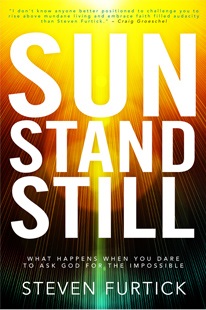
furtickWe’ll start out simply with Steven Furtick. If you want a case-study on how NOT to exegete a passage of scripture but instead narcigete it, go to any book written by Furtick, or sermon preached by him. The dude wrote an entire book (and sold lots of church bible-study paraphernalia) and preached several sermons based on the narcigesis of Joshua 10:12. One. Verse.

Joshua 10:12 (ESV) At that time Joshua spoke to the Lord in the day when the Lord gave the Amorites over to the sons of Israel, and he said in the sight of Israel, “Sun, stand still at Gibeon, and moon, in the Valley of Aijalon.”

Furtick then encouraged Christians that they should all pray “Sun stand still” prayers. It wasn’t a prayer, we are never taught to pray that way, God had already promised Joshua that battle, and the text itself in (verse 14) clearly states this was a unique and isolated event.

But even if you haven’t heard of Steven Furtick, I’m sure you’ve heard Hillsong’s “Oceans (where feet may fail)”, right? That song narcigetes the story of Jesus walking on the water, suggesting that God is asking each of us to walk on water. He isn’t. Many times the Story of God defeating Goliath is told in such a way that the listener plays the role of David and needs to find his 5 smooth stones, or master a skill in his “down time” doing menial tasks of watching sheep until “such a time” as the LORD would call them to use their skill (sling) to defeat the Goliath in their lives…. see where this is going? Narcegisis points to people… the Scriptures point to Jesus Christ, Son of the Living God.

The heroes of the Old Testament point us to the Messiah, God’s Anointed One, Jesus Christ. While we should seek to emulate their faith (Hebrews 11), their actions are not always commendable, nor are they a prescription for getting the same results they got. Because their actions didn’t make them chosen, their actions didn’t curry the favor of God, it was their faith. And faith doesn’t come by copying the actions of one of the heroes in the Bible, faith comes from hearing the Word of Christ (Romans 10:17). We’ve said it many times, don’t read yourself into the heroes of the Old Testament. Read yourself into the sinner that needs the Savior, sure… but not at the expense of missing the Truth of Scripture when Jesus rebuked the Pharisees by telling them, “For if you believed Moses, you would believe me; for he wrote of me.” (John 5:30-47)

Corporate Narcigesis

It happens with churches, too. The most common area where I see this happen, is whenever a church does “a series in Acts”. This isn’t always the case, but it happens a lot more than you’d think. Even in churches claiming to engage in expository preaching. Yes, it is possible to work through a text verse by verse and still engage in Narcigesis… by having a preacher chase rabbit trails and share personal or even corporate anecdotes throughout a sermon. Even if a passage is read aloud in-context at the beginning, a preacher looking to “deepen the congregation’s understanding of the passage” can engage in narcigesis by skipping around proof-texting verses to emphasis a point that isn’t even being made by the text. In the Book of the Acts of the Apostles, many a small church preacher will read in Acts 2 how 3,000 men were added to the church and how more were being added every day and think that the key to being a blessed church is to grow in numbers. Others will look at the miracles God performed for the lame beggar in Acts 3 and think that the reason the church isn’t seeing such miracles is that we don’t have men of great faith (dare I say audacious) like Peter and John, or that we aren’t all of one heart and soul (ch 4:32) so as a church we need to focus on being more Unified and then the church will be blessed. These are all false-readings. Let’s look at how Luke introduced his work.

Acts 1:1-8 (ESV) | The Promise of the Holy Spirit

In the first book, O Theophilus, I have dealt with all that Jesus began to do and teach, until the day when he was taken up, after he had given commands through the Holy Spirit to the apostles whom he had chosen. He presented himself alive to them after his suffering by many proofs, appearing to them during forty days and speaking about the kingdom of God. And while staying with them he ordered them not to depart from Jerusalem, but to wait for the promise of the Father, which, he said, “you heard from me;for John baptized with water, but you will be baptized with the Holy Spirit not many days from now.” So when they had come together, they asked him, “Lord, will you at this time restore the kingdom to Israel?” He said to them, “It is not for you to know times or seasons that the Father has fixed by his own authority. But you will receive power when the Holy Spirit has come upon you, and you will be my witnesses in Jerusalem and in all Judea and Samaria, and to the end of the earth.”

Yes, we call the book the Acts of the Apostles… but their acts, clearly defined by Jesus, were to be witnesses of Him. When the Apostles cast lots to select a replacement for Judas Iscariot, they narrowed the field to only those who were fellow witnesses from the beginning. The Apostle Paul was an undisputed witness of Jesus, since his encounter with Jesus produced immediate repentance. Jesus began the work, and He continued the work through His Apostles who were promised the gift of the Holy Spirit. The Promise of the Holy Spirit wasn’t limited to them:

Acts 2:38-41 (ESV)

38 And Peter said to them, “Repent and be baptized every one of you in the name of Jesus Christ for the forgiveness of your sins, and you will receive the gift of the Holy Spirit. 39 For the promise is for you and for your children and for all who are far off, everyone whom the Lord our God calls to himself. 40 And with many other words he bore witness and continued to exhort them, saying,“Save yourselves from this crooked generation.” 41 So those who received his word were baptized, and there were added that day about three thousand souls.

Had Peter done anything special to earn his calling? No. Was Peter the head of the church? No. Christ is the Head of His Church, and He gave us His Apostles, the last of whom was the Apostle Paul. Don’t read your church into these texts hoping to discover some formula for building a successful church… men do not build Christ’s Church. Peter rejected these notions even as he addressed the men of Jerusalem after God miraculously healed a 40-yr old lame beggar

Acts 3:1-16 (ESV) | The Lame Beggar Healed

Now Peter and John were going up to the temple at the hour of prayer, the ninth hour. And a man lame from birth was being carried, whom they laid daily at the gate of the temple that is called the Beautiful Gate to ask alms of those entering the temple. Seeing Peter and John about to go into the temple, he asked to receive alms. And Peter directed his gaze at him, as did John, and said, “Look at us.” And he fixed his attention on them, expecting to receive something from them. But Peter said, “I have no silver and gold, but what I do have I give to you. In the name of Jesus Christ of Nazareth, rise up and walk!” And he took him by the right hand and raised him up, and immediately his feet and ankles were made strong. And leaping up he stood and began to walk, and entered the temple with them, walking and leaping and praising God.And all the people saw him walking and praising God, 10 and recognized him as the one who sat at the Beautiful Gate of the temple, asking for alms. And they were filled with wonder and amazement at what had happened to him.

Peter Speaks in Solomon’s Portico

11 While he clung to Peter and John, all the people, utterly astounded, ran together to them in the portico called Solomon’s. 12 And when Peter saw it he addressed the people: “Men of Israel, why do you wonder at this, or why do you stare at us, as though by our own power or piety we have made him walk?13 The God of Abraham, the God of Isaac, and the God of Jacob, the God of our fathers, glorified his servant Jesus, whom you delivered over and denied in the presence of Pilate, when he had decided to release him. 14 But you denied the Holy and Righteous One, and asked for a murderer to be granted to you, 15 and you killed the Author of life, whom God raised from the dead. To this we are witnesses. 16 And his name—by faith in his name—has made this man strong whom you see and know, and the faith that is through Jesus has given the man this perfect health in the presence of you all.

Conclusion

We need to start scrutinizing the rabbit trails and personal anecdotes that have overrun our sermons and bible studies. The occasional anecdote can be helpful in as much as it points to the Scriptures. Too often, however, these anecdotes merely engage the audience in a bit of humor, or tend to highlight the creation rather than the Creator. This needs to stop. It is my sincere belief that the vast majority of those who are guilty of this form of narcigesis do so honestly; meaning they are so caught up in poor methodology and worldly ecclesiology that they’ve bought into the lie that it is up to them to make the Word of God relevant for their hearers. Men, if you start to recognize these trends in your pastor’s sermons… remain humble and gracious, and grant him the benefit of the doubt and ask to speak with him. Women, first speak with your husband and ask him to speak to the Pastor. If you are an unwed woman, ask to speak with the pastor’s wife or the wife of an elder. To everyone, walk in grace and humility, and engage the text, the Word of God. Trust in God the Holy Spirit to open the eyes and ears of His servants. They are your overseers, after all, and they will have to give account for their stewardship.

Romans 15:1-7 (ESV) | The Example of Christ

We who are strong have an obligation to bear with the failings of the weak, and not to please ourselves. Let each of us please his neighbor for his good, to build him up. For Christ did not please himself, but as it is written, “The reproaches of those who reproached you fell on me.” For whatever was written in former days was written for our instruction, that through endurance and through the encouragement of the Scriptures we might have hope. May the God of endurance and encouragement grant you to live in such harmony with one another, in accord with Christ Jesus, that together you may with one voice glorify the God and Father of our Lord Jesus Christ. Therefore welcome one another as Christ has welcomed you, for the glory of God.

Amen.
In Christ Jesus,
Jorge

DiM | “Feel It (ft. MrTalkbox)” by TobyMac

Today is “Discernment in Music” (DiM) day here at Faithful Stewardship (2 Corinthians 10:4-6 (ESV)).

September 10, 2015. Today we’ll be taking a look at “Feel It (ft. MrTalkbox)” by TobyMac which currently sits at #18 on the 20theCountdownMagazine.

TobyMac is the Tony Hawk of Christian Pop Music. He doesn’t seem to age, and everything he touches seems to turn into Pop gold. We’ve had our run-ins with Team Toby in social media, so seeing this song pop up on the chart didn’t give me a great deal of hope for this DiM. As is my usual approach, the first thing I did was look up a lyric video to see how the song goes…

TobyMacVEVO Lyric Video

This was me… watching the music video before reading the lyrics…

About the Video

Truthfully, there isn’t much to discuss. This video has N.O.T.H.I.N.G. to do with the Gospel of Jesus Christ… or Christianity… or the Bible. This is a puppy-love video. So, the title of the song is “Feel It”… and the video is about puppy love… clearly, this song is going to be one of those “Jesus is my girlfriend/boyfriend” songs… /sigh.

Lyrics (via KLove)

Feel It (feat. Mr. TalkBox)

When I sit back and imagine
Life without You, I can’t fathom
How I ever thought I’d make it on my own
And there’s at least a million reasons
I’m still standing here believin’
You’re my comfort, You’re my healin’
This I know (this I know)

Well, you can’t see the wind, but it moves the leaves
From the bottom to the top of the tallest trees
You are everything I will ever need
And they can’t take that from me

Oh, I feel it in my heart
I feel it in my soul
That’s how I know
You take our brokenness and make us beautiful
Yeah, that’s how I know

Everybody talkin’ like they need some proof
But what more do I need than to feel You

When I sit back and imagine
Life without You, I can’t fathom
How I ever thought I’d make it on my own
And there’s at least a million reasons
I’m still standing here believin’
You’re my comfort, You’re my healin’
This I know (this I know)

Well, you can’t see the wind, but it moves the leaves
From the bottom to the top of the tallest trees
You are everything I will ever need
And they can’t take that from me

Oh, I feel it in my heart
I feel it in my soul
That’s how I know
You take our brokenness and make us beautiful
Yeah, that’s how I know

(Can’t take that from me)

Love came crashin’ in
Never gonna be the same again
Yeah, You came crashing in
You wrecked me, You wrecked me

Love came crashin’ in
Never gonna be the same again
Yeah, You came crashing in
You wrecked me
That’s how I know

Oh, I feel it in my heart
I feel it in my soul
That’s how I know
You take our brokenness and make us beautiful
Yeah, that’s how I know

Oh, I feel it in my heart
I feel it in my soul
That’s how I know
You take our brokenness and make us beautiful
Yeah, that’s how I know
That’s how I know

Everybody talkin’ like they need some proof
But what more do I need than to feel You

Everybody talkin’ like they need some proof
But what more do I need than to feel You

Publishing: © 2015 Achtober Songs (BMI) / Universal Music – Brentwood Benson Publishing / D Soul Music (ASCAP) (Admin. at CapitolCMGPublishing.com) / Castle Bound Music, Inc. / We Be Pawtying (SESAC)
Writer(s): Toby McKeehan, David Arthur Garcia and Cary Barlowe

Discussion

The point of the song is clearly made in the outro of the song: Everybody talkin’ like they need some proof, but what more do I need than to feel You

So, feelings is “how we know” what, Jesus? Is that the message of the Gospel? You shall feel Jesus and that feeling will set you free? Feelings is the substance of things hoped for, the evidence of things not seen? Is our assurance of salvation based on feelings? Hold that thought.

So, if a teenager (like the ones in the Music Video) told you he/she was getting married, and you asked them “why?”… would you accept the answer, “because I feel it in my heart, I feel it in my soul, and he/she makes me feel beautiful!” If such feelings offer poor assurance in the selection of a spouse, a much less reliable should they be considered in matters of eternal significance? That was rhetorical.

The closest this song comes to anything even remotely pointing to the Gospel… is heavily coded in “youth-pastor-speak”. The phrase “you wrecked me” is supposedly a cool way of saying that God humbled the individual unto repentance… but it can also mean God broke down all of my defenses and just loved me despite my resistance. Youth-speak jargon holds to a rather fluid lexicon. But that’s the best we can find in this song… and it is woefully deficient. This song has nothing to offer the world or the Church that is in keeping with sound doctrine.

Let’s turn to the Word of God before closing out this DiM post.

Hebrews 11 (ESV) | By Faith

11 Now faith is the assurance of things hoped for, the conviction of things not seen. For by it the people of old received their commendation. By faith we understand that the universe was created by the word of God, so that what is seen was not made out of things that are visible.

By faith Abel offered to God a more acceptable sacrifice than Cain, through which he was commended as righteous, God commending him by accepting his gifts. And through his faith, though he died, he still speaks. By faith Enoch was taken up so that he should not see death, and he was not found, because God had taken him. Now before he was taken he was commended as having pleased God. And without faith it is impossible to please him, for whoever would draw near to God must believe that he exists and that he rewards those who seek him. By faith Noah, being warned by God concerning events as yet unseen, in reverent fear constructed an ark for the saving of his household. By this he condemned the world and became an heir of the righteousness that comes by faith…[Read the Whole Chapter]

Okay, but are we born with faith? No. How do we get faith? I’m glad you asked.

Romans 10:11-17 (ESV)

11 For the Scripture says, “Everyone who believes in him will not be put to shame.” 12 For there is no distinction between Jew and Greek; for the same Lord is Lord of all, bestowing his riches on all who call on him. 13 For “everyone who calls on the name of the Lord will be saved.” 14 How then will they call on him in whom they have not believed? And how are they to believe in him of whom they have never heard? And how are they to hear without someone preaching? 15 And how are they to preach unless they are sent? As it is written, “How beautiful are the feet of those who preach the good news!” 16 But they have not all obeyed the gospel. For Isaiah says, “Lord, who has believed what he has heard from us?” 17 So faith comes from hearing, and hearing through the word of Christ.

There is no mention of feelings here. Sure, the heart is mentioned, but the heart of a believer believes, while the heart of an unbeliever doubts the Savior and remains condemned. But more than that, we are not to trust our hearts; rather, we are to treasure the Word of God in our hearts, by faith, so that His Word will renew our hearts by the Grace of the Holy Spirit. We don’t really understand our own sinful hearts… let’s look at how Peter rebuked Simon in Acts 8.

Acts 8:9-24 (ESV) | Simon the Magician Believes

But there was a man named Simon, who had previously practiced magic in the city and amazed the people of Samaria, saying that he himself was somebody great. 10 They all paid attention to him, from the least to the greatest, saying, “This man is the power of God that is called Great.” 11 And they paid attention to him because for a long time he had amazed them with his magic. 12 But when they believed Philip as he preached good news about the kingdom of God and the name of Jesus Christ, they were baptized, both men and women. 13 Even Simon himself believed, and after being baptized he continued with Philip. And seeing signs and great miracles performed, he was amazed.

14 Now when the apostles at Jerusalem heard that Samaria had received the word of God, they sent to them Peter and John, 15 who came down and prayed for them that they might receive the Holy Spirit, 16 for he had not yet fallen on any of them, but they had only been baptized in the name of the Lord Jesus.17 Then they laid their hands on them and they received the Holy Spirit. 18 Now when Simon saw that the Spirit was given through the laying on of the apostles’ hands, he offered them money, 19 saying, “Give me this power also, so that anyone on whom I lay my hands may receive the Holy Spirit.” 20 But Peter said to him, “May your silver perish with you, because you thought you could obtain the gift of God with money! 21 You have neither part nor lot in this matter, for your heart is not right before God. 22 Repent, therefore, of this wickedness of yours, and pray to the Lord that, if possible, the intent of your heart may be forgiven you. 23 For I see that you are in the gall of bitterness and in the bond of iniquity. 24 And Simon answered, “Pray for me to the Lord, that nothing of what you have said may come upon me.”

Please don’t play around with the false-convert flip… the text says Simon believed and was baptized… and then it says that his heart was not right before God in this matter. He was in sin… and it was dangerous for him. Simon was rebuked for the intention of his heart. The point I’m making here is simply this: even after believing in the Gospel of Jesus Christ, repenting of sin and transgression and receiving by faith the forgiveness of sin and the righteousness of Christ… we still cannot defer to our hearts, our feelings, our impressions, or our ideas as the assurance of our salvation. Assurance of God’s Grace must be by Faith Alone, in Christ Alone, as found in Scripture Alone, to the Glory of God Alone.

Conclusion

It’s a very catching song, with a lot of style. This song does not edify the saints. This song doesn’t preach the Gospel to the lost. It is a feel-good, tickle the ears, pop-song marketed under a “Christian” label. I can’t say this is a harmless song, because the lyrics and the video encourage our youth to rely on their feelings for the assurance of their faith… such horrible, horrible advice for today’s youth. This song is only slightly better than a Bruno Mars song, because Bruno Mars can be overtly sexual in his videos and lyric… but that’s where this song rates… Bruno Mars.

Jude 24-25 (ESV) | Doxology

24 Now to him who is able to keep you from stumbling and to present you blameless before the presence of his glory with great joy, 25 to the only God, our Savior, through Jesus Christ our Lord, be glory, majesty, dominion, and authority, before all time and now and forever. Amen.

Amen.
In Christ Jesus,
Jorge

Gospel Wednesday | Matthew 20

bibleLet us continue our walk through the Gospel According to Matthew. Last week we worked through Matthew 19.

Last week’s look at Matthew 19 ended with the cost of following Jesus. We who believe are called to take up our crosses daily, dying to self, dying to our flesh, and living in the Spirit. This takes a while to sink in for the disciples… and I’d say it take even longer for us to get a grasp on this. Is it any wonder there are so many denominations that get bogged down in the quagmire of works-righteousness? Keep this thought in mind, the thought of what it means to die to self, to the flesh, and live by the Spirit as we look to Matthew chapter 20, where Jesus begins with a very difficult teaching regarding the Kingdom of Heaven… one that confronts the “it’s not fair, why should he get full pay for doing less work than I?” that springs forth from our self-seeking flesh.

Matthew 20 (ESV)

Matthew 20:1-16 (ESV) | Laborers in the Vineyard

“For the kingdom of heaven is like a master of a house who went out early in the morning to hire laborers for his vineyard. After agreeing with the laborers for a denarius a day, he sent them into his vineyard. And going out about the third hour he saw others standing idle in the marketplace, and to them he said, ‘You go into the vineyard too, and whatever is right I will give you.’ So they went. Going out again about the sixth hour and the ninth hour, he did the same. And about the eleventh hour he went out and found others standing. And he said to them, ‘Why do you stand here idle all day?’ They said to him, ‘Because no one has hired us.’ He said to them, ‘You go into the vineyard too.’ And when evening came, the owner of the vineyard said to his foreman, ‘Call the laborers and pay them their wages, beginning with the last, up to the first.’ And when those hired about the eleventh hour came, each of them received a denarius. 10 Now when those hired first came, they thought they would receive more, but each of them also received a denarius. 11 And on receiving it they grumbled at the master of the house, 12 saying, ‘These last worked only one hour, and you have made them equal to us who have borne the burden of the day and the scorching heat.’ 13 But he replied to one of them,‘Friend, I am doing you no wrong. Did you not agree with me for a denarius?14 Take what belongs to you and go. I choose to give to this last worker as I give to you. 15 Am I not allowed to do what I choose with what belongs to me? Or do you begrudge my generosity? 16 So the last will be first, and the first last.”

What a powerful parable. I’ve been mulling over this parable in my mind all week. Each time I try to work out the analogy of the hiring of the laborers throughout the day, my mind skips down to the complaint levied against the master of the vineyard. For this round, we will focus on this grumbling, and the Lord’s response to the grumbler.

Let us begin by establishing the relationship between the master and the first laborers. These first laborers are in need of work, in need of wages, and they agree to the wage for a day’s labor, and so begin the work granted to them by the master of the house. The agreement is between them and the master. Had no one else been hired, they’d have received their wage with gladness, even if work yet remained. The master didn’t change the terms, didn’t change conditions or the contract. He simply paid the same wages for those who had spent more time standing idly in the marketplace. From where did the grumbling come? From the laborers who were chosen first comparing their compensation to that of the laborers who came last. Rather than praise the master for his generosity to those who came last, they were incensed and offended, because in their eyes, they had done more work and they demanded that the disparity should be reflected in their compensation. The master rebukes this secondly. The master’s first rebuke is far more pointed. One might read it this way, “Do you presume to judge the Master in how I choose to use what is Mine?” I’m reminded of the LORD’s response to Jonah’s tantrum:

Jonah 4 (ESV) | Jonah’s Anger and the Lord’s Compassion
1 But it displeased Jonah exceedingly, and he was angry. 2 And he prayed to the Lord and said, “O Lord, is not this what I said when I was yet in my country? That is why I made haste to flee to Tarshish; for I knew that you are a gracious God and merciful, slow to anger and abounding in steadfast love, and relenting from disaster. 3 Therefore now, O Lord, please take my life from me, for it is better for me to die than to live.” 4 And the Lord said, “Do you do well to be angry?” 5 Jonah went out of the city and sat to the east of the city and made a booth for himself there. He sat under it in the shade, till he should see what would become of the city. 6 Now the Lord God appointed a plant and made it come up over Jonah, that it might be a shade over his head, to save him from his discomfort. So Jonah was exceedingly glad because of the plant. 7 But when dawn came up the next day, God appointed a worm that attacked the plant, so that it withered. 8 When the sun rose, God appointed a scorching east wind,and the sun beat down on the head of Jonah so that he was faint. And he asked that he might die and said, “It is better for me to die than to live.” 9 But God said to Jonah, “Do you do well to be angry for the plant?” And he said, “Yes, I do well to be angry, angry enough to die.” 10 And the Lord said, “You pity the plant, for which you did not labor, nor did you make it grow, which came into being in a night and perished in a night. 11 And should not I pity Nineveh, that great city, in which there are more than 120,000 persons who do not know their right hand from their left, and also much cattle?

While this isn’t an exact parallel, there is an overlap. Did Jonah have a true right to be angry? No. Sure, he could (and did) make excuses for his anger, but they simply didn’t stand up to the Word of the Lord and His compassion. The Master of the house showed compassion to the laborers hired in the eleventh hour… God’s Grace is His to extend, and we have no right to grumble against the Master of His House. The greater theme of this parable and of God’s response to Jonah, is that God is Sovereign over all. Our sinful flesh is quick to grumble and grow angry when God doesn’t follow our plan or properly compensate us according to our own measure.

As for application of this parable moving forward, I cannot help but think about the Apostle Paul. From Paul’s perspective, he is the least of the Apostles (1 Cor 15). He ended up working harder than the rest but I want to focus more on the time of his Apostleship. For that, let’s look at select portions from Acts.

Acts 1:15-17 (ESV)
15 In those days Peter stood up among the brothers (the company of persons was in all about 120) and said, 16 “Brothers, the Scripture had to be fulfilled, which the Holy Spirit spoke beforehand by the mouth of David concerning Judas, who became a guide to those who arrested Jesus. 17 For he was numbered among us and was allotted his share in this ministry.”

Acts 1:21-22 (ESV) 21 So one of the men who have accompanied us during all the time that the Lord Jesus went in and out among us, 22 beginning from the baptism of John until the day when he was taken up from us—one of these men must become with us a witness to his resurrection.”

Acts 9:10-22 (ESV) 10 Now there was a disciple at Damascus named Ananias. The Lord said to him in a vision, “Ananias.” And he said, “Here I am, Lord.” 11 And the Lord said to him, “Rise and go to the street called Straight, and at the house of Judas look for a man of Tarsus named Saul, for behold, he is praying, 12 and he has seen in a vision a man named Ananias come in and lay his hands on him so that he might regain his sight.” 13 But Ananias answered, “Lord, I have heard from many about this man, how much evil he has done to your saints at Jerusalem. 14 And here he has authority from the chief priests to bind all who call on your name.” 15 But the Lord said to him, “Go, for he is a chosen instrument of mine to carry my name before the Gentiles and kings and the children of Israel.16 For I will show him how much he must suffer for the sake of my name.” 17 So Ananias departed and entered the house. And laying his hands on him he said, “Brother Saul, the Lord Jesus who appeared to you on the road by which you came has sent me so that you may regain your sight and be filled with the Holy Spirit.” 18 And immediately something like scales fell from his eyes, and he regained his sight. Then he rose and was baptized; 19 and taking food, he was strengthened. For some days he was with the disciples at Damascus. 20 And immediately he proclaimed Jesus in the synagogues, saying, “He is the Son of God.” 21 And all who heard him were amazed and said, “Is not this the man who made havoc in Jerusalem of those who called upon this name? And has he not come here for this purpose, to bring them bound before the chief priests?” 22 But Saul increased all the more in strength, and confounded the Jews who lived in Damascus by proving that Jesus was the Christ.

The disciples were the first laborers hired by the Master of His House. Paul came much later, and yet was called to the same office of Apostle. This is just an example… we see the disciples welcome Paul quickly and acknowledge Paul’s calling as an Apostle of Jesus Christ. Sine Paul was the last Apostle, maybe we can find a broader example of application for this parable. Let us remain in the book of Acts and look to the example of welcoming Gentiles into the Promise, on equal footing with the Jews who believed and were baptized into the Name of Jesus.

Acts 15:1-11 (ESV) | The Jerusalem Council
1 But some men came down from Judea and were teaching the brothers, “Unless you are circumcised according to the custom of Moses, you cannot be saved.” 2 And after Paul and Barnabas had no small dissension and debate with them, Paul and Barnabas and some of the others were appointed to go up to Jerusalem to the apostles and the elders about this question. 3 So, being sent on their way by the church, they passed through both Phoenicia and Samaria, describing in detail the conversion of the Gentiles, and brought great joy to all the brothers. 4 When they came to Jerusalem, they were welcomed by the church and the apostles and the elders, and they declared all that God had done with them. 5 But some believers who belonged to the party of the Pharisees rose up and said, “It is necessary to circumcise them and to order them to keep the law of Moses.” 6 The apostles and the elders were gathered together to consider this matter.7 And after there had been much debate, Peter stood up and said to them, “Brothers, you know that in the early days God made a choice among you, that by my mouth the Gentiles should hear the word of the gospel and believe. 8 And God, who knows the heart, bore witness to them, by giving them the Holy Spirit just as he did to us, 9 and he made no distinction between us and them, having cleansed their hearts by faith. 10 Now, therefore, why are you putting God to the test by placing a yoke on the neck of the disciples that neither our fathers nor we have been able to bear? 11 But we believe that we will be saved through the grace of the Lord Jesus, just as they will.”

The point being made here is not one of ecumenical lack of discernment; rather, that the Lord is the Master of His House, and He extends grace as He sees fit. Rather than take offense, or accuse God of being unjust, we should praise Him for His Gracious Gifts.

I got a lot out of reading through this parable this week… several days of reading through the same chapter. I hope I didn’t belabor the point too much today.

Matthew 20:17-19 (ESV) | Jesus Foretells His Death a Third Time

17 And as Jesus was going up to Jerusalem, he took the twelve disciples aside, and on the way he said to them, 18 “See, we are going up to Jerusalem. And the Son of Man will be delivered over to the chief priests and scribes, and they will condemn him to death 19 and deliver him over to the Gentiles to be mocked and flogged and crucified, and he will be raised on the third day.”

Jesus warned His disciples of what was going to come. Still, with all of the warning, they were not prepared. God’s patience endures, even when our strength fails us.

Matthew 20:20-28 (ESV) |  A Mother’s Request

20 Then the mother of the sons of Zebedee came up to him with her sons, and kneeling before him she asked him for something. 21 And he said to her, “What do you want?” She said to him, “Say that these two sons of mine are to sit, one at your right hand and one at your left, in your kingdom.” 22 Jesus answered,“You do not know what you are asking. Are you able to drink the cup that I am to drink?” They said to him, “We are able.” 23 He said to them, “You will drink my cup, but to sit at my right hand and at my left is not mine to grant, but it is for those for whom it has been prepared by my Father.” 24 And when the ten heard it, they were indignant at the two brothers. 25 But Jesus called them to him and said, “You know that the rulers of the Gentiles lord it over them, and their great ones exercise authority over them. 26 It shall not be so among you. But whoever would be great among you must be your servant, 27 and whoever would be first among you must be your slave, 28 even as the Son of Man came not to be served but to serve, and to give his life as a ransom for many.”

The point being made here reflects that of the first parable in the chapter. There is a tendency for us to view experience, or time-in-service as a qualifier for greater authority and rule over those with less experience. That is not how the Kingdom of Heaven works. God does set up offices of authority, but those called to these offices are called to be servants as stewards of God’s grace. The offices serve the church. This is one of the reasons the CEO model of church is so abhorrent… for the corporation serves its CEO, where the Overseers, Deacons, and Pastors serve the church and are held more accountable to God for their stewardship.

Matthew 20:29-34 (ESV) | Jesus Heals Two Blind Men

29 And as they went out of Jericho, a great crowd followed him. 30 And behold, there were two blind men sitting by the roadside, and when they heard that Jesus was passing by, they cried out, “Lord, have mercy on us, Son of David!”31 The crowd rebuked them, telling them to be silent, but they cried out all the more, “Lord, have mercy on us, Son of David!” 32 And stopping, Jesus called them and said, “What do you want me to do for you?” 33 They said to him, “Lord, let our eyes be opened.” 34 And Jesus in pity touched their eyes, and immediately they recovered their sight and followed him

These men were blind, so they couldn’t see and follow Jesus of their own. But they had heard of Him, and so cried out to Jesus for mercy. They asked the Lord to open their eyes, and after He did, they followed Jesus. While this happened literally, we prayerfully ask that the Holy Spirit continue to open our eyes to the Truth in His Word, that we might walk in the Spirit and not by the flesh.

Until Next Week

Next week we’ll be working through chapter 21. We’ll be looking at the Triumphal entry into Jerusalem, cleansing of the temple, cursing of the fig tree, and the question of Authority, followed by some more parables. I look forward to continuing our trek through the Gospel According to Matthew. Until then, continue walking in faith and growing in knowledge of Christ through the reading of His Word.

Jude 1:24-25 (ESV) | Doxology

24 Now to him who is able to keep you from stumbling and to present you blameless before the presence of his glory with great joy, 25 to the only God, our Savior, through Jesus Christ our Lord, be glory, majesty, dominion, and authority, before all time and now and forever. Amen.

Amen, indeed.
In Christ Jesus,
Jorge