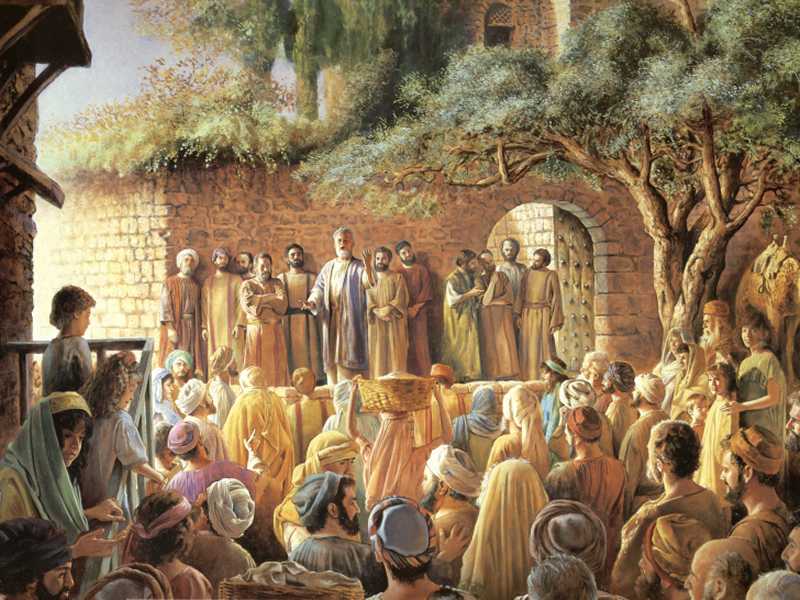
Why We Aren’t Cessationists

If you’ve been following us for some time, you’ll know that while we do preach Biblical discernment in all matters, we firmly assert that we are not cessationists. I think today we should clarify our position a bit so that there is no mystery on where we stand.

We are functionally cessationist while theologically we acknowledge
that God remains Sovereign over His gifts

First, let’s clearly define cessationism. Cessationsim is the assertion that certain gifts of the Holy Spirit listed in the Bible are no longer available or in operation today. That at some point in early church history, they ceased. Sometimes this assertion is tied to dispensationalism, at other times it is simply tied to the Apostles (or those upon whom the Apostles had directly laid their hands). When tied to dispensationalism, the assertion sometimes sounds like, “God doesn’t operate or deal with His people in that way anymore”, and when tied to the Apostles it sounds like, “those where only for a short time as a testimony of the authority given to the Apostles, and now that there are no more Apostles, the need for those gifts has gone away”. These views are held (in general) by both Lutherans (who generally take the Apostolic argument) and Calvinists (who generally take the dispensation argument). Our problem with the assertion of cessation of certain gifts of the Holy Spirit is that it isn’t taught in Scripture. That presents a bit of a problem when one considers Sola Scriptura as a major tenet of the Reformation.

Generally speaking, there is an argument within the cessation camp that pre-supposes a win as its fundamental argument for discernment. The argument is, “God doesn’t speak to people directly anymore; therefore, anyone who claims a direct revelation from God is either lying or deceived”. This is an argument that really should cease. If the Bible declared that God no longer speaks to His people directly, then there would be no further argument. That it doesn’t, means that we should drop this argument or at least demote it from being a foundational presupposition. At best, it is an empirical bias that may motivate an individual to exercise Biblical discernment, but the assertion should really be presented as a bias and not an objective Biblical truth.

Common Proof Texts for Cessation of Gifts

To Seal both Vision and Prophet

Perhaps one of my favorite pastors to listen to, whether it be one of his sermons or his discernment ministry, is Pastor Chris Rosebrough. When it comes to preaching the Word of God and practicing sound Biblical hermeneutics in breaking down bad teaching, I’ve not found anyone better. I haven’t heard him speak on this recently, but in the past on his program I’ve heard this approach taken a few times. This proof comes from Daniel 9:24. Let us start at the beginning of Daniel 9 so we understand the context of this passage.

Daniel 9:1-2 (ESV) 1 In the first year of Darius the son of Ahasuerus, by descent a Mede, who was made king over the realm of the Chaldeans— 2 in the first year of his reign, I, Daniel, perceived in the books the number of years that, according to the word of the Lord to Jeremiah the prophet, must pass before the end of the desolations of Jerusalem, namely, seventy years.

Okay, so we have Daniel, one of the exiles who feared the Lord God and was blessed by God and promoted to a leadership position in the realm of the Chaldeans. We see here that as he studied the Scriptures, he perceived the minimum number of years of the exile prophesied by Jeremiah as 70 years. What follows is Daniel’s prayer of repentance for himself and on behalf of Israel. In so doing, Daniel is following the instructions given to Solomon at the completion of the Temple.

2 Chronicles 7:11-22 (ESV) | If My People Pray
11 Thus Solomon finished the house of the Lord and the king’s house. All that Solomon had planned to do in the house of the Lord and in his own house he successfully accomplished.12 Then the Lord appeared to Solomon in the night and said to him: “I have heard your prayer and have chosen this place for myself as a house of sacrifice. 13 When I shut up the heavens so that there is no rain, or command the locust to devour the land, or send pestilence among my people, 14 if my people who are called by my name humble themselves, and pray and seek my face and turn from their wicked ways, then I will hear from heaven and will forgive their sin and heal their land. 15 Now my eyes will be open and my ears attentive to the prayer that is made in this place. 16 For now I have chosen and consecrated this house that my name may be there forever. My eyes and my heart will be there for all time. 17 And as for you, if you will walk before me as David your father walked, doing according to all that I have commanded you and keeping my statutes and my rules, 18 then I will establish your royal throne, as I covenanted with David your father, saying, ‘You shall not lack a man to rule Israel.’ 19 “But if you turn aside and forsake my statutes and my commandments that I have set before you, and go and serve other gods and worship them, 20 then I will pluck you up from my land that I have given you, and this house that I have consecrated for my name, I will cast out of my sight, and I will make it a proverb and a byword among all peoples. 21 And at this house, which was exalted, everyone passing by will be astonished and say, ‘Why has the Lord done thus to this land and to this house?’ 22 Then they will say, ‘Because they abandoned the Lord, the God of their fathers who brought them out of the land of Egypt, and laid hold on other gods and worshiped them and served them. Therefore he has brought all this disaster on them.’”

Solomon and Israel did not obey, and God kept His Word, as He always does. But now that the 70 years had been completed, Daniel sought the Lord in prayer.

Daniel 9:3-5 (ESV)3 Then I turned my face to the Lord God, seeking him by prayer and pleas for mercy with fasting and sackcloth and ashes. 4 I prayed to the Lord my God and made confession, saying, “O Lord, the great and awesome God, who keeps covenant and steadfast love with those who love him and keep his commandments, 5 we have sinned and done wrong and acted wickedly and rebelled, turning aside from your commandments and rules.

I encourage you to take some time and read his prayer in full. For now, let us skip to the response from the Lord given to Daniel by messenger, the Angel Gabriel.

Daniel 9:20-27 (ESV) | Gabriel Brings an Answer
20 While I was speaking and praying, confessing my sin and the sin of my people Israel, and presenting my plea before the Lord my God for the holy hill of my God, 21 while I was speaking in prayer, the man Gabriel, whom I had seen in the vision at the first, came to me in swift flight at the time of the evening sacrifice. 22 He made me understand, speaking with me and saying, “O Daniel, I have now come out to give you insight and understanding. 23 At the beginning of your pleas for mercy a word went out, and I have come to tell it to you, for you are greatly loved. Therefore consider the word and understand the vision. 24 “Seventy weeks are decreed about your people and your holy city, to finish the transgression, to put an end to sin, and to atone for iniquity, to bring in everlasting righteousness, to seal both vision and prophet, and to anoint a most holy place. 25 Know therefore and understand that from the going out of the word to restore and build Jerusalem to the coming of an anointed one, a prince, there shall be seven weeks. Then for sixty-two weeks it shall be built again with squares and moat, but in a troubled time.26 And after the sixty-two weeks, an anointed one shall be cut off and shall have nothing. And the people of the prince who is to come shall destroy the city and the sanctuary. Itsend shall come with a flood, and to the end there shall be war. Desolations are decreed.27 And he shall make a strong covenant with many for one week, and for half of the week he shall put an end to sacrifice and offering. And on the wing of abominations shall come one who makes desolate, until the decreed end is poured out on the desolator.”

So, our proof text for cessation comes from a Messianic Prophecy. This scripture gets presented as a declaration that when the second Temple is built both vision and prophet are sealed up, which is taken to mean “closed”. The Hebrew words used here can be legitimately interpreted in that light, so there is no point in digging into the roots of the words. There are 2 problems with using this passage, the first is that it comes in a prophecy regarding the Temple and the Anointed One (Messiah or Christ) which points to Jesus. So it is difficult to treat this text as a clear teaching text, because it was a specific message, to Daniel, regarding His plans for Judah and Jerusalem. The second problem is that if we are to take this as a definitive closing of both Prophet and Vision, well, then we have a problem because the New Testament has both visions and prophets revealed by God the Holy Spirit. So, in this text, there is no mechanism for putting this sealed up vision and prophet “on hold” until sometime after the John finishes writing the Book of Revelation on the Isle of Patmos.

This proof-text isn’t always used alone. It is often used in tandem with the following proof text.

But in These Last Days

Many will point to the introduction to the book of Hebrews as the proof that God no longer speaks directly to His people. The argument goes that the author is declaring that while God spoke in many ways to our fathers by the prophets, He now only speaks one way and that is by the Son. Let’s take a look at it.

Hebrews 1 (ESV) | The Supremacy of God’s Son
Long ago, at many times and in many ways, God spoke to our fathers by the prophets, 2 but in these last days he has spoken to us by his Son, whom he appointed the heir of all things, through whom also he created the world. 3 He is the radiance of the glory of God and the exact imprint of his nature, and he upholds the universe by the word of his power. After making purification for sins, he sat down at the right hand of the Majesty on high, 4 having become as much superior to angels as the name he has inherited is more excellent than theirs.
5 For to which of the angels did God ever say,
“You are my Son,
today I have begotten you”?
Or again,
“I will be to him a father,
and he shall be to me a son”?
6 And again, when he brings the firstborn into the world, he says,
“Let all God’s angels worship him.”
7 Of the angels he says,
“He makes his angels winds,
and his ministers a flame of fire.”
8 But of the Son he says,
“Your throne, O God, is forever and ever,
the scepter of uprightness is the scepter of your kingdom.
9 You have loved righteousness and hated wickedness;
therefore God, your God, has anointed you
with the oil of gladness beyond your companions.”
10 And,
“You, Lord, laid the foundation of the earth in the beginning,
and the heavens are the work of your hands;
11 they will perish, but you remain;
they will all wear out like a garment,
12 like a robe you will roll them up,
like a garment they will be changed.
But you are the same,
and your years will have no end.”
13 And to which of the angels has he ever said,
“Sit at my right hand until I make your enemies a footstool for your feet”?
14 Are they not all ministering spirits sent out to serve for the sake of those who are to inherit salvation?

But is the author making a declaration regarding how God will no longer speak, or is he pointing out that in Christ, the Son of the Living God, we now have something far better than Moses and the Prophets? I believe it is the latter. Why? Well, because this letter is first and foremost a letter to those who are familiar with the Law and the Prophets, but need better understanding and teaching on how Jesus fulfilled the Law and the Prophets and is now our perfect High Priest of a covenant superior to all previous covenants. There is also the matter of a member of the trinity not being included in this intro, namely, God the Holy Spirit. We know that God the Holy Spirit was promised to the Apostles to teach, remind, and grant power and gifts for the edification of the Church. Therefore, if the event that silenced God from speaking directly to His people by prophets was the virgin birth of Jesus, then why are we promised God the Holy Spirit?

Prophecies Will Pass Away; Tongues Will Cease

This one is less often used, but I have seen it so I want to point out the issue with using this one. It comes from 1 Corinthians 13.

1 Corinthians 13:8-12 (ESV) 8 Love never ends. As for prophecies, they will pass away; as for tongues, they will cease; as for knowledge, it will pass away. 9 For we know in part and we prophesy in part, 10 but when the perfect comes, the partial will pass away. 11 When I was a child, I spoke like a child, I thought like a child, I reasoned like a child. When I became a man, I gave up childish ways. 12 For now we see in a mirror dimly, but then face to face. Now I know in part; then I shall know fully, even as I have been fully known.

The idea behind using this proof-text is that this passage demonstrates that all of these gifts have a limit. What follows is usually an argument from silence or borrowing from the close of the Book of Revelation to suggest that tongues already ceased once we learned how to understand all of the major spoken languages and that prophecies have ceased since the canon of Scripture is now closed. The problem with using this text in that way is that its primary teaching is to demonstrate the eternal quality of love (a more excellent way). Paul explains that we see in part and prophesy in part but when the perfect comes… ah, Paul did insert a marker. To what is Paul referring here as when the perfect comes? The Return of Jesus Christ Our Lord. And that stands to reason, for once Jesus returns, we’ll have no need of prophecies or tongues or even knowledge, for all will know and bow down and confess that Jesus Christ is Lord. Of this I am quite confident, especially when we consider that the very next chapter is a prescriptive text on the primary gifts of the Holy Spirit that cessationists make off-limits, namely the gifts of Tongues and Prophecy.

Cessationism is Lazy Discernment

It would be very easy to rubber-stamp any claim to a direct revelation from God the Holy Spirit as clearly heretical (and many take that stance).  However, we know that God speaks to everyone through His Written Word, and we know that all scripture is God-breathed. We also know that God will not add to the Law, the Prophets, or Revelation and as such the canon of scripture is closed. We know that if anyone preaches a Gospel that does not agree with the Gospel revealed in Scripture, that person is to be accursed. We know that signs and wonders do not in themselves point to God or His blessing, nor do they prove the existence of an “anointing”. We know this from both the Old Testament Law regarding testing of the Prophets as well as in the New Testament warnings. We also have 1 Corinthians 12-14, we have the Book of Revelation, we have several mentions in Acts of prophets and prophetic words spoken over Timothy.

Biblical Discernment is a Mandate

While I do consider cessationsism to be lazy discernment, what I’ve found in the Pentecostal/Charismatic movement is that no one exercises discernment beyond their emotions, or what they call “feeling in their spirit that it isn’t right”. They seem to rely only on the Gift of the Holy Spirit listed:

1 Corinthians 12:4-11 (ESV) 4 Now there are varieties of gifts, but the same Spirit; 5 and there are varieties of service, but the same Lord; 6 and there are varieties of activities, but it is the same God who empowers them all in everyone. 7 To each is given the manifestation of the Spirit for the common good. 8 For to one is given through the Spirit the utterance of wisdom, and to another the utterance of knowledge according to the same Spirit, 9 to another faith by the same Spirit, to another gifts of healing by the one Spirit, 10 to another the working of miracles, to another prophecy, to another the ability to distinguish between spirits, to another various kinds of tongues, to another the interpretation of tongues. 11 All these are empowered by one and the same Spirit, who apportions to each one individually as he wills.

In the KJV, the highlighted portion phrases it “discerning of spirits”. So, they (in my experience) seem to rely on “those with that gift” to practice discernment just as they rely on those with the gift of prophecy to prophesy. In my opinion, that goes beyond lazy and into negligent. I have yet to find an online biblical discernment ministry from a Pentecostal/Charismatic point of view. I have come to believe (granted, by an argument from silence) that the movement(s) actively discourage Biblical discernment ministries and seeks to silence them. The seeker-mergent church actually teaches in their leadership conferences that those who question the pastor (exercise discernment) are wolves and need to be silenced, even going so far as practicing excommunication. Brothers and sisters in Christ, if you are standing on solid, Biblical foundation, there is no need to fear being challenged doctrinally. I’m not saying you have to stop mid-service to entertain a heckler every time, but the standard is Scripture, not the so-called “vision of the pastor”.

The Biggest Problem in Today’s Church

Cessationism is not the biggest doctrinal problem facing today’s Church. A Church that limits itself to only hearing from God the Holy Spirit as He speaks to them through the Written Word of Scripture has in no-way hamstrung itself, for the Word of God (in this case Written) will not return void. Some leaders take cessationism to an unhealthy extreme where they believe it is unbiblical to pray and ask for healing, or for wisdom, knowledge, etc… but in those cases the Scriptures refute their false teaching directly. Where cessationism is hurting the Church, is in its outreach to those who are lost in a sea of mysticism or being tossed about by every wind of doctrine. When one claims to be engaging in Biblical discernment, and starts with an assertion, that person has laid a stumbling block for the individual similar to that taught in 1 Corinthians 8. By all means, take every thought captive and submit it to Christ, and tear down every lofty opinion that raises itself against the knowledge of Christ. Expose the false teacher by his fruit, his false doctrine.

2 Timothy 3:16-17 (ESV) 16 All Scripture is breathed out by God and profitable for teaching, for reproof, for correction, and for training in righteousness, 17 that the man of God may be complete,equipped for every good work.

2 Timothy 4:2-4 (ESV) 2 preach the word; be ready in season and out of season; reprove, rebuke, and exhort, with complete patience and teaching. 3 For the time is coming when people will not endure sound teaching, but having itching ears they will accumulate for themselves teachers to suit their own passions, 4 and will turn away from listening to the truth and wander off into myths.

The biggest problem in today’s church, is that we’ve allowed the entertainment culture to supplant the preaching of the Word and sound doctrine. And many have turned away from listening to the truth and wandered off into myths. Mysticism has infiltrated every Christian denomination and many have abandoned the infallibility of Scripture because for too long they’ve ignored (or down-played) its sufficiency.

Not every direct revelation was included in Scripture, in-fact, we have record of some direct-revelation that were specifically prohibited from being recorded or spoken. The problem isn’t when someone says, “the Lord showed me” or “the Lord told me” or even “the Lord spoke to me”… the problem is when what is being claimed as coming from God the Holy Spirit isn’t Biblical. When someone claims “thus saith the Lord” when God has not spoken, that is blasphemy, and the individual is a false prophet. A teacher’s fruit is NOT how much money they raise, or how many disciples they gather; rather, it is their doctrine and what they teach.

In closing, if this is your first time visiting this site and you are worried about our non-cessation stance, here are some links to give a better picture of where we do stand. It could be argued that we are functionally cessationist while theologically we acknowledge that God remains Sovereign over His gifts.

Thank you for reading through to the end. Our desire is to study the Word of God in context, and as free from outside influence as possible, by God’s Grace. If you disagree with us, or feel we’ve missed a clear passage of scripture, do please share either in comments below or by contacting us directly. One final thought, in our understanding and application of Sola Scriptura, we affirm that unless a doctrine can be taught from scripture, it shouldn’t be taught from the pulpit. I don’t mind referencing a commentary or “church father” from time to time to maybe bring a different perspective, but we will not be “teaching” from the extra biblical texts. Sola Scriptura is indeed Scripture Alone. As Alistair Begg puts it, “the plain things are the main things, and the main things are the plain things”.

May the Grace of God be with you today and always,
In Christ Jesus,
Jorge

Temptation, Rebuke, Repentance, & Forgiveness

Suffer the Children - Anthony van DyckWe’ve been spending a great deal of time discussing discernment matters and pointing out false teaching (and even some false teachers). While this is exceedingly important I don’t want to overlook the need for Christians to understand their call to forgive is just as strong as the call to repent. Today, let’s look at what Jesus taught concerning temptation, rebuke, repentance, and forgiveness.

In researching a couple of rather heavy blogs that are in the works, I came across a passage that really caught my attention and I thought it would be an excellent way to pause some of the other research for a bit. Our primary text will be short, but we will explore other texts to better understand how this passage works out in our day-to-day lives.

Luke 17:1-4 (ESV) | Temptations to Sin
1 And [Jesus] said to his disciples, “Temptations to sin are sure to come, but woe to the one through whom they come! 2 It would be better for him if a millstone were hung around his neck and he were cast into the sea than that he should cause one of these little ones to sin. 3 Pay attention to yourselves! If your brother sins, rebuke him, and if he repents,forgive him, 4 and if he sins against you seven times in the day, and turns to you seven times, saying, ‘I repent,’ you must forgive him.”

This portion in Luke is part of a series of parables and lessons taught by Jesus beginning roughly in Luke 15. Before we dive into the individual elements of this text, I want to reference Matthew 18 for clarity on who the “one of these little ones” was.

Matthew 18:1-7 (ESV) | Who Is the Greatest?
1 At that time the disciples came to Jesus, saying, “Who is the greatest in the kingdom of heaven?” 2 And calling to him a child, he put him in the midst of them 3 and said,“Truly, I say to you, unless you turn and become like children, you will never enter the kingdom of heaven. 4 Whoever humbles himself like this child is the greatest in the kingdom of heaven. 5 “Whoever receives one such child in my name receives me, 6 but whoever causes one of these little ones who believe in me to sin, it would be better for him to have a great millstone fastened around his neck and to be drowned in the depth of the sea. 7 “Woe to the world for temptations to sin! For it is necessary that temptations come, but woe to the one by whom the temptation comes!

The two passages capture the same event, but in neither case do we have a verbatim account of all that Jesus said and did on that day (John 21:25 (ESV) “Now there are also many other things that Jesus did. Were every one of them to be written, I suppose that the world itself could not contain the books that would be written.”); rather, what we have in Scripture is that the Holy Spirit recalled in the minds of the writers and inspired them to record for our eternal benefit.

Temptation to Sin

Jesus makes absolutely clear here that temptations to sin are going to come. In Matthew, we see Jesus add that in-fact the temptations to sin are necessary. It was necessary even in Jesus’s case where we see that immediately following His baptism the Holy Spirit led Him into the wilderness to be tempted.

Matthew 4:1-3 (ESV) | The Temptation of Jesus
1 Then Jesus was led up by the Spirit into the wilderness to be tempted by the devil. 2 And after fasting forty days and forty nights, he was hungry. 3 And the tempter came and said to him, “If you are the Son of God, command these stones to become loaves of bread.”…

Jesus faithfully resists the devil (the tempter) and remains free of sin. I bring this up because while Jesus clearly teaches that temptation is bound to come, and is in-fact necessary, the sin is not. Why is the temptation necessary? I believe the answer to that question can be found in the first and greatest commandment:

Matthew 22:36-38 (ESV) 36 “Teacher, which is the great commandment in the Law?” 37 And he said to him, “You shall love the Lord your God with all your heart and with all your soul and with all your mind. 38 This is the great and first commandment.

The temptation to sin, once faithfully resisted, becomes a demonstration of a love for the Lord your God with all your heart, soul, and mind. Jesus is the only person who fulfilled the Law, to include the first and greatest commandment. He never wavered, He never faltered. In His perfection, He offered Himself as the Lamb of God, the ultimate sacrifice as payment for our sin. And in Him, by His Grace, a way was made for us to demonstrate our love for Him whenever we resist a temptation to sin. When we succumb to temptation and sin, then we are guilty of sin and must confess the sin and repent from it and ask for forgiveness in the Name of Jesus Christ.

Woe to the one…

The problem of sin is not limited to the one committing the sin. The one through whom the temptation to sin manifests itself bears extra responsibility. When Christ pronounces a “Woe” it’s no small matter.

Matthew 11:20-22 (ESV) | Woe to Unrepentant Cities
20 Then he began to denounce the cities where most of his mighty works had been done, because they did not repent. 21 “Woe to you, Chorazin! Woe to you, Bethsaida! For if the mighty works done in you had been done in Tyre and Sidon, they would have repented long ago in sackcloth and ashes. 22 But I tell you, it will be more bearable on the day of judgment for Tyre and Sidon than for you.

Tyre and Sidon will fare better on the day of judgment than Chorazin and Bethsaida… that is indeed a case for woe. Similarly, the one through whom temptation comes, causing one of the little ones to sin, is indeed woefully damned. The Sovereignty of God means that God’s Will shall be done in the earth, and He can use anyone, even those who don’t know Him to accomplish His will. We’ve seen that God used Balaam (an unbelieving practitioner of divination) to turn what would have been a curse against Israel into blessings, and we’ve also seen God bless and use King Cyrus to restore Israel and Jerusalem after the Exile into Babylon. However, Jesus makes clear that while temptation to sin will take place, the tempter is never doing the Will of God and bears a heavy burden of guilt. God does not compel men to tempt other men; rather, He knows the hearts of men and uses their actions and deeds to bring about His Will, and punishes those who reject God in the process. Balaam and Cyrus did not follow God, they continued in their sin and were rightfully judged by God. Jesus warns that it would be better to die than to be the cause for temptation for another believer’s sin. This thought is carried throughout the rest of the New Testament as we see time and time again the warnings against false teachers, false prophets, and doctrines of demons. We can see this concept fully in the Garden of Eden.

Genesis 3:9-13 (ESV) 9 But the Lord God called to the man and said to him, “Where are you?” 10 And he said, “I heard the sound of you in the garden, and I was afraid, because I was naked, and I hid myself.” 11 He said, “Who told you that you were naked? Have you eaten of the tree of which I commanded you not to eat?” 12 The man said, “The woman whom you gave to be with me, she gave me fruit of the tree, and I ate.” 13 Then the Lord God said to the woman, “What is this that you have done?” The woman said, “The serpent deceived me, and I ate.

In the punishment that followed, none were spared. Woe to the tempter who causes the little ones to sin. Though all of Creation was fully mature, it was yet extremely young when Adam fell.

This past Monday, we looked at the problem of placing a stumbling block in front of our brethren. It didn’t fit in that topic, but I want to look at how Paul taught this concept in his letter to the Corinthians.

1 Corinthians 8 (ESV) | Food Offered to Idols
8 Now concerning food offered to idols: we know that “all of us possess knowledge.” This “knowledge” puffs up, but love builds up. 2 If anyone imagines that he knows something, he does not yet know as he ought to know. 3 But if anyone loves God, he is known by God. 4 Therefore, as to the eating of food offered to idols, we know that “an idol has no real existence,” and that “there is no God but one.” 5 For although there may be so-called gods in heaven or on earth—as indeed there are many “gods” and many “lords”— 6 yet for us there is one God, the Father, from whom are all things and for whom we exist, and one Lord, Jesus Christ, through whom are all things and through whom we exist. 7 However, not all possess this knowledge. But some, through former association with idols, eat food as really offered to an idol, and their conscience, being weak, is defiled. 8 Food will not commend us to God. We are no worse off if we do not eat, and no better off if we do. 9 But take care that this right of yours does not somehow become a stumbling block to the weak. 10 For if anyone sees you who have knowledge eating in an idol’s temple, will he not be encouraged, if his conscience is weak, to eat food offered to idols? 11 And so by your knowledge this weak person is destroyed, the brother for whom Christ died. 12 Thus, sinning against your brothers and wounding their conscience when it is weak, you sin against Christ. 13 Therefore, if food makes my brother stumble, I will never eat meat, lest I make my brother stumble.

Wow. So while we who are in Christ, built up in the knowledge of the Scriptures and Maturing in the faith know that since there are no other gods but the One True God, are free to eat any food without it being a sin if we willfully exercise that “right” in such a manner that causes a less mature Christian to stumble then we have now sinned against our brother and against Christ. For Christ died for the weaker brother in the same way that He died for us. Anchoring this in the Luke text, even if our actions in-and-of themselves are not sinful, if they are done to tempt another to sin, then we have sinned. In today’s culture, we may struggle a bit with connecting to the matter of food, but what about drink? How about in clothing or entertainment? Take care that this right of yours does not somehow become a stumbling block to the weak.

Rebuke, Repent, & Forgive

Let’s take a look at the closing portion of our text in Luke.

Luke 17:3-4 (ESV) 3 Pay attention to yourselves! If your brother sins, rebuke him, and if he repents, forgive him, 4 and if he sins against you seven times in the day, and turns to you seven times, saying, ‘I repent,’ you must forgive him.”

Now, today the warning, “Pay attention to yourselves”, seems to fit more as an end to verse 2 rather than the start of verse 3. But it could fit just as well at the end of verse 4. Jesus says very plainly that if your brother sins, rebuke him. That’s a command, a prescription, if you will. Rebuke him, out of love. The world would have you believe that a rebuke is the opposite of love. That is patently false. The only way a failure to rebuke sin could be a loving act is if there is no sin, or if there is no consequence for the sin. But we know that sin is clearly defined (the Law) and we know that no sin goes unpunished.

Romans 6:22-23 (ESV) 22 But now that you have been set free from sin and have become slaves of God, the fruit you get leads to sanctification and its end, eternal life. 23 For the wages of sin is death, but the free gift of God is eternal life in Christ Jesus our Lord.

Therefore, since we know that the wages of sin is death, we rebuke our brother who sins out of love for him and obedience to Christ. But the rebuke does not mark the limit of our responsibility. Jesus goes right on to say that if he repents, forgive him. Forgive him when he repents. He then says that if your brother sins against you (makes it personal) seven times a day and repents seven times, you must forgive him. While the Luke account records the commandment of Jesus, the Matthew 18 account sheds some light on what Jesus was addressing.

Matthew 18:21-35 (ESV) | The Parable of the Unforgiving Servant
21 Then Peter came up and said to him, “Lord, how often will my brother sin against me, and I forgive him? As many as seven times?” 22 Jesus said to him, “I do not say to you seven times, but seventy-seven times. 23 “Therefore the kingdom of heaven may be compared to a king who wished to settle accounts with his servants. 24 When he began to settle, one was brought to him who owed him ten thousand talents. 25 And since he could not pay, his master ordered him to be sold, with his wife and children and all that he had, and payment to be made. 26 So the servant fell on his knees, imploring him, ‘Have patience with me, and I will pay you everything.’ 27 And out of pity for him, the master of that servant released him and forgave him the debt. 28 But when that same servant went out, he found one of his fellow servants who owed him a hundred denarii, and seizing him, he began to choke him, saying, ‘Pay what you owe.’ 29 So his fellow servant fell down and pleaded with him, ‘Have patience with me, and I will pay you.’ 30 He refused and went and put him in prison until he should pay the debt. 31 When his fellow servants saw what had taken place, they were greatly distressed, and they went and reported to their master all that had taken place. 32 Then his master summoned him and said to him, ‘You wicked servant! I forgave you all that debt because you pleaded with me. 33 And should not you have had mercy on your fellow servant, as I had mercy on you?’ 34 And in anger his master delivered him to the jailers, until he should pay all his debt. 35 So also my heavenly Father will do to every one of you, if you do not forgive your brother from your heart.

Once again, we see Jesus flipping things around on us. At the start, Peter thought he was being generous in his guess at a 7 times a day limit for forgiving a brother who sins against us. In the end, Jesus not only declares that there be no such limit, but also stipulates that to the one who will not forgive, his own sin will not be forgiven. We know this to be a common theme since Jesus also taught of the connection between our receiving forgiveness in how we grant forgiveness when Jesus taught His disciples to pray, “forgive us our sins, as we forgive those who sin against us”.

Conclusion

As we grow in God’s Word, we will undoubtedly be faced with many temptations. Temptations to sin, temptations to tempt others to sin, and temptations to despise rebuke for our sin. We will also be tempted to be unmerciful, unforgiving… essentially we will be tempted to walk according to the flesh. The truth of the parable of the unforgiving servant is that it is a daily thing for us. For our flesh isn’t just susceptible to sin, it craves it, for it is utterly depraved and fallen. Our flesh wages war against the Spirit. That is why it is so important that we remain in the Word and submit to the Spirit of God rather than our own flesh. We live in God’s Grace every day, and with that truth fully in mind, we must rely on the Holy Spirit to move us to forgive our brother from our hearts every time he repents, regardless of how often or how grievous we perceive his sin to be, for such a sin is minuscule when compared to the mercy and grace we have received from Jesus Christ on the cross.  But we must also not allow our freedom in Christ to become an occasion (or a snare, trap, stumbling block, temptation) for the young/weak in the faith to sin. Knowledge puffs up, but Love builds up.

2 Peter 1:5-8 (ESV)5 For this very reason, make every effort to supplement your faith with virtue, and virtue with knowledge, 6 and knowledge with self-control, and self-control with steadfastness, and steadfastness with godliness, 7 and godliness with brotherly affection, and brotherly affection with love. 8 For if these qualities are yours and are increasing, they keep you from being ineffective or unfruitful in the knowledge of our Lord Jesus Christ.

Amen. May the Lord bless you and keep you firmly in His will,
In Christ Jesus,
Jorge

CTT | Earn the Right to Speak Truth?

This statement has been bugging me since Tuesday’s DiM post. This seems to be a prevalent notion among the “missional” or “relational” churches who push the notion that “living out the Gospel” is somehow preferable to “preaching the Gospel”.

We live in a society that extols the man-made virtue of “Freedom of Speech” especially in voicing one’s opinion; however, that freedom of speech is routinely abridged whenever the speech invokes God, the Bible, or preaching the Gospel. That is to be expected based on what Jesus taught His disciples:

John 15:18-20 (ESV) | The Hatred of the World
18 “If the world hates you, know that it has hated me before it hated you. 19 If you were of the world, the world would love you as its own; but because you are not of the world, but I chose you out of the world, therefore the world hates you. 20 Remember the word that I said to you: ‘A servant is not greater than his master.’ If they persecuted me, they will also persecute you. If they kept my word, they will also keep yours.

What we should not have expected, was for the church to have accepted this upside-down concept of the Gospel, where we can freely share our opinions, but don’t you DARE share TRUTH without having earned the right to do so. What garbage, and again, it is completely upside down from what God’s Word teaches. Let’s look at what Scripture says regarding preaching, beginning with John the Baptist.

Matthew 3:1-12 (ESV) | John the Baptist Prepares the Way
1 In those days John the Baptist came preaching in the wilderness of Judea, 2 “Repent, for the kingdom of heaven is at hand.” 3 For this is he who was spoken of by the prophet Isaiah when he said,

“The voice of one crying in the wilderness:
‘Prepare the way of the Lord;
make his paths straight.’”

4 Now John wore a garment of camel’s hair and a leather belt around his waist, and his food was locusts and wild honey. 5 Then Jerusalem and all Judea and all the region about the Jordan were going out to him, 6 and they were baptized by him in the river Jordan,confessing their sins. 7 But when he saw many of the Pharisees and Sadducees coming to his baptism, he said to them, “You brood of vipers! Who warned you to flee from the wrath to come? 8 Bear fruit in keeping with repentance. 9 And do not presume to say to yourselves, ‘We have Abraham as our father,’ for I tell you, God is able from these stones to raise up children for Abraham. 10 Even now the axe is laid to the root of the trees. Every tree therefore that does not bear good fruit is cut down and thrown into the fire. 11 “I baptize you with water for repentance, but he who is coming after me is mightier than I, whose sandals I am not worthy to carry. He will baptize you with the Holy Spirit and fire. 12 His winnowing fork is in his hand, and he will clear his threshing floor andgather his wheat into the barn, but the chaff he will burn with unquenchable fire.”

Words… they are necessary for preaching. Let’s look at the start of Jesus’ Ministry after spending 40 days fasting in the wilderness, resisting the Devil.

Matthew 4:12-17 (ESV) | Jesus Begins His Ministry
12 Now when he heard that John had been arrested, he withdrew into Galilee. 13 And leaving Nazareth he went and lived in Capernaum by the sea, in the territory of Zebulun and Naphtali, 14 so that what was spoken by the prophet Isaiah might be fulfilled:

15 “The land of Zebulun and the land of Naphtali,
the way of the sea, beyond the Jordan, Galilee of the Gentiles—
16 the people dwelling in darkness
have seen a great light,
and for those dwelling in the region and shadow of death,
on them a light has dawned.”

17 From that time Jesus began to preach, saying,“Repent, for the kingdom of heaven is at hand.”

So, one might object, “oh but John the Baptist was specially anointed and Jesus is the very Son of God”. Fair objection. Let’s move to Acts chapter 8.

Acts 8:4-17 (ESV) | Philip Proclaims Christ in Samaria
4 Now those who were scattered went about preaching the word. 5 Philip went down to the city of Samaria and proclaimed to them the Christ. 6 And the crowds with one accord paid attention to what was being said by Philip when they heard him and saw the signs that he did. 7 For unclean spirits, crying out with a loud voice, came out of many who had them, and many who were paralyzed or lame were healed. 8 So there was much joy in that city.

9 But there was a man named Simon, who had previously practiced magic in the city and amazed the people of Samaria, saying that he himself was somebody great. 10 They all paid attention to him, from the least to the greatest, saying, “This man is the power of God that is called Great.” 11 And they paid attention to him because for a long time he had amazed them with his magic. 12 But when they believed Philip as he preached good news about the kingdom of God and the name of Jesus Christ, they were baptized, both men and women. 13 Even Simon himself believed, and after being baptized he continued with Philip. And seeing signs and great miracles performed, he was amazed.

14 Now when the apostles at Jerusalem heard that Samaria had received the word of God, they sent to them Peter and John, 15 who came down and prayed for them that they might receive the Holy Spirit, 16 for he had not yet fallen on any of them, but they had only been baptized in the name of the Lord Jesus. 17 Then they laid their hands on them and they received the Holy Spirit.

We know that the signs and wonders were of God the Holy Spirit operating through Philip. Notice here, though, that words are needed (necessary) even in the presence of miraculous signs and wonders such as unclean spirits being cast out, and the lame and paralyzed being healed in their midst. Words are necessary, at all times, for the preaching of the Gospel of Jesus Christ. One might argue, “but these are descriptive texts, you cannot make a prescription from them”… to that I would say, “you are mostly correct, and I’ll remember you pointed that out in future conversations”. Let’s look to some prescriptive texts regarding the preaching of the Gospel.

Romans 10:13-15 (ESV) 13 For “everyone who calls on the name of the Lord will be saved.” 14 How then will they call on him in whom they have not believed? And how are they to believe in him of whom they have never heard? And how are they to hear without someone preaching? 15 And how are they to preach unless they are sent? As it is written,“How beautiful are the feet of those who preach the good news!

1 Corinthians 1:20-25 (ESV)20 Where is the one who is wise? Where is the scribe? Where is the debater of this age?Has not God made foolish the wisdom of the world? 21 For since, in the wisdom of God, the world did not know God through wisdom, it pleased God through the folly of what we preach to save those who believe. 22 For Jews demand signs and Greeks seek wisdom, 23 but we preach Christ crucified, a stumbling block to Jews and folly to Gentiles, 24 but to those who are called, both Jews and Greeks, Christ the power of God and the wisdom of God. 25 For the foolishness of God is wiser than men, and the weakness of God is stronger than men.

Ephesians 3:8-12 (ESV)8 To me, though I am the very least of all the saints, this grace was given, to preach to the Gentiles the unsearchable riches of Christ, 9 and to bring to light for everyone what is the plan of the mystery hidden for ages in God who created all things, 10 so that through the church the manifold wisdom of God might now be made known to the rulers and authorities in the heavenly places. 11 This was according to the eternal purpose that he has realized in Christ Jesus our Lord, 12 in whom we have boldness and access with confidence through our faith in him.

2 Timothy 4:1-5 (ESV) | Preach the Word
1 I charge you in the presence of God and of Christ Jesus, who is to judge the living and the dead, and by his appearing and his kingdom: 2 preach the word; be ready in season and out of season; reprove, rebuke, and exhort, with complete patience and teaching. 3 For the time is coming when people will not endure sound teaching, but having itching ears they will accumulate for themselves teachers to suit their own passions, 4 and will turn away from listening to the truth and wander off into myths. 5 As for you, always be sober-minded, endure suffering, do the work of an evangelist, fulfill your ministry.

Now, to be sure, if we do not submit to the Word of God we preach, then we work contrary to the Gospel, unless we also confess our sin one to another, repenting and forgiving as we have been forgiven by the Gospel of Jesus Christ. For this point, we will return to 1 Corinthians and better understand what it is Paul is teaching in chapter 9.

1 Corinthians 9:8-27 (ESV) 8 Do I say these things on human authority? Does not the Law say the same? 9 For it is written in the Law of Moses, “You shall not muzzle an ox when it treads out the grain.” Is it for oxen that God is concerned? 10 Does he not certainly speak for our sake? It was written for our sake, because the plowman should plow in hope and the thresher thresh in hope of sharing in the crop. 11 If we have sown spiritual things among you, is it too much if we reap material things from you? 12 If others share this rightful claim on you, do not we even more? Nevertheless, we have not made use of this right, but we endure anything rather than put an obstacle in the way of the gospel of Christ. 13 Do you not know that those who are employed in the temple service get their food from the temple, and those who serve at the altar share in the sacrificial offerings? 14 In the same way, the Lord commanded that those who proclaim the gospel should get their living by the gospel. 15 But I have made no use of any of these rights, nor am I writing these things to secure any such provision. For I would rather die than have anyone deprive me of my ground for boasting. 16 For if I preach the gospel, that gives me no ground for boasting. For necessity is laid upon me. Woe to me if I do not preach the gospel! 17 For if I do this of my own will, I have a reward, but if not of my own will, I am still entrusted with a stewardship. 18 What then is my reward? That in my preaching I may present the gospel free of charge, so as not to make full use of my right in the gospel. 19 For though I am free from all, I have made myself a servant to all, that I might win more of them. 20 To the Jews I became as a Jew, in order to win Jews. To those under the law I became as one under the law (though not being myself under the law) that I might win those under the law. 21 To those outside the law I became as one outside the law (not being outside the law of God but under the law of Christ) that I might win those outside the law. 22 To the weak I became weak, that I might win the weak. I have become all things to all people, that by all means I might save some. 23 I do it all for the sake of the gospel, that I may share with them in its blessings.

24 Do you not know that in a race all the runners run, but only one receives the prize? Sorun that you may obtain it. 25 Every athlete exercises self-control in all things. They do it to receive a perishable wreath, but we an imperishable. 26 So I do not run aimlessly; I do not box as one beating the air. 27 But I discipline my body and keep it under control, lest after preaching to others I myself should be disqualified.

And this is why I boldly state that this idea that one must earn the right to speak Truth (often reinforced using the Francis of Assisi quote) is completely backward. The preaching of the Gospel requires words at all times. However, when such preaching opens a door for relationship or fellowship we must live in step with the Spirit, lest we disqualify ourselves for our lack of self-control.

Opinions… everyone has them

Let’s look at the difference between opinions and Truth. There is a difference and we need to be very careful how we divide the Word of God to “prove our point”. Scripture is very clear about a great many things, and it is also clear about opinions.

Romans 14:1-4 (ESV) | Do Not Pass Judgment on One Another
1 As for the one who is weak in faith, welcome him, but not to quarrel over opinions. 2 One person believes he may eat anything, while the weak person eats only vegetables. 3 Let not the one who eats despise the one who abstains, and let not the one who abstains pass judgment on the one who eats, for God has welcomed him. 4 Who are you to pass judgment on the servant of another? It is before his own master that he stands or falls. And he will be upheld, for the Lord is able to make him stand.

Romans 14:13-19 (ESV) | Do Not Cause Another to Stumble
13 Therefore let us not pass judgment on one another any longer, but rather decide never to put a stumbling block or hindrance in the way of a brother. 14 I know and am persuaded in the Lord Jesus that nothing is unclean in itself, but it is unclean for anyone who thinks it unclean. 15 For if your brother is grieved by what you eat, you are no longer walking in love. By what you eat, do not destroy the one for whom Christ died. 16 So do not let what you regard as good be spoken of as evil. 17 For the kingdom of God is not a matter of eating and drinking but of righteousness and peace and joy in the Holy Spirit.18 Whoever thus serves Christ is acceptable to God and approved by men. 19 So then let us pursue what makes for peace and for mutual up building.

That is NOT to say that all opinions are equally valid. As long as there is TRUTH (Scripture) then there is a standard by which we can declare certain opinions to be false, and we are not to simply allow every opinion that is false to go un-checked.

2 Corinthians 10:1-6 (ESV) | Paul Defends His Ministry
1 I, Paul, myself entreat you, by the meekness and gentleness of Christ—I who am humble when face to face with you, but bold toward you when I am away!— 2 I beg of you that when I am present I may not have to show boldness with such confidence as I count on showing against some who suspect us of walking according to the flesh. 3 For though we walk in the flesh, we are not waging war according to the flesh. 4 For the weapons of our warfare are not of the flesh but have divine power to destroy strongholds. 5 We destroy arguments and every lofty opinion raised against the knowledge of God, and take every thought captive to obey Christ, 6 being ready to punish every disobedience,when your obedience is complete.

Therefore, let us not compromise the Word of God for the sake of a short-lived, human-defined, sense of fellowship. We must preach the Gospel and by the Grace of God we must live out that Gospel in a manner that demonstrates the love of God, so that we are not disqualified. That doesn’t mean we have to live perfectly under the Law, though that should be our aim, it means that when we fall short of the Law we demonstrate repentance and embrace the Gospel that we preach. You are a sinner. I am a sinner. While we walk in our mortal, sinful flesh, we will sin. The Gospel isn’t that somehow we suddenly stopped sinning, but that in Christ Jesus we have the forgiveness of sin and the promise of a new body, one free of sin and death, that we will inherit either when we die or when Christ returns. That is the Gospel we must preach and live, and it words are always necessary, for faith comes by hearing, and hearing by the Words of Christ (Romans 10:17).

May the Grace of God and the Gospel of Jesus Christ fill your words, actions, and thoughts,
In Christ Jesus,
Jorge


Prophetic Insight or Divination?

propheticWe’ve allowed many to play fast and loose with the term “prophetic” whenever we see folks proclaim “prophetic insights” based on calendars (Hebrew and Modern). Is this Prophetic or merely divination by other spiritual means (numerology, astrology, omen reading).

Let us begin with what will undoubtedly be a season of supposed “prophetic words” that will capitalize on the upcoming Hebrew New Year (Rosh Hashana). It seems every year there is a “prophetic word for 20XX” that never gets reviewed or tested. A prophet of God must be 100% accurate or they are false and need to repent for their blasphemy. There is no in-between.

The Seventh Month

On our western calendar, Rosh Hashana falls on the evening of September 25. While it is called the “Hebrew New Year”, it doesn’t mark the first day of the calendar year as we westerners have come to think of “New Year”. It is in-fact the first day of the seventh month of the year. This is an important month in the Mosaic Covenant, so let us brush up a bit on what Scripture says regarding this month.

Leviticus 23:23-25 (ESV) | The Feast of Trumpets
23 And the Lord spoke to Moses, saying, 24 “Speak to the people of Israel, saying, In the seventh month, on the first day of the month, you shall observe a day of solemn rest, a memorial proclaimed with blast of trumpets, a holy convocation. 25 You shall not do any ordinary work, and you shall present a food offering to the Lord.

Okay, so this is to be a Sabbath day in addition to the weekly Sabbath (since this calendar is based on both solar and lunar cycles to keep the seasons) the day on which Rosh Hashana falls varies from year to year. Keeping track of Sabbaths the months, the lunar cycles and the holy days was a priestly duty, but all of the people of Israel had to abide by them in order to keep the Law.

Leviticus 23:26-32 (ESV) | The Day of Atonement
26 And the Lord spoke to Moses, saying, 27 “Now on the tenth day of this seventh month is the Day of Atonement. It shall be for you a time of holy convocation, and you shall afflict yourselves and present a food offering to the Lord. 28 And you shall not do any work on that very day, for it is a Day of Atonement, to make atonement for you before the Lord your God. 29 For whoever is not afflicted on that very day shall be cut off from his people.30 And whoever does any work on that very day, that person I will destroy from among his people. 31 You shall not do any work. It is a statute forever throughout your generations in all your dwelling places. 32 It shall be to you a Sabbath of solemn rest, and you shall afflict yourselves. On the ninth day of the month beginning at evening, from evening to evening shall you keep your Sabbath.”

Now in Numbers we see what sacrifices were to be brought for the Day of Atonement:

Numbers 29:7-11 (ESV) | Offerings for the Day of Atonement
7 “On the tenth day of this seventh month you shall have a holy convocation and afflict yourselves. You shall do no work, 8 but you shall offer a burnt offering to the Lord, a pleasing aroma: one bull from the herd, one ram, seven male lambs a year old: see that they are without blemish. 9 And their grain offering shall be of fine flour mixed with oil, three tenths of an ephah for the bull, two tenths for the one ram, 10 a tenth for each of the seven lambs: 11 also one male goat for a sin offering, besides the sin offering of atonement, and the regular burnt offering and its grain offering, and their drink offerings.

The Day of Atonement (Yom Kippur) is arguably the most important day on the Hebrew calendar. Lots of sacrifices made to atone for the sins of the people of Israel. It marks the end of the High Holy days that begin on the first day of the seventh month. Let’s look at the historical significance of the Day of Atonement within the Mosaic Covenant.

Leviticus 16:1-10 (ESV) | The Day of Atonement
1 The Lord spoke to Moses after the death of the two sons of Aaron, when they drew near before the Lord and died, 2 and the Lord said to Moses, “Tell Aaron your brother not to come at any time into the Holy Place inside the veil, before the mercy seat that is on the ark, so that he may not die. For I will appear in the cloud over the mercy seat. 3 But in this way Aaron shall come into the Holy Place: with a bull from the herd for a sin offering and a ram for a burnt offering. 4 He shall put on the holy linen coat and shall have the linen undergarment on his body, and he shall tie the linen sash around his waist, and wear the linen turban; these are the holy garments. He shall bathe his body in water and then put them on. 5 And he shall take from the congregation of the people of Israel two male goats for a sin offering, and one ram for a burnt offering. 6 “Aaron shall offer the bull as a sin offering for himself and shall make atonement for himself and for his house. 7 Then he shall take the two goats and set them before the Lord at the entrance of the tent of meeting. 8 And Aaron shall cast lots over the two goats, one lot for the Lord and the other lot for Azazel. 9 And Aaron shall present the goat on which the lot fell for the Lord and use it as a sin offering, 10 but the goat on which the lot fell for Azazel shall be presented alive before the Lord to make atonement over it, that it may be sent away into the wilderness to Azazel.

Okay, so we have now a full picture of what was required as far as sacrifices on the Day of Atonement. It was quite the bloody affair, and it was the only day when the High Priest could enter the Holy Place. The High Priest must first offer a sacrifice to atone for himself and his house, then he had to follow God’s commands to make atonement for the Holy Place because of the sins of the people, and then the tent of meeting and the altar. Then he would lay his hands on the live goat and confess over it all of the sins of the people (this is where the term “scapegoat” derives its meaning) so that it will carry away the sins of the people.

Everything we have discussed in the Law is a foreshadowing of the final sacrifice, the final Day of Atonement, the day that Jesus Christ died on the cross to atone for our sin forever.

Hebrews 9:19-28 (ESV) 19 For when every commandment of the law had been declared by Moses to all the people, he took the blood of calves and goats, with water and scarlet wool and hyssop, and sprinkled both the book itself and all the people, 20 saying, “This is the blood of the covenant that God commanded for you.” 21 And in the same way he sprinkled with the blood both the tent and all the vessels used in worship. 22 Indeed, under the law almost everything is purified with blood, and without the shedding of blood there is no forgiveness of sins.23 Thus it was necessary for the copies of the heavenly things to be purified with these rites, but the heavenly things themselves with better sacrifices than these. 24 For Christ has entered, not into holy places made with hands, which are copies of the true things, but into heaven itself, now to appear in the presence of God on our behalf. 25 Nor was it to offer himself repeatedly, as the high priest enters the holy places every year with blood not his own, 26 for then he would have had to suffer repeatedly since the foundation of the world. But as it is, he has appeared once for all at the end of the ages to put away sin by the sacrifice of himself. 27 And just as it is appointed for man to die once, and after that comes judgment, 28 so Christ, having been offered once to bear the sins of many, will appear a second time, not to deal with sin but to save those who are eagerly waiting for him.

This is the significance of the Day of Atonement for those of us who are in Christ Jesus. Plainly taught in Scripture. We now have the great High Priest at the right hand of God the Father interceding on our behalf. No more animal sacrifices, no more waiting for the seventh month of the year, much less the 10th day of the seventh month.

Prophetic Insight or Divination?

There is an unquenchable drive within the community of self-appointed apostles and prophets to always have a “fresh” or “new” word of prophecy. There is very little Biblical teaching in that community. In fact, there is a sense that what is old is no longer relevant, so there is no point of going back to what the Scriptures teach. Oddly enough, when these individuals do go back to the Scriptures, they tend to dive into odd portions of the Old Testament to rip verses or promises out of context. Finally, what is often times presented as a “prophetic word” or “prophetic insight” is really no different from divination.

Numerology and Astrology presented as Prophecy

Why do accept the idea that God is in any way bound to a Calendar (Hebrew or Modern)? Were the feasts and the Sabbaths to be observed by God or by men? Was God bound to certain days on which He could speak to His prophets? No. God spoke when He chose to speak, through whom He chose to speak to whomever He chose to speak. The Lord God is Sovereign. If God is not bound by certain days of the Calendar while the Mosaic Covenant is in effect, He is definitely not bound by those days now that the Truth of Jesus Christ as the Messiah, the Son of the Living God has been revealed. Jesus promised to send the Holy Spirit to dwell within us, and Paul taught that we, Christians, are now the temple of the Holy Spirit of God. If He dwells within us, then we needn’t wait for the Day of Atonement to approach the mercy-seat, or to confess our sins and be forgiven. So, why… WHY have we adopted the pagan practices of astrology and numerology in an attempt to divine the Will of God for “the New Year”?

We’ve already been dealing with false-prophesy in the form of astrology regarding John Hagee’s “4 Blood Moons” nonsense. The supposed tetrad of lunar eclipses that (depending on how you are trying to sell this ‘prophesy’) spell either doom or an opportunity for unlocking some secret blessing from God. Astrology.

Now, thanks in-part to the Hebrew-roots movement, we get 2 seasons of “annual prophetic words”, one for our modern New Year and another for the Hebrew Calendar New Year. We’ve already seen the Biblical significance of this month and how it points to Jesus, but the Hebrew year is also 5775. We’ll undoubtedly see ‘prophetic’ insights tied to some sort of divine significance of the numbers 5 and 7, and the fact that both numbers are doubled. (Rod Parsley and Chuck Pierce have apparently already done so). Numerology.

Neither of these forms of divination are Biblical nor are they Prophetic. While it is true that God repeats patterns of significance in His Word when He chose to work Creation in 6 days and rest on the 7th, it is God who sets the pattern, not the pattern that sets God. The pattern must point to God, or it is meaningless. For example, if I commit a sin (you pick one), there is no power in the number “7” or “10” that I can invoke to get God to forgive me, but if I remember that the Day of atonement (10th day of the 7th month) points to Christ on the Cross, then I can be reminded that Christ already made atonement for my sin, and that all that is required of me is to confess and repent from my sin. Nothing prophetic about your watch showing 7/7/77 as the date, or 7:55:07 as the time… there is no power of prophesy in the number, nor is God obligated to give a prophetic word just because the Calendar has a certain number or letter on it. Divination points to omens, not to the Living God, and not to Jesus Christ our Lord and Savior.

Divination is not Powerless

The real problem here is not only that God is not bound by any calendar to give a word of prophesy, but that divination is prohibited. Remember the test of a prophet isn’t limited to whether or not the sign or wonder comes to pass. Both the Law and Jesus tell us that false prophets will also produce signs and wonders. We are NOT to listen to every spirit, but only God the Holy Spirit.

Deuteronomy 18:9-12 (ESV) | Abominable Practices
9 “When you come into the land that the Lord your God is giving you, you shall not learn to follow the abominable practices of those nations. 10 There shall not be found among you anyone who burns his son or his daughter as an offering, anyone who practices divination or tells fortunes or interprets omens, or a sorcerer 11 or a charmer or a medium or a necromancer or one who inquires of the dead, 12 for whoever does these things is an abomination to the Lord. And because of these abominations the Lord your God is driving them out before you.

Acts 16:16-19 (ESV) 16 As we were going to the place of prayer, we were met by a slave girl who had a spirit of divination and brought her owners much gain by fortune-telling. 17 She followed Paul and us, crying out, “These men are servants of the Most High God, who proclaim to you the way of salvation.” 18 And this she kept doing for many days. Paul, having become greatly annoyed, turned and said to the spirit, “I command you in the name of Jesus Christ to come out of her.” And it came out that very hour. 19 But when her owners saw that their hope of gain was gone, they seized Paul and Silas and dragged them into the marketplace before the rulers.

So here we reviewed what was in the Law and then jumped ahead to Acts 16. Notice here there is a slave girl who had an unclean spirit, a spirit of divination. Her owners made money off her divination. She followed Paul and Silas for days and what does the scripture record her crying out? That they were servants of the Most High God proclaiming the way of salvation. Was she telling the truth? Yes. Was she prophesying? No. She was calling attention to herself and to Paul and Silas, but was not seeking to honor the Most High God. For we know that it was a foul spirit. A demon. It was not of God, and that is a problem. I believe this example is recorded in scripture to demonstrate that even if the proclamation sounds right (and this one does seem right in written form) the spirit behind it was wrong. It did not bring glory to God, nor did it edify the Church.

Conclusion

Stop reading omens. Stop searching out others to read omens. Don’t accept divination as a counterfeit for prophesy. Seek first the Kingdom of God by reading His Word, revealed in the Bible. Scripture defines scripture. All scripture is God-breathed. God is unchanging. He will not speak now in a way that runs contrary to Scripture. We are awaiting the Return of Jesus Christ our King, and we have our marching orders, the foundation laid by the Apostles with Jesus Christ as the cornerstone. He is also the Head of His Church. Remember, that the Testimony of Jesus is the Spirit of Prophecy (Revelation 19:10). Test the spirits to know if they are of God or of error. The only test we have is Scripture.

One final thought… anyone who claims to speak Prophetically in the Name of the Lord and demands a fee from you in order for you to be blessed by God has flipped the Gospel upside down. Jesus didn’t give His life on the cross for you to earn forgiveness, much less blessing. The sacrifices in the Law don’t translate into “seed offerings” of money commensurate with your faith to believe for miracles from God. The offerings we reviewed for the Day of Atonement didn’t become the wealth of the priests, they were sacrificed to the Lord to atone for their sin. The High Priest faced certain death if he displeased the Lord God on this day. The false teachers of today who seek to sell you false-hope and take advantage of your desperation by teaching for shameful gain what they ought not teach (Titus 1:9-11).

Jude 1:24-25 (ESV)24 Now to him who is able to keep you from stumbling and to present you blameless before the presence of his glory with great joy, 25 to the only God, our Savior, through Jesus Christ our Lord, be glory, majesty, dominion, and authority, before all time and now and forever. Amen.

In Christ Jesus,
Jorge

A Notable Sign, Evident to All

day-of-pentecost-acts-2-38The topic of “faith healers” is growing around the world. Today we will look at what God actually did in the early church and highlight the problems with this fraudulent, self-aggrandizing faith healing “ministry”. We, the American Evangelical complex, exported this form of evangelism to places in Africa and South America where so-called faith healers rake in money. There is rampant fraud, false teaching, and false signs & wonders. To dig into each false ministry would consume all of our time here and would ultimately end in despair for the state of the church. Instead of doing that, let’s look to the Scriptures to see what is of the Spirit of Truth and what is of error.

I’ve said this a few times before, but I am not a cessationist. The question here isn’t whether or not God performs miracles today, it is whether or not He does them at the command of self-proclaimed “anointed ones” who mishandle God’s Word when they preach and can never seem to produce evidence of their claims of miraculous healing. When God performs a miracle, a sign, or a wonder, it is to glorify Him (Soli Deo Gloria). It was no different in the early church. The signs and wonders that accompanied the Apostles were to give authority to the Gospel they preached, and that Gospel was Jesus Christ. They did not preach themselves, they did not preach for selfish gain, they did not seek the approval of men. In fact, they were persecuted, beaten, and killed for the sake of Jesus Christ. I have absolutely no doubt that we serve a Living God who is the same God who created everything out of nothing and is able to heal. I’ve witnessed Him heal my Father of cancer and my little sister’s failing kidney. These miracles were unquestionably the work of God the Holy Spirit, and we give all Glory and Honor and Praise to God. No faith-healer was involved, none was needed.

The Lame Beggar Healed

In the book of Acts, Luke begins by recording Jesus’ final statements before ascending into Heaven. In them, Jesus promised they would receive the Gift of God the Holy Spirit. In Acts 2 we see that promise fulfilled and we see the resulting miracle of tongues and the boldness of Peter to preach to all who had gathered to witness the miracle of hearing the wonders of God being proclaimed in each of their native languages, and many heard the call of the Gospel, to repent and be baptized in the Name of Jesus Christ for the forgiveness of sins and the gift of the Holy Spirit. And many were added to the church on that day. Now, we will pick up at the start of chapter 3.

Acts 3 (ESV) | The Lame Beggar Healed
1 Now Peter and John were going up to the temple at the hour of prayer, the ninth hour. 2 And a man lame from birth was being carried, whom they laid daily at the gate of the temple that is called the Beautiful Gate to ask alms of those entering the temple. 3 Seeing Peter and John about to go into the temple, he asked to receive alms. 4 And Peter directed his gaze at him, as did John, and said, “Look at us.” 5 And he fixed his attention on them, expecting to receive something from them. 6 But Peter said, “I have no silver and gold, but what I do have I give to you. In the name of Jesus Christ of Nazareth, rise up and walk!” 7 And he took him by the right hand and raised him up, and immediately his feet and ankles were made strong. 8 And leaping up he stood and began to walk, and entered the temple with them, walking and leaping and praising God. 9 And all the people saw him walking and praising God, 10 and recognized him as the one who sat at the Beautiful Gate of the temple, asking for alms. And they were filled with wonder and amazement at what had happened to him.11 While he clung to Peter and John, all the people, utterly astounded, ran together to them in the portico called Solomon’s.

Praise God. As you can see from the highlighting, this was no secret or private event. The Temple was the center of Jewish life, and this lame beggar was carried to the Beautiful Gate daily. The people knew who he was. They saw him as they entered the Temple and might have even given alms from time to time. Not only did he rise up and walk, but he leaped and entered the temple with Peter and John, praising God. Praising God… in the temple… for what He had done to him. And all the people saw him, recognized him, and were filled with wonder and amazement. Notice that this man didn’t just go away, never to be heard from again, he remained and in-fact clung to Peter and John.

Acts 3:12 And when Peter saw it he addressed the people: “Men of Israel, why do you wonder at this, or why do you stare at us, as though by our own power or piety we have made him walk? 13 The God of Abraham, the God of Isaac, and the God of Jacob, the God of our fathers, glorified his servant Jesus, whom you delivered over and denied in the presence of Pilate, when he had decided to release him.14 But you denied the Holy and Righteous One, and asked for a murderer to be granted to you, 15 and you killed the Author of life, whom God raised from the dead. To this we are witnesses. 16 And his name—by faith in his name—has made this man strong whom you see and know, and the faith that is through Jesus has given the man this perfect health in the presence of you all.

17 “And now, brothers, I know that you acted in ignorance, as did also your rulers. 18 But what God foretold by the mouth of all the prophets, that his Christ would suffer, he thus fulfilled. 19 Repent therefore, and turn back, that your sins may be blotted out, 20 that times of refreshing may come from the presence of the Lord, and that he may send the Christ appointed for you, Jesus, 21 whom heaven must receive until the time for restoring all the things about which God spoke by the mouth of his holy prophets long ago. 22 Moses said, ‘The Lord God will raise up for you a prophet like me from your brothers. You shall listen to him in whatever he tells you. 23 And it shall be that every soul who does not listen to that prophet shall be destroyed from the people.’ 24 And all the prophets who have spoken, from Samuel and those who came after him, also proclaimed these days.25 You are the sons of the prophets and of the covenant that God made with your fathers, saying to Abraham, ‘And in your offspring shall all the families of the earth be blessed.’26 God, having raised up his servant, sent him to you first, to bless you by turning every one of you from your wickedness.”

Peter makes plain that it was neither by their power nor their piety that made this lame man walk; rather, it was faith in the Name of Jesus that the man was made perfect in their presence. Faith in the Name of Jesus, for the Glory of His Name. Peter then reminds those in the temple of Moses who told them the Lord would raise up a prophet like Moses, and that they should listen to Him. He then reminds them that all prophets proclaimed the days of the Messiah, the very days in which they lived, (the Law and the Prophets) and Peter declared the Gospel of Jesus Christ, that He whom they killed was the Christ, Son of the Living God.

Acts 4 (ESV) | Peter and John Before the Council
4 And as they were speaking to the people, the priests and the captain of the temple and the Sadducees came upon them, 2 greatly annoyed because they were teaching the people and proclaiming in Jesus the resurrection from the dead. 3 And they arrested them and put them in custody until the next day, for it was already evening. 4 But many of those who had heard the word believed, and the number of the men came to about five thousand.

This was a whole-day affair. The Sadducees were greatly annoyed for 2 reasons. Firstly, they were greatly annoyed that Peter and John were teaching the people within the temple courts. How dare they! They are not scribes, teachers, lawyers, or priests! They have not been certified! Secondly, in their teaching of Jesus, they were proclaiming the resurrection from the dead. The Sadduccees did not believe in resurrection (Matt 22:23-33), one of the differences between them and the Pharisees. So they had Peter and John arrested and held over night since it was already evening.

Acts 4:5 On the next day their rulers and elders and scribes gathered together in Jerusalem, 6 with Annas the high priest and Caiaphas and John and Alexander, and all who were of the high-priestly family. 7 And when they had set them in the midst, they inquired, “By what power or by what name did you do this?

Now, don’t just breeze through this question. This isn’t merely an inquiry. What we have assembled here is a tribunal of sorts, those who were of the high-priestly family. It is of no little significance that Luke begins the next verse by specifying that God the Holy Spirit guided Peter’s response. This was a test that could very well lead to their death according to the Law of Moses in Deuteronomy 13. For that test didn’t rely on whether or not the sign or wonder had come true (clearly, the lame beggar was in-fact healed); rather, it hinged upon whether they pointed to the God of Abraham, Isaac, and Jacob. Let’s see Peter’s answer (prompted by the Holy Spirit).

Acts 4:8 Then Peter, filled with the Holy Spirit, said to them, “Rulers of the people and elders, 9 if we are being examined today concerning a good deed done to a crippled man, by what means this man has been healed, 10 let it be known to all of you and to all the people of Israel that by the name of Jesus Christ of Nazareth, whom you crucified, whom God raised from the dead—by him this man is standing before you well. 11 This Jesus is the stone that was rejected by you, the builders, which has become the cornerstone. 12 And there is salvation in no one else, for there is no other name under heaven given among men by which we must be saved.

Wow. Straight to the Gospel, then the Psalms, then the Gospel. Declaring Jesus as the Christ, the only Name under heaven by which we must be saved. This is a huge statement. Let’s look at the Psalm to which verse 11 refers.

Psalm 118:19-24 (ESV)
19 Open to me the gates of righteousness,
that I may enter through them
and give thanks to the Lord.
20 This is the gate of the Lord;
the righteous shall enter through it.
21 I thank you that you have answered me
and have become my salvation.
22 The stone that the builders rejected
    has become the cornerstone.
23 This is the Lord’s doing;
it is marvelous in our eyes.
24 This is the day that the Lord has made;
let us rejoice and be glad in it.

So these members of the high-priestly family would not only have recognized the line quoted by Peter, they would undoubtedly have recalled the psalm and its prophetic implication. In such a short discourse Peter turned what was a test of a false prophet into a proclamation of Jesus as the Christ, the Son of David, the Messiah. Let’s continue reading in Acts 4.

Acts 4:13 Now when they saw the boldness of Peter and John, and perceived that they were uneducated, common men, they were astonished. And they recognized that they had been with Jesus. 14 But seeing the man who was healed standing beside them, they had nothing to say in opposition. 15 But when they had commanded them to leave the council, they conferred with one another, 16 saying, “What shall we do with these men? For that a notable sign has been performed through them is evident to all the inhabitants of Jerusalem, and we cannot deny it. 17 But in order that it may spread no further among the people, let us warn them to speak no more to anyone in this name.” 18 So they called them and charged them not to speak or teach at all in the name of Jesus. 19 But Peter and John answered them, “Whether it is right in the sight of God to listen to you rather than to God, you must judge, 20 for we cannot but speak of what we have seen and heard.” 21 And when they had further threatened them, they let them go, finding no way to punish them, because of the people, for all were praising God for what had happened. 22 For the man on whom this sign of healing was performed was more than forty years old.

The man was still there, standing with Peter and John before the council and all the people as a testimony to the Name of Jesus Christ, and His Gospel preached by Peter and John. Why could they not punish these men? Because the people were praising God for what had happened. No one could deny that a notable sing had been performed and it was evident to all the inhabitants.

The Focus of Ministry is the Gospel

The focus of ministry is the Gospel of Jesus Christ, not the signs and wonders. A point we will continue to try to make here is that “signs and wonders” are meaningless on their own. Even according to the Law we know that what is taught is the measure by which we identify a false prophet, NOT whether or not the sign or wonder comes to pass! The teaching, the doctrine, the Scriptures far exceed the manifestations and signs and miracles. Our sense are easily manipulated and deceived. So many of these so-called faith healers preach false doctrines as a means of selfish gain. Many resort to parlor tricks and misdirection to ensnare the weak and immature. If salvation is a gift from God freely given, how then do we accept the false teaching that healing or blessings from God require “planting a financial seed” into the hands of the self-proclaimed anointed one? Paul talked about these, pejoratively calling them “super apostles” in 2 Corinthians 11.

2 Corinthians 11:1-15 (ESV) | Paul and the False Apostles
11 I wish you would bear with me in a little foolishness. Do bear with me! 2 For I feel a divine jealousy for you, since I betrothed you to one husband, to present you as a pure virgin to Christ. 3 But I am afraid that as the serpent deceived Eve by his cunning, your thoughts will be led astray from a sincere and pure devotion to Christ. 4 For if someone comes and proclaims another Jesus than the one we proclaimed, or if you receive a different spirit from the one you received, or if you accept a different gospel from the one you accepted, you put up with it readily enough. 5 Indeed, I consider that I am not in the least inferior to these super-apostles. 6 Even if I am unskilled in speaking, I am not so in knowledge; indeed, in every way we have made this plain to you in all things. 7 Or did I commit a sin in humbling myself so that you might be exalted, because I preached God’s gospel to you free of charge? 8 I robbed other churches by accepting support from them in order to serve you. 9 And when I was with you and was in need, I did not burden anyone, for the brothers who came from Macedonia supplied my need. So I refrained and will refrain from burdening you in any way. 10 As the truth of Christ is in me, this boasting of mine will not be silenced in the regions of Achaia. 11 And why?Because I do not love you? God knows I do! 12 And what I am doing I will continue to do, in order to undermine the claim of those who would like to claim that in their boasted mission they work on the same terms as we do.13 For such men are false apostles, deceitful workmen, disguising themselves as apostles of Christ. 14 And no wonder, for even Satan disguises himself as an angel of light. 15 So it is no surprise if his servants, also, disguise themselves as servants of righteousness. Their end will correspond to their deeds.

2 Corinthians 11:19-20 (ESV) 19 For you gladly bear with fools, being wise yourselves! 20 For you bear it if someone makes slaves of you, or devours you, or takes advantage of you, or puts on airs, or strikes you in the face.

Very strong words from the Apostle Paul. These false Apostles enslaved those who should have known better, for they had been taught the pure Word by Paul. Yet these so-called apostles came in and deceived the church, taught a different Jesus, imparted a different spirit, and took money from them, took advantage of them, put on airs, and even struck them in the face, and they endured the foolishness. Paul is enraged by the super-apostles and disappointed in the sheep who allowed themselves to be mislead. However, he loves them in Christ, enough to rebuke them and set them straight in his letter. To think that in this day we still bear with the likes of Todd Bentley, Benny Hinn, and T.B. Joshua.

We have so much more available to us today than what Peter and John had to work with in Acts 3. They had only the Law and the Prophets and God the Holy Spirit by which they could teach the Gospel of Christ to the people. And they could not carry with them the Law and the Prophets, they relied completely on God the Holy Spirit to guide them. We have that same Spirit as a promised by Jesus, and we also have ready access to the Law and the Prophets, and the New Testament foundation laid by the Apostles. With so much given to us by God the Holy Spirit, there is no excuse to still be carried about by every wind of doctrine. In closing, let us look to how Paul closes out this letter to the Corinthians.

2 Corinthians 13:2-14 (ESV) 2 I warned those who sinned before and all the others, and I warn them now while absent, as I did when present on my second visit, that if I come again I will not spare them—3 since you seek proof that Christ is speaking in me. He is not weak in dealing with you, but is powerful among you. 4 For he was crucified in weakness, but lives by the power of God. For we also are weak in him, but in dealing with you we will live with him by the power of God. 5 Examine yourselves, to see whether you are in the faith. Test yourselves. Or do you not realize this about yourselves, that Jesus Christ is in you?—unless indeed you fail to meet the test! 6 I hope you will find out that we have not failed the test. 7 But we pray to God that you may not do wrong—not that we may appear to have met the test, but that you may do what is right, though we may seem to have failed. 8 For we cannot do anything against the truth, but only for the truth. 9 For we are glad when we are weak and you are strong. Your restoration is what we pray for. 10 For this reason I write these things while I am away from you, that when I come I may not have to be severe in my use of the authority that the Lord has given me for building up and not for tearing down.

11 Finally, brothers, rejoice. Aim for restoration, comfort one another, agree with one another, live in peace; and the God of love and peace will be with you. 12 Greet one another with a holy kiss. 13 All the saints greet you.

14 The grace of the Lord Jesus Christ and the love of God and the fellowship of the Holy Spirit be with you all.

Amen. Remain in the Word of God, and continue preaching repentance and the Gospel of Jesus Christ for the forgiveness of sin and the promise of the Holy Spirit.

In Christ Jesus,
Jorge