OT | Crossing the Red Sea

Illustration from a Bible card published 1907  by the Providence Lithograph Company

Illustration from a Bible card published 1907
by the Providence Lithograph Company

Last week, in our Old Testament Study, we looked at Consecration and Redemption of the Firstborn in Exodus 13 and how it points to Christ as explained in the New Testament. This week, we will continue in Exodus 13 as we examine Israel’s crossing of the Red Sea and how that points ahead to our salvation and baptism.

Reminder of the Strong Hand of God

Let us start off with a reminder of the explanation God gave for the statue of consecrating and redeeming the firstborn.

Exodus 13:13-16 (ESV)

13 Every firstborn of a donkey you shall redeem with a lamb, or if you will not redeem it you shall break its neck. Every firstborn of man among your sons you shall redeem.14 And when in time to come your son asks you, ‘What does this mean?’ you shall say to him, ‘By a strong hand the Lord brought us out of Egypt, from the house of slavery. 15 For when Pharaoh stubbornly refused to let us go, the Lord killed all the firstborn in the land of Egypt, both the firstborn of man and the firstborn of animals. Therefore I sacrifice to the Lord all the males that first open the womb, but all the firstborn of my sons I redeem.’16 It shall be as a mark on your hand or frontlets between your eyes, for by a strong hand the Lord brought us out of Egypt.”

This isn’t the first time we see this declaration. The same was provided as an explanation for the feast of unleavened bread and the Passover. What follows next is a return to the historical narrative from the legal prescriptions of remembrance of the exodus. All of Israel has left the service of Pharoah, with Egypt’s plunder and a hope of being taken to the lands promised to Abraham, the Land of the Canaanites, the Land flowing with milk and honey. Let us take a moment to remind ourselves of this covenant made between God and Abram.

Genesis 17:1-10 (ESV) | Abraham and the Covenant of Circumcision

When Abram was ninety-nine years old the Lord appeared to Abram and said to him, “I am God Almighty; walk before me, and be blameless, that I may make my covenant between me and you, and may multiply you greatly. Then Abram fell on his face. And God said to him, “Behold, my covenant is with you, and you shall be the father of a multitude of nations. No longer shall your name be called Abram, but your name shall be Abraham, for I have made you the father of a multitude of nations. I will make you exceedingly fruitful, and I will make you into nations, and kings shall come from you.And I will establish my covenant between me and you and your offspring after you throughout their generations for an everlasting covenant, to be God to you and to your offspring after you. And I will give to you and to your offspring after you the land of your sojournings, all the land of Canaan, for an everlasting possession, and I will be their God.” And God said to Abraham, “As for you, you shall keep my covenant, you and your offspring after you throughout their generations. 10 This is my covenant, which you shall keep, between me and you and your offspring after you: Every male among you shall be circumcised.

This is the covenant of Abraham, of the circumcision. God promised the land of Canaan as an everlasting possession. The children of Israel feared Pharoah, and to say they were reticent to have Moses promise them that God had sent him to them to lead them to the Promised Land would be a huge under statement. Slavery is all these people knew. No doubt that is why God has made it plain to them that the Passover, the unleavened bread, and the consecration of the firstborn are a testimony to what the Lord God has done for Israel, bringing them out of the House of Slavery (Egypt).  What we will see here, though, that their soil is indeed rocky (Parable of the Sower). Let’s continue in the historical narrative of Exodus 13.

Exodus 13:17-22 (ESV) | Pillars of Cloud and Fire

17 When Pharaoh let the people go, God did not lead them by way of the land of the Philistines, although that was near. For God said, “Lest the people change their minds when they see war and return to Egypt.” 18 But God led the people around by the way of the wilderness toward the Red Sea. And the people of Israel went up out of the land of Egypt equipped for battle. 19 Moses took the bones of Joseph with him, for Joseph had made the sons of Israel solemnly swear, saying, “God will surely visit you, and you shall carry up my bones with you from here.” 20 And they moved on from Succoth and encamped at Etham, on the edge of the wilderness. 21 And the Lord went before them by day in a pillar of cloud to lead them along the way, and by night in a pillar of fire to give them light, that they might travel by day and by night. 22 The pillar of cloud by day and the pillar of fire by night did not depart from before the people.

God knows our hearts. He sees the quality of the soil and knows that they are not yet ready to endure the sight of the Philistines. So the Lord leads them by a pillar of cloud by day and a pillar of fire by night into the wilderness. While He is leading the people miraculously, and mightily, their faith is yet very weak. Let’s continue reading into the next chapter.

Exodus 14:1-9 (ESV) | Crossing the Red Sea

14 Then the Lord said to Moses, “Tell the people of Israel to turn back and encamp in front of Pi-hahiroth, between Migdol and the sea, in front of Baal-zephon; you shall encamp facing it, by the sea. For Pharaoh will say of the people of Israel, ‘They are wandering in the land; the wilderness has shut them in.’ And I will harden Pharaoh’s heart, and he will pursue them, and I will get glory over Pharaoh and all his host, and the Egyptians shall know that I am the Lord.” And they did so.

When the king of Egypt was told that the people had fled, the mind of Pharaoh and his servants was changed toward the people, and they said, “What is this we have done, that we have let Israel go from serving us?” 6 So he made ready his chariot and took his army with him, and took six hundred chosen chariots and all the other chariots of Egypt with officers over all of them. And the Lord hardened the heart of Pharaoh king of Egypt, and he pursued the people of Israel while the people of Israel were going out defiantly. The Egyptians pursued them, all Pharaoh’s horses and chariots and his horsemen and his army, and overtook them encamped at the sea, by Pi-hahiroth, in front of Baal-zephon.

Where these places point on the modern map I cannot say with certainty. It is interesting here that the Lord chooses the location for Israel’s encounter with Pharaoh’s men. God chose a location facing Baal Zephon, undoubtedly a significant Egyptian site to one of their gods. Notice the Lord tells Moses what Pharaoh will say and that he will interpret Israel’s movement as chaotic and aimless, that the wilderness will shut them in. Ancient Egyptians idenfitified deities over various lands, so Pharaoh may have thought that while the God of Israel had defeated all of the primary gods of Egypt, that their god (or demon) of the wilderness had ensnared Israel. However it might have played out in Pharaoh’s unbelieving heart/mind, the Lord God indeed hardened the heart of Pharaoh, and he sought out the destruction of Israel. I often wonder how much time must have passed between the death of all of the firstborn of Egypt to the time when Pharaoh took to the chase. The Bible does not say. It was long enough to amass quite a chariot army and give chase.

Exodus 14:10-14 (ESV)

10 When Pharaoh drew near, the people of Israel lifted up their eyes, and behold, the Egyptians were marching after them, and they feared greatly. And the people of Israel cried out to the Lord. 11 They said to Moses, “Is it because there are no graves in Egypt that you have taken us away to die in the wilderness? What have you done to us in bringing us out of Egypt? 12 Is not this what we said to you in Egypt: ‘Leave us alone that we may serve the Egyptians’? For it would have been better for us to serve the Egyptians than to die in the wilderness.”13 And Moses said to the people, “Fear not, stand firm, and see the salvation of the Lord, which he will work for you today. For the Egyptians whom you see today, you shall never see again. 14 The Lord will fight for you, and you have only to be silent.”

Rocky soil, weak faith. They cry out to the Lord and they turn on Moses, even pull out a “we told you to leave us alone”. Had God broken His promise? No. Despite all that the Lord had done for them, and let’s not forget that the pillar of fire and smoke is still present, when they saw the army of the Pharaoh, they are overcome with fear and are shaken in their faith in God.

Exodus 14:15-25 (ESV)

15 The Lord said to Moses, “Why do you cry to me? Tell the people of Israel to go forward.16 Lift up your staff, and stretch out your hand over the sea and divide it, that the people of Israel may go through the sea on dry ground. 17 And I will harden the hearts of the Egyptians so that they shall go in after them, and I will get glory over Pharaoh and all his host, his chariots, and his horsemen. 18 And the Egyptians shall know that I am the Lord, when I have gotten glory over Pharaoh, his chariots, and his horsemen.

19 Then the angel of God who was going before the host of Israel moved and went behind them, and the pillar of cloud moved from before them and stood behind them, 20 coming between the host of Egypt and the host of Israel. And there was the cloud and the darkness. And it lit up the night without one coming near the other all night.

21 Then Moses stretched out his hand over the sea, and the Lord drove the sea back by a strong east wind all night and made the sea dry land, and the waters were divided. 22 Andthe people of Israel went into the midst of the sea on dry ground, the waters being a wall to them on their right hand and on their left. 23 The Egyptians pursued and went in after them into the midst of the sea, all Pharaoh’s horses, his chariots, and his horsemen.24 And in the morning watch the Lord in the pillar of fire and of cloud looked down on the Egyptian forces and threw the Egyptian forces into a panic, 25 clogging their chariot wheels so that they drove heavily. And the Egyptians said, “Let us flee from before Israel, for the Lord fights for them against the Egyptians.

Wow. I’d like to draw your attention to something, in verse 18, and the Egyptians shall know… I found it interesting here that it doesn’t read “and all of Israel shall know”. I mean, it is Israel, who is has suddenly lost their faith. Interesting. Also backing up a bit to verse 17 where we see that God hardens the hearts of the Egyptians so that they will chase Israel through the Red Sea so that God will get glory over Pharaoh. This mighty hand of God moves for His glory, Soli Deo Gloria. The parting of the waters will both make a way of escape for Israel AND serve to bring Glory to God so that Egypt will know that the God of Israel is the Lord. Let’s continue before jumping to the New Testament.

Exodus 14:26-31 (ESV)

26 Then the Lord said to Moses, “Stretch out your hand over the sea, that the water may come back upon the Egyptians, upon their chariots, and upon their horsemen.” 27 So Moses stretched out his hand over the sea, and the sea returned to its normal course when the morning appeared. And as the Egyptians fled into it, the Lord threw the Egyptians into the midst of the sea. 28 The waters returned and covered the chariots and the horsemen; of all the host of Pharaoh that had followed them into the sea, not one of them remained. 29 But the people of Israel walked on dry ground through the sea, the waters being a wall to them on their right hand and on their left.

30 Thus the Lord saved Israel that day from the hand of the Egyptians, and Israel saw the Egyptians dead on the seashore. 31 Israel saw the great power that the Lord used against the Egyptians, so the people feared the Lord, and they believed in the Lord and in his servant Moses.

The victory belongs to the Lord. He utterly destroyed the Egyptian army that had gone after Israel. With a mighty Hand, the Lord brought Israel out of Egypt, the house of slavery.

Alive and Free in Christ

The Passover points to Christ who presented Himself as our Passover Lamb, slain to redeem all of mankind to God, out of the kingdom of darkness, the house of slavery to sin. The crossing of the Red Sea points to our Baptism into the death and resurrection of Jesus Christ. Let’s take a look at a portion of Paul’s letter to the Colossians.

Colossians 2:1-15 (ESV) | Alive in Christ

For I want you to know how great a struggle I have for you and for those at Laodicea and for all who have not seen me face to face, that their hearts may be encouraged, being knit together in love, to reach all the riches of full assurance of understanding and the knowledge of God’s mystery, which is Christ, in whom are hidden all the treasures of wisdom and knowledge. I say this in order that no one may delude you with plausible arguments. For though I am absent in body, yet I am with you in spirit, rejoicing to see your good order and the firmness of your faith in Christ.

Therefore, as you received Christ Jesus the Lord, so walk in him, rooted and built up in him and established in the faith, just as you were taught, abounding in thanksgiving. See to it that no one takes you captive by philosophy and empty deceit, according to human tradition, according to the elemental spirits of the world, and not according to Christ. For in him the whole fullness of deity dwells bodily, 10 and you have been filled in him, who is the head of all rule and authority.11 In him also you were circumcised with a circumcision made without hands, by putting off the body of the flesh, by the circumcision of Christ, 12 having been buried with him in baptism, in which you were also raised with him through faith in the powerful working of God, who raised him from the dead.13 And you, who were dead in your trespasses and the uncircumcision of your flesh, God made alive together with him, having forgiven us all our trespasses, 14 by canceling the record of debt that stood against us with its legal demands. This he set aside, nailing it to the cross. 15 He disarmed the rulers and authorities and put them to open shame, by triumphing over them in him.

Amen. Notice some of the familiar wording used, we have the reference to the circumcision (the sign of God’s covenant with Abraham), only this is a better circumcision. Having been buried in Him in baptism. As Israel crossed through the Red Sea, Egypt chased after, and God slowed the wheels of the chariots as they pursued. God nailed the record of debt, of slavery to sin, to the cross. Much like how God brought the waters crashing down upon the armies of Egypt so that they would not follow Israel out of the sea. Also notice how Paul closes this thought… that God disarmed the rulers and authorities and put them to open shame by triumphing over them in Christ. The open shame experienced by Egypt was only a shadow of the open shame of the Kingdom of darkness in the triumph of Christ at the cross. This is the Gospel of Jesus Christ, that by a strong hand the Lord brought us out of the Kingdom of Darkness, from the house of slavery to sin. The next time you take communion, remember what God has done for you, and know that He alone is the Lord.

We will continue studying the Exodus and how it points to the redemptive work of Jesus Christ. I do hope you will join us again next week. if you have any questions or comments, please feel free to share.

Romans 16:25-27 (ESV) 25 Now to him who is able to strengthen you according to my gospel and the preaching of Jesus Christ, according to the revelation of the mystery that was kept secret for long ages 26 but has now been disclosed and through the prophetic writings has been made known to all nations, according to the command of the eternal God, to bring about the obedience of faith— 27 to the only wise God be glory forevermore through Jesus Christ! Amen.

May the Grace of God be with you today and always,
In Christ Jesus,
Jorge

OT | Consecration of the Firstborn

Christ in Gethsemane by Heinrich Hofmann

Christ in Gethsemane by Heinrich Hofmann

Last week, in our Old Testament Study, we looked at The Passover Lamb  in Exodus 12 and how it points to Christ as explained in Hebrews. This week, we will move ahead in Exodus to see how the consecration of the firstborn of Israel also continues to point to the Messiah, Jesus the Christ, Son of the Living God.


Consecration of the Firstborn

Exodus 13 (ESV) | Consecration of the Firstborn

13 The Lord said to Moses, Consecrate to me all the firstborn. Whatever is the first to open the womb among the people of Israel, both of man and of beast, is mine.”

The Feast of Unleavened Bread

Then Moses said to the people, “Remember this day in which you came out from Egypt, out of the house of slavery, for by a strong hand the Lord brought you out from this place. No leavened bread shall be eaten. Today, in the month of Abib, you are going out.And when the Lord brings you into the land of the Canaanites, the Hittites, the Amorites, the Hivites, and the Jebusites, which he swore to your fathers to give you, a land flowing with milk and honey, you shall keep this service in this month. Seven days you shall eat unleavened bread, and on the seventh day there shall be a feast to the Lord. Unleavened bread shall be eaten for seven days; no leavened bread shall be seen with you, and no leaven shall be seen with you in all your territory. You shall tell your son on that day, ‘It is because of what the Lord did for me when I came out of Egypt.’ And it shall be to you as a sign on your hand and as a memorial between your eyes, that the law of the Lordmay be in your mouth. For with a strong hand the Lord has brought you out of Egypt.10 You shall therefore keep this statute at its appointed time from year to year.

11 “When the Lord brings you into the land of the Canaanites, as he swore to you and your fathers, and shall give it to you, 12 you shall set apart to the Lord all that first opens the womb. All the firstborn of your animals that are males shall be the Lord‘s. 13 Every firstborn of a donkey you shall redeem with a lamb, or if you will not redeem it you shall break its neck. Every firstborn of man among your sons you shall redeem. 14 And when in time to come your son asks you, ‘What does this mean?’ you shall say to him, ‘By a strong hand the Lord brought us out of Egypt, from the house of slavery. 15 For when Pharaoh stubbornly refused to let us go, the Lord killed all the firstborn in the land of Egypt, both the firstborn of man and the firstborn of animals. Therefore I sacrifice to the Lord all the males that first open the womb, but all the firstborn of my sons I redeem.’16 It shall be as a mark on your hand or frontlets between your eyes, for by a strong hand the Lord brought us out of Egypt.”

Here we again see that God is instituting a statute of reminder for the people in that context, and we also see a shadow of God’s coming Salvation, the promised seed that would crush the head of the serpent. As with the feast of unleavened bread, the offering of a sacrificial lamb for the redemption of the firstborn is to serve as a reminder of what God has done for Israel, and for what He will do for Creation. The latter might be more difficult to see since what takes place here is a shadow of things to come. As always, to rightly understand the Old Testament, we need to draw our understanding from the New Testament. There are two key terms or concepts that connect this statute of the Law to the Gospel of Jesus Christ: Redemption and Firstborn.

Redemption. Now, in our culture we feel we have an understanding of the concept of redemption. When a store issues us a 25% off coupon, we know that if we decide to shop at that store and present the coupon, the redemption of which means that the store pays for 25% of the item, and we pay only 75%. The store redeems the coupon by paying for (or absorbing the cost of) the discount. But this is a poor explanation for the concept of our redemption. What we have here is a declaration that every firstborn belongs to God. Either it is redeemed by an atoning sacrifice of a lamb, or it must die. Clearly, this is only expected for livestock as all male children must be redeemed and not killed. Still the statute remains as both a reminder and a promise.

Firstborn. As soon as Adam sinned, and he and his wife were made aware of their nakedness in sin, blood was shed to cover their nakedness. This animal sacrifice was not enough to fully redeem Adam (the man, or all of mankind). God promised a seed of woman would crush the head of the serpent. We saw last week that the Passover Lamb pointed to Christ. Now we see that the Lamb is needed to redeem the firstborn. But we also know that Jesus is the firstborn (John 3:16-18) Son of God. Jesus is both the firstborn (that belongs to God) AND the sacrificial Passover Lamb. Now, there was no way of knowing this was God’s plan for redeeming all of mankind at this point, for God will continue to reveal His plan throughout the Law and the Prophets. For now, this is a statute of the Law set as a reminder of His favor, His love, His Grace, and His Mercy for the children of Israel. Let us now look at how the New Testament writers drew their understanding of the Law under the inspiration of God the Holy Spirit with the Gospel of the Cross as their focal point.

Ephesians 1:3-10 (ESV) 

Blessed be the God and Father of our Lord Jesus Christ, who has blessed us in Christ with every spiritual blessing in the heavenly places, even as he chose us in him before the foundation of the world, that we should be holy and blameless before him. In love he predestined us for adoption as sons through Jesus Christ, according to the purpose of his will, to the praise of his glorious grace, with which he has blessed us in the Beloved. In him we have redemption through his blood, the forgiveness of our trespasses, according to the riches of his grace, which he lavished upon us, in all wisdom and insight making known to us the mystery of his will, according to his purpose, which he set forth in Christ10 as a plan for the fullness of time, to unite all things in him, things in heaven and things on earth.

Colossians 1:15-23 (ESV) | Preeminence of Christ

15 He is the image of the invisible God, the firstborn of all creation. 16 For by him all things were created, in heaven and on earth, visible and invisible, whether thrones or dominions or rulers or authorities—all things were created through him and for him. 17 And he is before all things, and in him all things hold together. 18 And he is the head of the body, the church. He is the beginning, the firstborn from the dead, that in everything he might be preeminent. 19 For in him all the fullness of God was pleased to dwell, 20 and through him to reconcile to himself all things, whether on earth or in heaven, making peace by the blood of his cross.

21 And you, who once were alienated and hostile in mind, doing evil deeds, 22 he has now reconciled in his body of flesh by his death, in order to present you holy and blameless and above reproach before him, 23 if indeed you continue in the faith, stable and steadfast, not shifting from the hope of the gospel that you heard, which has been proclaimed in all creation under heaven, and of which I, Paul, became a minister.

Hebrews 9:11-28 (ESV) | Redemption Through the Blood of Christ

11 But when Christ appeared as a high priest of the good things that have come, then through the greater and more perfect tent (not made with hands, that is, not of this creation) 12 he entered once for all into the holy places, not by means of the blood of goats and calves but by means of his own blood, thus securing an eternal redemption.13 For if the blood of goats and bulls, and the sprinkling of defiled persons with the ashes of a heifer, sanctify for the purification of the flesh, 14 how much more will the blood of Christ, who through the eternal Spirit offered himself without blemish to God, purify our conscience from dead works to serve the living God.

15 Therefore he is the mediator of a new covenant, so that those who are called may receive the promised eternal inheritance, since a death has occurred that redeems them from the transgressions committed under the first covenant. 16 For where a will is involved, the death of the one who made it must be established. 17 For a will takes effect only at death, since it is not in force as long as the one who made it is alive. 18 Therefore not even the first covenant was inaugurated without blood. 19 For when every commandment of the law had been declared by Moses to all the people, he took the blood of calves and goats, with water and scarlet wool and hyssop, and sprinkled both the book itself and all the people, 20 saying, “This is the blood of the covenant that God commanded for you.” 21 And in the same way he sprinkled with the blood both the tent and all the vessels used in worship. 22 Indeed, under the law almost everything is purified with blood, and without the shedding of blood there is no forgiveness of sins.

23 Thus it was necessary for the copies of the heavenly things to be purified with these rites, but the heavenly things themselves with better sacrifices than these. 24 For Christ has entered, not into holy places made with hands, which are copies of the true things, but into heaven itself, now to appear in the presence of God on our behalf. 25 Nor was it to offer himself repeatedly, as the high priest enters the holy places every year with blood not his own, 26 for then he would have had to suffer repeatedly since the foundation of the world. But as it is, he has appeared once for all at the end of the ages to put away sin by the sacrifice of himself. 27 And just as it is appointed for man to die once, and after that comes judgment, 28 so Christ, having been offered once to bear the sins of many, will appear a second time, not to deal with sin but to save those who are eagerly waiting for him.

All praise, glory, and honor be to the our Lord and Savior, Jesus Christ. This week’s reading is a bit short because I want to save the crossing of the Red Sea for next week. For now, let us close this post with the realization and understanding that we, who are in Christ Jesus, have been fully redeemed by God in the sacrifice of the spotless Lamb of God, Jesus Christ, on the cross. By His blood you have been redeemed, once and for all. Remain in Him, holding firmly by faith to the promise of the inheritance of eternal life with Christ.

We will continue studying the Exodus and how it points to the redemptive work of Jesus Christ. I do hope you will join us again. if you have any questions or comments, please feel free to share.

Romans 16:25-27 (ESV) 25 Now to him who is able to strengthen you according to my gospel and the preaching of Jesus Christ, according to the revelation of the mystery that was kept secret for long ages 26 but has now been disclosed and through the prophetic writings has been made known to all nations, according to the command of the eternal God, to bring about the obedience of faith— 27 to the only wise God be glory forevermore through Jesus Christ! Amen.

May the Grace of God be with you today and always,
In Christ Jesus,
Jorge
Times of Difficulty | Parkside Church

2011-alistair-beggToday, I’d like to share an absolutely wonderful sermon by Alistair Begg entitled Times of Difficulty – | Parkside Church. I encourage you to watch the video of this sermon at Parkside Church. If you’d rather just listen to the sermon without the rest of the sermon, Chris Rosebrough of Fighting for the Faith uploaded the audio from just the sermon here. Alistair Begg also shares the audio portion on his other ministry website Truth For Life.

The text for the sermon is 2 Timothy 3:

2 Timothy 3:1-9(ESV)

Godlessness in the Last Days

But understand this, that in the last days there will come times of difficulty. For people will be lovers of self, lovers of money, proud, arrogant, abusive, disobedient to their parents, ungrateful, unholy, heartless, unappeasable, slanderous, without self-control, brutal, not loving good, treacherous, reckless, swollen with conceit, lovers of pleasure rather than lovers of God, having the appearance of godliness, but denying its power. Avoid such people. For among them are those who creep into households and capture weak women, burdened with sins and led astray by various passions, always learning and never able to arrive at a knowledge of the truth. Just as Jannes and Jambres opposed Moses, so these men also oppose the truth, men corrupted in mind and disqualified regarding the faith. But they will not get very far, for their folly will be plain to all, as was that of those two men.

Alistair also reads verses 1 through 5 from the Living Bible (Paraphrase, not a translation):

2 Timothy 3:1-5Living Bible (TLB)

You may as well know this too, Timothy, that in the last days it is going to be very difficult to be a Christian. For people will love only themselves and their money; they will be proud and boastful, sneering at God, disobedient to their parents, ungrateful to them, and thoroughly bad. They will be hardheaded and never give in to others; they will be constant liars and troublemakers and will think nothing of immorality. They will be rough and cruel, and sneer at those who try to be good. They will betray their friends; they will be hotheaded, puffed up with pride, and prefer good times to worshiping God.They will go to church, yes, but they won’t really believe anything they hear. Don’t be taken in by people like that.

While I am no fan of any Paraphrase or “Amplified” version of the Bible, Alistair uses this portion carefully and faithfully to the Scriptures as merely an introduction. He immediately returns to the Scriptures for his exegesis.

I pray you find this sermon as informative and encouraging as I did. In closing, let us look to 2 Timothy 4:1-5.

2 Timothy 4:1-5 (ESV) | Preach the Word
1 I charge you in the presence of God and of Christ Jesus, who is to judge the living and the dead, and by his appearing and his kingdom: 2 preach the word; be ready in season and out of season; reprove, rebuke, and exhort, with complete patience and teaching.3 For the time is coming when people will not endure sound teaching, but having itching ears they will accumulate for themselves teachers to suit their own passions, 4 and will turn away from listening to the truth and wander off into myths. 5 As for you, always be sober-minded, endure suffering, do the work of an evangelist, fulfill your ministry.

May the Grace and Peace of God be with you always,
In Christ Jesus,
Jorge

OT | The Passover Lamb

Christ in Gethsemane by Heinrich Hofmann

Christ in Gethsemane by Heinrich Hofmann

There has been a great deal of emphasis recently on Jewish traditions, calendars, and ceremonies in the books and sermons in evangelical circles. Some of it is good, but a lot of it is sketchy. We seem to have forgotten Sola Scriptura, and we’ve lost sight of the covenants in Scripture and their role in Christianity. We are of the New Covenant, bought by the blood of Jesus Christ. The Old Covenant points to Jesus, who then fulfilled the covenant in His body, as the Lamb of God. Over the next several weeks we will be looking at the Old Testament drawing our understanding of it not from the Midrash, but from the New Testament. Today, I want to start at the Exodus, with a look at the Passover.

The Passover

Exodus 12 (ESV) | The Passover
1 The Lord said to Moses and Aaron in the land of Egypt, 2 “This month shall be for you the beginning of months. It shall be the first month of the year for you. 3 Tell all the congregation of Israel that on the tenth day of this month every man shall take a lamb according to their fathers’ houses, a lamb for a household. 4 And if the household is too small for a lamb, then he and his nearest neighbor shall take according to the number of persons; according to what each can eat you shall make your count for the lamb. 5 Your lamb shall be without blemish, a male a year old. You may take it from the sheep or from the goats, 6 and you shall keep it until the fourteenth day of this month, when the whole assembly of the congregation of Israel shall kill their lambs at twilight.

7 “Then they shall take some of the blood and put it on the two doorposts and the lintel of the houses in which they eat it. 8 They shall eat the flesh that night, roasted on the fire; with unleavened bread and bitter herbs they shall eat it. 9 Do not eat any of it raw or boiled in water, but roasted, its head with its legs and its inner parts. 10 And you shall let none of it remain until the morning; anything that remains until the morning you shall burn. 11 In this manner you shall eat it: with your belt fastened, your sandals on your feet, and your staff in your hand. And you shall eat it in haste. It is the Lord’s Passover.12 For I will pass through the land of Egypt that night, and I will strike all the firstborn in the land of Egypt, both man and beast; and on all the gods of Egypt I will execute judgments: I am the Lord.13 The blood shall be a sign for you, on the houses where you are. And when I see the blood, I will pass over you, and no plague will befall you to destroy you, when I strike the land of Egypt.

14 “This day shall be for you a memorial day, and you shall keep it as a feast to the Lord; throughout your generations, as a statute forever, you shall keep it as a feast. 15 Seven days you shall eat unleavened bread. On the first day you shall remove leaven out of your houses, for if anyone eats what is leavened, from the first day until the seventh day, that person shall be cut off from Israel. 16 On the first day you shall hold a holy assembly, and on the seventh day a holy assembly. No work shall be done on those days. But what everyone needs to eat, that alone may be prepared by you. 17 And you shall observe the Feast of Unleavened Bread, for on this very day I brought your hosts out of the land of Egypt. Therefore you shall observe this day, throughout your generations, as a statute forever. 18 In the first month, from the fourteenth day of the month at evening, you shall eat unleavened bread until the twenty-first day of the month at evening. 19 For seven days no leaven is to be found in your houses. If anyone eats what is leavened, that person will be cut off from the congregation of Israel, whether he is a sojourner or a native of the land. 20 You shall eat nothing leavened; in all your dwelling places you shall eat unleavened bread.”

21 Then Moses called all the elders of Israel and said to them, “Go and select lambs for yourselves according to your clans, and kill the Passover lamb. 22 Take a bunch of hyssop and dip it in the blood that is in the basin, and touch the lintel and the two doorposts with the blood that is in the basin. None of you shall go out of the door of his house until the morning. 23 For the Lord will pass through to strike the Egyptians, and when he sees the blood on the lintel and on the two doorposts, the Lord will pass over the door and will not allow the destroyer to enter your houses to strike you. 24 You shall observe this rite as a statute for you and for your sons forever. 25 And when you come to the land that the Lord will give you, as he has promised, you shall keep this service. 26 And when your children say to you, ‘What do you mean by this service?’ 27 you shall say, ‘It is the sacrifice of the Lord’s Passover, for he passed over the houses of the people of Israel in Egypt, when he struck the Egyptians but spared our houses.’” And the people bowed their heads and worshiped. 28 Then the people of Israel went and did so; as the Lord had commanded Moses and Aaron, so they did.

Exodus 12:40-51 (ESV) | Institution of the Passover
40 The time that the people of Israel lived in Egypt was 430 years. 41 At the end of 430 years, on that very day, all the hosts of the Lord went out from the land of Egypt. 42 It was a night of watching by the Lord, to bring them out of the land of Egypt; so this same night is a night of watching kept to the Lord by all the people of Israel throughout their generations.

43 And the Lord said to Moses and Aaron, “This is the statute of the Passover: no foreigner shall eat of it, 44 but every slave that is bought for money may eat of it after you have circumcised him. 45 No foreigner or hired worker may eat of it. 46 It shall be eaten in one house; you shall not take any of the flesh outside the house, and you shall not break any of its bones. 47 All the congregation of Israel shall keep it. 48 If a stranger shall sojourn with you and would keep the Passover to the Lord, let all his males be circumcised. Then he may come near and keep it; he shall be as a native of the land. But no uncircumcised person shall eat of it. 49 There shall be one law for the native and for the stranger who sojourns among you.”

50 All the people of Israel did just as the Lord commanded Moses and Aaron. 51 And on that very day the Lord brought the people of Israel out of the land of Egypt by their hosts.

Okay, we’ve gone through a lot of text (we skipped some verses for time sake), let’s review what have thus far before moving on to Exodus 13. In verse 5, we see God demanding that the Passover Lamb had to be without blemish. This evaluation of the lamb from either the goats or the sheep had to be made physically; therefore, it was only a shadow of the true Passover Lamb, who is truly without blemish. This is why it was so significant that John the Baptist made the following declaration as recorded in John 1.

John 1:29-34 (ESV) | Behold, the Lamb of God
29 The next day he saw Jesus coming toward him, and said, “Behold, the Lamb of God, who takes away the sin of the world! 30 This is he of whom I said, ‘After me comes a man who ranks before me, because he was before me.’ 31 I myself did not know him, but for this purpose I came baptizing with water, that he might be revealed to Israel.” 32 And John bore witness: “I saw the Spirit descend from heaven like a dove, and it remained on him. 33 I myself did not know him, but he who sent me to baptize with water said to me, ‘He on whom you see the Spirit descend and remain, this is he who baptizes with the Holy Spirit.’ 34 And I have seen and have borne witness that this is the Son of God.”

Only the Son of God could be perfect and without blemish, and only He could truly be the Lamb of God, who takes away the sin of the world.

Now, the unleavened bread is very interesting here. Firstly, God is instituting the Passover as a remembrance of His deliverance of Israel out of Egypt. The entire service, really, as evidenced by the explanation given in verse 26 and 27. The point of the Passover is to remind them of what God had done. However, as the Passover and subsequent Exodus comes, there is no time to make extensive preparations for life in the wilderness, particularly in food. Egypt gives up its riches, but we see in Exodus 12:34,39 that they left Egypt in haste and didn’t have time to leaven their bread. This is important because while the unleavened bread points to the Passover, the Passover itself is accomplished by God and the Blood of the Lamb.

The leaven is added to the bread to cause it to raise, inflate, to give a sense of increase though it is a false sense. This understanding can be drawn from Jesus’s warning to His disciples in Matthew 16. We, the children of God adopted by the Blood of the Lamb, we preach the Gospel of Jesus Christ so that all who believe in Him will not perish in Egypt (death of sin), but be freed from Egypt and brought to the Promised Land (Heaven). We dare not add anything to the bread, to falsely inflate it, or to make it more palatable for those who would hear the Gospel. The unleavened bread was to be eaten with bitter herbs, a symbol and a reminder of the harshness of their enslavement, and for us it is of our sinfulness. They didn’t make cake, there was no frosting… and when we preach Law and Gospel, the Law is indicative of the bitter herbs, for the Law convicts us of our sin, and the pure, unleavened Gospel of Jesus Christ reminds us of His Body that was broken for us. Let’s look at how the Apostle Paul referred to the leaven in relation to Communion:

1 Corinthians 5:6-8 (ESV) 6 Your boasting is not good. Do you not know that a little leaven leavens the whole lump? 7 Cleanse out the old leaven that you may be a new lump, as you really are unleavened. For Christ, our Passover lamb, has been sacrificed. 8 Let us therefore celebrate the festival, not with the old leaven, the leaven of malice and evil, but with the unleavened bread of sincerity and truth.

In Exodus 12:43 we see prohibitions being added, that this Passover was not for the uncircumcised, not for the lost. Salvation, deliverance out of Egypt, is secured by no other means than Christ’s death on the cross, by the Passover Lamb. Communion is not for the unbeliever, for he who has not believed in Jesus stands condemned already.

John 3:16-21 (ESV) | For God So Loved the World
16 “For God so loved the world, that he gave his only Son, that whoever believes in him should not perish but have eternal life. 17 For God did not send his Son into the world to condemn the world, but in order that the world might be saved through him. 18 Whoever believes in him is not condemned, but whoever does not believe is condemned already, because he has not believed in the name of the only Son of God. 19 And this is the judgment: the light has come into the world, and people loved the darkness rather than the light because their works were evil. 20 For everyone who does wicked things hates the light and does not come to the light, lest his works should be exposed. 21 But whoever does what is true comes to the light, so that it may be clearly seen that his works have been carried out in God.”

That is not to say that Salvation isn’t available to all; rather, that Salvation (and by extension, Communion) is not available for those who do not believe in Christ. We preach both Law and Gospel, so that the lost might hear the Word of God and receive faith, a gift from God, to believe in Him and be delivered from Egypt, out of their sin and trespasses, so that they might join in the Communion of the Body of Christ.

Let us now look at how this Truth of the Passover is clarified in Hebrews.

Hebrews 10:1-18 (ESV) | Christ’s Sacrifice Once for All
10 For since the law has but a shadow of the good things to come instead of the true form of these realities, it can never, by the same sacrifices that are continually offered every year, make perfect those who draw near. 2 Otherwise, would they not have ceased to be offered, since the worshipers, having once been cleansed, would no longer have any consciousness of sins? 3 But in these sacrifices there is a reminder of sins every year. 4 For it is impossible for the blood of bulls and goats to take away sins.

5 Consequently, when Christ came into the world, he said,

“Sacrifices and offerings you have not desired, but a body have you prepared for me;
6 in burnt offerings and sin offerings you have taken no pleasure.
7 Then I said, ‘Behold, I have come to do your will, O God,
as it is written of me in the scroll of the book.’”

8 When he said above, “You have neither desired nor taken pleasure in sacrifices and offerings and burnt offerings and sin offerings” (these are offered according to the law), 9 then he added, “Behold, I have come to do your will.” He does away with the first in order to establish the second. 10 And by that will we have been sanctified through the offering of the body of Jesus Christ once for all.

11 And every priest stands daily at his service, offering repeatedly the same sacrifices, which can never take away sins. 12 But when Christ had offered for all time a single sacrifice for sins, he sat down at the right hand of God, 13 waiting from that time until his enemies should be made a footstool for his feet. 14 For by a single offering he has perfected for all time those who are being sanctified.

15 And the Holy Spirit also bears witness to us; for after saying,

16 “This is the covenant that I will make with them after those days, declares the Lord: I will put my laws on their hearts, and write them on their minds,

17 then he adds,

I will remember their sins and their lawless deeds no more.

18 Where there is forgiveness of these, there is no longer any offering for sin.

All praise, glory, and honor be to the our Lord and Savior, Jesus Christ. We will continue studying the Exodus and how it points to the redemptive work of Jesus Christ. I do hope you will join us again. if you have any questions or comments, please feel free to share.

Romans 16:25-27 (ESV) 25 Now to him who is able to strengthen you according to my gospel and the preaching of Jesus Christ, according to the revelation of the mystery that was kept secret for long ages 26 but has now been disclosed and through the prophetic writings has been made known to all nations, according to the command of the eternal God, to bring about the obedience of faith— 27 to the only wise God be glory forevermore through Jesus Christ! Amen.

May the Grace of God be with you today and always,
In Christ Jesus,
Jorge
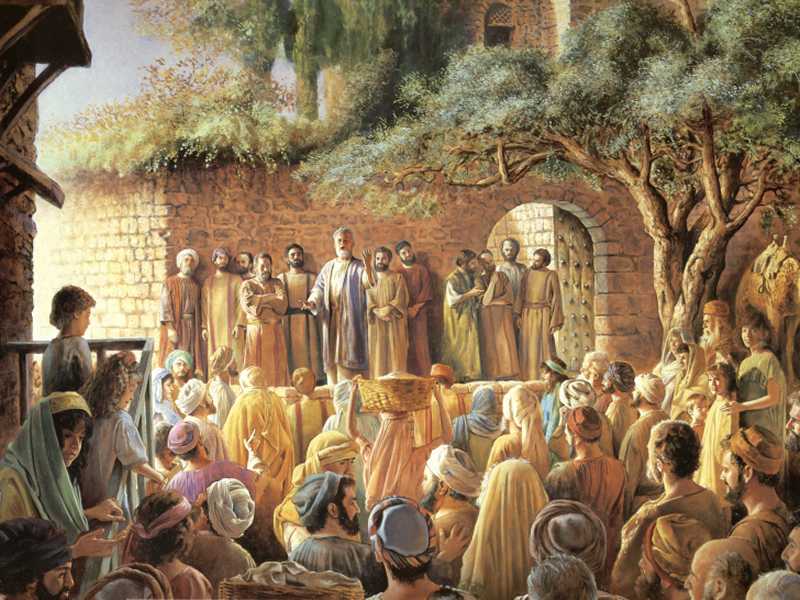
CTT | Churching the unchurched?

day-of-pentecost-acts-2-38A theme or apologetic used by the seeker-sensitive and emergent (post-modern progressive christians) for taking it upon themselves to redefine the Church, Praise and Worship, and the role of the Pastor is their claim to be “churching the unchruched”. Is that valid? What does that even mean? Let’s discuss.

There’s a book?

So, there is a book entitled, “Church for the Unchurched” that I do not recommend anyone read. But I want to share an endorsement from the Amazon.com page:

“This is a groundbreaking book. What sets it apart from all the others is that it is based on hard data and real life examples…If you want to know what is really happening in the so-called Seeker churches, this book is a must read.” –Rick Warren, Senior Pastor, Saddleback Community Church, Mission Viejo, California

What sets this book apart is… being based on hard data and real life examples? Okay… should a book about Church and Evangelism be based on Scripture? Yes, actually, it should be.

Ephesians 2:19-21 (ESV) 19 So then you are no longer strangers and aliens, but you are fellow citizens with the saints and members of the household of God, 20 built on the foundation of the apostles and prophets, Christ Jesus himself being the cornerstone, 21 in whom the whole structure, being joined together, grows into a holy temple in the Lord.

Purpose of the Church for the Unchurched?

What is the purpose of the Church? The gathering of the assembly? The seeker-mergent belief (and teaching) is that the assembly of the saints is supposed to be where unbelievers are supposed to hear the Gospel and become believers. But what prevents an unbeliever from attending church in the first place? These seeker-mergent teachers would have you believe that how traditional churches present the Gospel (you know, preaching Law (sin) and Gospel (repentance) and the forgiveness of sins) that has been “failing”. So, they inevitably get caught up in dialing down the preaching of the Law (sins become “mistakes”) and over-emphasizing God’s Love (by avoiding His Holiness,  Justice, Righteousness) trying to compel unbelievers to first agree to attend this non-church style of Church and then later “make a decision for Christ” based on how “loving, warm, engaging, inviting, and welcoming” the congregation is. They are led in a prayer, told they are saved, and then they are fed a diet of self-help legalism that Christians must abide by to establish their Christian-ness. But that legalism isn’t based on Law-preaching, because now that they are “saved” the purpose of their church is no longer them, but the other “unchurched”. So they are expected to read the Bible on their own, while from the pulpit they hear life tips from the latest Christian self-help book, or simply from the pastor’s life experiences.

What does the Bible say about the purpose of Pastors and the Church?

I want to look at a couple of passages that help put together a picture of what it means first to be a pastor and also the role of the Church. Let’s begin in Matthew:

Matthew 16:5-20 (ESV) | The Leaven of the Pharisees and Sadducees
5 When the disciples reached the other side, they had forgotten to bring any bread. 6 Jesus said to them, “Watch and beware of the leaven of the Pharisees and Sadducees.” 7 And they began discussing it among themselves, saying, “We brought no bread.” 8 But Jesus, aware of this, said, “O you of little faith, why are you discussing among yourselves the fact that you have no bread? 9 Do you not yet perceive? Do you not remember the five loaves for the five thousand, and how many baskets you gathered? 10 Or the seven loaves for the four thousand, and how many baskets you gathered? 11 How is it that you fail to understand that I did not speak about bread? Beware of the leaven of the Pharisees and Sadducees.” 12 Then they understood that he did not tell them to beware of the leaven of bread, but of the teaching of the Pharisees and Sadducees.

13 Now when Jesus came into the district of Caesarea Philippi, he asked his disciples, “Who do people say that the Son of Man is?” 14 And they said, “Some say John the Baptist, others say Elijah, and others Jeremiah or one of the prophets.” 15 He said to them, “But who do you say that I am?” 16 Simon Peter replied, “You are the Christ, the Son of the living God.” 17 And Jesus answered him, “Blessed are you, Simon Bar-Jonah! For flesh and blood has not revealed this to you, but my Father who is in heaven. 18 And I tell you, you are Peter, and on this rock I will build my church, and the gates of hell shall not prevail against it. 19 I will give you the keys of the kingdom of heaven, and whatever you bind on earth shall be bound in heaven, and whatever you loose on earth shall be loosed in heaven.” 20 Then he strictly charged the disciples to tell no one that he was the Christ.

John 21:1-19 (ESV) | Jesus Appears to Seven Disciples
21 After this Jesus revealed himself again to the disciples by the Sea of Tiberias, and he revealed himself in this way. 2 Simon Peter, Thomas (called the Twin), Nathanael of Cana in Galilee, the sons of Zebedee, and two others of his disciples were together. 3 Simon Peter said to them, “I am going fishing.” They said to him, “We will go with you.” They went out and got into the boat, but that night they caught nothing. 4 Just as day was breaking, Jesus stood on the shore; yet the disciples did not know that it was Jesus. 5 Jesus said to them, “Children, do you have any fish?” They answered him, “No.” 6 He said to them, “Cast the net on the right side of the boat, and you will find some.” So they cast it, and now they were not able to haul it in, because of the quantity of fish. 7 That disciple whom Jesus loved therefore said to Peter, “It is the Lord!” When Simon Peter heard that it was the Lord, he put on his outer garment, for he was stripped for work, and threw himself into the sea. 8 The other disciples came in the boat, dragging the net full of fish, for they were not far from the land, but about a hundred yards off. 9 When they got out on land, they saw a charcoal fire in place, with fish laid out on it, and bread. 10 Jesus said to them, “Bring some of the fish that you have just caught.” 11 So Simon Peter went aboard and hauled the net ashore, full of large fish, 153 of them. And although there were so many, the net was not torn. 12 Jesus said to them, “Come and have breakfast.” Now none of the disciples dared ask him, “Who are you?” They knew it was the Lord. 13 Jesus came and took the bread and gave it to them, and so with the fish. 14 This was now the third time that Jesus was revealed to the disciples after he was raised from the dead. 15 When they had finished breakfast, Jesus said to Simon Peter, “Simon, son of John, do you love me more than these?” He said to him, “Yes, Lord; you know that I love you.” He said to him, “Feed my lambs.” 16 He said to him a second time, “Simon, son of John, do you love me?” He said to him, “Yes, Lord; you know that I love you.” He said to him,“Tend my sheep.” 17 He said to him the third time, “Simon, son of John, do you love me?”Peter was grieved because he said to him the third time, “Do you love me?” and he said to him, “Lord, you know everything; you know that I love you.” Jesus said to him, “Feed my sheep. 18 Truly, truly, I say to you, when you were young, you used to dress yourself and walk wherever you wanted, but when you are old, you will stretch out your hands, and another will dress you and carry you where you do not want to go.” 19 (This he said to show by what kind of death he was to glorify God.) And after saying this he said to him,“Follow me.”

So we have here a picture of teaching and preaching being presented in terms of food. I believe that when Jesus appeared on the shoreline, the disciples remembered what Jesus taught at Peter’s confession. We also see that the disciples understood the teaching of the leaven of the Pharisees and Sadducees was in their teaching, not in actual food. The religious leaders of that day taught themselves, their doctrines, and their righteousness. Jesus rebuked them repeatedly, pointing out to them that if they had indeed believed Moses and his teaching, they would believe in Jesus (John 5:45-47). They added to the Law and the Prophets with their oral tradition and interpretations of the Law and Prophets, they introduced their own leaven to the Bread of Life (Jesus, the Word made flesh).

At breakfast, Jesus addresses Peter specifically, and asks three times “do you love Me”. What goes on the Greek is fascinating, but for now, let us focus on Jesus’ response, “feed my lambs; tend my sheep, feed my sheep”. Is Jesus just talking about food here? No. Is he saying that Peter is supposed to find his own way to feed the sheep? Absolutely not. Looking back at Peter’s confession of Christ, notice that Jesus specifies that the revelation was from God; therefore, Peter’s confession is the rock upon which Jesus will build His Church, not Peter’s flesh (the Greek makes it very clear) though Peter’s name is changed. When we look back at Jesus’s rebuke of His disciples for worrying about not bringing bread, Jesus points out that He had already demonstrated that He will provide for our earthly needs, that clearly He is focused on more important things for the church. God provides the physical bread and fish, and He also provides the Spiritual bread, the Gospel of Jesus Christ, by which Peter is to feed and tend the flock of Christ (the Church).

The Early Church Evangelized the Synagogue

Yes, the early Church first evangelized the Temple (in Jerusalem) and the synagogues. Does that mean that the purpose of Church is to get unbelievers to attend so that they can become believers? No. Please don’t freak out on me just yet, let’s first discuss what was going on in the early church. After Christ’s ascension into Heaven, we see the first assembly of the Church.

Acts 1:12-19 (ESV) 12 Then they returned to Jerusalem from the mount called Olivet, which is near Jerusalem, a Sabbath day’s journey away. 13 And when they had entered, they went up to the upper room, where they were staying, Peter and John and James and Andrew, Philip and Thomas, Bartholomew and Matthew, James the son of Alphaeus and Simon the Zealot and Judas the son of James. 14 All these with one accord were devoting themselves to prayer, together with the women and Mary the mother of Jesus, and his brothers. 15 In those days Peter stood up among the brothers (the company of persons was in all about 120) and said, 16 “Brothers, the Scripture had to be fulfilled, which the Holy Spirit spoke beforehand by the mouth of David concerning Judas, who became a guide to those who arrested Jesus. 17 For he was numbered among us and was allotted his share in this ministry.” 18 (Now this man acquired a field with the reward of his wickedness, and falling headlong he burst open in the middle and all his bowels gushed out. 19 And it became known to all the inhabitants of Jerusalem, so that the field was called in their own language Akeldama, that is, Field of Blood.)

When the Day of Pentecost arrives, God pours out His Spirit upon His Church, all who were assembled in the upper room, and the sound of their worship of God in many languages (by a miracle of the Holy Spirit) drew a crowd and Peter preached Law and Gospel to them, and many were added to the Church on that day. After Peter’s sermon in chapter 2, let’s look at how the Church assembled:

Acts 2:42-47 (ESV) | The Fellowship of the Believers
42 And they devoted themselves to the apostles’ teaching and the fellowship, to the breaking of bread and the prayers. 43 And awe came upon every soul, and many wonders and signs were being done through the apostles. 44 And all who believed were together and had all things in common. 45 And they were selling their possessions and belongings and distributing the proceeds to all, as any had need. 46 And day by day, attending the temple together and breaking bread in their homes, they received their food with glad and generous hearts, 47 praising God and having favor with all the people. And the Lord added to their number day by day those who were being saved.

Does this look like a church whose focus is on attracting the “unchurched”? No. Who added to their number? The Lord did. Who was being added? Those who were being saved. The Church, God’s Church is for the Christians, those who have believed in the Gospel of Jesus Christ. Any attempt to tailor a Church for those who are unbelievers is an exercise in futility. Let’s see how Paul addressed this idea in his letter to the Romans. At the close of chapter 9, Paul is trying to fix some misconceptions some Gentiles had regarding the Jews. Let’s begin there and move into chapter 10.

Romans 9:30-33 (ESV) | Israel’s Unbelief
30 What shall we say, then? That Gentiles who did not pursue righteousness have attained it, that is, a righteousness that is by faith; 31 but that Israel who pursued a law that would lead to righteousness did not succeed in reaching that law. 32 Why? Because they did not pursue it by faith, but as if it were based on works. They have stumbled over the stumbling stone, 33 as it is written,

“Behold, I am laying in Zion a stone of stumbling, and a rock of offense;
and whoever believes in him will not be put to shame.”

Romans 10 (ESV) | The Message of Salvation to All
1 Brothers, my heart’s desire and prayer to God for them is that they may be saved. 2 For I bear them witness that they have a zeal for God, but not according to knowledge. 3 For, being ignorant of the righteousness of God, and seeking to establish their own, they did not submit to God’s righteousness. 4 For Christ is the end of the law for righteousness to everyone who believes.

5 For Moses writes about the righteousness that is based on the law, that the person who does the commandments shall live by them. 6 But the righteousness based on faith says,“Do not say in your heart, ‘Who will ascend into heaven?’” (that is, to bring Christ down) 7 “or ‘Who will descend into the abyss?’” (that is, to bring Christ up from the dead). 8 But what does it say? “The word is near you, in your mouth and in your heart” (that is, the word of faith that we proclaim); 9 because, if you confess with your mouth that Jesus is Lord and believe in your heart that God raised him from the dead, you will be saved. 10 For with the heart one believes and is justified, and with the mouth one confesses and is saved. 11 For the Scripture says, “Everyone who believes in him will not be put to shame.” 12 For there is no distinction between Jew and Greek; for the same Lord is Lord of all, bestowing his riches on all who call on him. 13 For “everyone who calls on the name of the Lord will be saved.”
14 How then will they call on him in whom they have not believed? And how are they to believe in him of whom they have never heard? And how are they to hear without someone preaching? 15 And how are they to preach unless they are sent? As it is written,“How beautiful are the feet of those who preach the good news!” 16 But they have not all obeyed the gospel. For Isaiah says, “Lord, who has believed what he has heard from us?” 17 So faith comes from hearing, and hearing through the word of Christ.
18 But I ask, have they not heard? Indeed they have, for
“Their voice has gone out to all the earth,
and their words to the ends of the world.”
19 But I ask, did Israel not understand? First Moses says,
“I will make you jealous of those who are not a nation;
with a foolish nation I will make you angry.”
20 Then Isaiah is so bold as to say,
“I have been found by those who did not seek me;
I have shown myself to those who did not ask for me.”
21 But of Israel he says, “All day long I have held out my hands to a disobedient and contrary people.”

We are not born with faith. We are in-fact born in unbelief, dead in sins and trespasses. Faith is a gift from God, one that comes only by hearing the word of Christ, the Bread of Life. The leaven of the Pharisees is to be avoided and has no part in Christ. It doesn’t matter how awesome/entertaining/welcoming your church service is to the unbeliever, unless they hear unleavened preaching, they will not obtain faith necessary for salvation. Your “testimony” of Christ’s forgiveness isn’t enough, neither is your band’s rendition of “Awesome God”. For it is by hearing the Word of Christ that faith comes.

Conclusion

The Church is the body of Christ, and there is no way to have a church that “churches” unbelievers. Unbelievers who come to the church should undeniably be presented Law and Gospel so that they might become believers (faith comes by hearing the Word of God), but the responsibility for bringing them in rests with the Christians, not the Church. Jesus told Peter to feed and tend His flock. Again, the Church is the body of Christ, Christ is the head of His body. We are to share the gospel with the unbelievers, and invite them to the Church of Jesus Christ, we don’t decide to change the focus of Christ’s Church so that it is more palatable for unbelievers.

1 Corinthians 1:18-25 (ESV) | Christ the Wisdom and Power of God
18 For the word of the cross is folly to those who are perishing, but to us who are being saved it is the power of God. 19 For it is written,
“I will destroy the wisdom of the wise,
and the discernment of the discerning I will thwart.”
20 Where is the one who is wise? Where is the scribe? Where is the debater of this age?Has not God made foolish the wisdom of the world? 21 For since, in the wisdom of God, the world did not know God through wisdom, it pleased God through the folly of what we preach to save those who believe. 22 For Jews demand signs and Greeks seek wisdom,23 but we preach Christ crucified, a stumbling block to Jews and folly to Gentiles, 24 but to those who are called, both Jews and Greeks, Christ the power of God and the wisdom of God. 25 For the foolishness of God is wiser than men, and the weakness of God is stronger than men.

There is only one way to the Father, and that is through Christ. Getting someone to join in an attendance ritual on Sunday morning isn’t going to grant faith, unless they are hearing the unleavened Word of God. Changing what is heard on Sunday morning so that unbelievers will “sign up” doesn’t bring them closer to repentance. Unless we preach Christ and Him crucified for our sin, we’ve simply invited lost sinners to a social club built around “positive messaging”.

Our Father in Heaven, Holy is Your Name. Your Kingdom come, Your Will be done on Earth as it is in Heaven. Give us this day our daily bread, and forgive us our sin as we forgive those who sin against us. Lead us not into temptation, but deliver us from evil. We thank you, Father, that there is now no condemnation for those who are in Christ Jesus. For the law of the Spirit of life has set us free in Christ Jesus from the law of sin and death. For You have done what the law, weakened by our flesh, could not do. By sending Your Own Son in the likeness of sinful flesh and for sin, You condemned sin in the flesh, in order that the righteous requirement of the law might be fulfilled in us. May we walk not according to the flesh but according to the Spirit, by Your Grace in Christ Jesus, Amen. (Matt 6, Romans 8)

In Christ Jesus,
Jorge