Gospel Wednesday | Colossians 1

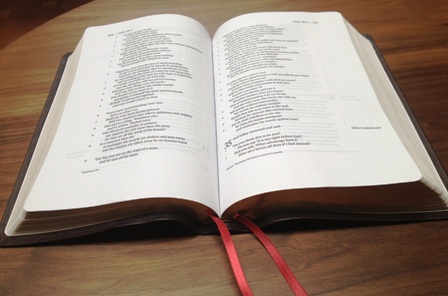
bibleWe are currently working on some “fundamentals of Christianity” (haven’t come up with a title yet) posts geared toward encouraging new or newly-learning Christians by focusing on the basics of our Faith, the Gospel of Jesus Christ. We feel it will be a necessary feature here at Faithful Stewardship as we move more toward exercising Biblical discernment in some of the more contentious or deeply ingrained issues of the modern-day church. From time to time we will also review some church history as it pertains to present-day denominations and their effect on the Body of Christ. The plan is to move more of the Old Testament studies to Thursdays.  We will continue pointing to the Gospel in every post, we just want to really highlight it in our Wednesday posts. We are open to any questions or suggestions you may have, especially if you are a new (or renewed) Christian. We want to hear from you.

Paul Writes to a Church He Did not Plant

I have always loved Paul’s letter to the church at Colossae. In many ways, it feels more familiar in that the church at Colossae was not directly planted by Paul in his missionary journeys, so his letter to them in that sense seems all the more tangible, or connectable, to me as a Christian many centuries and miles removed from the Pauline missionary routes. Colossae was approximately 10-12 miles away from two other prosperous cities, Heiropolis and Laodecia (ref WebBible Encycolopedia).  Colossae was also about 120 miles from Ephesus. We know that Paul spent 3 years working with the elders of Ephesus (Acts 20:31). If we go back a bit to Chapter 19, we see the impact of Paul’s first 2 years of preaching in Ephasus.

Acts 19:1-10 (ESV) | Paul in Ephesus

And it happened that while Apollos was at Corinth, Paul passed through the inland country and came to Ephesus. There he found some disciples. And he said to them, “Did you receive the Holy Spirit when you believed?” And they said, “No, we have not even heard that there is a Holy Spirit.” And he said, “Into what then were you baptized?” They said, “Into John’s baptism.” And Paul said, “John baptized with the baptism of repentance, telling the people to believe in the one who was to come after him, that is, Jesus.” On hearing this, they were baptized in the name of the Lord Jesus. And when Paul had laid his hands on them, the Holy Spirit came on them, and they began speaking in tongues and prophesying. There were about twelve men in all.

And he entered the synagogue and for three months spoke boldly, reasoning and persuading them about the kingdom of God. But when some became stubborn and continued in unbelief, speaking evil of the Way before the congregation, he withdrew from them and took the disciples with him, reasoning daily in the hall of Tyrannus. 10 This continued for two years, so that all the residents of Asia heard the word of the Lord, both Jews and Greeks.

Without getting overly involved in the history of the region. Apollos had preached well in Ephesus before Paul arrived, but needed some additional training for he had been a disciple of John the Baptist and only knew of Jesus what was prophesied. He was not aware of the Baptism in the Name of Jesus Christ, only the Baptism of repentance. Jesus promised to send the Holy Spirit to dwell within those who believed and were baptized in His Name. We see the Apostle Paul completing the Gospel teaching of these disciples and they received the Holy Spirit, here with evidence and manifestation, but understand that the gift of the Holy Spirit is received by faith in the Promise given by Jesus Christ regardless of manifestation. Those who are baptized in the Name of the Father, the Son, and the Holy Spirit are in dwelt by the Holy Spirit. Paul worked for two years preaching the Gospel to all the residents of Asia, both Jews and Greeks. It is possible that Epaphras and Philemon were discipled around this time. If you’ve been looking through the books of the New Testament, you know that there is a short, 1-chapter letter to Philemon. We’ll look at that letter once we wrap up Colossians.

Paul’s Letter to the Colossians

Colossians 1 (ESV)

Greeting

Paul, an apostle of Christ Jesus by the will of God, and Timothy our brother, To the saints and faithful brothers in Christ at Colossae: Grace to you and peace from God our Father.

Thanksgiving and Prayer

We always thank God, the Father of our Lord Jesus Christ, when we pray for you, since we heard of your faith in Christ Jesus and of the love that you have for all the saints,because of the hope laid up for you in heaven. Of this you have heard before in the word of the truth, the gospel, which has come to you, as indeed in the whole world it is bearing fruit and increasing—as it also does among you, since the day you heard it and understood the grace of God in truth, just as you learned it from Epaphras our beloved fellow servant. He is a faithful minister of Christ on your behalf and has made known to us your love in the Spirit.

And so, from the day we heard, we have not ceased to pray for you, asking that you may be filled with the knowledge of his will in all spiritual wisdom and understanding,10 so as to walk in a manner worthy of the Lord, fully pleasing to him, bearing fruit in every good work and increasing in the knowledge of God.11 May you be strengthened with all power, according to his glorious might, for all endurance and patience with joy,12 giving thanks to the Father, who has qualified you to share in the inheritance of the saints in light. 13 He has delivered us from the domain of darkness and transferred us to the kingdom of his beloved Son, 14 in whom we have redemption, the forgiveness of sins.

Paul, after properly introducing himself as he tends to do, immediately offers praise, thanksgiving, and prayer for the church at Colossae. We see here that Epaphras likely planted this church, and Paul is commending them by way of reminder to keep in the Grace of Jesus Christ as taught to them in Truth. Notice how quickly Paul anchors everything into the Gospel of Jesus Christ. He does not give a checklist of their deeds, their size, nor their finances, neither does he take the approach of “well we are all Christians, Praise God” and move on to the subject of the letter. No. Paul is encouraging them in the Gospel, letting them know that they are in the prayers of the Brethren, and urging them to continue walking in Christ. Everything is anchored in Christ. This is such a primary focus that Paul will continue on this thought further narrowing down the person of Christ as the Son of God.

The Preeminence of Christ

15 He is the image of the invisible God, the firstborn of all creation. 16 For by him all things were created, in heaven and on earth, visible and invisible, whether thrones or dominions or rulers or authorities—all things were created through him and for him. 17 And he is before all things, and in him all things hold together. 18 And he is the head of the body, the church. He is the beginning, the firstborn from the dead, that in everything he might be preeminent. 19 For in him all the fullness of God was pleased to dwell, 20 and through him to reconcile to himself all things, whether on earth or in heaven, making peace by the blood of his cross.

21 And you, who once were alienated and hostile in mind, doing evil deeds, 22 he has now reconciled in his body of flesh by his death, in order to present you holy and blameless and above reproach before him, 23 if indeed you continue in the faith, stable and steadfast, not shifting from the hope of the gospel that you heard, which has been proclaimed in all creation under heaven, and of which I, Paul, became a minister.

Here, we see Paul clearly proclaiming the deity of Christ. Might I ask that you take some time to really read what Paul is saying of Jesus here? Hollywood has done a great job of hyper-fixation on the singular “anti-christ”, but the New Testament warns of many false christs and many anti-christs in the last days (in which we live). How we view Jesus Christ is of supreme importance, for Only Jesus Christ as described in the Bible is the Way of Salvation. You cannot deviate in the person of Jesus Christ and somehow manage a True Gospel. It simply cannot be done. This is where the Mormons (Latter Day Saints) and the Jehovah’s Witness fail, though they both falsely claim to be “Christian”. This is also why any attempt to synchronize Islam and Christianity is abject heresy. While Islam has a name for Jesus (Issa), they deny the Biblical Jesus. What Paul is providing for us here is a clear starting point for discernment: Who do you say that I Am?

Paul’s Ministry to the Church

24 Now I rejoice in my sufferings for your sake, and in my flesh I am filling up what is lacking in Christ’s afflictions for the sake of his body, that is, the church, 25 of which I became a minister according to the stewardship from God that was given to me for you, to make the word of God fully known, 26 the mystery hidden for ages and generations but now revealed to his saints. 27 To them God chose to make known how great among the Gentiles are the riches of the glory of this mystery, which is Christ in you, the hope of glory. 28 Him we proclaim, warning everyone and teaching everyone with all wisdom, that we may present everyone mature in Christ. 29 For this I toil, struggling with all his energy that he powerfully works within me.

Colossians 2:1-5 (ESV)

For I want you to know how great a struggle I have for you and for those at Laodicea and for all who have not seen me face to face, that their hearts may be encouraged, being knit together in love, to reach all the riches of full assurance of understanding and the knowledge of God’s mystery, which is Christ, in whom are hidden all the treasures of wisdom and knowledge. I say this in order that no one may delude you with plausible arguments. For though I am absent in body, yet I am with you in spirit, rejoicing to see your good order and the firmness of your faith in Christ.

The Apostle Paul describes his ministry as a stewardship from God, given to him for the Church. The Gospel is the Lord’s. It is His testimony we preach. We who share the Word of God, are stewards of God’s Grace and mercy, preaching the Word of God so that the lost might be saved. I sometimes wonder why the chapter mark is placed so early, it seems the closing thought of Paul’s intro doesn’t truly settle until verse 5 of Chapter 2. We will stop here for today, and pick up next week on the meat of Paul’s letter to the Colossians, that is Christian living and ministry.

But Who Do You Say That I Am?

In closing out today’s Gospel Wednesday, I want to focus on the question of who Jesus is. We mentioned it earlier, but I think it should be more fully explored. Let’s take a moment to turn to Matthew chapter 16.

Matthew 16:13-28 (ESV)

Peter Confesses Jesus as the Christ

13 Now when Jesus came into the district of Caesarea Philippi, he asked his disciples, “Who do people say that the Son of Man is?” 14 And they said, “Some say John the Baptist, others say Elijah, and others Jeremiah or one of the prophets.”15 He said to them, “But who do you say that I am?” 16 Simon Peter replied, “You are the Christ, the Son of the living God.”17 And Jesus answered him, “Blessed are you, Simon Bar-Jonah! For flesh and blood has not revealed this to you, but my Father who is in heaven. 18 And I tell you, you are Peter, and on this rock I will build my church, and the gates of hell shall not prevail against it. 19 I will give you the keys of the kingdom of heaven, and whatever you bind on earth shall be bound in heaven, and whatever you loose on earth shall be loosed in heaven.” 20 Then he strictly charged the disciples to tell no one that he was the Christ.

Jesus Foretells His Death and Resurrection

21 From that time Jesus began to show his disciples that he must go to Jerusalem and suffer many things from the elders and chief priests and scribes, and be killed, and on the third day be raised.22 And Peter took him aside and began to rebuke him, saying, “Far be it from you, Lord! This shall never happen to you.” 23 But he turned and said to Peter,“Get behind me, Satan! You are a hindrance to me. For you are not setting your mind on the things of God, but on the things of man.”

Take Up Your Cross and Follow Jesus

24 Then Jesus told his disciples, “If anyone would come after me, let him deny himself and take up his cross and follow me. 25 For whoever would save his life will lose it, but whoever loses his life for my sake will find it. 26 For what will it profit a man if he gains the whole world and forfeits his soul? Or what shall a man give in return for his soul? 27 For the Son of Man is going to come with his angels in the glory of his Father, and then he will repay each person according to what he has done.28 Truly, I say to you, there are some standing here who will not taste death until they see the Son of Man coming in his kingdom.”

There is no room for creativity in teaching who Jesus is. Failure to faithfully confess Christ is not the only false teaching out there, but it is (in my view) the most dangerous. They will invoke His Name falsely (blasphemy) and many will be (have been) deceived. You who have placed your faith in Christ, remain in Him, in His Word. As long as you abide in Him, the One is the Word made flesh, you will not be the one of whom Jesus prophesied:

Matthew 7:21-23 (ESV) | I Never Knew You

21 “Not everyone who says to me, ‘Lord, Lord,’ will enter the kingdom of heaven, but the one who does the will of my Father who is in heaven. 22 On that day many will say to me, ‘Lord, Lord, did we not prophesy in your name, and cast out demons in your name, and do many mighty works in your name?’ 23 And then will I declare to them, ‘I never knew you; depart from me, you workers of lawlessness.’

Remember when we pointed out earlier, that the Apostle Paul did not praise the Colossians by running down a list of accomplishments or works; rather, he praised them for their love and faith in Jesus Christ. Don’t be so eager to build a portfolio of righteous acts, that you skip over the only thing that matters, Jesus Christ. I encourage you to spend time reading the Gospels with a singular focus of who Jesus is. We’ll pick up next week in Colossians 2:6. Until then, be blessed, be faithful, and be ready.

Jude 1:24-25 (ESV)| Doxology

24 Now to him who is able to keep you from stumbling and to present you blameless before the presence of his glory with great joy, 25 to the only God, our Savior, through Jesus Christ our Lord, be glory, majesty, dominion, and authority, before all time and now and forever. Amen.

In Christ Jesus,
Jorge

Escape…Do not look back…lest you be swept away

This week my personal schedule got completely derailed and I allowed my Bible study time to suffer. It has been a mess. I thank God for His Mercy and Grace in giving me a loving, godly wife who reads me well and knows when to rebuke and when to encourage me.  Today, I’d like to share what has been rolling in my mind regarding the aftermath of the destruction of Sodom and Gomorrah, and what I think this points to for our understanding of repentance and the high cost of following Jesus Christ, or what it means to “be a Christian”.

Genesis 19:15-29 (ESV) 15 As morning dawned, the angels urged Lot, saying, “Up! Take your wife and your two daughters who are here, lest you be swept away in the punishment of the city.” 16 But he lingered. So the men seized him and his wife and his two daughters by the hand, the Lord being merciful to him, and they brought him out and set him outside the city. 17 And as they brought them out, one said, “Escape for your life. Do not look back or stop anywhere in the valley. Escape to the hills, lest you be swept away.” 18 And Lot said to them, “Oh, no, my lords. 19 Behold, your servant has found favor in your sight, and you have shown me great kindness in saving my life. But I cannot escape to the hills, lest the disaster overtake me and I die. 20 Behold, this city is near enough to flee to, and it is a little one. Let me escape there—is it not a little one?—and my life will be saved!” 21 He said to him, “Behold, I grant you this favor also, that I will not overthrow the city of which you have spoken. 22 Escape there quickly, for I can do nothing till you arrive there.” Therefore the name of the city was called Zoar.

23 The sun had risen on the earth when Lot came to Zoar. 24 Then the Lord rained on Sodom and Gomorrah sulfur and fire from the Lord out of heaven. 25 And he overthrew those cities, and all the valley, and all the inhabitants of the cities, and what grew on the ground. 26 But Lot’s wife, behind him, looked back, and she became a pillar of salt. 27 And Abraham went early in the morning to the place where he had stood before the Lord. 28 And he looked down toward Sodom and Gomorrah and toward all the land of the valley, and he looked and, behold, the smoke of the land went up like the smoke of a furnace. 29 So it was that, when God destroyed the cities of the valley, God remembered Abraham and sent Lot out of the midst of the overthrow when he overthrew the cities in which Lot had lived.

The Bible does not go into great detail on the particulars of Lot’s wife turning into salt, anymore than it does on why she turned. The point of this passage isn’t Lot’s wife, it is about God’s wrath and about His salvation, for God spared Lot because He remembered Abraham, with whom He made His covenant. Jewish tradition (outside of the Bible) generally holds to the notion that Lot’s wife saw God destroy Sodom and Gomorrah and that is how she was turned into a pillar of salt, because no one can see God and live. Possible, but not worth spending a great deal of time on here because it isn’t explained fully in Scripture. In 2 Peter 2, the Apostle links the destruction of Sodom and Gomorrah and the Flood during Noah’s time as examples of what is going to happen to the ungodly. Similarly, I believe the unique punishment of Lot’s wife also stands as an example. But of what? At face value, what we know is that all of them were commanded not to look back in their flight. I think there is a problem of unbelief or possibly a problem of unrepentance. Lot’s daughters were betrothed, but their would-be husbands thought Lot was joking, so they perished with the city. Lot was a righteous man (as attested to by the Apostle Peter), but his daughters would later conspire to do evil in the sight of God, thus becoming the mothers of the Moabites and the Ammonites. So, whether she doubted the word of the Lord regarding the destruction, and looked back out of disbelief, or she looked back because she couldn’t fully repent of that world, we don’t know. In researching another topic in the book of Luke, I came across another passage that always gave me pause to reflect:

Luke 9:57-62 (ESV) 57 As they were going along the road, someone said to him, “I will follow you wherever you go.” 58 And Jesus said to him, “Foxes have holes, and birds of the air have nests, but the Son of Man has nowhere to lay his head.” 59 To another he said, “Follow me.” But he said, “Lord, let me first go and bury my father.” 60 And Jesus[a] said to him, “Leave the dead to bury their own dead. But as for you, go and proclaim the kingdom of God.” 61 Yet another said, “I will follow you, Lord, but let me first say farewell to those at my home.” 62 Jesus said to him, “No one who puts his hand to the plow and looks back is fit for the kingdom of God.”

Now, lets look at the greater context of Luke 9 and what happens next in Luke 10. Jesus has been prepping His disciples for His upcoming death, the need to take up their crosses and follow Him, and He was also transfigured before Peter, James, and John who heard the voice of God the Father in Heaven. These are troubling times, and the disciples aren’t really getting it yet. People are still wanting to follow Jesus, but they each are being held back by the cares of this life.  In the next portion of Scripture, Luke 10, we see Jesus sending out the 72 disciples, pronouncing woe to unrepentant cities, and wrapping up the chapter we see Jesus give a gentle rebuke to Martha over being distracted from the important things.

First, let us address the primary lesson of repentance. The call to repentance, is to turn away from sin. In Genesis 19, this was quite literal. They were to flee, run, and not to look back lest they get swept away in the destruction. Today, we face a destruction that is every bit as real, and impending as what Lot’s family faced, only it is more subtle. The wages of sin is death, and the Holiness and Justice of the Lord God is not superseded by His Love, it is reinforced by it. We are born dead in sin and trespasses (Eph 2) and looking back toward the world of sin from which we are told to flee is sin. Repenting of this sin, means turning away from looking back. The Israelites whom the Lord God delivered out of Egypt frequently committed this sin of turning back toward Egypt, even inviting the bondage of slavery so that they might save their own lives.

Numbers 14:1-4 (ESV) 1 Then all the congregation raised a loud cry, and the people wept that night. 2 And all the people of Israel grumbled against Moses and Aaron. The whole congregation said to them, “Would that we had died in the land of Egypt! Or would that we had died in this wilderness! 3 Why is the Lord bringing us into this land, to fall by the sword? Our wives and our little ones will become a prey. Would it not be better for us to go back to Egypt?” 4 And they said to one another, “Let us choose a leader and go back to Egypt.”

Thankfully, Jesus Christ presented Himself as the atoning sacrifice for the sin of mankind. His blood paid the debt of sin, so that in Him we might be made free from the bondage of sin. There is forgiveness for sin, and we must die to our flesh daily, take up our cross, and follow Him without looking back.

A secondary lesson here is that you can’t plow a straight line by looking back. You can’t follow Jesus if you keep looking back toward the world, toward Sodom and Gomorrah. You can’t follow Jesus and try to manage all of the cares of this life on your own. We aren’t likely to face being literally turned into a pillar of salt, but if we are not careful we can become just as ineffective and distracted. Keep your eyes on Christ. Keep Him in your focus. This goes for the members of the Church, the Body of Christ, and for the Elders/Deacons/Pastors. Preach the Word of God. Keep Jesus Christ, the Word of God made flesh, as the central figure and focus of all of Scripture.

In closing, I’d like to take a moment to visit Matthew 6, at the promise we have from God that He will meet our needs and that He cares for us.

Matthew 6:25-34 (ESV) 25 “Therefore I tell you, do not be anxious about your life, what you will eat or what you will drink, nor about your body, what you will put on. Is not life more than food, and the body more than clothing? 26 Look at the birds of the air: they neither sow nor reap nor gather into barns, and yet your heavenly Father feeds them. Are you not of more value than they? 27 And which of you by being anxious can add a single hour to his span of life? 28 And why are you anxious about clothing? Consider the lilies of the field, how they grow: they neither toil nor spin, 29 yet I tell you, even Solomon in all his glory was not arrayed like one of these. 30 But if God so clothes the grass of the field, which today is alive and tomorrow is thrown into the oven, will he not much more clothe you, O you of little faith? 31 Therefore do not be anxious, saying, ‘What shall we eat?’ or ‘What shall we drink?’ or ‘What shall we wear?’ 32 For the Gentiles seek after all these things, and your heavenly Father knows that you need them all. 33 But seek first the kingdom of God and his righteousness, and all these things will be added to you. 34 “Therefore do not be anxious about tomorrow, for tomorrow will be anxious for itself. Sufficient for the day is its own trouble.

The Apostle Paul gave this instruction to the church at Philip

Philippians 3:12-16 (ESV) 12 Not that I have already obtained this or am already perfect, but I press on to make it my own, because Christ Jesus has made me his own. 13 Brothers, I do not consider that I have made it my own. But one thing I do: forgetting what lies behind and straining forward to what lies ahead, 14 I press on toward the goal for the prize of the upward call of God in Christ Jesus. 15 Let those of us who are mature think this way, and if in anything you think otherwise, God will reveal that also to you. 16 Only let us hold true to what we have attained.

Amen. May the Lord bless you and keep you,
In Him,
Jorge

God the Holy Spirit | His Gifts

doveWhile this post isn’t exactly a “part 4” of a series dedicated to the Person of God the Holy Spirit, I wasn’t comfortable concluding that series without taking the time to discuss the Gifts of God the Holy Spirit as laid out by the Apostle Paul in his letter to the church at Corinth. Once again, I’d like to emphasize that I am not following any guides or commentaries in this series, this is simply how I read the Scriptures and what I feel is the simplest, most direct interpretation of the written Word. The following 2 statements of faith, however, must be accepted as fundamental truths for this discussion to have any real meaning:

  • The inerrancy of the Bible as the Word of God. In it we find that which God has revealed of Himself, His Nature, His Will, and His Love for us. While we cannot claim (nor should we) to know and explain everything about God (for we are only created beings) we can (and must) aim to know what He has given to us to know about Him, that which He has chosen to reveal about Himself by giving us His Word and His Spirit.
  • The Trinity. There is only One God. He exists eternally as 3 distinct persons, God the Father, God the Son Jesus Christ, and God the Holy Spirit.

If this is your first visit to the blog and you feel you’d like to read the rest of the series, I encourage you to follow the links on the Welcome page. In this series, we’ve looked at the working of God the Holy Spirit filling men and women of faith throughout Scripture (Old and New Testaments). It was not an exhaustive look by any means, but I just wanted to present the case that being filled with God the Holy Spirit was not a completely new concept to the New Testament Jews. The only thing that changed in the New Covenant, is that Jesus promised to pour out the Holy Spirit onto all who believed and were baptized in His Name, not just select few as He did before the cross. We took a close look at how Luke highlighted the work of the person of God the Holy Spirit while working with God the Son Jesus Christ. An attentive reading of the book of Luke will show that Luke took great care to prepare us for what we would see in the Book of Acts. Finally, we looked at the fulfillment of the promise Jesus made to send God the Holy Spirit to those who believed and were baptized. We see the Holy Spirit empowering the early church. In our conclusion to Part 3, I was heavily burdened to draw attention to a crucial element of doctrine, the Gifts of God the Holy Spirit are of God, not of men.

Let us begin our study in 1 Corinthians 12:

1 Corinthians 12 (ESV)
1 Now concerning spiritual gifts, brothers, I do not want you to be uninformed. 2 You know that when you were pagans you were led astray to mute idols, however you were led. 3 Therefore I want you to understand that no one speaking in the Spirit of God ever says “Jesus is accursed!” and no one can say “Jesus is Lord” except in the Holy Spirit.

What an interesting way to open this topic, don’t you think? Remember that Paul is talking to Gentiles, so he needs to cover all of the bases. While they had already received the Gospel of Jesus Christ, and were believers and no doubt had the Scriptures taught to them, this is all still new. The Jews grew up honoring the Sabbath, keeping (or attempting to) the Law and studying the Prophets and the Psalms. We Gentiles did not (sadly, many of us whose testimony is that we grew up in the church, still fall woefully short of studying the Scriptures of even the lost Jews) thus we are exceedingly grateful for the Grace of God working through His Apostle Paul. Notice here that he begins by reminding them that when they were pagans they were led astray to mute idols. While the rational argument against the worship of mute idols, made by men is one Paul engages in frequently, he makes it clear here that this discussion is less on the idol, and more on what led them astray to the idols. No one speaking in the Spirit of God ever says “Jesus is accursed”... is our first lesson here in Spiritual discernment. Paul is not interested in providing a completely lesson on identifying each evil spirit by which men might speak; rather, he’s clearly defining a means of identifying one who is speaking in the Spirit of God. But Paul isn’t just speaking of his own here. Let us look first to the Law

Deuteronomy 13:1-4 (ESV)  1 “If a prophet or a dreamer of dreams arises among you and gives you a sign or a wonder, 2 and the sign or wonder that he tells you comes to pass, and if he says,‘Let us go after other gods,’ which you have not known, ‘and let us serve them,’ 3 you shall not listen to the words of that prophet or that dreamer of dreams. For the Lord your God is testing you, to know whether you love the Lord your God with all your heart and with all your soul. 4 You shall walk after the Lord your God and fear him and keep his commandments and obey his voice, and you shall serve him and hold fast to him.

I believe that Paul is explaining Spiritual Discernment in 1 Corinthians 12 as it was already laid out in the Law (Deu 13). Notice here that the test is not of whether the man is speaking of his own will (that test can be found in Deuteronomy 18:18-22); rather the Lord God is talking about a false prophet/dreamer whose sign or wonder comes to pass. If a sign or wonder comes to pass but the individual points to anyone other than God (the Father, the Son, or the Holy Spirit) the individual is a false prophet who is listening to unclean spirits, the spirit of error,or the doctrines of demons. Jesus also warned that we shouldn’t also be wary of false christs in Mark 13:21-22, “And then if anyone says to you, ‘Look, here is the Christ!’ or ‘Look, there he is!’ do not believe it. For false christs and false prophets will arise and perform signs and wonders, to lead astray, if possible, the elect.” So, it is not enough for someone to just use the Name of Jesus Christ, if who they teach is not the real Jesus Christ, God the Son (Islam, Mormonism, Jehovah’s Witness, etc…). Let us continue in 1 Cor 12:

1 Corinthians 12:4-13 (ESV) 4 Now there are varieties of gifts, but the same Spirit; 5 and there are varieties of service, but the same Lord; 6 and there are varieties of activities, but it is the same God who empowers them all in everyone. 7 To each is given the manifestation of the Spirit for the common good. 8 For to one is given through the Spirit the utterance of wisdom, and to another the utterance of knowledge according to the same Spirit, 9 to another faith by the same Spirit, to another gifts of healing by the one Spirit, 10 to another the working of miracles, to another prophecy, to another the ability to distinguish between spirits, to another various kinds of tongues, to another the interpretation of tongues. 11 All these are empowered by one and the same Spirit, who apportions to each one individually as He wills. 12 For just as the body is one and has many members, and all the members of the body, though many, are one body, so it is with Christ. 13 For in one Spirit we were all baptized into one body—Jews or Greeks, slaves or free—and all were made to drink of one Spirit.

I truly believe that the Apostle Paul is trying to make it absolutely clear that regardless of the manifestation of God the Holy Spirit, it is all empowered by Him as He wills. It is not about us, or even about the Apostles, it is all about God the Holy Spirit. We are all baptized in One Spirit and made to drink of One Spirit… God the Holy Spirit. There is only one God the Holy Spirit. Any manifestation that is not of God the Holy Spirit is either falsified by the flesh (illusion, deception, fraud, vanity,presumption) or of unclean spirits, more commonly known as demons (again, 1 John 4:1-4). I believe that a blanket prohibition on these manifestations serves as a prohibition on God the Holy Spirit working in these ways among His people. I’ll revisit this view later on, for now let us continue.

1 Corinthians 12:14-31 (ESV) 14 For the body does not consist of one member but of many. 15 If the foot should say, “Because I am not a hand, I do not belong to the body,” that would not make it any less a part of the body. 16 And if the ear should say, “Because I am not an eye, I do not belong to the body,” that would not make it any less a part of the body. 17 If the whole body were an eye, where would be the sense of hearing? If the whole body were an ear, where would be the sense of smell? 18 But as it is, God arranged the members in the body, each one of them, as he chose. 19 If all were a single member, where would the body be? 20 As it is, there are many parts, yet one body. 21 The eye cannot say to the hand, “I have no need of you,” nor again the head to the feet, “I have no need of you.” 22 On the contrary, the parts of the body that seem to be weaker are indispensable, 23 and on those parts of the body that we think less honorable we bestow the greater honor, and our unpresentable parts are treated with greater modesty, 24 which our more presentable parts do not require. But God has so composed the body, giving greater honor to the part that lacked it, 25 that there may be no division in the body, but that the members may have the same care for one another. 26 If one member suffers, all suffer together; if one member is honored, all rejoice together. 27 Now you are the body of Christ and individually members of it. 28 And God has appointed in the church first apostles, second prophets, third teachers, then miracles, then gifts of healing, helping, administrating, and various kinds of tongues. 29 Are all apostles? Are all prophets? Are all teachers? Do all work miracles? 30 Do all possess gifts of healing? Do all speak with tongues? Do all interpret? 31 But earnestly desire the higher gifts.
And I will show you a still more excellent way.

What we see here is a discussion of a wide array of problems that can arise out of a selfish or self-centered misunderstanding of the Gifts of God the Holy Spirit. The very first lie Paul addresses here is the, “Since I don’t move in that way I must not really be a part of the Body of Christ” lie. How does this play out? I happens a lot in even the most biblical of Pentecostal/Charismatic churches. Many feel that since they do not speak in tongues or have not spoken a word of wisdom, knowledge, or prophecy that maybe they aren’t really in the Body of Christ, or worse, that they aren’t truly saved. This is a lie of the enemy. Paul immediately flips the coin and demonstrates the utter fallacy of telling someone else that since he is not manifesting the same Spiritual Gifts (gifts, not fruit) that somehow he isn’t really a member of the Body of Christ. Relying solely on a particular manifestation to determine his membership in the Body of Christ is insidious because it is not judging the fruit of the Spirit; rather, it is judging him by a Gift of God the Holy Spirit who chooses at His discretion how He will move in each individual. So, if you’ve decided that speaking in tongues is required proof of salvation, you are adding to the Scriptures, for no such determination can be found in Scripture. If you’ve decided that speaking in tongues was only for the Apostles, you’ve made the same error, for no such connection is in scripture. God the Holy Spirit determines His gifts. We are told to judge them by their fruit, and to test the spirit behind the person to see if they are of God the Holy Spirit.

That last statement is important. Paul began this discussion with discernment. Once it is clear that God the Holy Spirit is working, then he addressed the need to keep focused on the fact that regardless of the service or gift or manifestation, it is God who is working, not men. We also see that as a body of believers, not everyone will serve the same functions or even look the same, yet we are all part of the same body and necessary. It is not up to the body to decide who belongs or who serves which function, that is up to God. Thus far, we’ve been able to demonstrate bad theology regarding the Gifts of the Spirit, but now Paul wants to address the heart of the issue. I believe, that at the heart of what Paul is addressing here in Corinth, is a body of believers who have drifted in the faith away from the Greatest Commandments to comparing their spirituality based on the gifts of the spirit. What is that more excellent way? Love. 1 Corinthians 13 is devoted to the centrality of love as the foundation for the Law and the Prophets. If you’ve not read our discussion of Christian Relationships, I recommend doing so very soon. If you’ve never read 1 Cor 13, please take a few minutes to read through it now before continuing on to Ch 14.

Before we get into chapter 14, let’s at least acknowledge that of the Gifts of God the Holy Spirit, the most feared, mocked, maligned and faked, copied, counterfeited gifts are Prophecy and Tongues. Few have any problem with knowledge, wisdom, faith, or even healing (though I hear many who reject that God heals anymore). How interesting that Paul, by the guidance of God the Holy Spirit, dedicated the next chapter to these Gifts.

1 Corinthians 14 (ESV) 1 Pursue love, and earnestly desire the spiritual gifts, especially that you may prophesy. 2 For one who speaks in a tongue speaks not to men but to God; for no one understands him, but he utters mysteries in the Spirit. 3 On the other hand, the one who prophesies speaks to people for their upbuilding and encouragement and consolation. 4 The one who speaks in a tongue builds up himself, but the one who prophesies builds up the church. 5 Now I want you all to speak in tongues, but even more to prophesy. The one who prophesies is greater than the one who speaks in tongues, unless someone interprets, so that the church may be built up.

With love as both the foundation AND the goal, we are told to earnestly desire the spiritual gifts, especially that we may prophesy.  In Luke 11:13, Jesus tells us to ask God the Father for the Gift of the Holy Spirit. Based on what we’ve seen in chapter 12, we know that we are to look to God the Holy Spirit for these gifts. Why does Paul want everyone to speak in tongues? Does he want people to speak in foreign languages fluently without studying them? Well, that would be awesome, but that is not really the context he set up here. He has already established that he is talking about those who speak in tongues building up himself and speaking to God uttering the mysteries in the Spirit… for no one understands him. This isn’t the miraculous instant-Rosetta-Stone of languages we saw in Acts 2 that Paul is talking about here. Notice also that within this context, tongues with interpretation are equal to prophesy; tongues without interpretation is inferior to prophecy, since the church isn’t built up by tongues without interpretation the way it is with prophecy. Let us continue…

1 Corinthians 14:13-25 (ESV) 13 Therefore, one who speaks in a tongue should pray that he may interpret. 14 For if I pray in a tongue, my spirit prays but my mind is unfruitful. 15 What am I to do? I will pray with my spirit, but I will pray with my mind also; I will sing praise with my spirit, but I will sing with my mind also. 16 Otherwise, if you give thanks with your spirit, how can anyone in the position of an outsider say “Amen” to your thanksgiving when he does not know what you are saying? 17 For you may be giving thanks well enough, but the other person is not being built up. 18 I thank God that I speak in tongues more than all of you. 19 Nevertheless, in church I would rather speak five words with my mind in order to instruct others, than ten thousand words in a tongue. 20 Brothers, do not be children in your thinking. Be infants in evil, but in your thinking be mature. 21 In the Law it is written, “By people of strange tongues and by the lips of foreigners will I speak to this people, and even then they will not listen to me, says the Lord.” 22 Thus tongues are a sign not for believers but for unbelievers, while prophecy is a sign not for unbelievers but for believers. 23 If, therefore, the whole church comes together and all speak in tongues, and outsiders or unbelievers enter, will they not say that you are out of your minds? 24 But if all prophesy, and an unbeliever or outsider enters, he is convicted by all, he is called to account by all, 25 the secrets of his heart are disclosed, and so, falling on his face, he will worship God and declare that God is really among you.

Another command, that those who speak in a tongue should pray that he may interpret. That, however, is up to God the Holy Spirit. So what does Paul do? He prays with his spirit and his mind also, he sings praises with his spirit and sings with his mind also. Notice, he doesn’t abandon speaking in a tongue that is unintelligible. He trusts that God the Holy Spirit who dwells in him is faithful and just to activate his spirit in prayer to God (not men), while Paul also praises God and prays to God in his mind. And he does this more than all of those to whom he is writing this letter. Settle that in your hearts, because we are about to shift gears a bit in verse 19. Nevertheless… while all of what he said is absolutely true, in church, he’d rather speak five words of instruction than 10,000 words that will only benefit him in prayer to God. The gathering of believers is not about catching up on your personal prayer time, it’s about building up the Body of Christ. Primarily through the reading of God’s Word, but also through the ministering of the Gifts of the Holy Spirit that are given for the Body of Christ. While his focus has shifted now to start thinking less about our individual moving in the Gifts of the Holy Spirit, Paul has not yet established any rules, he is merely highlighting the needs of the body are different from the needs of the individual members. As an Apostle of Jesus Christ, Paul does establish in his letters the order and structure of the church (Titus, 1 & 2 Timothy bear it out extensively), but in the interest of time now I want to stay focused on the order of service as far as Tongues and Prophecy are concerned. Let us continue on…

1 Corinthians 14:26-33 (ESV) 26 What then, brothers? When you come together, each one has a hymn, a lesson, a revelation, a tongue, or an interpretation. Let all things be done for building up. 27 If any speak in a tongue, let there be only two or at most three, and each in turn, and let someone interpret. 28 But if there is no one to interpret, let each of them keep silent in church and speak to himself and to God. 29 Let two or three prophets speak, and let the others weigh what is said. 30 If a revelation is made to another sitting there, let the first be silent. 31 For you can all prophesy one by one, so that all may learn and all be encouraged, 32 and the spirits of prophets are subject to prophets. 33 For God is not a God of confusion but of peace.

I’d like to make mention of a couple of observations. Here, it seems Paul isn’t just talking about praying in tongues and being overheard, he’s talking about someone launching into speech as though it were a “Thus says the Lord” prophecy. The idea here is that there will be an interpretation and the Body of Christ edified. If that doesn’t happen, then the speaker got carried away and was simply being disorderly. The spirits of the prophets are subject to the prophets serves as a reminder that God the Holy Spirit isn’t in the business of creating confusion in the church, so the prophet can wait for his turn to share what God the Holy Spirit has to say. When we gather together, there should be a hymn, a lesson, a revelation, a tongue &  interpretation or a prophecy for the edification of the Body. In order, so that all can be encouraged by what God the Holy Spirit has to say. But remember, again, that there is only One God the Holy Spirit. God gives the utterances, the messages, and manifestations. God is a God of peace. If the speaking in tongues and prophesying devolve into frenzied chaos, that is either the work of the flesh or of unclean spirits. Test the spirits, and weigh what is said. I’d also like to highlight, that verse 32 applies also to speaking in tongues. If you don’t have an interpretation. The speaking of unintelligible tongues is for praying to God, not for edifying the Body of Christ. There is no benefit or need to do so loudly. God the Father hears the prayers from your Spirit as well as your Mind, so unless God the Holy Spirit is compelling you to proclaim something specific in another tongue with the interpretation, or asking you to speak so that another can interpret, keep your prayer language quiet as you pray with your mind and your spirit just as Paul said he did in verse 15. I’d like to close this post by looking a how Paul closed this discussion on Tongues and Prophecy:

1 Corinthians 14:39-40 (ESV) So, my brothers, earnestly desire to prophesy, and do not forbid speaking in tongues. But all things should be done decently and in order.

All things should be done decently and in order. This is not a prohibition on prophesy nor tongues. While it is absolutely true that nothing will be added to Scripture, that does not mean that God the Holy Spirit does not still give prophesies, tongues, interpretations, or any other of the gifts we’ve discussed in God’s Word. We know that God the Holy Spirit is unchanging, and that His role is to point us to God the Son Jesus Christ, and who gives us access to the Throne of God the Father. Refusing the gifts of the Holy Spirit to avoid “getting carried away” or the task of discernment is not unlike rejecting music to avoid sensuality. Sure you can get buy without music, but why not discipline yourself so that you can enjoy the gift of music in your life? Similarly, while God the Holy Spirit is Sovereign over His Gifts, why not allow Him to move in your life as He Wills, rather than force him to only use you to speak English? I know you will be spending daily devotional time in prayer and reading Scripture, so allow the Holy Spirit freedom in your life. Test the spirits always, but know that the Holy Spirit is God and the Spirit of God will not lead you astray. God is so very good, and His Gifts are His to give to those whom He saved, by grace, through faith, and that not of ourselves, it is the Gift of God.

May the Lord bless and keep you,
In Him,
Jorge

God the Holy Spirit | Part 3

doveWelcome back to part 3! Today, I want to take a good look at the Promise of God the Holy Spirit fulfilled to in Acts and what the Apostles taught regarding the Gift of the Holy Spirit. I’d like to reiterate that I am not following any denominational quick-guide on the Holy Spirit. I shall endeavor to simply share what I’ve read in the Scriptures. I maintain 2 fundamental statements of faith as the basis for this discussion:

  • The inerrancy of the Bible as the Word of God. In it we find that which God has revealed of Himself, His Nature, His Will, and His Love for us. While we cannot claim (nor should we) to know and explain everything about God (for we are only created beings) we can (and must) aim to know what He has given to us to know about Him, that which He has chosen to reveal about Himself by giving us His Word and His Spirit.
  • The Trinity. There is only One God. He exists eternally as 3 distinct persons, God the Father, God the Son Jesus Christ, and God the Holy Spirit.

In the last post, we ended by taking a look at the Great Commission as recorded in Matthew 28 and Mark 16. I neglected, however, to share that Luke included a Great Commission as well.

Luke 24:44-49 (ESV) 44 Then he said to them, “These are my words that I spoke to you while I was still with you, that everything written about me in the Law of Moses and the Prophets and the Psalms must be fulfilled.” 45 Then he opened their minds to understand the Scriptures, 46 and said to them, “Thus it is written, that the Christ should suffer and on the third day rise from the dead, 47 and that repentance and forgiveness of sins should be proclaimed in his name to all nations, beginning from Jerusalem. 48 You are witnesses of these things. 49 And behold, I am sending the promise of my Father upon you. But stay in the city until you are clothed with power from on high.”

Personally, I think the reason we don’t have a grandiose declaration of the Great Commission here in Luke, is that he isn’t quite finished writing. He didn’t need to belabor the point here at the end of the Gospel, since he was going to share how the Great Commission was carried out by the early church. Notice here that we still have all of the elements of the Great commission, that Jesus is the Messiah, the Christ who suffered and died and rose on the third day and that the repentance and forgiveness of sins in Jesus Name would be preached to all nations beginning in Jerusalem. Let’s pick up from this thought in Acts

Acts 1:4-8 (ESV) 4 And while staying with them he ordered them not to depart from Jerusalem, but to wait for the promise of the Father, which, he said, “you heard from me; 5 for John baptized with water, but you will be baptized with the Holy Spirit not many days from now.” 6 So when they had come together, they asked him, “Lord, will you at this time restore the kingdom to Israel?” 7 He said to them, “It is not for you to know times or seasons that the Father has fixed by his own authority. 8 But you will receive power when the Holy Spirit has come upon you, and you will be my witnesses in Jerusalem and in all Judea and Samaria, and to the end of the earth.”

Acts 2:1-15 (ESV) 1 When the day of Pentecost arrived, they were all together in one place. 2 And suddenly there came from heaven a sound like a mighty rushing wind, and it filled the entire house where they were sitting. 3 And divided tongues as of fire appeared to them and rested on each one of them. 4 And they were all filled with the Holy Spirit and began to speak in other tongues as the Spirit gave them utterance. 5 Now there were dwelling in Jerusalem Jews, devout men from every nation under heaven. 6 And at this sound the multitude came together, and they were bewildered, because each one was hearing them speak in his own language. 7 And they were amazed and astonished, saying, “Are not all these who are speaking Galileans? 8 And how is it that we hear, each of us in his own native language? 9 Parthians and Medes and Elamites and residents of Mesopotamia, Judea and Cappadocia, Pontus and Asia, 10 Phrygia and Pamphylia, Egypt and the parts of Libya belonging to Cyrene, and visitors from Rome, 11 both Jews and proselytes, Cretans and Arabians—we hear them telling in our own tongues the mighty works of God.” 12 And all were amazed and perplexed, saying to one another, “What does this mean?” 13 But others mocking said, “They are filled with new wine.” 14 But Peter, standing with the eleven, lifted up his voice and addressed them: “Men of Judea and all who dwell in Jerusalem, let this be known to you, and give ear to my words. 15 For these people are not drunk, as you suppose, since it is only the third hour of the day…[9 a.m.]

This is amazing. I’m going to pause here to let you know that we will be skipping through Peter’s sermon for now (I do plan on revisiting because it is just such a wonderful sermon!) so that we can remain focused on the Gift of the Holy Spirit promised by Jesus Christ. Notice here that there are more places listed than there are Apostles at this time. Notice also that each hearer (of which 3,000 would be saved and baptized) heard praises of God in his own foreign language, something that wasn’t done. Since the Law and the Prophets were for the Children of Israel, why would it need to ever be translated into Gentile tongues? Galileans were not exactly known for their scholarly achievements, so any thought that these men were trained in language simply wouldn’t have been entertained. In fact, the very idea that this was the result of drunkenness is in itself a bit absurd. I struggle to understand a drunken person speaking English, much less a language I would recognize to be beyond the knowledge of the drunk. Nevertheless, Peter sets them straight and immediately begins preaching the Gospel of Jesus Christ. Let’s jump to the conclusion of his sermon.

Acts 2:32-39 (ESV) 32 This Jesus God raised up, and of that we all are witnesses. 33 Being therefore exalted at the right hand of God, and having received from the Father the promise of the Holy Spirit, he has poured out this that you yourselves are seeing and hearing. 34 For David did not ascend into the heavens, but he himself says,
“‘The Lord said to my Lord,
“Sit at my right hand,
35 until I make your enemies your footstool.”’
36 Let all the house of Israel therefore know for certain that God has made him both Lord and Christ, this Jesus whom you crucified.” 37 Now when they heard this they were cut to the heart, and said to Peter and the rest of the apostles, “Brothers, what shall we do?” 38 And Peter said to them, “Repent and be baptized every one of you in the name of Jesus Christ for the forgiveness of your sins, and you will receive the gift of the Holy Spirit. 39 For the promise is for you and for your children and for all who are far off, everyone whom the Lord our God calls to himself.”

I find the inclusion of this last portion telling. The promise of the Holy Spirit is not limited to the Apostles. The promise of the Holy Spirit was for all who would believe the Gospel of Jesus Christ. Indeed, it is an integral part of the Gospel. Matthew worded the Great Commission to include the Holy Spirit in the baptism into all who would become disciples. One baptism, in the Name of the Father, the Son, and of the Holy Spirit. Remember in the first post also, that when the Spirit of God fell on Saul who was anointed as the first king of Israel he prophesied? And the terminology used for the Holy Spirit moving in David is that the Holy Spirit “rushed” on David? Interesting how all of the elements come together in the first outpouring of the Holy Spirit to all who believe. This is not the work of men, but of God the Holy Spirit. Don’t lose sight of that. Many did, and many still do today, but don’t you do it, dear reader. Remember that the whole of Scriptures isn’t about you or me, but about God the Father, God the Son Jesus, and God the Holy Spirit. Yes, friend, this is about God the Holy Spirit moving as a precious promised Gift from Jesus Christ our Lord and Savior, for everyone whom the Lord our God calls to Himself.

Now, I urge you to continue reading through Acts (or restart after finishing this blog post) to see very clearly the boldness and the clarity of scriptures granted to the Apostles by God the Holy Spirit to stand firm in the face of judgment and preach the Gospel of Jesus Christ. Seriously, better sermons you will never witness… and not just from the Apostles. Check out Stephen, a deacon, filled with the Holy Spirit and the wisdom and boldness granted him through the Holy Spirit (Acts 6-7). However, right now I want to focus on the importance of preaching the Gospel completely.

After Stephen’s death a great persecution arose on the Church in Jerusalem and the believers (minus the Apostles) scattered throughout Judea and Samaria. Now Philip was preaching the Gospel of Jesus Christ, he was filled with the Holy Spirit who was performing many signs and wonders through Philip, leading many to believe.

Acts 8:9-24 (ESV) 9 But there was a man named Simon, who had previously practiced magic in the city and amazed the people of Samaria, saying that he himself was somebody great. 10 They all paid attention to him, from the least to the greatest, saying, “This man is the power of God that is called Great.” 11 And they paid attention to him because for a long time he had amazed them with his magic. 12 But when they believed Philip as he preached good news about the kingdom of God and the name of Jesus Christ, they were baptized, both men and women. 13 Even Simon himself believed, and after being baptized he continued with Philip. And seeing signs and great miracles performed, he was amazed. 14 Now when the apostles at Jerusalem heard that Samaria had received the word of God, they sent to them Peter and John, 15 who came down and prayed for them that they might receive the Holy Spirit, 16 for he had not yet fallen on any of them, but they had only been baptized in the name of the Lord Jesus. 17 Then they laid their hands on them and they received the Holy Spirit. 18 Now when Simon saw that the Spirit was given through the laying on of the apostles’ hands, he offered them money, 19 saying, “Give me this power also, so that anyone on whom I lay my hands may receive the Holy Spirit.” 20 But Peter said to him, “May your silver perish with you, because you thought you could obtain the gift of God with money! 21 You have neither part nor lot in this matter, for your heart is not right before God. 22 Repent, therefore, of this wickedness of yours, and pray to the Lord that, if possible, the intent of your heart may be forgiven you. 23 For I see that you are in the gall of bitterness and in the bond of iniquity.” 24 And Simon answered, “Pray for me to the Lord, that nothing of what you have said may come upon me.”

Now, often this passage is used as a proof-text for those who believe that the speaking in tongues (and for some even prophecy) was granted only to the Apostles and those who had direct contact with them. If we looked at this passage alone and allowed someone to fill in several blanks, I could see that being a very persuasive argument. However, nowhere in the underlined portion do I see it plainly stated that Simon was wrong to ask for something that was only for the Apostles. It isn’t what he was asking for that was wrong, it was that his heart (motive) was not right before God. So much so, that Peter wasn’t sure if repentance would be possible for him. We didn’t cover it, but Peter saw God strike down Ananias and Sapphira for attempting to steal from the Holy Spirit (chapter 5). Also, at the end of the chapter, we see the Holy Spirit use Philip in a way we don’t have recorded of the Apostles… the Spirit of the Lord carried Philip away from Gaza to Azotus. How many times have you thought or even prayed, “okay Lord, please instantly move me from here to there as you did Philip”? I will not venture a guess as to why these believers had not yet received the Gift of the Holy Spirit. I think it is important that we see that it sometimes didn’t happen immediately.

Now, the majority of Acts 10 is God working on the Apostle Peter to bring deeper understanding of the very Gospel he preached, that God was indeed bringing in Gentiles. It’s a wonderful story (especially for us Gentiles), but I want to pick up at the beginning of his sermon to Cornelius (a Gentile)

Acts 10:34-48 (ESV) 34 So Peter opened his mouth and said: “Truly I understand that God shows no partiality, 35 but in every nation anyone who fears him and does what is right is acceptable to him. 36 As for the word that he sent to Israel, preaching good news of peace through Jesus Christ (he is Lord of all), 37 you yourselves know what happened throughout all Judea, beginning from Galilee after the baptism that John proclaimed: 38 how God anointed Jesus of Nazareth with the Holy Spirit and with power. He went about doing good and healing all who were oppressed by the devil, for God was with him. 39 And we are witnesses of all that he did both in the country of the Jews and in Jerusalem. They put him to death by hanging him on a tree, 40 but God raised him on the third day and made him to appear, 41 not to all the people but to us who had been chosen by God as witnesses, who ate and drank with him after he rose from the dead. 42 And he commanded us to preach to the people and to testify that he is the one appointed by God to be judge of the living and the dead. 43 To him all the prophets bear witness that everyone who believes in him receives forgiveness of sins through his name.” 44 While Peter was still saying these things, the Holy Spirit fell on all who heard the word. 45 And the believers from among the circumcised who had come with Peter were amazed, because the gift of the Holy Spirit was poured out even on the Gentiles. 46 For they were hearing them speaking in tongues and extolling God. Then Peter declared, 47 “Can anyone withhold water for baptizing these people, who have received the Holy Spirit just as we have?” 48 And he commanded them to be baptized in the name of Jesus Christ. Then they asked him to remain for some days.

Their hearts were ready. The pump was clearly primed by the Holy Spirit (God had already spoken to Cornelius in a vision to send for Simon-Peter) because they believed the Gospel even while it was being preached! And the Gift of the Holy Spirit fell on these Gentiles in the same way it fell on the Apostles. Now it would be some time until the fullness of this revelation of the new covenant would be made official (the topical focus of the letter to the Galatians), but in Chapter 11, we see Peter bring this good news of just how far the Gospel will go to save (truly to the ends of the earth for all nations and every tribe and every nation). I would also like to caution against tying the Gift of the Holy Spirit to the Apostles, rather than to the Holy Spirit. So far, the gifts of the Holy Spirit were as much a sign to the Apostles as they were to others, because the Holy Spirit is God, not some parlor trick. Skipping ahead to chapter 15, we see the fruit of Peter’s witness to the Gentiles in the Jerusalem Council. The Elders declare that the yoke of the covenant of Abraham (circumcision) and the Law of Moses should not be tied to the Gospel of Jesus Christ to the Gentiles. Since the Law of Moses is still being read in synagogues throughout the land, they encouraged Gentile believers to abstain from food sacrificed to idols, sexual immorality, from blood, and food from strangled animals.  I believe that from this letter to the believers in Antioch the Holy Spirit then guided Paul to address it more completely to the Galatians, for they had been lead astray by those from the circumcision party (teaching that to be saved, all had to be circumcised into the covenant of Abraham).

Okay, so lets look at one more instance. In Acts 18, we are introduced to Apollos who was preaching in Ephesus that Jesus was the Christ, though he only knew the baptism of John. When Priscilla and Aquila heard him, they took him aside and explained to him the way of God more accurately, and then sent him off to Jerusalem to continue preaching. Paul arrives in Ephesus (as Apollos is in Corinth) run into some disciples. Let’s pick up the story in Acts 19:

Acts 19:1-10 (ESV) 19 And it happened that while Apollos was at Corinth, Paul passed through the inland country and came to Ephesus. There he found some disciples. 2 And he said to them, “Did you receive the Holy Spirit when you believed?” And they said, “No, we have not even heard that there is a Holy Spirit.” 3 And he said, “Into what then were you baptized?” They said, “Into John’s baptism.” 4 And Paul said, “John baptized with the baptism of repentance, telling the people to believe in the one who was to come after him, that is, Jesus.” 5 On hearing this, they were baptized in the name of the Lord Jesus. 6 And when Paul had laid his hands on them, the Holy Spirit came on them, and they began speaking in tongues and prophesying. 7 There were about twelve men in all. 8 And he entered the synagogue and for three months spoke boldly, reasoning and persuading them about the kingdom of God. 9 But when some became stubborn and continued in unbelief, speaking evil of the Way before the congregation, he withdrew from them and took the disciples with him, reasoning daily in the hall of Tyrannus. 10 This continued for two years, so that all the residents of Asia heard the word of the Lord, both Jews and Greeks.

A couple of notes here. First, while Apollos was teaching from the Scriptures that Jesus was the Christ, the baptism was that of John the Baptist. This is probably one of the things Apollos was corrected in. One question I like to ask whenever I read this passage is, “what prompted Paul to ask the question?” I think it is a fair question to ask of the Holy Spirit yourselves, so I’m not going to dive into what I think might have been at play here. Suffice it to say that since they had received an incomplete Gospel and Baptism, Paul shared the full Gospel, and as they heard it they were baptized in the Name of Jesus and then Paul laid hands on them so that they can receive the Gift of the Holy Spirit, and they began speaking in tongues and prophesying. Interesting how this played out, but again, I want to emphasize that if you are looking for a formula or a system, you’ve already  missed it. The Holy Spirit is a person. Look to God, not to a formula, or ritual.

Remember Luke 11:13 (ESV) “If you then, who are evil, know how to give good gifts to your children, how much more will the heavenly Father give the Holy Spirit to those who ask Him!

Now, I’ve gone beyond my intended word limit, but I think that is as it should be. So far, we’ve managed to look at God the Holy Spirit as both a Person of the Trinity and a Promised Gift sent by Jesus Christ (God the Son) after He ascended to the right hand of God the Father in Heaven. I’ve done my best to simply share what I see in the Scriptures. If the Lord Wills, the next post we will take a look together at Paul’s instructions regarding the gifts of the Holy Spirit. This is a topic that greatly divides the church today as far as doctrine goes. No legitimate doctrine of faith denies the Trinity or that the Holy Spirit is God, or that the Holy Spirit dwells within all those who believe in the Gospel. I say that with great confidence, because if you don’t teach properly these basic truths regarding the Holy Spirit, then the God you teach is not the God plainly described in the Bible. However, what we will be discussing next is not the Gift or Promise of God the Holy Spirit to all who believe; rather, the gifts given by the Holy Spirit to those in whom He dwells, the body of Christ. We will be looking specifically at 1 Corinthians 12 and 14, Paul’s instructions to the church in Corinth.

May the Lord bless and keep you,
In Him,
Jorge

The Story Behind The Hymn – I Know Whom I Have Believed

Okay, so as excited as I have been about the series on God the Holy Spirit… I’m delaying part 3 of that post. In listening to a sermon this morning on 2 Timothy 1, the speaker mentioned the Hymn I Know Whom I Have Believed, and the story of its author, Major Daniel Webster Whittle. Not being much of a hymnal guy, it was the first I had heard of Mr Whittle. I chose to look this story up, and with a tear in my eye, I decided this was well worth sharing today.  I pray you find some blessing in this story, too.

The Story Behind The Song – I Know Whom I Have Believed

This beloved hymn written by Major Daniel Webster Whittle, the exact date of his composition is not known, but it was originally published in 1883 in Gospel Hymns No. 4. It is one of about two hundred hymns composed by Major Whittle as he was known. It is one of his most well-known hymns, one other popular hymn that he wrote is “There Shall Be Showers of Blessings” If you look at these two hymns for the authorship you may be a bit confused, you will see the name El Nathan on the left hand side indicating that El Nathan wrote the Lyrics, and you will see James McGranahan on the right hand side, indicating that he wrote the music. El Nathan is a pseudonym – a fictitious name used by a person or sometimes a group, which Daniel Webster Whittle used. He also used the pseudonyms Elias Nathan and W.W.D.

Daniel Webster Whittle was born in Chicopee Falls, Massachusetts on November 22, 1840. He was named after the great American politician Daniel Webster who was greatly admired by Whittle’s father. Little is known of his childhood. His father had heard Daniel Webster, the great statesman, make a stirring speech. Daniel Webster in this speech said “It is my living sentiment, and by the blessing of God it shall be my dying sentiment — independence now and independence forever!”

This would later inspire his parents to name him after Daniel Webster in hopes that he would become a great leader in the fight for freedom as well. His mother is said to have been a godly woman who instilled in him and his three brothers strong Christian principles.

Daniel Whittle worked as a cashier for Wells Fargo bank as a teenager and into his early twenties. He was not a wicked man at first, on the contrary, he was quiet religious. He surrendered his life to the Lord one night while acting as a night watchman at the Wells Fargo Bank. He went into the vault, got down on his knees and gave his surrendered his life for the Heavenly Father to use as he would. He even became the Sunday School Superintendent at the great Tabernacle in Chicago where he would meet his wife, Miss Abbie Hanson. He would join the army in 1861 and be commissioned as a 2nd Lieutenant. In the summer of 1862, August as the Civil War began to intensify his unit was called to go South. August 22, 1862, the night before his departure, he and Abbie were married. It would be a year before they would be reunited. In his own words he tells of his departure, “My dear mother was a devout Christian, and parted from me with many a tear, and followed me with many a prayer. She had placed a New Testament in a pocket of the haversack that she’d arranged for me”

This little New Testament would pay a vital part in his rededication. Whittle rose to the rank of Major and while leading a charge, actually filling in, and he was wounded in his sword arm which led to the amputation of his arm and a stay in a prisoner of war camp. It was while he was in this POW camp that out of boredom he began to search for something to read. He found in his personal effects the little New Testament that his Mother had placed there. He read through the New Testament in a matter of days and started through it again. One night the nurse woke him up and told him that one of his men was dying and had been begging for someone to pray for him. The nurse told Major Whittle that he (the nurse) was a wicked man and could not pray. Major Whittle confessed that he too was wicked man with many sins in his own life and could not pray either. The nurse said that he thought Major Whittle was a Christian because he had observed him constantly reading the Scripture and the Major Whittle did not cuss as the other men. The nurse begged Major Whittle to at least accompany him to see the boy as he did not want to return alone. Moved with compassion, Major Whittle reluctantly agreed. Here, in Major Whittle’s own words, is what took place that night: “I dropped on my knees and held the boy’s hand in mine. In a few broken words I confessed my sins and asked Christ to forgive me. I believed right there that He did forgive me. I then prayed earnestly for the boy. He became quiet and pressed my hand as I prayed and pleaded God’s promises. When I arose from my knees, he was dead. A look of peace had come over his troubled face, and I cannot but believe that God who used him to bring me to the Savior, used me to lead him to trust Christ’s precious blood and find pardon. I hope to meet him in heaven.”

Ten years later at the encouragement of his close friend D.L. Moody he would enter into evangelism. Some of his first songs were set to music by Phillip Bliss. Whittle attended and participated in the memorial service for Phillip Bliss. Later he would work closely with the man who would set to music many of his later songs, and who set the music to this song, “I Know Whom I Have Believed”, James McGranahan. Major Whittle died March 4, 1901 after having written over 200 hymns.

The refrain of the hymn is a direct quotation from the King James Bible in II Timothy 1:12 “…for I know whom I have believed, and am persuaded that he is able to keep that which I have committed unto him against that day.”

The rest of the article is interesting, but I wanted to stop here and reflect a bit about the message of Salvation, the Gospel of Jesus Christ. In closing, let us return to the words of the Apostle Paul in his second letter to Timothy:

2 Timothy 1 (ESV)
1 Paul, an apostle of Christ Jesus by the will of God according to the promise of the life that is in Christ Jesus,
2 To Timothy, my beloved child:
Grace, mercy, and peace from God the Father and Christ Jesus our Lord.

3 I thank God whom I serve, as did my ancestors, with a clear conscience, as I remember you constantly in my prayers night and day. 4 As I remember your tears, I long to see you, that I may be filled with joy. 5 I am reminded of your sincere faith, a faith that dwelt first in your grandmother Lois and your mother Eunice and now, I am sure, dwells in you as well. 6 For this reason I remind you to fan into flame the gift of God, which is in you through the laying on of my hands, 7 for God gave us a spirit not of fear but of power and love and self-control.

8 Therefore do not be ashamed of the testimony about our Lord, nor of me his prisoner, but share in suffering for the gospel by the power of God, 9 who saved us and called us to a holy calling, not because of our works but because of his own purpose and grace, which he gave us in Christ Jesus before the ages began, 10 and which now has been manifested through the appearing of our Savior Christ Jesus, who abolished death and brought life and immortality to light through the gospel, 11 for which I was appointed a preacher and apostle and teacher, 12 which is why I suffer as I do. But I am not ashamed, for I know whom I have believed, and I am convinced that he is able to guard until that Day what has been entrusted to me. 13 Follow the pattern of the sound words that you have heard from me, in the faith and love that are in Christ Jesus. 14 By the Holy Spirit who dwells within us, guard the good deposit entrusted to you.

May the Lord bless and keep you, and may the Holy Spirit who dwells within us grow us into the full knowledge of Him who Saved us,
In Him,
Jorge