Justified By His Grace – Broadcasts – Truth For Life.
Today, I spent my blog time trying out a new Welcome page and moving the blog roll.
I found this broadcast to be a refreshing reminder.
May the Lord Bless you and Keep you,
In Him,
FS
Justified By His Grace – Broadcasts – Truth For Life.
Today, I spent my blog time trying out a new Welcome page and moving the blog roll.
I found this broadcast to be a refreshing reminder.
May the Lord Bless you and Keep you,
In Him,
FS
I’ve been spending a great deal of time reading the Scriptures and praying for understanding of the whole of scriptures in relationship to the Gospel of Jesus Christ. There has been a great deal of growth, and yet I feel like I’m only scratching the surface. I hope you can relate to that feeling. Lately, I’ve been trying carefully to re-evaluate every aspect of my doctrine to make sure that what I believe is in line with the Scriptures. I’ll admit, it’s not fun. We usually like to start with those beliefs we didn’t trust, or that we suspected were unBiblical, but when it comes to challenging our own… *sigh*… it can be rough. My personal growth has been what I would call a Renaissance of the Preeminence of the Gospel of Jesus Christ in all of Scriptures. I’m learning that a common pitfall in Evangelical circles, is to allow ourselves to somehow graduate from the Gospel and move on toward living a Holy life. The problem is in the false-notion that we can (or should) graduate from the Gospel. There is nothing beyond the Gospel, because the Gospel is everything. Outside of the Gospel, there is no hope of living a Holy life. So, instead of graduating, what happens is we allow our focus to fall from the grace of the Gospel, back under the Law.
Galatians 5:1-6 (ESV)
5 For freedom Christ has set us free; stand firm therefore, and do not submit again to a yoke of slavery.
2 Look: I, Paul, say to you that if you accept circumcision, Christ will be of no advantage to you. 3 I testify again to every man who accepts circumcision that he is obligated to keep the whole law. 4 You are severed from Christ, you who would be justified by the law; you have fallen away from grace. 5 For through the Spirit, by faith, we ourselves eagerly wait for the hope of righteousness. 6 For in Christ Jesus neither circumcision nor uncircumcision counts for anything, but only faith working through love.
The Apostle Paul is not encouraging any sense of Lawlessness. I have no desire to encourage or condone lawlessness. So where’s the balance? I can cite several places where Paul is rebuking those who fall from grace and back into Law… and also where James is rebuking lawlessness. I know (intellectually, theologically, scripturally) the answer is, “in Jesus Christ”. I’d like to share an object lesson I believe the Holy Spirit gave me over the weekend.

“Daddy… you mad?”
I am the father of a wonderful 4-year-old son, and a beautiful 2-year-old daughter. Lately, my daughter has been pushing the limits of her authority and testing the patience of her parents. She’s always been strong-willed, and quite the ham, but lately she has become very aware of her desires and quite capable to communicate those desires. She has been testing the waters in matching her will against ours. If you have toddlers now, or can remember when your kids were at this age, you know that this is simply a part of growing up. It isn’t rebellion, but it is a resistance to submission of will. Naturally, it is my duty to rebuke, reprimand, and even admonish such willful acts of disobedience, so I must, though it breaks my heart to do so. My son generally just needs a strong word. He may not understand (or even want to) why he was “in trouble” but he acknowledges he was reprimanded and then we have to build him back up. My daughter… will fight. Over the weekend, she disobeyed direct commands (stop that, don’t play with that, come here, pick that up) to varying degrees of defiance. In a few cases, this lead to punishment, tears, and a few instances of “telling on daddy” to mommy. A funny thing also kept coming up… once all was said and done, she apologized, we hugged, and reaffirmed our love for each other… she’d ask me later, “Daddy… you mad?”. I’d tell her, “no, honey, I’m not mad. It makes Daddy mad when you don’t do what I tell you to do, but I’m not mad now, and I still love you very, very much”. She’d smile at me and continue playing, sometimes hamming it up with an overwhelming tackle of a hug. As we were putting the kids to bed this past Saturday evening, and I started thinking about how I relate to our Heavenly Father.
Luke 11:11-13 (ESV) 11 What father among you, if his son asks for a fish, will instead of a fish give him a serpent; 12 or if he asks for an egg, will give him a scorpion? 13 If you then, who are evil, know how to give good gifts to your children, how much more will the heavenly Father give the Holy Spirit to those who ask him!”
As a father, I am an imperfect picture of the Perfect Love of Our Heavenly Father. Yes, my daughter is learning what it means to please and displease me, her earthly father. But those lessons are being taught and reinforced within the context of my love for her as my daughter. At no time… ever… is there any question that I love my daughter. None. And in my flesh, I am evil. How much more… is a powerful statement. One of the most dangerous lies of the devil, is when he accuses God of malice in His correction/punishment of our disobedience. Do not allow the enemy to twist the consequences of disobedience or the fleshly failings/stumblings that are going to happen, into doubt of your standing with God. Just as my daughter doesn’t stop being my daughter just because I had to correct her wrong doing, we don’t stop being Children of God simply because we failed to be Holy. Our performance was not what saved us in the first place!
Ephesians 2 (ESV)
2 And you were dead in the trespasses and sins 2 in which you once walked, following the course of this world, following the prince of the power of the air, the spirit that is now at work in the sons of disobedience— 3 among whom we all once lived in the passions of our flesh, carrying out the desires of the body and the mind, and were by nature children of wrath, like the rest of mankind. 4 But God, being rich in mercy, because of the great love with which he loved us, 5 even when we were dead in our trespasses, made us alive together with Christ—by grace you have been saved— 6 and raised us up with him and seated us with him in the heavenly places in Christ Jesus, 7 so that in the coming ages he might show the immeasurable riches of his grace in kindness toward us in Christ Jesus. 8 For by grace you have been saved through faith. And this is not your own doing; it is the gift of God, 9 not a result of works, so that no one may boast. 10 For we are his workmanship, created in Christ Jesus for good works, which God prepared beforehand, that we should walk in them. One in Christ 11 Therefore remember that at one time you Gentiles in the flesh, called “the uncircumcision” by what is called the circumcision, which is made in the flesh by hands— 12 remember that you were at that time separated from Christ, alienated from the commonwealth of Israel and strangers to the covenants of promise, having no hope and without God in the world. 13 But now in Christ Jesus you who once were far off have been brought near by the blood of Christ. 14 For he himself is our peace, who has made us both one and has broken down in his flesh the dividing wall of hostility 15 by abolishing the law of commandments expressed in ordinances, that he might create in himself one new man in place of the two, so making peace, 16 and might reconcile us both to God in one body through the cross, thereby killing the hostility. 17 And he came and preached peace to you who were far off and peace to those who were near. 18 For through him we both have access in one Spirit to the Father. 19 So then you are no longer strangers and aliens, but you are fellow citizens with the saints and members of the household of God, 20 built on the foundation of the apostles and prophets, Christ Jesus himself being the cornerstone, 21 in whom the whole structure, being joined together, grows into a holy temple in the Lord. 22 In him you also are being built together into a dwelling place for God by the Spirit.
The Christian life, is a life lived in Christ. We are being built together, joined together, grown into a holy temple in the Lord… but Jesus Christ is the cornerstone. You cannot make (or keep) a wall straight, if you take your eyes off of the cornerstone. When we fall out of alignment (and it will happen while we walk in the flesh), the Holy Spirit will work us back into alignment. Do not mistake the rebuke and correction of the Holy Spirit for malice. There is no room to question God’s love, for Scripture makes it clear that He loved us while we were dead in our sins. We don’t reject the Law and the Prophets, we don’t ignore them one bit, not a single iota, because in doing so we would lose sight of depth and width of that for which Jesus gave Himself as the final sacrifice.
2 Timothy 3:16-17 (ESV) 16 All Scripture is breathed out by God and profitable for teaching, for reproof, for correction, and for training in righteousness, 17 that the man of God may be complete, equipped for every good work.
The problem is not the Law and the Prophets, it’s in allowing your focus to move off of what Christ did for us and onto an obligation to fulfill the whole law ourselves, something we are incapable of doing apart from Christ! How does that pan out?
So, in closing, we should expect to get corrected, rebuked, and punished for wrong doing… as Children of God in Christ Jesus, for the maturing of the Church. We will mess up and He will correct us. But we remain, forever, His children. Bless the Lord for His Love, His Kindness, His Mercy, and His Grace. Amen.
May the Lord bless you and keep you,
In Him,
Jorge
 It has been a couple of months since we last looked at prayer. Since then, we’ve been reviewing Sovereignty of God, His Word, the Gospel of Jesus, Discipleship… and I think it is important to revisit the topic of prayer. So, lets start with a quick review of how our Lord and Savior, Jesus Christ, taught his disciples to pray:
Matthew 6:7-15 (ESV)
7 “And when you pray, do not heap up empty phrases as the Gentiles do, for they think that they will be heard for their many words. 8 Do not be like them, for your Father knows what you need before you ask him. 9 Pray then like this:“Our Father in heaven,
hallowed be your name.
10 Your kingdom come,
your will be done,
on earth as it is in heaven.
11 Give us this day our daily bread,
12 and forgive us our debts,
as we also have forgiven our debtors.
13 And lead us not into temptation,
but deliver us from evil.14 For if you forgive others their trespasses, your heavenly Father will also forgive you, 15 but if you do not forgive others their trespasses, neither will your Father forgive your trespasses.
Notice the first half of the prayer begins in full acknowledgement and praise of the sovereignty of God. Our Father in heaven, hallowed be your name sets the stage for the foundational basis of prayer. Jesus prayed to His Father in Heaven and He taught us to do likewise (because in/through Jesus we are made free to call the Lord God our Father). The next part of the prayer is where I really want to focus on today. Your Kingdom come, Your Will be done on earth as it is in Heaven. Our first request does not come from us. Our first request is that God’s Kingdom come, and that God’s Will be done on earth, as it is done in Heaven. His Sovereignty. His Will.
God’s Will is done in Heaven. Jesus isn’t instructing us to pray that God’s will be done in Heaven, we are to ask that God’s Will be done on earth, in the same way that it is done in Heaven. This is to keep us, and our prayers, firmly rooted in the Will of God. Any attempt to twist this into somehow us giving God permission to execute His Will on Earth is false. The sovereignty of God is immutable. This is an acknowledgement that while we will make our petitions to God in prayer, He remains sovereign, and we acknowledge that above all else, it is His Will we desire to be done on earth just as it is done in Heaven. This is about submission to God, our Heavenly Father, in prayer. Now, I encourage you to take some time to read the context of this instruction fully, so start in Matthew 5 and read all the way through Matthew 7. I believe that the overall theme of this sermon is to clarify the role of Jesus Christ (to fulfill the Law & Prophets Matt 5:15), even to the extend that He clearly makes the case that apart from Him no one has access to Heaven because they are incapable of fulfilling the Law themselves (v22). In Chapter 6, Jesus moves into the need for total submission to God the Father in all things, even our good works according to the Law, and that we stop doing good things for our own glory. Including how we are to pray by specifying that we pray in accordance with His Will.
Matthew 6:3-4 (ESV) 3 But when you give to the needy, do not let your left hand know what your right hand is doing, 4 so that your giving may be in secret. And your Father who sees in secret will reward you.
Matthew 6:6 (ESV) 6 But when you pray, go into your room and shut the door and pray to your Father who is in secret. And your Father who sees in secret will reward you.
Matthew 6:16-18 (ESV) 16 “And when you fast, do not look gloomy like the hypocrites, for they disfigure their faces that their fasting may be seen by others. Truly, I say to you, they have received their reward. 17 But when you fast, anoint your head and wash your face, 18 that your fasting may not be seen by others but by your Father who is in secret. And your Father who sees in secret will reward you.
And now, Jesus moves into addressing our motives. So, we’ve seen Jesus address the practice of good deeds not for recognition of men, but in full submission to God who sees in secret. Now he’s moving our motives.
Matthew 6:19-21 (ESV) 19 “Do not lay up for yourselves treasures on earth, where moth and rust destroy and where thieves break in and steal, 20 but lay up for yourselves treasures in heaven, where neither moth nor rust destroys and where thieves do not break in and steal. 21 For where your treasure is, there your heart will be also. 22 “The eye is the lamp of the body. So, if your eye is healthy, your whole body will be full of light, 23 but if your eye is bad, your whole body will be full of darkness. If then the light in you is darkness, how great is the darkness! 24 “No one can serve two masters, for either he will hate the one and love the other, or he will be devoted to the one and despise the other. You cannot serve God and money.
Interesting. We’ve been taught how to be blessed by God if we improve the way we give to the needy, pray, and fast… and immediately Jesus addresses money. Often, blessings are interpreted as money. Why? We walk in the flesh and are easily tempted. But Jesus makes a very strong point here, that we are NOT to lay up for ourselves treasures on earth; rather, we are to lay up for ourselves treasures in heaven. You see, when we seek the blessings of God in such a way that demands we receive our blessings on earth, we are trading permanent, heavenly treasures for temporary ones where moth and rust destroy. But it isn’t just about making a poor trade, it’s about who we are submitting ourselves to. No one can serve two masters… Jesus didn’t leave a third option, either you are serving money (wealth, prosperity, Mammon), or you are serving God. Again, you cannot serve God and Mammon.
Jesus moves straight from there, back to addressing the basic needs of mankind. He does so, by highlighting again the Sovereignty of God, but also His Goodness.
Matthew 6:25-33 (ESV) 25 “Therefore I tell you, do not be anxious about your life, what you will eat or what you will drink, nor about your body, what you will put on. Is not life more than food, and the body more than clothing? 26 Look at the birds of the air: they neither sow nor reap nor gather into barns, and yet your heavenly Father feeds them. Are you not of more value than they? 27 And which of you by being anxious can add a single hour to his span of life? 28 And why are you anxious about clothing? Consider the lilies of the field, how they grow: they neither toil nor spin, 29 yet I tell you, even Solomon in all his glory was not arrayed like one of these. 30 But if God so clothes the grass of the field, which today is alive and tomorrow is thrown into the oven, will he not much more clothe you, O you of little faith? 31 Therefore do not be anxious, saying, ‘What shall we eat?’ or ‘What shall we drink?’ or ‘What shall we wear?’ 32 For the Gentiles seek after all these things, and your heavenly Father knows that you need them all. 33 But seek first the kingdom of God and his righteousness, and all these things will be added to you.
Seek first the kingdom of God… and again, take another look at how we are told to pray up in v9-14. “Your kingdom come” is also included in the prayer taught in the account in Luke 11 when the lesson is a response to the disciples asking Jesus how they should pray. That prayer is shorter, and I believe that praying for God’s kingdom to come is praying for God’s Will to be done on earth as it is in Heaven, and no doubt it served as a reminder of the full lesson Jesus taught here in Matthew. Because nothing happens in God’s Kingdom that is not within His Will. Nothing. That is the immutable sovereignty of God.
Whenever the topic of prayer comes up, the enemy will attempt to silence you and your prayers. He does so in many ways, but we’ve seen here a few already
These are big items found in this one chapter. Now, let me take a moment to ask you to turn to James 4. You may have read this a few times before, but take a moment now to read what James had to say in light of Matthew 6, 7 (I know we didn’t really cover Ch7 here, but I will leave that for your study, or if God allows, a subsequent post).
James 4 (ESV)
4 What causes quarrels and what causes fights among you? Is it not this, that your passions are at war within you? 2 You desire and do not have, so you murder. You covet and cannot obtain, so you fight and quarrel. You do not have, because you do not ask. 3 You ask and do not receive, because you ask wrongly, to spend it on your passions. 4 You adulterous people! Do you not know that friendship with the world is enmity with God? Therefore whoever wishes to be a friend of the world makes himself an enemy of God. 5 Or do you suppose it is to no purpose that the Scripture says, “He yearns jealously over the spirit that he has made to dwell in us”? 6 But he gives more grace. Therefore it says, “God opposes the proud, but gives grace to the humble.” 7 Submit yourselves therefore to God. Resist the devil, and he will flee from you. 8 Draw near to God, and he will draw near to you. Cleanse your hands, you sinners, and purify your hearts, you double-minded. 9 Be wretched and mourn and weep. Let your laughter be turned to mourning and your joy to gloom. 10 Humble yourselves before the Lord, and he will exalt you.11 Do not speak evil against one another, brothers. The one who speaks against a brother or judges his brother, speaks evil against the law and judges the law. But if you judge the law, you are not a doer of the law but a judge. 12 There is only one lawgiver and judge, he who is able to save and to destroy. But who are you to judge your neighbor?
13 Come now, you who say, “Today or tomorrow we will go into such and such a town and spend a year there and trade and make a profit”— 14 yet you do not know what tomorrow will bring. What is your life? For you are a mist that appears for a little time and then vanishes. 15 Instead you ought to say, “If the Lord wills, we will live and do this or that.” 16 As it is, you boast in your arrogance. All such boasting is evil. 17 So whoever knows the right thing to do and fails to do it, for him it is sin.
The question or objection that comes up whenever the subject of prayer is discussed generally falls under “yeah, I tried that, I prayed, and nothing happened”. Now there are so many reasons why a prayer may not have been fulfilled, that I generally take a deep breath and wait for a softening in the countenance of the person posing the question (because it’s normally presented as an accusation). Against whom is the accusation being levied? Is it against me? What have I taught that is of myself? Hopefully nothing; therefore, there is no need to be offended, or to take offense at the accusation neither should I worry about defending myself. But I was sharing what Jesus said in Matthew Ch 6. So, is the accusation against Jesus or God, the Father? I don’t need to speak for Him. James cuts to the heart of the matter, and I think it reflects the instruction we received in Matthew 6.
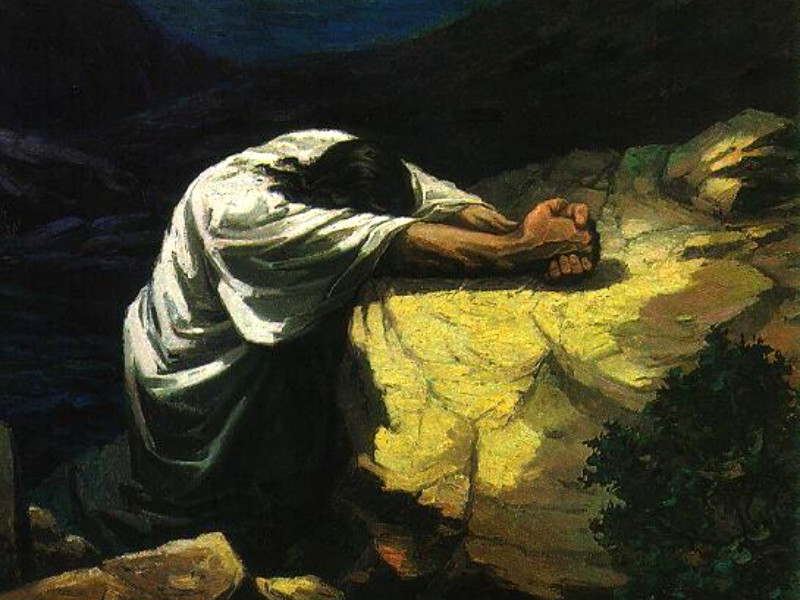
Prayer was an essential part of Jesus’ life, and should be an essential part of our lives. There are no secrets to prayer. There are no secrets to unlocking the key to prayer. Jesus openly taught how to pray, and again gave instruction to His disciples and God the Father ensured that the lessons would be preserved for us in His Scriptures. We must submit to God’s sovereignty, and make our petitions to Him fully acknowledging His Will. We don’t always get our way, because it’s not our will, but God’s Will. Let’s look at Jesus’ prayer in the garden of Gethsemane:
Matthew 26:39 (ESV) 39 And going a little farther he fell on his face and prayed, saying, “My Father, if it be possible, let this cup pass from me; nevertheless, not as I will, but as you will.”
In closing, I don’t want to pluck prayer out as some request roulette mechanic. The goal of prayer must be submission to God, and He does speak to us through His Word and by His Spirit so that we are not left completely unaware of what His Will is. Your kingdom come... He has shared so much with us already if we would just… read… the… Bible. Anyway, I love the way the Apostle Paul closes the letter to the Thessalonians.
1 Thessalonians 5:12-28 (ESV) 12 We ask you, brothers, to respect those who labor among you and are over you in the Lord and admonish you, 13 and to esteem them very highly in love because of their work. Be at peace among yourselves. 14 And we urge you, brothers, admonish the idle, encourage the fainthearted, help the weak, be patient with them all. 15 See that no one repays anyone evil for evil, but always seek to do good to one another and to everyone. 16 Rejoice always, 17 pray without ceasing, 18 give thanks in all circumstances; for this is the will of God in Christ Jesus for you. 19 Do not quench the Spirit. 20 Do not despise prophecies, 21 but test everything; hold fast what is good. 22 Abstain from every form of evil.
23 Now may the God of peace himself sanctify you completely, and may your whole spirit and soul and body be kept blameless at the coming of our Lord Jesus Christ. 24 He who calls you is faithful; he will surely do it.
25 Brothers, pray for us.
26 Greet all the brothers with a holy kiss.
27 I put you under oath before the Lord to have this letter read to all the brothers.
28 The grace of our Lord Jesus Christ be with you.
May the grace of our Lord Jesus Christ be with you, too.
FS

Repro. of painting by Emile Adan, copyrighted by Braun & Co., N.Y.
So, we’ve spoken a bit about delegated authority within the Scriptures. I’d like to continue in that thought by looking at several examples throughout the Old Testament. But I don’t want to lose sight of the end-goal of this series, so I want to anchor each post in this series in the Great Commission found in the book of Matthew:
Matthew 28:16-20 (NASB) The Great Commission
16 But the eleven disciples proceeded to Galilee, to the mountain which Jesus had designated. 17 When they saw Him, they worshiped Him; but some were doubtful. 18 And Jesus came up and spoke to them, saying, “All authority has been given to Me in heaven and on earth. 19 Go therefore and make disciples of all the nations, baptizing them in the name of the Father and the Son and the Holy Spirit, 20 teaching them to observe all that I commanded you; and lo, I am with you always, even to the end of the age.”
This is our mission. All of the scriptures are about Jesus Christ, and He left us with this charge before He ascended into Heaven. The book of Mark also records the Great Commission and summarizes the portion that I want to focus on for this study. The two accounts should be taken together. I believe that a strong case can be made for the modern church having made huge strides at following the “preaching the Gospel” as summarized by Mark (though the argument wains a bit when we look at the signs that follow believers)… but what I struggle to find is a modern-day understanding of “making disciples”. I suspect it will become increasingly difficult to connect or appreciate what it means to make disciples or to even be a disciple, because I believe that culturally we have lost sight of the concept of apprenticeship. Why? I blame individualism; however, having something to blame does not in itself address the problem. So, to explore the concept of Discipleship, I want to start out by breaking down discipleship into 3 major steps or phases: the calling, apprenticeship, and ministry. Taking the 2 accounts of the Great Commission, we are called by Him through the preaching of the Gospel, then we are to become disciples of the Word (apprenticeship) and then go out and be partakers in the Great Commission ourselves. I’m breaking this down only as a generalized theme, and am in no way trying to make hard-lined separations so that you must be in one phase or the other.
Let’s start by returning to the Genesis account of Adam and the Garden of Eden.
Genesis 1:26 (NASB) 26 Then God said, “Let Us make man in Our image, according to Our likeness; and let them rule over the fish of the sea and over the birds of the sky and over the cattle and over all the earth, and over every creeping thing that creeps on the earth.”
Here we have God announcing the purpose of man before He creates man, “…let them rule…”. We have our calling. Our purpose was determined before we were created. Now, on the grand scale, since we know that in the Kingdom of Heaven we will reign and rule with Christ; therefore all of man’s earthly existence fits in the apprenticeship phase… sure, but that is not where I want to go. For apprenticeship, and what that means in our daily walks, lets look at the individual call of Adam.
Genesis 2:8,9,15 (NASB) 8 The Lord God planted a garden toward the east, in Eden; and there He placed the man whom He had formed. 9 Out of the ground the Lord God caused to grow every tree that is pleasing to the sight and good for food…15 Then the Lord God took the man and put him into the garden of Eden to cultivate it and keep it…
Here, we have a garden that God planted and caused to grow, and then He places Adam in the garden to cultivate it. Here we have our first apprenticeship. God showed Adam how to cultivate His garden. Adam sins against God and fails his task, sending all of mankind into darkness and cursing the very ground he was supposed to cultivate and forfeiting his delegated authority over to whom had fathered Adam’s sin, the devil.
Genesis 3:21-23 (NASB) 21 The Lord God made garments of skin for Adam and his wife, and clothed them. 22 Then the Lord God said, “Behold, the man has become like one of Us, knowing good and evil; and now, he might stretch out his hand, and take also from the tree of life, and eat, and live forever”— 23 therefore the Lord God sent him out from the garden of Eden, to cultivate the ground from which he was taken.
Now, here our phases are broken somewhat, because the story of Adam is one of man’s failure and of God’s Sovereignty, Grace, Love and provision. We’ve already looked at how Jesus came to fulfill God’s plan and redeem all of mankind by paying the debt of Adam, by offering Himself as the Pure Spotless Lamb of Sacrifice. However, even after the fall, we have Adam being given his ministry, “to cultivate the ground from which he was taken“. I also like that we still have Adam being taught by God in that He, “made garments of skin…and clothed them“.
Let us now jump ahead a bit to another individual about whom we’ve discussed recently. Paul writes in Romans 4 about how Abram’s faith in God was credited to him as righteousness before the covenant of circumcision. Let us turn now to Genesis 12 which starts out with God’s calling of Abram:
Genesis 12:1-4 (NASB)
12 Now the Lord said to Abram,
“Go forth from your country,
And from your relatives
And from your father’s house,
To the land which I will show you;
2 And I will make you a great nation,
And I will bless you,
And make your name great;
And so you shall be a blessing;
3 And I will bless those who bless you,
And the one who curses you I will curse.
And in you all the families of the earth will be blessed.”
4 So Abram went forth as the Lord had spoken to him; and Lot went with him. Now Abram was seventy-five years old when he departed from Haran.
Seventy-five years old when God first calls Abram! I remember wringing my hands unsure of what God wanted from me as a 20yr old college failure. But I digress, here in Genesis we have a rather sudden and out-of-the-blue call of God to Abram. In Chapter 11 we have the lineage from Noah to Abram, Sarai, and Lot. Aside from some basic family data, the only thing we know about Abram at this point is that God has a plan and a calling for Abram… and its BIG. To this point, Abram has done nothing deserving of the call of God, just as Adam had done nothing to deserve his calling. The Bible… is about God. Also notice that there is no delay in moving from Calling to Apprenticeship, “So Abram went forth as the Lord had spoken to him“. What we will see here is that Abram has a long way to go before he can start experiencing the call on his life. He lies to Pharaoh in Egypt which almost leads to adultery (however, God intervenes), he and Lot have to part ways due to land not supporting both their wealth, and Lot takes the better looking land. Not exactly an explosive start to his calling, eh? Then the Lord speaks to him again
Genesis 13:14-17 (NASB) 14 The Lord said to Abram, after Lot had separated from him, “Now lift up your eyes and look from the place where you are, northward and southward and eastward and westward; 15 for all the land which you see, I will give it to you and to your descendants forever. 16 I will make your descendants as the dust of the earth, so that if anyone can number the dust of the earth, then your descendants can also be numbered. 17 Arise, walk about the land through its length and breadth; for I will give it to you.”
So, we see here God is continuing to reveal to Abram all that He intends to do in Abram’s life, and for his descendants. In Gen 14, we see 4 kings (Chedorlaomer’s team) come against 5 kings in the region (Bera king of Sodom’s team), and prevail against them, ransacking Sodom and taking with them Lot and his possessions. Abram rises up and defeats Cherdorlaomer and the kings with him and rescues Lot. That’s no small feat, not in the slightest. The Bible is quick to point out to whom goes the credit for such a feat…
Genesis 14:18-23 (NASB)
18 And Melchizedek king of Salem brought out bread and wine; now he was a priest of God Most High.19 He blessed him and said,
“Blessed be Abram of God Most High,
Possessor of heaven and earth;
20 And blessed be God Most High,
Who has delivered your enemies into your hand.”He gave him a tenth of all. 21 The king of Sodom said to Abram, “Give the people to me and take the goods for yourself.” 22 Abram said to the king of Sodom, “I have sworn to the Lord God Most High, possessor of heaven and earth, 23 that I will not take a thread or a sandal thong or anything that is yours, for fear you would say, ‘I have made Abram rich.’
Abram declines the “fulfill your calling quick” scheme. No doubt with all of the spoils of war, Abram could indeed have made himself a great nation. But he knew better, because he feared the One who had called him, and remembered that it would be He who would bring His Will to pass. Abram’s faith was not in the schemes of men (though he will still falter on this point regarding his wife… but hey… God’s Grace is truly amazing!); rather, it was in the Word of God. In Chapter 15, we see Abram ask God directly, “Oh Lord God what will you give me since I am childless…” and God answers him with a promise that his heir would come from his own body. It is then, that Abram believed in the Lord God and it was credited to him as righteousness (now we’ve come full-circle to Paul’s explanation of justification by faith in Romans 4). God’s call to Abram was a mighty call. And God had to work with Abram for many years. God changed Abram’s name to Abraham after establishing the covenant of circumcision and He had to deal with Abraham both in blessings and in rebukes. Twenty-five years after being called by God, Abraham finally has his son, Isaac. Abraham is 100 years old by the time a son is born to him. In the very next chapter, God tests Abraham. Now, I pray that we never have to deal with this level of testing to move on from apprenticeship to ministry, but Abraham passes the test for which he had been studying for 25 years (since the God called him):
Genesis 22:15-18 (NASB) 15 Then the angel of the Lord called to Abraham a second time from heaven, 16 and said, “By Myself I have sworn, declares the Lord, because you have done this thing and have not withheld your son, your only son, 17 indeed I will greatly bless you, and I will greatly multiply your seed as the stars of the heavens and as the sand which is on the seashore; and your seed shall possess the gate of their enemies. 18 In your seed all the nations of the earth shall be blessed, because you have obeyed My voice.”
Abraham didn’t do anything to invite God’s call on his life, anymore than Adam did. But what Abraham did after God initiated the call on his life: he believed in the Lord, and obeyed His voice. As Christians, we’ve been grafted into God’s everlasting covenant with Abraham through Jesus Christ, who bore within Himself the punishment for the sin of all mankind. We’ve been granted an inheritance in the Kingdom of Heaven, where we will reign and rule with Christ as heirs and joint heirs.
But what is our calling now? Remember the Great Commission (Mark 16 & Matthew 28). That is a calling for all of us who’ve answered the call of the Holy Spirit on our lives, to accept Jesus as our Lord and Savior. That is not to say that we don’t have individual callings. God has a plan for each of us made before we were born (Psalm 139:16) and when we are made alive in Christ, He gives us gifts and callings:
Ephesians 4:11-16 (NASB) 11 And He gave some as apostles, and some as prophets, and some as evangelists, and some as pastors and teachers, 12 for the equipping of the saints for the work of service, to the building up of the body of Christ; 13 until we all attain to the unity of the faith, and of the knowledge of the Son of God, to a mature man, to the measure of the stature which belongs to the fullness of Christ. 14 As a result, we are no longer to be children, tossed here and there by waves and carried about by every wind of doctrine, by the trickery of men, by craftiness in deceitful scheming; 15 but speaking the truth in love, we are to grow up in all aspects into Him who is the head, even Christ, 16 from whom the whole body, being fitted and held together by what every joint supplies, according to the proper working of each individual part, causes the growth of the body for the building up of itself in love.
It takes time, we will stumble along the way, but God is faithful to complete His work in each of us. Not everyone has the same calling, and we really have no say in what our calling will be, nor can we randomly pick a calling from the Bible and implore to grant us that calling. God does the calling, and the teaching, and the perfecting. What do we do? In closing this post (we’ll be revisiting this topic), let us turn to James 4:
James 4:7-10 (NASB) 7 Submit therefore to God. Resist the devil and he will flee from you. 8 Draw near to God and He will draw near to you. Cleanse your hands, you sinners; and purify your hearts, you double-minded. 9 Be miserable and mourn and weep; let your laughter be turned into mourning and your joy to gloom. 10 Humble yourselves in the presence of the Lord, and He will exalt you.
We submit to God. Please know that I am in no way claiming to have succeeded in this myself. I struggle as you. I stumble just as you stumble (maybe even in the same areas). And like you, I put my hope in Jesus Christ. For apart from Him, I am nothing.
May the Lord bless and keep you,
In Him,
FS

We are the branches
I’m so excited to read passages of scripture I’ve read before, only this time to see something new for me. In my reading the other day, I came across a passage of scripture that I’m confident I have read before, several times; however, this time it hit me squarely in the chest. But, before we get to that passage in Romans, lets start with one of Jesus’ messages found in John which I believe serves as the backdrop for Paul’s discussion:
John 15:1-11 (NASB) 15 “I am the true vine, and My Father is the vinedresser. 2 Every branch in Me that does not bear fruit, He takes away; and every branch that bears fruit, He prunes it so that it may bear more fruit. 3 You are already clean because of the word which I have spoken to you. 4 Abide in Me, and I in you. As the branch cannot bear fruit of itself unless it abides in the vine, so neither can you unless you abide in Me. 5 I am the vine, you are the branches; he who abides in Me and I in him, he bears much fruit, for apart from Me you can do nothing. 6 If anyone does not abide in Me, he is thrown away as a branch and dries up; and they gather them, and cast them into the fire and they are burned. 7 If you abide in Me, and My words abide in you, ask whatever you wish, and it will be done for you. 8 My Father is glorified by this, that you bear much fruit, and so prove to be My disciples. 9 Just as the Father has loved Me, I have also loved you; abide in My love. 10 If you keep My commandments, you will abide in My love; just as I have kept My Father’s commandments and abide in His love. 11 These things I have spoken to you so that My joy may be in you, and that your joy may be made full.
Jesus came first to the Jews… but He came also for the Gentiles. Sometime in the Middle Ages, the notion that Christians were somehow favored by God over the Jews who crucified Jesus. I’m not interested in delving into the history of how such false doctrine could take root, but given the state of the Roman Catholic Church at the time… well… let us move on. In contemporary Christianity, I still catch hints of disdain or scoffing at Israel. In fact, just yesterday I saw a detestable headline from a self-described Christian blog declaring “Israel is no longer God’s chosen people”. Such a dangerous thing to proclaim, and such a pity. But this is not a new thing (it amazes me how every decade in this country people think they’ve discovered something new… something that makes the Bible obsolete, or portions of it).
The Apostle Paul had to confront such ideology in his letter to the Romans. After the exploring the last post about how Paul explains that salvation by faith is present in the Old Testament, I continued reading. What struck me next was just how awesomely Paul addresses what was going to be a major problem in Centuries to come (arguably, that could be said of the whole of Scriptures, but this point of Christians thinking ill of the Jews is what struck me this time). Lets turn to Romans 11, to see what Paul says about having been grafted into the True Vine, that is, Jesus Christ.
Romans 11:14-27 (NASB)
14 if somehow I might move to jealousy my fellow countrymen and save some of them. 15 For if their rejection is the reconciliation of the world, what will their acceptance be but life from the dead? 16 If the first piece of dough is holy, the lump is also; and if the root is holy, the branches are too.
17 But if some of the branches were broken off, and you, being a wild olive, were grafted in among them and became partaker with them of the rich root of the olive tree, 18 do not be arrogant toward the branches; but if you are arrogant, remember that it is not you who supports the root, but the root supports you. 19 You will say then, “Branches were broken off so that I might be grafted in.” 20 Quite right, they were broken off for their unbelief, but you stand by your faith. Do not be conceited, but fear; 21 for if God did not spare the natural branches, He will not spare you, either. 22 Behold then the kindness and severity of God; to those who fell, severity, but to you, God’s kindness, if you continue in His kindness; otherwise you also will be cut off. 23 And they also, if they do not continue in their unbelief, will be grafted in, for God is able to graft them in again. 24 For if you were cut off from what is by nature a wild olive tree, and were grafted contrary to nature into a cultivated olive tree, how much more will these who are the natural branches be grafted into their own olive tree?
25 For I do not want you, brethren, to be uninformed of this mystery—so that you will not be wise in your own estimation—that a partial hardening has happened to Israel until the fullness of the Gentiles has come in; 26 and so all Israel will be saved; just as it is written,“The Deliverer will come from Zion,
He will remove ungodliness from Jacob.”
27 “This is My covenant with them,
When I take away their sins.”
Israel remains the first-born son of God (not to be confused with Jacob, who was in-fact the second-born son, but to whom Esau traded his birthright for a bowl of stew; rather, the descendants of Abraham are first described as God’s chosen people) and we, the Gentiles are adopted through Jesus Christ… Grafted into the True Vine. Notice the warning in verse 25, “so that you will not be wise in your own estimation“. Paul is warning the redeemed Gentiles not to misunderstand the partial hardening that happened to Israel. Jesus came when He did, at a time when Israel was partially hardened and Rome was in power so that He might lay down His Life as payment for all of our sins… to remove ungodliness from Jacob and to take away their sins. Praise the Lord.
In Him,
FS
 Faithful Stewardship
You must be logged in to post a comment.