We Remember | Good Friday through Resurrection Sunday

Christ in Gethsemane by Heinrich Hofmann

Christ in Gethsemane by Heinrich Hofmann

Today is a special day of remembrance for the Gift of Grace from God. As Christians, this is a day we should keep in remembrance every day of our lives (Give us this day our daily bread, and forgive us our trespasses as we forgive those who trespass against us), but today is specially highlighted as a day of remembrance.

Remember who we were

Ephesians 2:1-9 (ESV) 1 And you were dead in the trespasses and sins 2 in which you once walked, following the course of this world, following the prince of the power of the air, the spirit that is now at work in the sons of disobedience— 3 among whom we all once lived in the passions of our flesh, carrying out the desires of the body and the mind, and were by nature children of wrath, like the rest of mankind. 4 But God, being rich in mercy, because of the great love with which he loved us, 5 even when we were dead in our trespasses, made us alive together with Christ—by grace you have been saved— 6 and raised us up with him and seated us with him in the heavenly places in Christ Jesus, 7 so that in the coming ages he might show the immeasurable riches of his grace in kindness toward us in Christ Jesus. 8 For by grace you have been saved through faith. And this is not your own doing; it is the gift of God, 9 not a result of works, so that no one may boast.

Romans 5:1-11 (ESV) 1 Therefore, since we have been justified by faith, we have peace with God through our Lord Jesus Christ. 2 Through him we have also obtained access by faith into this grace in which we stand, and we rejoice in hope of the glory of God. 3 Not only that, but we rejoice in our sufferings, knowing that suffering produces endurance, 4 and endurance produces character, and character produces hope, 5 and hope does not put us to shame, because God’s love has been poured into our hearts through the Holy Spirit who has been given to us. 6 For while we were still weak, at the right time Christ died for the ungodly. 7 For one will scarcely die for a righteous person—though perhaps for a good person one would dare even to die— 8 but God shows his love for us in that while we were still sinners, Christ died for us. 9 Since, therefore, we have now been justified by his blood, much more shall we be saved by him from the wrath of God. 10 For if while we were enemies we were reconciled to God by the death of his Son, much more, now that we are reconciled, shall we be saved by his life. 11 More than that, we also rejoice in God through our Lord Jesus Christ, through whom we have now received reconciliation.

Remember what He did

Isaiah 53 (ESV)

53 Who has believed what he has heard from us?
And to whom has the arm of the Lord been revealed?
2 For he grew up before him like a young plant,
and like a root out of dry ground;
he had no form or majesty that we should look at him,
and no beauty that we should desire him.
3 He was despised and rejected by men;
a man of sorrows, and acquainted with grief;
and as one from whom men hide their faces
he was despised, and we esteemed him not.

4 Surely he has borne our griefs
and carried our sorrows;
yet we esteemed him stricken,
smitten by God, and afflicted.
5 But he was pierced for our transgressions;
he was crushed for our iniquities;
upon him was the chastisement that brought us peace,
and with his wounds we are healed.
6 All we like sheep have gone astray;
we have turned—every one—to his own way;
and the Lord has laid on him
the iniquity of us all.

7 He was oppressed, and he was afflicted,
yet he opened not his mouth;
like a lamb that is led to the slaughter,
and like a sheep that before its shearers is silent,
so he opened not his mouth.
8 By oppression and judgment he was taken away;
and as for his generation, who considered
that he was cut off out of the land of the living,
stricken for the transgression of my people?
9 And they made his grave with the wicked
and with a rich man in his death,
although he had done no violence,
and there was no deceit in his mouth.

10 Yet it was the will of the Lord to crush him;
he has put him to grief;
when his soul makes an offering for guilt,
he shall see his offspring; he shall prolong his days;
the will of the Lord shall prosper in his hand.
11 Out of the anguish of his soul he shall see and be satisfied;
by his knowledge shall the righteous one, my servant,
make many to be accounted righteous,
and he shall bear their iniquities.
12 Therefore I will divide him a portion with the many,
and he shall divide the spoil with the strong,
because he poured out his soul to death
and was numbered with the transgressors;
yet he bore the sin of many,
and makes intercession for the transgressors.

Remember that He did not leave us alone

John 14:15-31 (ESV) 15 “If you love me, you will keep my commandments. 16 And I will ask the Father, and he will give you another Helper, to be with you forever, 17 even the Spirit of truth, whom the world cannot receive, because it neither sees him nor knows him. You know him, for he dwells with you and will be in you. 18 “I will not leave you as orphans; I will come to you. 19 Yet a little while and the world will see me no more, but you will see me. Because I live, you also will live. 20 In that day you will know that I am in my Father, and you in me, and I in you. 21 Whoever has my commandments and keeps them, he it is who loves me. And he who loves me will be loved by my Father, and I will love him and manifest myself to him.” 22 Judas (not Iscariot) said to him, “Lord, how is it that you will manifest yourself to us, and not to the world?” 23 Jesus answered him, “If anyone loves me, he will keep my word, and my Father will love him, and we will come to him and make our home with him. 24 Whoever does not love me does not keep my words. And the word that you hear is not mine but the Father’s who sent me. 25 “These things I have spoken to you while I am still with you. 26 But the Helper, the Holy Spirit, whom the Father will send in my name, he will teach you all things and bring to your remembrance all that I have said to you. 27 Peace I leave with you; my peace I give to you. Not as the world gives do I give to you. Let not your hearts be troubled, neither let them be afraid. 28 You heard me say to you, ‘I am going away, and I will come to you.’ If you loved me, you would have rejoiced, because I am going to the Father, for the Father is greater than I. 29 And now I have told you before it takes place, so that when it does take place you may believe. 30 I will no longer talk much with you, for the ruler of this world is coming. He has no claim on me, 31 but I do as the Father has commanded me, so that the world may know that I love the Father. Rise, let us go from here.

John 16:1-14 (ESV) 1 “I have said all these things to you to keep you from falling away. 2 They will put you out of the synagogues. Indeed, the hour is coming when whoever kills you will think he is offering service to God. 3 And they will do these things because they have not known the Father, nor me. 4 But I have said these things to you, that when their hour comes you may remember that I told them to you. “I did not say these things to you from the beginning, because I was with you. 5 But now I am going to him who sent me, and none of you asks me, ‘Where are you going?’ 6 But because I have said these things to you, sorrow has filled your heart. 7 Nevertheless, I tell you the truth: it is to your advantage that I go away, for if I do not go away, the Helper will not come to you. But if I go, I will send him to you. 8 And when he comes, he will convict the world concerning sin and righteousness and judgment: 9 concerning sin, because they do not believe in me; 10 concerning righteousness, because I go to the Father, and you will see me no longer; 11 concerning judgment, because the ruler of this world is judged. 12 “I still have many things to say to you, but you cannot bear them now. 13 When the Spirit of truth comes, he will guide you into all the truth, for he will not speak on his own authority, but whatever he hears he will speak, and he will declare to you the things that are to come. 14 He will glorify me, for he will take what is mine and declare it to you.

Remember that He is Returning

Matthew 24:29-31 (ESV) 29 “Immediately after the tribulation of those days the sun will be darkened, and the moon will not give its light, and the stars will fall from heaven, and the powers of the heavens will be shaken. 30 Then will appear in heaven the sign of the Son of Man, and then all the tribes of the earth will mourn, and they will see the Son of Man coming on the clouds of heaven with power and great glory. 31 And he will send out his angels with a loud trumpet call, and they will gather his elect from the four winds, from one end of heaven to the other.

1 Thessalonians 4:13-18 (ESV) 13 But we do not want you to be uninformed, brothers, about those who are asleep, that you may not grieve as others do who have no hope. 14 For since we believe that Jesus died and rose again, even so, through Jesus, God will bring with him those who have fallen asleep. 15 For this we declare to you by a word from the Lord, that we who are alive, who are left until the coming of the Lord, will not precede those who have fallen asleep. 16 For the Lord himself will descend from heaven with a cry of command, with the voice of an archangel, and with the sound of the trumpet of God. And the dead in Christ will rise first. 17 Then we who are alive, who are left, will be caught up together with them in the clouds to meet the Lord in the air, and so we will always be with the Lord. 18 Therefore encourage one another with these words.

Revelation 19:11-16 (ESV) 11 Then I saw heaven opened, and behold, a white horse! The one sitting on it is called Faithful and True, and in righteousness he judges and makes war. 12 His eyes are like a flame of fire, and on his head are many diadems, and he has a name written that no one knows but himself. 13 He is clothed in a robe dipped in blood, and the name by which he is called is The Word of God. 14 And the armies of heaven, arrayed in fine linen, white and pure, were following him on white horses. 15 From his mouth comes a sharp sword with which to strike down the nations, and he will rule them with a rod of iron. He will tread the winepress of the fury of the wrath of God the Almighty. 16 On his robe and on his thigh he has a name written, King of kings and Lord of lords.

Brothers and sisters in Christ, it is my prayer that you find encouragement in this post, and in this Day (the whole weekend) of Remembrance. Encourage one another with these words. Preach the Gospel, and walk in the Grace of God, the Spirit of God, and in Love of God.

1 Thessalonians 5:23-24 (ESV) 23 Now may the God of peace himself sanctify you completely, and may your whole spirit and soul and body be kept blameless at the coming of our Lord Jesus Christ. 24 He who calls you is faithful; he will surely do it.

In Him,
Jorge

Discernment | Prophecy or Apostasy?

The primary goal of Faithful Stewardship is to study the Word of God. Knowing what the Word of God says as the standard of Truth will preserve you from false doctrine. However, there is a great need in this present day to understand that there are false prophets, false teachers, and even false christs leading away the saints away from the faith, from the Gospel of Jesus Christ.  I’d like to borrow an exhortation from Christ Rosebrough at Fighting for the Faith, “please, don’t come with an open mind; rather, come with an open Bible”. We really can’t rely on our feelings or emotions to warn us of false teaching or false doctrine, we really need to hold every teacher, writer, speaker to the Word of God. Today, I just want to look at the basis for why it is so important to practice discernment and not to just “go with it” in the name of “not being a thorn in someone’s side”.

Remembering that Jesus Christ didn’t come to abolish the Law, but to fulfill it, let us look at what the Law says about false prophets.

Deuteronomy 13 (ESV)  1 “If a prophet or a dreamer of dreams arises among you and gives you a sign or a wonder, 2 and the sign or wonder that he tells you comes to pass, and if he says, ‘Let us go after other gods,’ which you have not known, ‘and let us serve them,’ 3 you shall not listen to the words of that prophet or that dreamer of dreams. For the Lord your God is testing you, to know whether you love the Lord your God with all your heart and with all your soul. 4 You shall walk after the Lord your God and fear him and keep his commandments and obey his voice, and you shall serve him and hold fast to him. 5 But that prophet or that dreamer of dreams shall be put to death, because he has taught rebellion against the Lord your God, who brought you out of the land of Egypt and redeemed you out of the house of slavery, to make you leave the way in which the Lord your God commanded you to walk. So you shall purge the evil from your midst. 6 “If your brother, the son of your mother, or your son or your daughter or the wife you embrace or your friend who is as your own soul entices you secretly, saying, ‘Let us go and serve other gods,’ which neither you nor your fathers have known, 7 some of the gods of the peoples who are around you, whether near you or far off from you, from the one end of the earth to the other, 8 you shall not yield to him or listen to him, nor shall your eye pity him, nor shall you spare him, nor shall you conceal him. 9 But you shall kill him. Your hand shall be first against him to put him to death, and afterward the hand of all the people. 10 You shall stone him to death with stones, because he sought to draw you away from the Lord your God, who brought you out of the land of Egypt, out of the house of slavery. 11 And all Israel shall hear and fear and never again do any such wickedness as this among you. 12 “If you hear in one of your cities, which the Lord your God is giving you to dwell there, 13 that certain worthless fellows have gone out among you and have drawn away the inhabitants of their city, saying, ‘Let us go and serve other gods,’ which you have not known, 14 then you shall inquire and make search and ask diligently. And behold, if it be true and certain that such an abomination has been done among you, 15 you shall surely put the inhabitants of that city to the sword, devoting it to destruction, all who are in it and its cattle, with the edge of the sword. 16 You shall gather all its spoil into the midst of its open square and burn the city and all its spoil with fire, as a whole burnt offering to the Lord your God. It shall be a heap forever. It shall not be built again. 17 None of the devoted things shall stick to your hand, that the Lord may turn from the fierceness of his anger and show you mercy and have compassion on you and multiply you, as he swore to your fathers, 18 if you obey the voice of the Lord your God, keeping all his commandments that I am commanding you today, and doing what is right in the sight of the Lord your God.

I’d like to make a couple of notes here. Firstly, according to the old covenant, they were to be put to death. Under the new covenant, we are not to physically put them to death, but death is still what is required for this sin. According Romans Chapter 6, we know that we must die to sin, die to our flesh, by joining in Christ’s death, so that we might be made alive in Him. Repentance, Atonement, Returning to the Gospel of Jesus Christ. The false teachers are to repent of their idolatry! That is why we still have the Law and the Prophets. The letter of the law kills, so that those of us who have died to sin might be made alive in Christ before we die in the flesh and face Judgement. This is real. If you ascribe to the secessionist view, then you probably believe the office of the Prophet to be closed. I do not hold to that view, because I don’t see any support for it in the Bible. Neither do I see anything in Scripture that modified the office of Prophet; therefore, the standard for a Prophet of God remains unchanged. God promised His people to send Prophets, because Israel begged Moses to speak to them the Words of God, for they were too scared to hear God’s voice for themselves (Exodus 20:18-21). In this present day, for anyone who claims to be a Prophet, even if their signs/wonders come true, if they preach themselves, or a god that is not the One True God of the Bible (pantheism, gnosticism, humanism, etc.) they are to be put to death (called to repentance and cut off from the people until such repentance according to the Law) and we are NOT to listen to them. As Paul told Titus, “they are to be silenced” (Titus 1:11). I would also argue that this same test be applied to anyone claiming to be a present-day Apostle. Again, even if the signs/wonders come true, if what they preach is not in keeping with sound doctrine (Titus 2) they are to be silenced and “put to death” (called to repent). Now, we also run into some abuses in the current charismatic/evangelical circles where they are wise enough not to claim for themselves the office of Prophet or Apostle, yet they feel completely free to claim to speak on God’s behalf via a gift of the prophecy, knowledge, understanding from God the Holy Spirit. For some reason, in this community they think it’s okay to “prophecy” in the Name of God things that do not come to pass. Is that okay? There is also a test for that in the Law as well.

Deuteronomy 18:9-22 (ESV) 9 “When you come into the land that the Lord your God is giving you, you shall not learn to follow the abominable practices of those nations. 10 There shall not be found among you anyone who burns his son or his daughter as an offering, anyone who practices divination or tells fortunes or interprets omens, or a sorcerer 11 or a charmer or a medium or a necromancer or one who inquires of the dead, 12 for whoever does these things is an abomination to the Lord. And because of these abominations the Lord your God is driving them out before you. 13 You shall be blameless before the Lord your God, 14 for these nations, which you are about to dispossess, listen to fortune-tellers and to diviners. But as for you, the Lord your God has not allowed you to do this. 15 “The Lord your God will raise up for you a prophet like me from among you, from your brothers—it is to him you shall listen— 16 just as you desired of the Lord your God at Horeb on the day of the assembly, when you said, ‘Let me not hear again the voice of the Lord my God or see this great fire any more, lest I die.’ 17 And the Lord said to me, ‘They are right in what they have spoken. 18 I will raise up for them a prophet like you from among their brothers. And I will put my words in his mouth, and he shall speak to them all that I command him. 19 And whoever will not listen to my words that he shall speak in my name, I myself will require it of him. 20 But the prophet who presumes to speak a word in my name that I have not commanded him to speak, or who speaks in the name of other gods, that same prophet shall die.’ 21 And if you say in your heart, ‘How may we know the word that the Lord has not spoken?’— 22 when a prophet speaks in the name of the Lord, if the word does not come to pass or come true, that is a word that the Lord has not spoken; the prophet has spoken it presumptuously. You need not be afraid of him.

Here, we see that false prophets are not to be feared. So then, the bigger sin here, even in the Law, is anchored in the teaching of the one who claims to be speaking the Words of God. If their teaching leads the Children of God astray, they are to be silenced and put to death (again, we understand this now in the New Covenant to be a call to repentance, that they might die to their sin and repent and turn back to God through the Gospel of Jesus Christ). It is one thing to falsely prophecy signs and wonders that don’t come true… for the Law identifies that the prophet has spoken presumptuously, and they need not be feared. Do not fear these individuals, they are speaking of their own. I think this happens when young Christians are poorly discipled in the Word of God and out of their zeal try to “operate in the gifts of the Holy Spirit” and end up speaking from themselves rather than from the Holy Spirit”. This is not a “safe zone” because if they take the next step to preach/teach/or lead to a false gospel, false spirits, false teachings, then there is a major problem. For according to the old covenant, this false teaching and leading astray from the One True God bore the penalty of death. This is Sin.

Even more troubling, is that false teachers often buy their own lie first, even before leading away others after gods they have not known (borrowing from the passages in Exodus above). We understand that only the work of the Holy Spirit is capable of opening the hearts of sinners to the Gospel of Grace… how much more then does the Hand of God have to fall on those who once professed a faith in the Gospel of Jesus Christ, only to have let themselves be led astray by spirits of error or by pride/presumptuous assertions? The Apostles spoke strongly against false teachers, false prophets, and false christs. That is because when Jesus was asked about the end times (Matthew 24), He warned strongly against false christs even leading astray the elect. Being deceived is a worse state than being lost.

2 Peter 2:17-22 (ESV) 17 These are waterless springs and mists driven by a storm. For them the gloom of utter darkness has been reserved. 18 For, speaking loud boasts of folly, they entice by sensual passions of the flesh those who are barely escaping from those who live in error. 19 They promise them freedom, but they themselves are slaves of corruption. For whatever overcomes a person, to that he is enslaved. 20 For if, after they have escaped the defilements of the world through the knowledge of our Lord and Savior Jesus Christ, they are again entangled in them and overcome, the last state has become worse for them than the first. 21 For it would have been better for them never to have known the way of righteousness than after knowing it to turn back from the holy commandment delivered to them. 22 What the true proverb says has happened to them: “The dog returns to its own vomit, and the sow, after washing herself, returns to wallow in the mire.”

I encourage you, brothers and sisters in the Body of Christ, to hold firmly to the Word of God. Scrutinize heavily anything extra-biblical (outside of scripture) being presented as the Word of God. Test the spirits (1 John 4), for God the Holy Spirit will never object to His Spoken Word being measured by His Written Word, for He is One God. Silence the false teachers and issue a rebuke and a call to repentance, burn up the false doctrines and do not return to them. Preach the Word of God and teach in accordance with sound doctrine. For we are stewards of the Gospel of Jesus Christ. It is His Gospel, entrusted to us as His stewards. And do not fear the false prophet, false teacher, even the false christ. Fear and love the Lord God.

Jude 1:24-25 (ESV) Now to him who is able to keep you from stumbling and to present you blameless before the presence of his glory with great joy, to the only God, our Savior, through Jesus Christ our Lord, be glory, majesty, dominion, and authority, before all time and now and forever. Amen.

May the Lord Bless you and keep you,
In Him,
Jorge

Naaman the Leper | The Humbling Call of the Gospel

??????????I’d like to take a moment to share a beautiful story of the humbling call of the Gospel… from 2 Kings.

2 Kings 5:1-10 (ESV) 1 Naaman, commander of the army of the king of Syria, was a great man with his master and in high favor, because by him the Lord had given victory to Syria. He was a mighty man of valor, but he was a leper. 2 Now the Syrians on one of their raids had carried off a little girl from the land of Israel, and she worked in the service of Naaman’s wife. 3 She said to her mistress, “Would that my lord were with the prophet who is in Samaria! He would cure him of his leprosy.” 4 So Naaman went in and told his lord, “Thus and so spoke the girl from the land of Israel.” 5 And the king of Syria said, “Go now, and I will send a letter to the king of Israel.” So he went, taking with him ten talents of silver, six thousand shekels of gold, and ten changes of clothing. 6 And he brought the letter to the king of Israel, which read, “When this letter reaches you, know that I have sent to you Naaman my servant, that you may cure him of his leprosy.” 7 And when the king of Israel read the letter, he tore his clothes and said, “Am I God, to kill and to make alive, that this man sends word to me to cure a man of his leprosy? Only consider, and see how he is seeking a quarrel with me.” 8 But when Elisha the man of God heard that the king of Israel had torn his clothes, he sent to the king, saying, “Why have you torn your clothes? Let him come now to me, that he may know that there is a prophet in Israel.” 9 So Naaman came with his horses and chariots and stood at the door of Elisha’s house. 10 And Elisha sent a messenger to him, saying, “Go and wash in the Jordan seven times, and your flesh shall be restored, and you shall be clean.”

Naaman is a man of status, stature, and accomplishment. He is wealthy and a favored of the king of Syria. But he has leprosy. He is told that there is a prophet in Samaria (capital of the northern kingdom of Israel), and asks permission from the king of Syria to go to Israel to find this prophet.

2 Kings 5:11-19a (ESV) 11 But Naaman was angry and went away, saying, “Behold, I thought that he would surely come out to me and stand and call upon the name of the Lord his God, and wave his hand over the place and cure the leper. 12 Are not Abana and Pharpar, the rivers of Damascus, better than all the waters of Israel? Could I not wash in them and be clean?” So he turned and went away in a rage. 13 But his servants came near and said to him, “My father, it is a great word the prophet has spoken to you; will you not do it? Has he actually said to you, ‘Wash, and be clean’?” 14 So he went down and dipped himself seven times in the Jordan, according to the word of the man of God, and his flesh was restored like the flesh of a little child, and he was clean. 15 Then he returned to the man of God, he and all his company, and he came and stood before him. And he said, “Behold, I know that there is no God in all the earth but in Israel; so accept now a present from your servant.” 16 But he said, “As the Lord lives, before whom I stand, I will receive none.” And he urged him to take it, but he refused. 17 Then Naaman said, “If not, please let there be given to your servant two mule loads of earth, for from now on your servant will not offer burnt offering or sacrifice to any god but the Lord. 18 In this matter may the Lord pardon your servant: when my master goes into the house of Rimmon to worship there, leaning on my arm, and I bow myself in the house of Rimmon, when I bow myself in the house of Rimmon, the Lord pardon your servant in this matter.” 19 He said to him, “Go in peace.”

Naaman was angry at the simplicity of Elisha’s command. He expected ceremony, he expected penance, he expected to have to do something only a person of his status and stature could do, to gain a favor from God specially designed of a man of his caliber. However, in his anger he was not beyond heeding the wise counsel of his servants, who rightly rejoiced in the simplicity of the task. Therefore, Naaman, a wealthy and prominent pagan, humbled himself before the Lord God of Israel, and was healed of his disease, and was made clean. He confesses the sovereignty of the one True God of Israel, and commits to serving the God of Israel for the rest of his days. Pride almost prevented Naaman from knowing the God of Israel. He is not alone in this. Let’s take a moment to visit a similar encounter in Matthew 19.

Matthew 19:16-23 (ESV) 16 And behold, a man came up to him, saying, “Teacher, what good deed must I do to have eternal life?” 17 And he said to him, “Why do you ask me about what is good? There is only one who is good. If you would enter life, keep the commandments.” 18 He said to him, “Which ones?” And Jesus said, “You shall not murder, You shall not commit adultery, You shall not steal, You shall not bear false witness, 19 Honor your father and mother, and, You shall love your neighbor as yourself.” 20 The young man said to him, “All these I have kept. What do I still lack?” 21 Jesus said to him, “If you would be perfect, go, sell what you possess and give to the poor, and you will have treasure in heaven; and come, follow me.” 22 When the young man heard this he went away sorrowful, for he had great possessions. 23 And Jesus said to his disciples, “Truly, I say to you, only with difficulty will a rich person enter the kingdom of heaven.

In this case, the rich you man was looking at Jesus face to face, an his pride was too much to overcome (in this moment, at least. I often wonder if he might have repented later to follow Christ). This rich ruler already thought himself to be worthy of eternal life. He went away sorrowful at hearing that he needed to become perfect. He simply couldn’t let go of all that he based his identity on (his wealth) to follow Jesus and secure eternal life. Much like Naaman walked away angry. The Gospel requires humility. Such a simple plan, devoid of anything that men might boast. Naaman humbled himself, and I can only hope that the rich young man also humbled himself and repented later. The Apostle Paul had much to say about boasting in the wrong things; let’s look at a couple of examples:

Ephesians 2:8-10 (ESV) 8 For by grace you have been saved through faith. And this is not your own doing; it is the gift of God, 9 not a result of works, so that no one may boast. 10 For we are his workmanship, created in Christ Jesus for good works, which God prepared beforehand, that we should walk in them.

1 Corinthians 1:26-31 (ESV) 26 For consider your calling, brothers: not many of you were wise according to worldly standards, not many were powerful, not many were of noble birth. 27 But God chose what is foolish in the world to shame the wise; God chose what is weak in the world to shame the strong; 28 God chose what is low and despised in the world, even things that are not, to bring to nothing things that are, 29 so that no human being might boast in the presence of God. 30 And because of Him you are in Christ Jesus, who became to us wisdom from God, righteousness and sanctification and redemption, 31 so that, as it is written, “Let the one who boasts, boast in the Lord.”

Now, I want to also to point out what happens to Gehazi, when he decides to take advantage of the newly saved Naaman for selfish gain.

2 Kings 5:19b-27 (ESV) 19b But when Naaman had gone from him a short distance, 20 Gehazi, the servant of Elisha the man of God, said, “See, my master has spared this Naaman the Syrian, in not accepting from his hand what he brought. As the Lord lives, I will run after him and get something from him.” 21 So Gehazi followed Naaman. And when Naaman saw someone running after him, he got down from the chariot to meet him and said, “Is all well?” 22 And he said, “All is well. My master has sent me to say, ‘There have just now come to me from the hill country of Ephraim two young men of the sons of the prophets. Please give them a talent of silver and two changes of clothing.’” 23 And Naaman said, “Be pleased to accept two talents.” And he urged him and tied up two talents of silver in two bags, with two changes of clothing, and laid them on two of his servants. And they carried them before Gehazi. 24 And when he came to the hill, he took them from their hand and put them in the house, and he sent the men away, and they departed. 25 He went in and stood before his master, and Elisha said to him, “Where have you been, Gehazi?” And he said, “Your servant went nowhere.” 26 But he said to him, “Did not my heart go when the man turned from his chariot to meet you? Was it a time to accept money and garments, olive orchards and vineyards, sheep and oxen, male servants and female servants? 27 Therefore the leprosy of Naaman shall cling to you and to your descendants forever.” So he went out from his presence a leper, like snow.

Did not my heart go… Elisha was heartbroken by the foolishness and greed of Gehazi. Gehazi was a servant of the man of God, he had no need of anything. Naaman was made whole by God and had dedicated himself to service of the One True God. Elisha declared to Naaman “as the Lord lives” he would not accept payment from Naaman for that which God had done. Given Naaman’s problem of pride that almost made him miss out on his healing, perhaps there was a concern here that allowing Naaman to pay for his healing might leave a door open for the sin of pride to return? That is conjecture on my part, since we don’t have an explanation in this text. But what we do have, is Gehazi taking advantage of Naaman’s desire to return a blessing to Elisha so that he might become wealthy. In the end, he paid a horrible price, and the leprosy of Naaman came upon Gehazi and his descendants forever. This level of permanency we see echoed in 2 Peter 2, when the Apostle Peter is warning of false prophets and teachers:

2 Peter 2 (ESV) 1 But false prophets also arose among the people, just as there will be false teachers among you, who will secretly bring in destructive heresies, even denying the Master who bought them, bringing upon themselves swift destruction. 2 And many will follow their sensuality, and because of them the way of truth will be blasphemed. 3 And in their greed they will exploit you with false words. Their condemnation from long ago is not idle, and their destruction is not asleep…

Is it no wonder, then that in every discussion of the qualification of Church leaders we see a reference to dishonest gain? Paul, in his letter to Titus puts together both the standard and the warning quite well:

Titus 1:6-11 (ESV) 6 if anyone is above reproach, the husband of one wife, and his children are believers and not open to the charge of debauchery or insubordination. 7 For an overseer, as God’s steward, must be above reproach. He must not be arrogant or quick-tempered or a drunkard or violent or greedy for gain, 8 but hospitable, a lover of good, self-controlled, upright, holy, and disciplined. 9 He must hold firm to the trustworthy word as taught, so that he may be able to give instruction in sound doctrine and also to rebuke those who contradict it. 10 For there are many who are insubordinate, empty talkers and deceivers, especially those of the circumcision party. 11 They must be silenced, since they are upsetting whole families by teaching for shameful gain what they ought not to teach.

The role of Overseer is not to be taken lightly. The temptation of taking advantage of the children of God for personal gain is ever-present and never happens “all at once”. This is also why a plurality of elders is essential, so that they can keep each other in check. The penalty for false teaching or becoming a stumbling block to those young in the faith are severe, and to be avoided at all cost.

The story of God healing Naaman is a wonderful story, especially for those of us who are not born children of Israel. As the Lord lives… He is the One True God, who loved us so much that He gave His Son, Jesus, as the final atoning sacrifice for the sin of man, so that through Him we might be called sons and daughters of the Most High God.

Jude 1:24-25 (ESV) Now to him who is able to keep you from stumbling and to present you blameless before the presence of his glory with great joy, to the only God, our Savior, through Jesus Christ our Lord, be glory, majesty, dominion, and authority, before all time and now and forever. Amen.

May the Lord Bless you and keep you always,
In Him,
Jorge

DiM | “I am Mountain” by Gungor

Over the past couple of days, I’ve heard a new song being pushed by Air1 radio. The song melody is very different from other songs of the day. Not entirely unique, but different enough to catch my attention. However, this morning I caught the song from beginning to end, and thought I’d try to catch the meaning of the song… I was disappointed. Who is the mountain? The artist, apparently. Let’s take a look at the lyrics of the song:

I AM MOUNTAIN
(Michael Gungor / Lisa Gungor)

I am mountain, I am dust
Constellations made of us
There’s glory in the dirt
A universe within the sand
Eternity within a man

We are ocean, we are mist
Brilliant fools who wound and kiss
There’s beauty in the dirt
Wandering in skin and soul
Searching, longing for a home

As the light, light
Lights up the skies, up the skies
We will fight, fight
Fight for our lives, for our lives

I am mountain, I am dust
Constellations made of us
There’s mystery in the dirt
The metaphors are breaking down
We taste the wind and sight is sound

As the light, light
Lights up the skies, up the skies
We will fight, fight
Fight for our lives, for our lives
2x

Momentary carbon stories
From the ashes
Filled with holy ghost
Life is here now
Breathe it all in
Let it all go

You are earth and wind

If there is one line that makes sense, it is “The metaphors are breaking down”, because this is song has no discernible Gospel message. None. What it does have is mysticism and pantheism in that it seems to extol the glory within us (by loosely referencing that we were made from the earth/dirt therefore glory, mystery, and beauty being in the earth and in us), and some odd reference to being filled with holy ghost and living in the moment. Just, odd. The plain reading of the lyric does not point to Jesus, the Cross, or even the Bible or God the Father in any way. It points to man, and some metaphysical philosophy that glorifies the moment by highlighting the temporary state of man. Even if you tried to put into the lyrics a Christian filter, you wouldn’t get a coherent Gospel interpretation. At best you get random allusions to comments made in the Bible, but nothing that would point to a Christian message.

So, I decided to take a look at their “BIO” to see if they are taking the approach of other Christian bands (like Skillet) who focus on sharing the Gospel message outside the songs. Now, I’m already stretching for that connection, because while Skillet doesn’t always have a clearly discernible Gospel message, they aren’t pointing to mysticism/pantheism/humanism, they just don’t always clearly define who their “hero” is in the song that they very clearly need. But I’ve heard them share the Gospel in concerts so they do a good job in that regard (personally, I’d rather they did both, but I’m happy they share the Gospel). Anyway, let’s look at the Gungor BIO taken from their website:

We don’t have to look far to find the results of what happens when filters are removed and people create what they think they want to create. Most often, it’s chaos.
It takes the truly gifted artist, at the exact moment when personal uncertainty is as its peak, to reach within and draw out music both noticeably free from constraints and laser-like in its focus.
Michael Gungor, through the musical collective known simply as Gungor, has achieved just such a work. Setting aside his reliance on what he called “metaphysical constructs I’d known all my life,” Gungor has tapped his considerable musical reserves for a song set simultaneously re- velatory in its lyrical content, ambitious in its sonic scope and compelling in its approachability.
Finally given the opportunity to self-identify, Gungor uses his skills as an accomplished multi- instrumentalist, arranger and producer on “I Am Mountain” to kick off a journey of stories told, some personal, some allegorical, but all honest and forthright.
“There’s that sense of searching, wandering and loss within all these songs,” Michael says. “On the other side of that, there’s a rebirth of hope and life within that. There’s a freedom and em- brace of mystery and the unknown, and finding a joy and childlikeness within that.”
Michael’s path of creative rediscovery allows the tracks on “I Am Mountain” to exist in their own needs, be it the dark east/west musical dichotomy of “The Beat of Her Heart” or the me- lodic hooks of “Long Way Off,” from the galloping synths of “God And Country” to the descent from beauty into deconstruction in “Upside Down.”
Michael shares vocalizations in Gungor with wife Lisa, and together they interact, counter-play and underscore each song’s arc with precision and versatility, be it the plaintive whisper of “Yesternite,” the lost-then-found effect choices made on “Wandering” and ‘70s-era evocation on the chorus of “Let It Go”.
In this age of musical homogeneity, such diversity might be a danger sign. But Gungor’s deft manipulation of such moments piques interest not only in the immediacy of an individual song, but throughout the album’s listening experience as a whole. That variety is most assuredly on purpose.
“I recently had the best meal of my life, an eight-course Japanese/sushi thing,” Michael says, “and just the balance of the plates they’d bring and how they handled each of the flavors after the next to build to something, it was amazing. “That’s how I wanted to approach this record,” he continues. “To have a palate cleanser when its needed, something easy to go down, a breath for a second when things get too dark or heavy. “Any good film, meal, symphony, album, whatever, has those kinds of moments that allow you to breathe.”

To be fair, this doesn’t seem like they wrote their own BIO. However, notice the big thing that is missing here? The Gospel. So let’s look at their Blog. They actually have a post entitled “What Do We Believe?” It is incredibly long, so I will not be sharing all of it. Here are some key points I find most telling:

What Do We Believe? Let’s do a little experiment together. Pick up some droppable object near you. Keys, a pillow, a small child, whatever. (For the literalists, I should add that I am just kidding about the child, and that you really shouldn’t ever drop children.) Ok, now look at it and really try to believe that when you drop it, that it is going to float into the sky. I am going to do this with you. I just picked up a stuffed rabbit that happened to be on the couch. Now using your free will, REALLY try to BELIEVE that when you drop your object, gravity is not going to exist anymore. If you are anything like me, you will find that this is not possible. While I was staring at the rabbit, I actually was able to create this superficial feeling of suspense and tried to really expect it to not drop. But if you stopped me and asked me in the middle of that if I would bet my life on the results, I am going to go ahead and admit that I would have bet on gravity. I dropped it. And guess what?! It didn’t drop! It floated in mid-air! Isn’t that amazing? Do you believe me? No? Why not? Because by the time you can use your conscious mind to “believe” something, your unconscious mind has already sorted through the data and there is no way you can force yourself to un-know what you know. You might be able to convince yourself that it is possible for gravity to stop for a moment. It’s like when I was in junior high and I kept almost breaking my glasses to prove that I really believed God would heal my eyes. But when the rubber meets the road, you really can’t choose to believe or not believe in something like gravity. Every moment of your existence has been influenced and limited by it. You’ve never escaped it, and unless you leave this planet on some space adventure some day, you never will. I grew up in an environment that placed a high priority on belief. Belief was everything. Belief was made you “us” rather than “them”. Belief was what determined not just your life, but your afterlife. But what is belief really? Do I believe in gravity or do I know that it exists? After all, isn’t it theoretically possible that gravity as we currently understand it doesn’t exist? I mean, our views of what holds us to the ground has changed pretty radically through history. Who is to know that we won’t discover that our current understanding of gravity is wrong? Even the most straight forward assumptions are still assumptions. There’s always another possibility. For example, isn’t it theoretically possible (even if unlikely) that we are part of a computer simulation that holds us to the ground simply because that’s what the programmer wanted the program to do? So on that level, pretty much EVERYTHING is a belief because EVERYTHING we know is built on assumptions. We “know” that gravity is real, but that assumes that your perception of existence is real and not a dream or some sort of momentary simulation in the mind of God. Everything you believe or know is built on a lot of assumptions that have already been processed by your unconscious mind and that is the foundation upon which we can start forming words and ideas about what we “believe.” So what happens when your unconscious mind removes some of the assumptions? What happens when some of what you built the words and concepts on does not exist anymore? For instance, let’s talk about God. When I was a kid, I would pray up to the sky all the time. During worship services, I would look up because I was somehow taught that God was this Supreme Being “up” in Heaven, and someday he would come “down” here to rescue us. But then in school, of course, we learned about space and the earth and how it rotates and how there is really no such thing as “up” or “down.” These are ideas relative to earth and our position within its gravitational pull. And in fact, what is up to me right now is down for a lot of other people on earth, and in a few hours, up has drastically changed for all of us. So if up and down aren’t real, then what do we mean by God being “up” in Heaven? And why do so many worship leaders stare at the lights of the sanctuary and reach their hands into the sky as though trying to reach somebody “up” there? Up where? Towards which planet? Which galaxy? Because if it’s in some direction that we are supposed to think about God, that direction would be constantly changing. Sometimes the congregation should be gazing down and to the right or reaching their hands straight out behind them… So what do you do when you lose the up and down assumption in your unconscious? Well, you either stop looking up, or you look up in a more metaphorical way. But once you lose that assumption, it’s impossible to once again BELIEVE that God is UP there. You can’t do it. You have seen that up is not real, and you will never be able to un-see that. So here’s my point in all of this: we should be very slow to judge people for their beliefs. I’m talking to myself as well here. There are some beliefs that drive me crazy. I find them backwards and limiting and destructive. But while I think it’s okay to make value judgments on beliefs, I think so many of us are so quick to label, categorize and dismiss human beings because of their beliefs. But here’s the reality. We don’t really get to chose our beliefs. They are handed to us from our environment. Who of us came up with any our beliefs on our own? You can’t even have concepts or beliefs in your head without words. And where did you get those words? Did you make them up? Did you invent the word ‘God? Did you invent the words ‘science’, ‘humanism’, ‘good’, ‘evil’, ‘love’…? No, these words do not exist as something separate from your experience and environment. These words come to you with concepts and experiences that have been handed to you from your particular environment. And you either accept them, change them, or deny them, but even those decisions are largely out of your control. You will see what you will see, and those things cannot be un-seen. You will think with words that your environment hands you and you have no ability to unlearn those words or concepts. They are burned into your brain, and they always will be. This sounds awfully fatalistic, but I don’t think it has to be. Because I believe that you can choose with your conscious mind what you want to do with the (un)beliefs that you have. Back to the “up” thing. Even if you know God isn’t up there somewhere, perhaps you are a person that finds great solace in looking up while you pray or lifting your hands when you sing. Perhaps it makes you feel like a child looking up to a parent. Or perhaps it makes you feel lighter and more human, more connected and a part of everything. So maybe you decide to keep looking up sometimes. Maybe lifting your hands makes you feel like you are surrendering something of yourself to something or someone “higher” than yourself. Even though you realize the absurdity of thinking of God as some being that lives somewhere in the direction of Galaxy 54-tx42… You have a choice on what to do with that belief (or lack thereof) now. You can stop looking up. Or you can look up. That’s your decision. Unlike believing that the rabbit is not going to hit the floor when you drop it, that’s something you can actually choose. Over the last year, I have had so many questions asked of me about what I believe. Just tonight I had a conversation with someone extremely close to me that said that he wouldn’t consider me a Christian anymore. Why? Not because of my life.. Not because my life looks like Jesus or doesn’t look like Jesus. But because of my lack of ability to nail down all the words and concepts of what I exactly BELIEVE. Because I’ve lost so many of the unconscious assumptions that I used to have and have no ability to un-see what I have seen. I have no more ability to believe, for example, that the first people on earth were a couple named Adam and Eve that lived 6,000 years ago. I have no ability to believe that there was a flood that covered all the highest mountains of the world only 4,000 years ago and that all of the animal species that exist today are here because they were carried on an ark and then somehow walked or flew all around the world from a mountain in the middle east after the water dried up. I have no more ability to believe these things than I do to believe in Santa Clause or to not believe in gravity. But I have a choice on what to do with these unbeliefs. I could either throw out those stories as lies, or I could try to find some value in them as stories. But this is what happens…

If you try to find some value in them as stories, there will be some people that say that you aren’t a Christian anymore because you don’t believe the Bible is true or “authoritative”. Even if you try to argue that you think there is a truth to the stories, just not in an historical sense; that doesn’t matter. To some people, you denying the “truth” of a 6,000 year old earth with naked people in a garden eating an apple being responsible for the death of dinosaurs is the same thing as you nailing Jesus to the cross. You become part of ‘them’. The deniers of God’s Word.

So, the Bible is open to interpretation and meaning must be given to its “stories”. That doesn’t bode well at all. It is okay to struggle with the timeline of Genesis, but not okay to dismiss it. One more bit from the blog:

I’m not saying that language is unimportant. It is important. Just not important enough to divide over. People are more important than ideas. Love is more important than the concept of love. We should never hurt or lessen the humanity of actual human beings because of the language, beliefs, and concepts that their environment and experiences have given them.

The language of the Gospel is critical. They go on to quote James 2 in order to prove their rejection of statements of faith in favor of deeds. However, in getting there, they have already rejected the notion of defining Love according to scripture in their statement “love is more important than the concept of love”.

This is not sound doctrine, and it is not Gospel. This is dangerous theology. Air1 doesn’t claim to be a Christian radio station (in fact, they argue against the notion often employing a poor argument that since songs can’t be saved they can’t be labeled “Christian”), they just play “positive” music. Apparently mysticism and pantheism are welcome on their airwaves. Pity. Another of Gungor’s blogs echos this attitude of rejecting the “Christian Music” label, and it is hardly “positive” and demonstrates how failure to confess the Word of God is in itself divisive. The sinful comments they cite are in-fact sinful, and were clearly not made in love. However, that does little to exonerate Gungor from the original blog post, nor from this current blog about that blog.

An artist who questions the Authority of the Bible, refuses to confess the Gospel of Salvation and rejects the sinful state of man is not one I’m willing to embrace as a brother in Christ. How you describe Jesus, how you describe God, means all the difference in creation. I pray these two find the Gospel of Jesus Christ, and repent of this false doctrine. In the meantime, I do not want others to be unaware of the false doctrine behind their music.

Jude 1:24-25 (ESV) Now to him who is able to keep you from stumbling and to present you blameless before the presence of his glory with great joy, to the only God, our Savior, through Jesus Christ our Lord, be glory, majesty, dominion, and authority, before all time and now and forever. Amen.

In Him,
Jorge

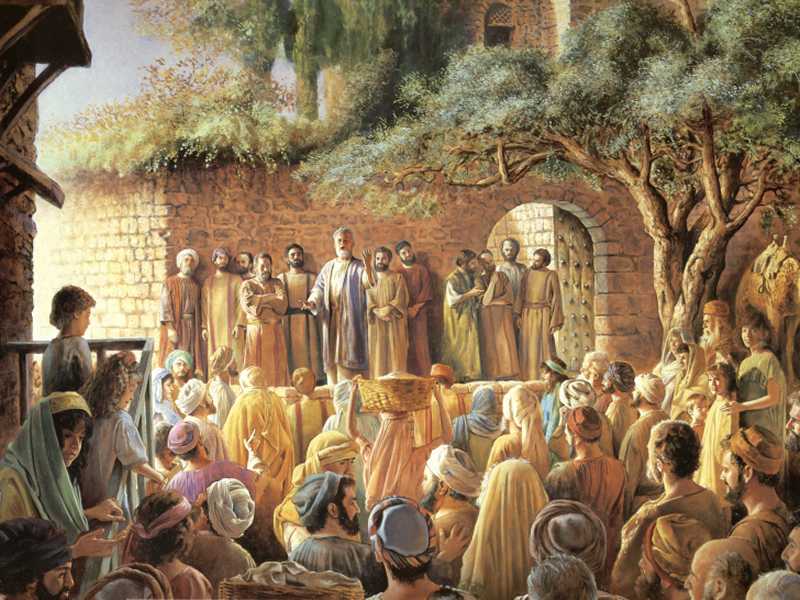
Peter’s first sermon

day-of-pentecost-acts-2-38

I tried to find the original of this image for proper citation, if you know the artist or title of this work please inform me.

I’ve made references to Peter’s first sermon a few times in prior posts, and today I thought it would be awesome to take a look at this first sermon preached by Peter. Our text will be Acts 2. If you’ve been following our bible studies here, you should remember that Acts 2 begins with the promise of God the Holy Spirit being poured out on the day of Pentecost. The Day of Pentecost is not a “new testament” thing, it is in-fact a Jewish celebration of the Feast of Weeks (Leviticus 23:15-22). Pentecost is the Greek word (the fiftieth day) referring to this Hebrew Festival. This festival is particularly important, because it was listed as one of the 3 festivals that all Jewish men were required to appear before the Lord God of Israel (Exodus 34:22-23), which by the time Jesus arrived on the earth, the Lord God had already declared His presence to be made at the Temple in Jerusalem. Therefore, all Jewish men had to make pilgrimage to Jerusalem 3 times a year, one of these times is for the Feast of Weeks, or Pentecost (in Greek). Jews from around the world were in Jerusalem to appear before the Lord God of Israel for Pentecost. It is on this day, that the Promise of God the Holy Spirit as spoken by Jesus Christ, was delivered. The first Gift of God the Holy Spirit manifested is the gift of different tongues/languages so that the men from all over the world would hear the Glory of God proclaimed in their native tongues, not just in Galilean Aramaic. So, Peter’s first sermon was not to Gentiles, it was to Jews. Devout, learned Jews who were observing the Feast of Weeks in keeping with the Law of Moses. These were not strangers to the Law or of the Prophets, they were familiar with the Holy Scriptures. However, in their knowledge, the did not recognize Jesus of Nazareth as the Christ, the Messiah. So, Peter’s first audience was a tough one. Thank God for His Holy Spirit. Now that we’ve set the stage, let us take a look at his sermon:

Acts 2:14-41 (ESV)

14 But Peter, standing with the eleven, lifted up his voice and addressed them: “Men of Judea and all who dwell in Jerusalem, let this be known to you, and give ear to my words. 15 For these people are not drunk, as you suppose, since it is only the third hour of the day. 16 But this is what was uttered through the prophet Joel:

17 “‘And in the last days it shall be, God declares,
that I will pour out my Spirit on all flesh,
and your sons and your daughters shall prophesy,
and your young men shall see visions,
and your old men shall dream dreams;
18 even on my male servants and female servants
in those days I will pour out my Spirit, and they shall prophesy.
19 And I will show wonders in the heavens above
and signs on the earth below,
blood, and fire, and vapor of smoke;
20 the sun shall be turned to darkness
and the moon to blood,
before the day of the Lord comes, the great and magnificent day.
21 And it shall come to pass that everyone who calls upon the name of the Lord shall be saved.’

I just wanted to take a moment to highlight that Peter is quoting from Joel 2:28-32. This prophecy starts in Joel 1:1 and runs throughout the book of Joel. It is all one prophecy. Peter is quoting the portion that rests between the Lord taking pity on His people, and sitting in Judgment over the nations. These are the last days in which we find ourselves, for the Lord had taken pity upon His creation and gave to us the ultimate sacrifice for the remission of sin, the Gospel of Jesus Christ, the Gift of God. We also await the day of His Glorious return, when He will redeem all who have called upon the Name of the Lord and He will sit in Judgment over creation. Why did Peter go to Joel first? Well, clearly the God the Holy Spirit was giving Peter the words to speak in that very hour (as Jesus told the disciples would happen), but notice the entrance into this sermon comes as a response to the accusations against the manifestation of the Gift of the Holy Spirit as mere drunkenness.  The first visit to Scripture is a clear statement of the outpouring of the Holy Spirit as foretold by Joel (who prophesied by the Spirit of God). Peter was also clearly marking the present age, the need for repentance and acceptance of the gift of God and the need to do so before the coming judgement. The book of Joel is not long, and I encourage you to take some time to read through it. However, let us continue for now in Peter’s sermon.

22 “Men of Israel, hear these words: Jesus of Nazareth, a man attested to you by God with mighty works and wonders and signs that God did through him in your midst, as you yourselves know— 23 this Jesus, delivered up according to the definite plan and foreknowledge of God, you crucified and killed by the hands of lawless men. 24 God raised him up, loosing the pangs of death, because it was not possible for him to be held by it. 25 For David says concerning him,

“‘I saw the Lord always before me,
for he is at my right hand that I may not be shaken;
26 therefore my heart was glad, and my tongue rejoiced;
my flesh also will dwell in hope.
27 For you will not abandon my soul to Hades,
or let your Holy One see corruption.
28 You have made known to me the paths of life;
you will make me full of gladness with your presence.’

29 “Brothers, I may say to you with confidence about the patriarch David that he both died and was buried, and his tomb is with us to this day. 30 Being therefore a prophet, and knowing that God had sworn with an oath to him that he would set one of his descendants on his throne, 31 he foresaw and spoke about the resurrection of the Christ, that he was not abandoned to Hades, nor did his flesh see corruption. 32 This Jesus God raised up, and of that we all are witnesses. 33 Being therefore exalted at the right hand of God, and having received from the Father the promise of the Holy Spirit, he has poured out this that you yourselves are seeing and hearing. 34 For David did not ascend into the heavens, but he himself says,

“‘The Lord said to my Lord,
“Sit at my right hand,
35 until I make your enemies your footstool.”’

36 Let all the house of Israel therefore know for certain that God has made him both Lord and Christ, this Jesus whom you crucified.”

37 Now when they heard this they were cut to the heart, and said to Peter and the rest of the apostles, “Brothers, what shall we do?” 38 And Peter said to them, “Repent and be baptized every one of you in the name of Jesus Christ for the forgiveness of your sins, and you will receive the gift of the Holy Spirit. 39 For the promise is for you and for your children and for all who are far off, everyone whom the Lord our God calls to himself.” 40 And with many other words he bore witness and continued to exhort them, saying, “Save yourselves from this crooked generation.” 41 So those who received his word were baptized, and there were added that day about three thousand souls.

Amen. Peter points out that the Jews were guilty of putting Jesus to death, by the hands of lawless men (Romans). Once Peter explained in Scriptures that the Jews were witness to the outpouring of the Holy Spirit, he then moved to identifying Jesus as the Christ. When he quotes from the Psalms of David, he first goes to Psalm 16. I have to be honest, had I read this Psalm without knowing Peter’s interpretation of the Psalm, I wouldn’t have read it as a prophetic Psalm about Jesus. However, Peter makes it clear that since David’s body did see corruption (his body rotted in the grave), it wasn’t about himself that he was speaking; rather, David was referring to the death and resurrection of Jesus Christ. So awesome. The new testament provides us with clear insight into how we should read the old testament to see Jesus (not ourselves, because the bible is not about us).

The next Psalm Peter visits is Psalms 110. Here, however, Peter quotes the introduction to the Psalm. Read the rest of the Psalm, because David is again prophesying of Jesus but he is doing so regarding the Day of Judgement, the Day of Christ’s Return. So, again, we have Peter explaining from scriptures that we find ourselves in the last days, between the salvation of the Lord and His Judgement. Notice, in verse 37, that all who heard these words understood the gravity of what was being taught and their guilt was before them, something they dare not proceed into judgement with, “Brothers, what shall we do?” Peter’s response is great direct and powerful. He also returns to the initial point of the sermon, the outpouring of the Holy Spirit. They don’t have to wait, because they (as are we all) are in the last days when the Spirit of God is poured out.

Peter preaches the Gospel of Jesus Christ from the Scriptures, clearly identifies their sin and need of a Savior (these being folks who follow the Law and the Prophets, not a Godless group of people, but one still perishing nonetheless for they have not yet believed in Jesus as the Christ) and then offers them the Way of escape. He also is quick to relay the promise of God the Holy Spirit. The disciples had just received the very gift that Jesus instructed them to wait for and they knew immediately that this Gift was promised to all who believe and are baptized in the Name of the Lord Jesus Christ.

That same Holy Spirit that gave Peter the words to speak, lives within each of us who call upon the Name of the Lord and have our names written in the Lamb’s book of life. We may not move as powerfully in the Holy Spirit, but I think that is due to a lack of knowledge of the Scriptures, and poor discipleship. Peter walked with the Son of God for years. That’s powerful discipleship. We have a great deal of it, but we don’t have all of what Jesus did (John 21:25), so we don’t have the fullness by which the 12 Apostles were taught. Remember in John 14:26 that the Holy Spirit is promised to both teach and remind them of all that Jesus had said to them. That is critical for us to have the New Testament written, but also as a promise to us that He will remind us of His Word that we have buried in our hearts (Psalms 119:9-16).

Brothers and sisters, please become life-long students of the Word of God. Pray in the Spirit, always, AND edify your mind by drinking in the written Word of God.  If you look around the web, you’ll see that gallop estimates that 40% of Americans attend church daily. However, a Hartford Institute of Religion study indicates that only half of those are telling the truth. But that is only the tip of the iceberg, so to speak. If 20% attend church weekly, how much of each service is actually devoted to studying and exegeting properly the Word of God? If the typical Sunday morning service runs from 10:30am to Noon, with the first 45 minutes of a concert, 10 minutes of announcements, intro videos, skits, collecting of tithe/offerings, that leaves roughly 30 minutes for a sermon. Now, what if the sermon is geared more toward sloganeering of a self-help book, or casting the vision of the pastor rather than teaching the text of the Bible? It can become all to easy to lose sight of the Word of God even while conducting the business of church. I pray your church experience is nothing like what I’ve detailed above. Still, even if that 1.5 hrs of Sunday Morning church were devoted to biblical study, it wouldn’t be enough. That is why I am so eager to share what I am studying throughout the week, and am so excited that you are reading here today. Even if you disagree with everything I write, at least you are reading the Word of God that is copy-and-pasted into these posts and hopefully following the external links to bible references. 😉

In closing, I’d like to echo Paul’s benediction from 2 Thessalonians 3:16 (ESV) “Now may the Lord of peace himself give you peace at all times in every way. The Lord be with you all.”

In Him,
Jorge