Church History | Christianity in America (Part 6)

churchhistoryThis week we’ll be continuing the series by Dr. Dan van Voorhis entitled Christianity in America. This series covers American Christianity from the Puritans through the modern-day Emergent Church. We don’t usually go through such a long series but I’m learning so much from these lectures that I simply don’t want to stop short. The goal of this series is to figure out how the American church in its present state came to be… how did we get to where we are today?

Daniel van Voorhis, PhD, is an Assistant Professor of History and Political Thought and Assistant Dean in the school of Arts and Sciences at Concordia University, Irvine. He has a BA in Theology and earned his PhD in Modern History from the University of St. Andrews (Scotland) in 2007. (source)

Lesson #6 – The Gospel on the Airwaves

Unfortunately, Dr Dan Van Voorhis switched back to handouts (no powerpoint slides) for this episode but FaithCapo doesn’t have the the link to the handout available online.


Listen on MP3


Conclusion

We will continue this series to its conclusion. After that, we’ll get back to sharing sermons on Fridays.

Hebrews 13:20-21 (ESV)

Now may the God of peace who brought again from the dead our Lord Jesus, the great shepherd of the sheep, by the blood of the eternal covenant, equip you with everything good that you may do his will,working in us that which is pleasing in his sight, through Jesus Christ, to whom be glory forever and ever. Amen.

In Christ Jesus,
Jorge

Gospel Wednesday | Mark 13

GWWelcome back as we continue working through the Gospel According to Mark. Last week we covered Mark 12, where we saw Jesus silence the Sadducees and the Pharisees who thought they were clever enough to trip up the Son of God on the Law of God (granted, they were unbelievers so they rejected Him outright in their folly). We also looked at some of Jesus’ teaching in parables.

Today, we’ll resume reading, beginning in Chapter 13 of the Gospel According to Mark.

Mark 13:1-2 (ESV) | Jesus Foretells Destruction of the Temple

And as he came out of the temple, one of his disciples said to him, “Look, Teacher, what wonderful stones and what wonderful buildings!”And Jesus said to him, “Do you see these great buildings? There will not be left here one stone upon another that will not be thrown down.”

And so the (second) Temple was indeed destroyed circa 70 A. D. (or C.E.). Modern Judaism (which is totally different from what it was during Christ’s first advent) still looks forward to a new temple being built. Sadly, there are groups of Christians who seem to think Christ’s return for the Church is somehow connected to the earthly kingdom of Israel and the earthly Temple. Such doctrinal positions do not fit with the Book of Hebrews or the Letter to the Romans… or even what follows in this chapter.

Mark 13:3-13 (ESV) | Signs of the Close of the Age

And as he sat on the Mount of Olives opposite the temple, Peter and James and John and Andrew asked him privately, “Tell us, when will these things be, and what will be the sign when all these things are about to be accomplished?” And Jesus began to say to them, “See that no one leads you astray. Many will come in my name, saying, ‘I am he!’ and they will lead many astray. And when you hear of wars and rumors of wars, do not be alarmed. This must take place, but the end is not yet. For nation will rise against nation, and kingdom against kingdom. There will be earthquakes in various places; there will be famines. These are but the beginning of the birth pains.

But be on your guard. For they will deliver you over to councils, and you will be beaten in synagogues, and you will stand before governors and kings for my sake, to bear witness before them. And the gospel must first be proclaimed to all nations. And when they bring you to trial and deliver you over, do not be anxious beforehand what you are to say, but say whatever is given you in that hour, for it is not you who speak, but the Holy Spirit. And brother will deliver brother over to death, and the father his child, and children will rise against parents and have them put to death. And you will be hated by all for my name’s sake. But the one who endures to the end will be saved.

So much for that nonsensical (and nonBiblical) “seven mountains mandate”… the role of the Church isn’t to take control over the kingdoms of this world, but to Proclaim the Gospel. We also shouldn’t be blindly accepting everyone who anoints him/herself a “prophet” or “apostle” in some misguided belief that we should expect a fresh outpouring of the Holy Spirit to usher in the return of Jesus. Jesus warned of the exact opposite… an increase in false prophets. Jesus warns us clearly to be on guard. This is a call to discernment, not  “open mindedness”. This same warning continues in the next portion.

Mark 13:14-23 (ESV) | The Abomination of Desolation

“But when you see the abomination of desolation standing where he ought not to be (let the reader understand), then let those who are in Judea flee to the mountains. Let the one who is on the housetop not go down, nor enter his house, to take anything out, and let the one who is in the field not turn back to take his cloak. And alas for women who are pregnant and for those who are nursing infants in those days! Pray that it may not happen in winter. For in those days there will be such tribulation as has not been from the beginning of the creation that God created until now, and never will be. And if the Lord had not cut short the days, no human being would be saved. But for the sake of the elect, whom he chose, he shortened the days. And then if anyone says to you, ‘Look, here is the Christ!’ or ‘Look, there he is!’ do not believe it. For false christs and false prophets will arise and perform signs and wonders, to lead astray, if possible, the elect. But be on guard; I have told you all things beforehand.

No secret rapture, no new wave of some super-di-duper-charged anointing. God isn’t waiting for a particular indication or even to trigger the return of Christ Jesus to Judge the quick and the dead. He knows the moment already. There is no “if this then He’ll return”. Only Believe in Him and His Word. He has told us all things beforehand. Trust in that Truth.

Mark 13:24-27 (ESV) | The Coming of the Son of Man

“But in those days, after that tribulation, the sun will be darkened, and the moon will not give its light, and the stars will be falling from heaven, and the powers in the heavens will be shaken. And then they will see the Son of Man coming in clouds with great power and glory. And then he will send out the angels and gather his elect from the four winds, from the ends of the earth to the ends of heaven.

No one will sleep through this. No one will “miss” this event. It will be the end. All will witness it. All will be judged. No 24hr cameras in Jerusalem to “capture the event” needed.

Mark 13:28-31 (ESV) | The Lesson of the Fig Tree

“From the fig tree learn its lesson: as soon as its branch becomes tender and puts out its leaves, you know that summer is near. So also, when you see these things taking place, you know that he is near, at the very gates. Truly, I say to you, this generation will not pass away until all these things take place. Heaven and earth will pass away, but my words will not pass away.

Identifying the signs of the fig tree doesn’t give the observer any control over the season. It’s not about anticipating the End or preparing for it with some foolish food box (Jim Bakker). While there were many who missed the first advent of the Messiah… no one will miss the last one. Heaven and Earth will pass away, but The Words of Christ will not. Ever. Hallelujah!

Mark 13:32-37 (ESV) | No One Knows That Day or Hour

“But concerning that day or that hour, no one knows, not even the angels in heaven, nor the Son, but only the Father. Be on guard, keep awake. For you do not know when the time will come. It is like a man going on a journey, when he leaves home and puts his servants in charge, each with his work, and commands the doorkeeper to stay awake. Therefore stay awake—for you do not know when the master of the house will come, in the evening, or at midnight, or when the rooster crows, or in the morning— lest he come suddenly and find you asleep. And what I say to you I say to all: Stay awake.”

What does it mean to stay awake? Remain in the faith. Do not slumber in unbelief. I know there are different interpretations that my Calvinist brothers take here so, as usual, please consult your pastor for how this is to be interpreted in that framework.

Conclusion

Jesus Christ, our Lord and Savior, is Returning. There is nothing expected of us for bringing Him back, and even if there were we’d fail. It is Christ who created us, Christ who Saved Us, and Christ will bring us home in the end. Until next week, spend time in the Written Word of God and do not forsake the gathering of the saints, hearing of the Preached Word… both Law and Gospel.

Hebrews 13:20-21 (ESV) Now may the God of peace who brought again from the dead our Lord Jesus, the great shepherd of the sheep, by the blood of the eternal covenant, equip you with everything good that you may do his will,working in us that which is pleasing in his sight, through Jesus Christ, to whom be glory forever and ever. Amen.

In Christ Jesus,
Jorge

DiM | “At Your Feet (Surrender)” By Dan Bremnes

disapproveEvangelical Worship Edition.

April 7, 2016. Today we’ll be looking at a song that was pushed by Worship Together YouTube Channel back in December 2015. The song is worthless, but it does give us an opportunity to discuss the mystical movement called SOZO.  Today’s song is called “At Your Feet (Surrender)” by Dan Bremnes.


Music Video (via SOZO Playlist)


Lyrics (via Genius)

[Verse 1]
My eyes are on the Cross
Where You gave it all
I worship You, I worship You
I see the One who saves
The Light of heaven’s grace
I run to You, I run to You

[Chorus]
And I, I surrender
I lay my life down at Your feet
God of mercy, You are worthy
I give You every part of me

[Verse 2]
The things that I have done
The things that I will do
I give to You, I give to You
Holy God above
How could I resist Your love?
I run to You, I run to You

[Chorus]
And I, I surrender
I lay my life down at Your feet
God of mercy, You are worthy
I give You every part of me

[Bridge]
With every breath
With all I am
Oh Jesus, I surrender
My heart is Yours
I trust You Lord
Oh Jesus I surrender
(2x)
Jesus I
Through You, Jesus

[Chorus]
I, I surrender
I lay my life down at Your feet
God of mercy, You are worthy
I give You every part of me
(2x)

Written By: Scott Cash, Ed Cash, Dan Bremnes, Katherine Langridge, Ben Fielding
Release Date: June 9, 2015
Produced By: Ed Cash, Scott Cash

Discussion

The focus of the song is the singer. What the singer will do, what the singer is doing, what the singer is pledging. If the object of the “You” is truly the God of the Bible, then we can find some small phrases that are indeed true, like “You are worthy…”, “God of Mercy”, and “On the Cross is Where You Gave it all”. But these are not the focus of the song, nor are they even remotely explicated.

The song is filled with mystical promises bereft of meaning. What does the singer mean by “I run to you”? We don’t know. The only valid, Christian understanding is that we turn to God’s Word and the Lord’s Supper for grace and forgiveness. Mystics have a lot of false meanings for this turn of phrase. What does it mean to “surrender all to God” or to “give every part of me to God”? It’s a purely abstract, emotional, mystical promise of doing something for God, but it has no meaning. It’s like making a vow to keep the Greatest commandment without understanding that to do so according to the Law would necessitate keeping all of the Law, which necessarily includes loving neighbor as ourselves.

Matthew 22:36-40 (ESV) “Teacher, which is the great commandment in the Law?” And he said to him, “You shall love the Lord your God with all your heart and with all your soul and with all your mind. This is the great and first commandment. And a second is like it: You shall love your neighbor as yourself. On these two commandments depend all the Law and the Prophets.”

Jesus Christ is the Only One who kept the Law. And He laid down His life on the cross, bearing the wrath of God against sin, so that by Faith we might be clothed in the Righteousness from God, forgiven of our sin, and adopted as Sons of the Most High. Salvation had nothing to do with any of our “surrender” or “works”; therefore, our worship should focus on what He did for us, not what we claim to do for Him.

Ephesians 2:8-10 (ESV) For by grace you have been saved through faith. And this is not your own doing; it is the gift of God, not a result of works, so that no one may boast. For we are his workmanship, created in Christ Jesus for good works, which God prepared beforehand, that we should walk in them.

Your relationship with God is all His doing. Thank Him for that. God doesn’t need your good works, your neighbor does. Preach the Word of God, love and forgive your neighbor as an outflow of your understanding of the immeasurable Grace He extended to you at the cross. This song is off-mission, off-target, and completely out of focus.

Before we close out, let’s look at the artist behind the song and then we’ll examine the Sozo movement.

Dan Bremnes

I wanted to see what the artist’s doctrinal foundation might be, so I checked out his Facebook page.

It was a six-month missions trip in Australia with Youth With a Mission (YWAM) that would help re-shape his perspective: “While I was there, something happened in my life, and God started working on my heart. I started to go a lot deeper in my faith,” Dan shares. “Something sort of clicked in me. I’ve always had these opportunities to lead worship and share about my faith, and I started thinking about making music that was really intentional about reaching people on a spiritual level. I wanted to come right out and speak about God and my relationship with Him.”

Sharing “about our faith” or “about our relationship with God” isn’t the same thing as Preaching the Word of God, or Sharing the Gospel of Jesus Christ. Sure, it could just be a wording issue where he means the right thing, but he also leads Christian worship. What is he really leading, who is he leading, and where is he leading them? That’s the question that really needs to be asked and answered. Look at how he describes his understanding of Faith.

“In my town we go cliff jumping in the summer. I’m always the guy to round up a group of friends to go jump off cliffs. But when I get there and stand on the edge of the cliff, I realize that I like the idea of cliff jumping more than I actually like cliff jumping,” Dan shares. “Faith is similar for me. I like the idea of being brave and jumping out in to the unknown, but when it actually comes to putting faith into action, I think I like the idea of it more than the actual act. But I know that God is always calling us out into the unknown, and He’s faithful to catch us anytime we take a leap.”

That said, leaps of faith are still intimidating, even scary, but for Dan, stepping out and pursuing music led to a tremendous sense of purpose and joy. Like the majority of artists, his journey began humbly—playing local churches for the cost of his gas. But as he shared his songs with anyone who’d listen and continued to hone his songwriting craft, it wasn’t long before people took notice.

Risk-taking isn’t the same thing as Faith. Scripture doesn’t call us to take “leaps of faith”, like what this artist is describing. This isn’t Christianity. This isn’t sound doctrine. Humanists and mystics talk this way about their own beliefs, too. How does the Bible define Faith? I recommend reading through the book of Hebrews, but here let us pull some portions from the Hall of Faith in Hebrews 11.

Hebrews 11:1-16 (ESV) | By Faith

Now faith is the assurance of things hoped for, the conviction of things not seen. For by it the people of old received their commendation. By faith we understand that the universe was created by the word of God, so that what is seen was not made out of things that are visible.

By faith Abel offered to God a more acceptable sacrifice than Cain, through which he was commended as righteous, God commending him by accepting his gifts. And through his faith, though he died, he still speaks. By faith Enoch was taken up so that he should not see death, and he was not found, because God had taken him. Now before he was taken he was commended as having pleased God. And without faith it is impossible to please him, for whoever would draw near to God must believe that he exists and that he rewards those who seek him. By faithNoah, being warned by God concerning events as yet unseen, in reverent fear constructed an ark for the saving of his household. By this he condemned the world and became an heir of the righteousness that comes by faith.

By faith Abraham obeyed when he was called to go out to a place that he was to receive as an inheritance. And he went out, not knowing where he was going. By faith he went to live in the land of promise, as in a foreign land, living in tents with Isaac and Jacob, heirs with him of the same promise. For he was looking forward to the city that has foundations, whose designer and builder is God. By faith Sarah herself received power to conceive, even when she was past the age, since she considered him faithful who had promised. Therefore from one man, and him as good as dead, were born descendants as many as the stars of heaven and as many as the innumerable grains of sand by the seashore.

 These all died in faith, not having received the things promised, but having seen them and greeted them from afar, and having acknowledged that they were strangers and exiles on the earth. For people who speak thus make it clear that they are seeking a homeland.If they had been thinking of that land from which they had gone out,they would have had opportunity to return. But as it is, they desire a better country, that is, a heavenly one. Therefore God is not ashamed to be called their God, for he has prepared for them a city….

Hebrews 11:29-40 (ESV) By faith the people crossed the Red Sea as on dry land, but the Egyptians, when they attempted to do the same, were drowned. By faith the walls of Jericho fell down after they had been encircled for seven days. By faith Rahab the prostitute did not perish with those who were disobedient, because she had given a friendly welcome to the spies. And what more shall I say? For time would fail me to tell of Gideon, Barak, Samson, Jephthah, of David and Samuel and the prophets— who through faith conquered kingdoms, enforced justice, obtained promises,stopped the mouths of lions, quenched the power of fire, escaped the edge of the sword, were made strong out of weakness, became mighty in war, put foreign armies to flight. Women received back their dead by resurrection. Some were tortured, refusing to accept release, so that they might rise again to a better life. Others suffered mocking and flogging, and even chains and imprisonment. They were stoned, they were sawn in two, they were killed with the sword. They went about in skins of sheep and goats, destitute, afflicted, mistreated— of whom the world was not worthy—wandering about in deserts and mountains, and in dens and caves of the earth. And all these, though commended through their faith, did not receive what was promised, since God had provided something better for us, that apart from us they should not be made perfect.

Hebrews 12:1-2 (ESV) | Jesus, Founder and Perfecter of Our Faith

Therefore, since we are surrounded by so great a cloud of witnesses, let us also lay aside every weight, and sin which clings so closely, and let us run with endurance the race that is set before us, looking to Jesus, the founder and perfecter of our faith, who for the joy that was set before him endured the cross, despising the shame, and is seated at the right hand of the throne of God.

What the Bible records isn’t a blind leap of faith like jumping off a cliff or embarking on a music career… Faith is trusting in the Word of the Lord. They trusted in the Word of the Lord despite their circumstance, and what’s even more important is that many cited never received their promises while in this life, for they were trusting in an Eternal God who gave Eternal Promises. Christ is the fulfillment of these promises, and He is now in Heaven at the right hand of the Father, where all of our Promises wait for us who are in Christ Jesus… by Faith.

Is this man a gifted musician and singer? sure. Should he be leading Christian worship? No.

SOZO

Let’s talk about SOZO for a moment. It is one of the fruits of the heresy house, Bethel Church in Redding, CA. Now, the theology taught there by Randy Clark spurred on a mystic in Argentina who then developed Bethel SOZO. From their “history of SOZO” page:

In 1997 Randy Clark, a healing evangelist, held meetings at Bethel Church. At that time, Pastor Clark would send a team to train a congregation how to be prayer servants. A small portion of that training was a model of “deliverance” from Argentina. This model became our first tool “The Four Doors”. Dawna DeSilva, the leader and founder of the Sozo Ministry, attended this training at Bethel. Afterward, Dawna began to use the concept of “The Four Doors” when she prayed for people. Seeing a miraculous difference in people’s level of freedom, the “Sozo Ministry” was birthed. As the Sozo Ministry developed, the Lord introduced other tools that have aided in people being healed and released from the wounds and lies which have hindered those individuals from the Godhead and their destiny.

From their “overview” page:

There are six tools that the SOZO team uses:

  • Father Ladder
  • Four Doors
  • Presenting Jesus
  • The Wall
  • Trigger Mechanisms (Advanced Tool)
  • Divine Editing (Advanced Tool)

As you can see, this isn’t even remotely Biblical Doctrine. I think the folks at GotQuestions.org summarized this “ministry” well here:

Sozo prayer, or Sozo ministry (from the Greek for “save” or “deliver”), is defined as “a unique inner healing and deliverance ministry in which the main aim is to get to the root of those things hindering your personal connection with the Father, Son, and Holy Spirit.” Sozo was created by a group of people from Bethel Church in Redding, California, and modeled after spiritual practices observed at revivals in Argentina. Sozo is strongly mystical in its approach and relies heavily on ideas about God and the Holy Spirit that are not based on biblical fact.

Sozo prayer requires the presence of a mediator or guide who is trained to walk participants through a time of prayer and reflection that is supposed to facilitate intimacy with God. Intimacy with God is definitely something to be sought; however, the method of attaining intimacy via a journey through the subconscious is questionable at best. Intimacy with God is achieved by Bible study, prayer, regular church attendance, and obedience, not by a mystical “journey” through our past. The Bible warns us to be discerning and wise, and not to be fooled (Hosea 14:9; Hebrews 5:14). The Bible and the Holy Spirit—not our subconscious thoughts or a fallible human being—are our connection to the counsel and the voice of God (John 17:17). Many types of ungodly mystical practices include the presence of a “spirit guide,” but the Bible tells us that our connection to the Father is a direct connection, mediated by Christ (1 Timothy 2:5) and guided by the Holy Spirit (John 16:13). No other spirit guide is necessary.

The methods and practices of Sozo are of human invention and require human instruction, without reference to Scripture. In fact, Sozo is much closer to new age mysticism than to Christianity. Participants are encouraged into a mild trance state, while being “led” into a series of mental/emotional rooms or stages where, by connecting to their own deeper feelings and thoughts, they believe themselves to have a new experience with God. Whatever participants feel has happened to them, the Bible tells us it is dangerous to open ourselves up to something that has not been sanctioned by God (Ephesians 4:11–14). Preaching and teaching, evangelism, and the practice of anointing a person with oil or laying hands on him, for instance, are all shown in Scripture to be spiritually safe and useful. But Sozo prayer does not have that kind of backing. (Read More)

This SOZO ministry is garbage mysticism posing as “christian”. Avoid it. Today’s song is presented as music conducive to such mysticism, avoid it also. This is not sound doctrine, it is false teaching… doctrines of demons.

1 Timothy 4:1-5 (ESV) | Some Will Depart from the Faith

Now the Spirit expressly says that in later times some will depart from the faith by devoting themselves to deceitful spirits and teachings of demons, through the insincerity of liars whose consciences are seared, who forbid marriage and require abstinence from foods that God created to be received with thanksgiving by those who believe and know the truth. For everything created by God is good, and nothing is to be rejected if it is received with thanksgiving, for it is made holy by the word of God and prayer.

1 Timothy 6:3-11 (ESV)

If anyone teaches a different doctrine and does not agree with the sound words of our Lord Jesus Christ and the teaching that accords with godliness, he is puffed up with conceit and understands nothing. He has an unhealthy craving for controversy and for quarrels about words, which produce envy, dissension, slander, evil suspicions, and constant friction among people who are depraved in mind and deprived of the truth, imagining that godliness is a means of gain. But godliness with contentment is great gain, for we brought nothing into the world, and we cannot take anything out of the world. But if we have food and clothing, with these we will be content. But those who desire to be rich fall into temptation, into a snare, into many senseless and harmful desires that plunge people into ruin and destruction. For the love of money is a root of all kinds of evils. It is through this craving that some have wandered away from the faith and pierced themselves with many pangs. But as for you, O man of God, flee these things. Pursue righteousness, godliness, faith, love, steadfastness, gentleness.

Conclusion

This song is worthless. It would be better to pray the 10 Commandments and then immediately asking forgiveness for failing them than to make the vaulted oaths to God about all that you are doing for Him in this song. Dear Christian, read the written Word of God (in context) or listen to it being read or rightly preached as your act of worship. Find music that is truly Christ-centered, be it hymns or Psalms set to music, but don’t chase every mystical wind of music being put out there under the label of “christian ministry”.

Jude 24-25 (ESV) | Doxology

Now to him who is able to keep you from stumbling and to present you blameless before the presence of his glory with great joy, to the only God, our Savior, through Jesus Christ our Lord, be glory, majesty, dominion, and authority, before all time and now and forever. Amen.

In Christ Jesus,
Jorge

CTT | “3 Days & 3 Nights”?

As frustrating as social media can become regarding matters of …well anything, there is no doubt near limitless opportunity to challenge our perceptions and doctrinal positions. If we are willing to do the work of a Berean, even holding our closest kept doctrines up to the light of Scripture for examination, and ask questions of our pastors and teachers, there is room for growth, even from discussions originating in social media.

During Holy Week, we shared a post that examined the timeline of Holy Week and the Passion of Christ. The timeline we shared was a Thursday evening Passover meal with Jesus and His disciples, the institution of the Lord’s Supper, His arrest, His trial through the night and into Friday morning, Crucifixion on Friday afternoon, burial before sundown Friday, Resurrection before daybreak on Sunday morning.

The primary focus of today’s CTT post is on the wording we find in Matthew 12:40. Let’s look at the verse in it’s immediate context and then we’ll explain the thought being conveyed in this passage, its wording, and how it reconciles with the rest of Matthew and the other Gospel Accounts of the Death and Resurrection of Jesus Christ.

Matthew 12:38-42 (ESV) | The Sign of Jonah

Then some of the scribes and Pharisees answered him, saying, “Teacher,we wish to see a sign from you.” But he answered them, “An evil and adulterous generation seeks for a sign, but no sign will be given to it except the sign of the prophet Jonah. For just as Jonah was three days and three nights in the belly of the great fish, so will the Son of Man be three days and three nights in the heart of the earth. The men of Nineveh will rise up at the judgment with this generation and condemn it, for they repented at the preaching of Jonah, and behold, something greater than Jonah is here. The queen of the South will rise up at the judgment with this generation and condemn it, for she came from the ends of the earth to hear the wisdom of Solomon, and behold,something greater than Solomon is here.

So, the common objection we’ll hear from folks insisting on a modern, literalistic interpretation of this passage is something to the effect of, “hey, since Jesus listed days and nights here, He’s explicitly laying out 3×24 hour periods where He lay in the tomb”. We’re going to address this objection by looking at the following questions:

  1. How many times is this phrasing used to describe the burial of Jesus as opposed to the more general phrasing of “3 days” or “on the third day”?
  2. How did Matthew account for the timeline of the Passion of Christ? How about Luke, the physician?
  3. If the extra wording isn’t for specifying timing of the time in the tomb, why the extra wording? Where is the significance in this phrase to be found?

This will probably end up being a long post, but I want to cover these three points to the best of my ability. Please double-check my work (open Bible, not an open mind) and don’t hesitate to talk these issues over with your pastor. Please understand that due to my lack of training in Koine Greek, I’ll be making my arguments based on the ESV translation, trusting the scholarship of others to provide solid translations.

1. How is Jesus’ time in the tomb referenced?

There are a number of ways we could go about researching this question. Let’s begin with how many times Matthew refers to Jesus’ time in the tomb. Matthew references it 7 times. We’ve already seen the first reference in Matt 12:40. Let’s look at the other references Matthew makes:

Matt 16:21;17:23;20:19;26:61;27:40;27:63-64; (ESV)

Matthew 16:21(ESV) 21 From that time Jesus began to show his disciples that he must go to Jerusalem and suffer many things from the elders and chief priests and scribes, and be killed, and on the third day be raised.

Matthew 17:23 (ESV) 23 and they will kill him, and he will be raised on the third day.” And they were greatly distressed.

Matthew 20:19 (ESV) 19 and deliver him over to the Gentiles to be mocked and flogged and crucified, and he will be raised on the third day.”

Matthew 26:61 (ESV) 61 and said, “This man said, ‘I am able to destroy the temple of God, and to rebuild it in three days.’”

Matthew 27:40 (ESV) 40 and saying, “You who would destroy the temple and rebuild it in three days, save yourself! If you are the Son of God, come down from the cross.”

Matthew 27:63-64 (ESV) 63 and said, “Sir, we remember how that impostor said, while he was still alive, ‘After three days I will rise.’ 64 Therefore order the tomb to be made secure until the third day, lest his disciples go and steal him away and tell the people, ‘He has risen from the dead,’ and the last fraud will be worse than the first.”

Interesting, isn’t it? Now here we have Matthew talking about Jesus being raised “on the third day”, “in three days”, “after three days”, and we have a reference to being in the heart of the earth for 3 days and 3 nights. Matthew didn’t only record what Jesus said of Himself, He also recorded what the people remembered, the unbelievers and the enemies of Jesus, this is how they remembered it and we see how they hurled these words back at Jesus as an insult to Him. When we start looking to the other Gospel writers, we’ll see another 10 mentions of Christ’s death and resurrection, with a mixture of these same reference points of “in three days”, “on the third day”, and “after three days”. So what are we seeing here? Is this a discrepancy in the amount of time Jesus spent in the tomb? No. This reflects the fluid nature of how time is referenced in the culture of the day. Clearly Matthew, who was writing to the Jews, had no issue whatsoever using the various references to time without a problem. A point that is clearly made in the Matt 27:63-64, where if we applied our modern-day, down-to-the-minute specificity of time keeping we’d say, “hey, bozos, if you’re trying to prevent an event that happens after 3 days, why would you only place guards until the start of the third day?”

So, we’ve demonstrated how the Gospel accounts treat all presented phrasing as equally descriptive of the time Jesus spent in the tomb. Those who seek to delve into various theories and algorithms to try to reconcile all of these times to fit our modernist accounting of time do so NOT to reconcile the scriptures with each other, but simply to modernize the time keeping, and undermine the Scriptures in the process. So how should we treat the Jewish accounting of days? We should accept that the Scriptures are sound. The death and burial of Jesus was a VERY public event, during the feast of unleavened bread. Jerusalem was packed with people. His death and resurrection was easily falsifiable yet no one proved the Apostles false. Secondly, we do have extra-biblical resources for learning how the Jews accounted for days, hours, months, and years. In our modern culture, we have standardized time such the length of an hour or a day remains fixed, regardless of the sunrise/sunset. In Jewish culture, the standard was sunrise and sunset as observed by certain people. The length of a day and that of an hour varied throughout the year (source). The idea of converting references to “3 days” to exactly 72 hours is a modern concept that we need to resist applying to Scripture. Even when we see “3 days and 3 nights”, but we’ll talk more about that in point 3. Any part of a day was called that day. In fact, the only place in the whole Bible that refers to “half days” is in Revelation 11:1-14, where John is sharing the vision of the Two Witnesses who die and are raised up in 3 and a half days.

2. Matthew’s Timeline of the Passion of Christ, and Luke’s account of how Jesus referenced on the road to Emmaus

Okay, so we already pointed out how Matthew’s account uses various references to the 3 days of Christ’s death and resurrection. What I’d like to do now is work through Matthew’s account of the timing of the death and resurrection of Jesus to really drive home the point that Matthew wasn’t confused or internally inconsistent. Now, another thing worth noting is that the 7 days of the week having names didn’t fully take until about the 3rd or 4th century A.D. The Jews only had one day of the week that was named, and that was the Sabbath. The days were numbered 1 thru 7, with the seventh day being the Sabbath.  If you’d like to read through the Matthew account and build the timeline yourself, simply open your Bible to Matthew 26 through 28. For our purposes here, I want to highlight specific passages working from the resurrection backward.

Resurrection Day

Matthew 28:1-2 (ESV) Now after the Sabbath, toward the dawn of the first day of the week, Mary Magdalene and the other Mary went to see the tomb. And behold, there was a great earthquake, for an angel of the Lord descended from heaven and came and rolled back the stone and sat on it.

Okay, so the empty tomb was discovered by the Marys toward the dawn of the first day of the week, the day following the Sabbath. Matthew gives us a very precise record of which part of which day this event took place. The Sabbath had ended roughly at sundown on what we’d call ‘Saturday night’, and the empty was discovered early in the morning on what we call Sunday. Incidentally, this is why the Church meets on Sunday rather than keeping Saturdays… because we now are part of the 8th day, the Lord’s Day after His Sabbath rest from all of His previous work, the “it is finished” on the cross. Since the resurrection takes place on the first day of the week, it counts as a full day, the third day. We already see that the Sabbath was the second day, but let’s see what Matthew records for that day.

The Sabbath of our Lord and Savior

Matthew 27:57-66 (ESV) When it was evening, there came a rich man from Arimathea, named Joseph, who also was a disciple of Jesus. He went to Pilate and asked for the body of Jesus. Then Pilate ordered it to be given to him. And Joseph took the body and wrapped it in a clean linen shroud and laid it in his own new tomb, which he had cut in the rock. And he rolled a great stone to the entrance of the tomb and went away. Mary Magdalene and the other Mary were there, sitting opposite the tomb. The next day, that is, after the day of Preparation, the chief priests and the Pharisees gathered before Pilate and said, “Sir, we remember how that impostor said, while he was still alive, ‘After three days I will rise.’ Therefore order the tomb to be made secure until the third day, lest his disciples go and steal him away and tell the people, ‘He has risen from the dead,’ and the last fraud will be worse than the first.” Pilate said to them, “You have a guard of soldiers. Go, make it as secure as you can.” So they went and made the tomb secure by sealing the stone and setting a guard.

Folks like to mess around with this day and try to insert days before and after this day to stretch out timelines. I don’t think there’s any legitimacy to this, particularly within Matthew’s account. We see Jesus buried, the next day the guard is put in place until the third day, and the next day (after the Sabbath) the tomb is empty. Three days accounted for by Jewish reckoning with the Sabbath in the center. Where folks play with dates is by first insisting that Preparation Day has to be a certain date, and then they start to squeeze in narratives between verses to justify their fixed dates.

Now what we have here is Jesus being crucified on the day of preparation, before the Sabbath, before the First day of the week. Jesus had a truly rough day which didn’t start on the day of preparation, but on the first day of the feast of unleavened bread, the day the Passover Lambs were slaughtered. So let’s go there in Matthew’s account.

Jesus Keeps Passover with the Disciples

Matthew 26:17-19 (ESV) Now on the first day of Unleavened Bread the disciples came to Jesus, saying, “Where will you have us prepare for you to eat the Passover?” He said, “Go into the city to a certain man and say to him, ‘The Teacher says, My time is at hand. I will keep the Passover at your house with my disciples.’” And the disciples did as Jesus had directed them, and they prepared the Passover.

Okay, so Matthew (writing to a Jewish audience) didn’t explain the significance of the first day of Unleavened Bread. I get this detail from Mark’s account Mark 14:12 (ESV) And on the first day of Unleavened Bread, when they sacrificed the Passover lamb, his disciples said to him, “Where will you have us go and prepare for you to eat the Passover?” That fixes the Passover to that evening after they slaughtered the Passover Lamb, where the LORD then institutes the Lord’s Supper, Judas runs off to betray Jesus… and sometime later returns and Jesus is arrested and is immediately taken to trial throughout the night (where Peter betrays Him 3 times before the rooster crows). Once day breaks, Jesus stands before the Roman courts as the Jews push for Rome to crucify Jesus. This is a very tight timeline, and it is of the Passover leading into 3 days: (Passover Thursday), Friday, Saturday (Sabbath), Sunday.

Regarding the 3 days, I’d like to take a moment to turn to Luke’s Account of the Resurrection and the Emmaus walk found in Luke 24. Please read the full chapter, but we’ll pull some selected texts to focus on the timing of events.

Luke 24:1-3 (ESV) But on the first day of the week, at early dawn, they went to the tomb, taking the spices they had prepared. And they found the stone rolled away from the tomb, but when they went in they did not find the body of the Lord Jesus.

Luke 24:9-12 (ESV) and returning from the tomb they told all these things to the eleven and to all the rest. Now it was Mary Magdalene and Joanna and Mary the mother of James and the other women with them who told these things to the apostles, but these words seemed to them an idle tale, and they did not believe them. But Peter rose and ran to the tomb; stooping and looking in, he saw the linen cloths by themselves; and he went home marveling at what had happened.

Luke 24:13-27 (ESV) That very day two of them were going to a village named Emmaus, about seven miles from Jerusalem, and they were talking with each other about all these things that had happened. While they were talking and discussing together, Jesus himself drew near and went with them. But their eyes were kept from recognizing him. And he said to them, “What is this conversation that you are holding with each other as you walk?” And they stood still, looking sad. Then one of them, named Cleopas, answered him, “Are you the only visitor to Jerusalem who does not know the things that have happened there in these days?” And he said to them, “What things?” And they said to him, “Concerning Jesus of Nazareth, a man who was a prophet mighty in deed and word before God and all the people, and how our chief priests and rulers delivered him up to be condemned to death, and crucified him. But we had hoped that he was the one to redeem Israel. Yes, and besides all this, it is now the third day since these things happened. Moreover, some women of our company amazed us. They were at the tomb early in the morning, and when they did not find his body, they came back saying that they had even seen a vision of angels, who said that he was alive. Some of those who were with us went to the tomb and found it just as the women had said, but him they did not see.” And he said to them, “O foolish ones, and slow of heart to believe all that the prophets have spoken! Was it not necessary that the Christ should suffer these things and enter into his glory?” And beginning with Moses and all the Prophets, he interpreted to them in all the Scriptures the things concerning himself.

Luke 24:30-31 (ESV) When he was at table with them, he took the bread and blessed and broke it and gave it to them. And their eyes were opened, and they recognized him. And he vanished from their sight.

Luke 24:36-49 (ESV) As they were talking about these things, Jesus himself stood among them, and said to them, “Peace to you!” But they were startled and frightened and thought they saw a spirit. And he said to them, “Why are you troubled, and why do doubts arise in your hearts? See my hands and my feet, that it is I myself. Touch me, and see. For a spirit does not have flesh and bones as you see that I have.” And when he had said this, he showed them his hands and his feet. And while they still disbelieved for joy and were marveling, he said to them, “Have you anything here to eat?” They gave him a piece of broiled fish, and he took it and ate before them. Then he said to them, “These are my words that I spoke to you while I was still with you, that everything written about me in the Law of Moses and the Prophets and the Psalms must be fulfilled.” Then he opened their minds to understand the Scriptures, and said to them, “Thus it is written, that the Christ should suffer and on the third day rise from the dead, and that repentance and forgiveness of sins should be proclaimed in his name to all nations, beginning from Jerusalem. You are witnesses of these things. And behold, I am sending the promise of my Father upon you. But stay in the city until you are clothed with power from on high.”

The first day of the week, was the third day, and the Christ had risen on that third day as it was Written.

3. Why the extra wording?

Okay, so why the extra wording in Matthew 12:40? Let’s reread the passage in its context.

Matthew 12:38-42 (ESV) Then some of the scribes and Pharisees answered him, saying, “Teacher,we wish to see a sign from you.” But he answered them, “An evil and adulterous generation seeks for a sign, but no sign will be given to it except the sign of the prophet Jonah. For just as Jonah was three days and three nights in the belly of the great fish, so will the Son of Man be three days and three nights in the heart of the earth. The men of Nineveh will rise up at the judgment with this generation and condemn it, for they repented at the preaching of Jonah, and behold, something greater than Jonah is here. The queen of the South will rise up at the judgment with this generation and condemn it, for she came from the ends of the earth to hear the wisdom of Solomon, and behold,something greater than Solomon is here.

Notice I chose to highlight different portions of this passage this time around? That’s because this is the purpose of the extra wording “three days and three nights”. Matthew isn’t sharing extra insight on the timing of Christ’s resurrection, he’s quoting Jesus’ words of rebuke against the scribes and Pharisees. Matthew is connecting for us that Jonah foreshadowed Christ. The men of Nineveh repented at the preaching of Jonah, and these scribes and Pharisees murdered Him. This isn’t the only time Matthew records this point. It happens again in chapter 16, but this time Matthew doesn’t draw out the teaching.

Matthew 16:1-4 (ESV) | The Pharisees and Sadducees Demand Signs

And the Pharisees and Sadducees came, and to test him they asked him to show them a sign from heaven. He answered them, “When it is evening, you say, ‘It will be fair weather, for the sky is red.’ And in the morning, ‘It will be stormy today, for the sky is red and threatening.’ You know how to interpret the appearance of the sky, but you cannot interpret the signs of the times. An evil and adulterous generation seeks for a sign, but no sign will be given to it except the sign of Jonah.” So he left them and departed.

The point of the extra wording was for the hearers in that day and for us who read it now to reflect back on the Old Testament Account of Jonah. No doubt this was part of the teaching Jesus did on the road to Emmaus as He taught them from the Scriptures to see how everything pointed to Christ’s death and resurrection. Matthew is the only Gospel writer to use this expanded connection to Jonah with the phrasing of the three days and three nights. We can replicate the timelines in Mark and Luke. John takes a different approach in his account, and we might take some time to work through his account in another CTT post down the road.

Conclusion

Scripture interprets scripture. We let the clear passages teach us how to understand the unclear passages, and we let the text do the teaching. The Scriptures don’t need our help, we just need to read them and trust that God the Holy Spirit will grow our faith through the hearing (reading) of God’s Word. We need to be careful with how we try to force verses to reconcile with our modern-day paradigms, for in so doing we run the risk of completely disregarding the harmony of the scriptures in favor of our own machinations.

Hebrews 13:20-21 (ESV) Now may the God of peace who brought again from the dead our Lord Jesus, the great shepherd of the sheep, by the blood of the eternal covenant, equip you with everything good that you may do his will, working in us that which is pleasing in his sight, through Jesus Christ, to whom be glory forever and ever. Amen.

In Christ Jesus,
Jorge

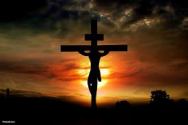
Friday Sermon | The Passion of Christ

imagesI hadn’t planned to post anything for Good Friday, but Worldview Everlasting (WEtv) posted 2 videos this week that were so full of awesome teaching that I simply had to share it. These are short videos and I will not be adding much text to this post. My encouragement to you dear brothers and sisters in Christ is to spend time in God’s Word and attend whatever services your local church holds this weekend (vespers, sunrise service, etc.) to be fed the Word of God. This holiday isn’t about the abominable bunny, it is about the beautiful exchange of your sinfulness for Christ’s righteousness by His Finished work on the cross.

Update: After this post was posted, WEtv put out another amazing video that simply had to be added to today’s post.

Timeline Events of Holy Week – Pr Bryan Wolfmueller


One Lamb for All – Pr Matt Richard


The Full Suffering of Christ

Psalm 22 (ESV) | Why Have You Forsaken Me?
To the choirmaster: according to The Doe of the Dawn.
A Psalm of David.

My God, my God, why have you forsaken me?
Why are you so far from saving me, from the words of my groaning?
O my God, I cry by day, but you do not answer,
and by night, but I find no rest.
Yet you are holy,
enthroned on the praises of Israel.
In you our fathers trusted;
they trusted, and you delivered them.
To you they cried and were rescued;
in you they trusted and were not put to shame.
But I am a worm and not a man,
scorned by mankind and despised by the people.
All who see me mock me;
they make mouths at me; they wag their heads;
“He trusts in the Lord; let him deliver him;
let him rescue him, for he delights in him!”
Yet you are he who took me from the womb;
you made me trust you at my mother’s breasts.
On you was I cast from my birth,
and from my mother’s womb you have been my God.
Be not far from me,
for trouble is near,
and there is none to help.
Many bulls encompass me;
strong bulls of Bashan surround me;
they open wide their mouths at me,
like a ravening and roaring lion.
I am poured out like water,
and all my bones are out of joint;
my heart is like wax;
it is melted within my breast;
my strength is dried up like a potsherd,
and my tongue sticks to my jaws;
you lay me in the dust of death.
For dogs encompass me;
a company of evildoers encircles me;
they have pierced my hands and feet—
I can count all my bones—
they stare and gloat over me;
they divide my garments among them,
and for my clothing they cast lots.
But you, O Lord, do not be far off!
O you my help, come quickly to my aid!
Deliver my soul from the sword,
my precious life from the power of the dog!
Save me from the mouth of the lion!
You have rescued me from the horns of the wild oxen!
I will tell of your name to my brothers;
in the midst of the congregation I will praise you:
You who fear the Lord, praise him!
All you offspring of Jacob, glorify him,
and stand in awe of him, all you offspring of Israel!
For he has not despised or abhorred
the affliction of the afflicted,
and he has not hidden his face from him,
but has heard, when he cried to him.
From you comes my praise in the great congregation;
my vows I will perform before those who fear him.
The afflicted shall eat and be satisfied;
those who seek him shall praise the Lord!
May your hearts live forever!
All the ends of the earth shall remember
and turn to the Lord,
and all the families of the nations
shall worship before you.
For kingship belongs to the Lord,
and he rules over the nations.
All the prosperous of the earth eat and worship;
before him shall bow all who go down to the dust,
even the one who could not keep himself alive.
Posterity shall serve him;
it shall be told of the Lord to the coming generation;
they shall come and proclaim his righteousness to a people yet unborn,
that he has done it.

Conclusion

Today we remember the most terrible and beautiful day recorded in history. This is the very center of the Scriptures, the Written Word of God. In closing, I’d like to remind our readers of the forgiveness of God and of the call to proclaim the Gospel of Jesus Christ, baptizing and teaching all that Christ had taught… what we now have in Scripture.

John 21:15-19 (ESV) | Jesus and Peter
When they had finished breakfast, Jesus said to Simon Peter, “Simon, son of John, do you love me more than these?” He said to him, “Yes, Lord; you know that I love you.” He said to him, “Feed my lambs.” He said to him a second time, “Simon, son of John, do you love me?” He said to him, “Yes, Lord; you know that I love you.” He said to him, “Tend my sheep.” He said to him the third time, “Simon, son of John, do you love me?” Peter was grieved because he said to him the third time, “Do you love me?” and he said to him, “Lord, you know everything; you know that I love you.” Jesus said to him, “Feed my sheep. Truly, truly, I say to you, when you were young, you used to dress yourself and walk wherever you wanted, but when you are old, you will stretch out your hands, and another will dress you and carry you where you do not want to go.” (This he said to show by what kind of death he was to glorify God.) And after saying this he said to him, “Follow me.”

Matthew 28:16-20 (ESV) | The Great Commission
Now the eleven disciples went to Galilee, to the mountain to which Jesus had directed them. And when they saw him they worshiped him, but some doubted. And Jesus came and said to them, “All authority in heaven and on earth has been given to me. Go therefore and make disciples of all nations, baptizing them in the name of the Father and of the Son and of the Holy Spirit, teaching them to observe all that I have commanded you. And behold, I am with you always, to the end of the age.”

Amen.
In Christ Jesus,
Jorge