All Scripture is God-breathed…

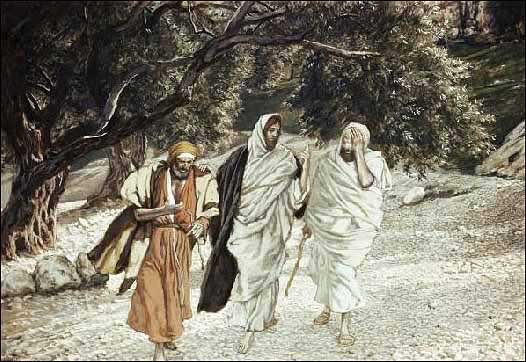
Road to Emmaus  by James J. Tissot

Road to Emmaus
by James J. Tissot

I had hoped to have written today’s post a bit sooner; nevertheless, I am grateful that God has granted me the grace and mercy to share another post on this fine Monday morning. As I have been spending a great deal of time in prayer regarding His plans for my life and my involvement within the local church (each year, twice a year, our local church engages in 21 days of prayer and fasting seeking God’s Will for our fellowship, our families, and our individual walks), this blog has come to mind repeatedly. I am reminded that I am not to take this blog lightly, that I cannot simply post what I like and rely on the first amendment to shield me from these writings. Rather, that as I commit myself to the study of God’s Word, and share here what I learn in the Scriptures, by the Grace of God by His Holy Spirit, that I do so prayerfully and humbly.

In the last post, we started to look at the subject of Biblical submission, that is, submitting to God and His Word in righteousness. Before continuing, I do think it important that we spend time again looking at the authority of the Scriptures. So, consider this a companion to the last post, because one cannot effectively discuss submission, without clearly and completely discussing authority.

Let us begin with the Apostle Paul’s instruction to Timothy, in which he declares:

2 Timothy 3:16 (NASB, emphasis mine) 16 All Scripture is [a]inspired by God and profitable for teaching, for reproof, for correction, for training in righteousness;
Footnote: [a] 2 Timothy 3:16 Lit God-breathed

I don’t normally include the footnotes in these posts; however, I couldn’t find a translation of the this passage that included the literal meaning of the Greek in the text. Every translation I searched included the literal meaning of the Greek as a footnote, and I believe it is important for us to recognize. Now, there is nothing wrong with the word “inspired” here, but I want to examine the literal “God-breathed” for a few moments.

Psalm 33:6 (NASB, emphasis mine) 6 By the word of the Lord the heavens were made, And by the breath of His mouth all their host.

Genesis 2:7 (NASB emphasis mine) 7 Then the Lord God formed man of dust from the ground, and breathed into his nostrils the breath of life; and man became a living being.

So, you see, the connection of all of Scripture to the Breath of God is an important one to maintain. As Paul wrote in Acts 17:28a (KJV), “For in him we live, and move, and have our being;” {oh yeah… I went old-school on that one 😉 }.

I mention this because in the past couple of decades we’ve seen a surge in the number of non-denominational Churches both here and abroad. There is a breaking away from the major hierarchies and set doctrines of these Churches that can be traced back to the reformation of the Roman Catholic Church. No doubt breaking away from false teaching, false doctrine, and corrupt leadership is necessary, but to do so without reconnecting to the authority of Scripture only leaves you floating aimlessly in a sea of organizations of men. Without a firm grasp on the authority of Scriptures, we cannot hope to remain submitted to God in keeping with His word, thus our attempts at reformation degrade into mere rebellion.  I’ve spoken to so many Christians who have left the church because they were hurt, mistreated, or lied to… only to reject all authority and to purpose within their hearts never to submit to “anyone but the Holy Spirit”. But to do so without acknowledging fully the authority of Scriptures is both reckless and rebellious and is a popular snare of the devil in our present culture and age.  It is to this generation that I hope to reach and reaffirm the authority of whole of Scriptures and the Gospel of Jesus Christ. It is why I’m focusing primarily in the New Testament affirmations of the Divine authority of scriptures. Let us continue on then…

I’d like to take a moment to look at one of the coolest accounts of Jesus after His resurrection found in Luke 24. I urge you strongly, to read the whole chapter… and then re-read it. It happens that as the women returned from finding the tomb of Jesus empty, and having been spoken to by Angels of the Lord, and shared their testimony with the disciples, that most did not believe. They were in mourning. Imagine for a moment, that only 3 days ago you saw your mentor, beloved teacher, Savior tortured and killed… you would undoubtedly have clouded judgement as well, would you not? But Peter took off running to see for himself. I love Peter… but that’s not where we are going right now, just setting up the backdrop for begins in verse 13:

Luke 24:13-17 (NASB, emphasis mine) 13 And behold, two of them were going that very day to a village named Emmaus, which was about seven miles from Jerusalem. 14 And they were talking with each other about all these things which had taken place. 15 While they were talking and discussing, Jesus Himself approached and began traveling with them. 16 But their eyes were prevented from recognizing Him. 17 And He said to them, “What are these words that you are exchanging with one another as you are walking?” And they stood still, looking sad.

The “them” in v13 refers to those disciples who heard the testimony of the women who had seen the empty tomb. But why did Jesus not just appear in full glory like, “here I am, BAM”? let’s read on, because the answer to this question is absolutely beautiful…

Luke 24:18-27 (NASB, emphasis mine) 18 One of them, named Cleopas, answered and said to Him, “Are You the only one visiting Jerusalem and unaware of the things which have happened here in these days?” 19 And He said to them, “What things?” And they said to Him, “The things about Jesus the Nazarene, who was a prophet mighty in deed and word in the sight of God and all the people, 20 and how the chief priests and our rulers delivered Him to the sentence of death, and crucified Him. 21 But we were hoping that it was He who was going to redeem Israel. Indeed, besides all this, it is the third day since these things happened. 22 But also some women among us amazed us. When they were at the tomb early in the morning, 23 and did not find His body, they came, saying that they had also seen a vision of angels who said that He was alive. 24 Some of those who were with us went to the tomb and found it just exactly as the women also had said; but Him they did not see.” 25 And He said to them, “O foolish men and slow of heart to believe in all that the prophets have spoken! 26 Was it not necessary for the Christ to suffer these things and to enter into His glory?” 27 Then beginning with Moses and with all the prophets, He explained to them the things concerning Himself in all the Scriptures.

Wow. You see… Jesus wanted His disciples to understand who He was and what had just happened in context of the Scriptures. He later reveals Himself to His disciples… but first, He chose to explain to them what they needed to know about Him… beginning with Moses and with all the prophets… Praise the Lord! While Jesus, being the Son of God, and already the first-born from the grave (resurrected) already bears all Authority in Heaven and Earth, He still chose to demonstrate His authority to His disciples by walking them through the scriptures. If Jesus chose to reveal Himself to His disciples in this manner, then we, too should likewise turn to the whole of Scripture to understand, proclaim, and reveal Jesus, the King of kings, and Lord of lords.

One more example before we close today. Let us return to the Apostle Paul for an example of how we are to share the Gospel as stewards of His word. Lets look at his letter to the Thessalonians. In the opening chapters of this letter, Paul is giving thanks for the faithfulness of the believers. One of the things for which Paul expresses thankfulness is particularly striking:

1 Thessalonians 2:13 (NASB) 13 For this reason we also constantly thank God that when you received the word of God which you heard from us, you accepted it not as the word of men, but for what it really is, the word of God, which also performs its work in you who believe.

So we have here that the Apostle is thankful that the believers accepted their words as the Word of God. But how is it, then, that such Authority could have been given to Paul by these believers? That they would not only accept their words as being of God, but that they “became imitators of the churches of God in Christ Jesus that are in Judea, for you also endured the same sufferings at the hands of your own countrymen…(v14)”. Thankfully, we have the account in Acts to bring us up-to-speed on what took place.

Acts 17:1-4(NASB) Paul at Thessalonica
17 Now when they had traveled through Amphipolis and Apollonia, they came to Thessalonica, where there was a synagogue of the Jews. 2 And according to Paul’s custom, he went to them, and for three Sabbaths reasoned with them from the Scriptures, 3 explaining and giving evidence that the Christ had to suffer and rise again from the dead, and saying, “This Jesus whom I am proclaiming to you is the Christ.” 4 And some of them were persuaded and joined Paul and Silas, along with a large number of the God-fearing Greeks and a number of the leading women.

This Jesus…is the Christ.” Paul reasoned with them from the Scriptures. That is where he derived his authority to preach, proclaiming the Jesus who had stopped him on the road to Damascus was in-fact the Christ. The authority isn’t in the vision, it’s in the Scriptures. Paul’s eyes needed to be opened, just as the eyes of the disciples that were walking on the road to Emmaus needed their eyes to be open.

It is my sincere prayer, that these posts spark a desire in your heart to read these scriptures for yourselves, and to get the full context of each passage. As I read/hear these passages I get a sense of what the disciples shared with one another after Jesus revealed Himself to them.

Luke 24:31-32 (NASB) 31 Then their eyes were opened and they recognized Him; and He vanished from their sight. 32 They said to one another, “Were not our hearts burning within us while He was speaking to us on the road, while He was explaining the Scriptures to us?”

May the Holy Spirit do likewise in your hearts as you search the Scriptures, and submit to the authority of God and His Word.

In Him,
FS

The Righteousness of Biblical Submission

Christ in Gethsemane by Heinrich Hofmann

Christ in Gethsemane by Heinrich Hofmann

We live in a society that absolutely rejects the notion of submission. For most Americans, submission is a sign of weakness, inferiority, and failure. What’s worse, there is a disturbing upward trend in deviant fetishism that seeks to add a very sick and twisted meaning to submission, due in large part to a recent publication of filth I don’t care to mention. To put it bluntly, submission is a dirty word in our society. There is a very good reason the enemy works so diligently to pervert, distort, and redefine “submission” and what it means to submit. As we will see in the Scriptures, the reason is that submission to God and the authority of His Word is our only hope for salvation. While that may seem like a “given”, I urge you to bear with me and see if we might dig a bit deeper into what it means to submit to God and His Word.

In the first chapter of the Gospel of John, we have the following introduction of Jesus Christ:

John 1:1-5 (NASB) The Deity of Jesus Christ
1 In the beginning was the Word, and the Word was with God, and the Word was God. 2 He was in the beginning with God. 3 All things came into being through Him, and apart from Him nothing came into being that has come into being. 4 In Him was life, and the life was the Light of men. 5 The Light shines in the darkness, and the darkness did not comprehend it.

John 1:14-18 (NASB) The Word Made Flesh
14 And the Word became flesh, and dwelt among us, and we saw His glory, glory as of the only begotten from the Father, full of grace and truth. 15 John *testified about Him and cried out, saying, “This was He of whom I said, ‘He who comes after me has a higher rank than I, for He existed before me.’” 16 For of His fullness we have all received, and grace upon grace. 17 For the Law was given through Moses; grace and truth were realized through Jesus Christ. 18 No one has seen God at any time; the only begotten God who is in the bosom of the Father, He has explained Him.

I like to start in the book of John, because I find that his intro does a wonderful job of introducing the Christ in such a manner that unifies the whole Bible. Right off the bat it is clear that in order to fully understand what it means to know Jesus involves studying all of God’s Word from Genesis through Revelation. If you’ll remember the wording of the prophecy in Isaiah 9:6 regarding the Messiah, “For a child will be born to us, a son will be given to us”, you see here that John was pointing out that while His flesh was born that day, Jesus was given to us… ,”And the Word became flesh”.

Now, as Christians, we are to take Jesus as our example. What did Jesus have to say about the Law and the Prophets?

Matthew 5:17-19 (NASB)
17 “Do not think that I came to abolish the Law or the Prophets; I did not come to abolish but to fulfill. 18 For truly I say to you, until heaven and earth pass away, not the smallest letter or stroke shall pass from the Law until all is accomplished. 19 Whoever then annuls one of the least of these commandments, and teaches others to do the same, shall be called least in the kingdom of heaven; but whoever keeps and teaches them, he shall be called great in the kingdom of heaven.

Jesus had every right, being God, to simply speak truth from His own authority. Why did He choose to return to scriptures time and time again? A common quick-answer given today is simply that He did so to demonstrate to us how we might live our lives. While there is truth in that, I believe that answer to be incomplete, and it leaves too much room for the enemy to inject into our minds doubts and false doctrines regarding the person of Jesus and the role of  biblical submission to Divine Authority. Jesus wasn’t just demonstrating submission to the scriptures and to God the Father, He submitted to the Father’s Will.  When He fasted for 40 days (Matt 4), He submitted to the Spirit, was led into the wilderness to be tempted, and He was hungry. Not an act just for demonstration’s sake, it was real. He resisted the temptation of the devil by referring to the Scriptures. That alone would make the point I’m trying to make, but look at His response to the second temptation.

Matthew 4:7 Jesus said to him, “On the other hand, it is written, ‘You shall not put the Lord your God to the test.’”

Jesus isn’t directing the quote at Satan, He presents the quote as a standard by which He must resist the temptation to put the Lord God to the test. Jesus is saying that He will not do what Satan suggested He do, because Scriptures clearly stay that we are not to test the Lord our God. Submission. Likewise in the response to the third and final temptation, Jesus isn’t commanding Satan ‘You shall worship the Lord your God, and serve Him only.’ He is saying that He is to worship the Lord God and serve Him only; therefore, He will resist the final temptation. Submission. Satan had to flee… and after he had run away, the angels came to minister to Jesus. I think that it is from this example that James writes

James 4:7-10 (NASB)
7 Submit therefore to God. Resist the devil and he will flee from you. 8 Draw near to God and He will draw near to you. Cleanse your hands, you sinners; and purify your hearts, you double-minded. 9 Be miserable and mourn and weep; let your laughter be turned into mourning and your joy to gloom. 10 Humble yourselves in the presence of the Lord, and He will exalt you.

I look forward to returning to James 4 at a later date, but for now, I just wanted to point out that the Apostles understood submission because they saw it in the life of Jesus. In your own private reading time, examine for yourselves all of the times Jesus deferred to His Father in Heaven. In the book of John, He made it very clear to the Pharisees that He was the Son of God, and that He was sent by Him, and that His authority over sin, sickness, even the Sabbath was from God; however, He also deferred to God’s Will and Authority. Let’s go to another truly desperate and painful times when Jesus submitted to God the Father

Mark 14:36 (NASB) (Luke 22:39-46; Matthew 26:36-46; Mark 14:32-42)
36 And He was saying, “Abba! Father! All things are possible for You; remove this cup from Me; yet not what I will, but what You will.”

Luke 23:34 (NASB) (On the Cross)
34 But Jesus was saying, “Father, forgive them; for they do not know what they are doing.” And they cast lots, dividing up His garments among themselves.

Luke 23:46 (NASB) 46 And Jesus, crying out with a loud voice, said, “Father, into Your hands I commit My spirit.” Having said this, He breathed His last.

Amen. Yes, Jesus demonstrated complete and total submission to God the Father… by being fully and completely submitted to God the Father. It is this point, this point exactly, that lead me to share this message today. If Jesus, being the Son of God, the Word of God, equal to God was righteous in His submission to God and the Word of God… where is it that we get this false notion that submission denotes inferiority? We submit to God not only because He is superior to us (because we are, in-fact, inferior to God) but because it is Right that we do so. If submission were based solely on inferiority of being then Jesus could not have submitted to God the Father, for He is in no way an inferior being. He submitted to the Authority of God the Father, because that is the design of God’s creation.

Pray about this, and settle it in your spirits. Biblical submission is righteousness in the sight of God. Submit therefore to God. There is much more to discuss concerning the righteousness of biblical submission. Know that the basis for subsequent discussion has been presented here, in that we must first submit to God, His Word, His Son, His Spirit, and His Will. We will take a prayerful look at what the scriptures have to say about submission, particularly in how we are to live our lives as Christians in society, family, and within the Church.

Until next time, May the Lord bless and keep you in His Will,

In Him,
FS

Related articles

Context of Christmas: from kings to the King of kings

ImageIf it is fitting that we Christians celebrate the Birth of the Jesus (Christmas), then we should endeavor to do so in Truth, the Word of God. It isn’t enough to simply reject the santaism that competes with the message of Jesus, or the materialism that robs us of our peace and joy and even goodwill toward men. I’d like to devote the next few articles to the wonder of the birth of Jesus. Luke 2 and Matthew 2 are wonderful passages chronicling the birth of our Savior, but I’d like to look at this event as the centerpiece of the bible, rather than simply the beginning of the New Testament. This will be my humble attempt at an overview of the Bible in many ways. As such, I will be using a lot more references to scripture (without including the texts here) than I am accustomed. I pray you will find the time to look up the passages referenced for your edification.

Today, I want to look at the significance of title “King of kings”. It is a title of the ultimate supremacy of God over all of the kings of men, and it is a title specifically worn by Jesus in Revelation 19:

Revelation 19:16 (NASB) 16 And on His robe and on His thigh He has a name written, “KING OF KINGS, AND LORD OF LORDS.”

In the Beginning, when God created man, His desire was to be with us. He desired to have us freely choose to love Him, and live in His presence. To do so, we simply needed to obey Him (Gen 2:15-18). Adam failed in that regard, seeking rather to be like God knowing both good and evil. God immediately spared man from eternal separation from Him by removing man from the garden (Gen 3:22-24), and promising to make a way for the redemption of man by the seed of woman (Gen 3:15). As an aside, I’d like to point out that the enmity is between Satan and mankind. We too often falsely elevate Satan to being the opposite God. He is merely “in opposition” to God, but by this time he had already been cast out (defeated) by God. He remains a viscous foe only to created beings (men and angels, and the lesser creatures). We know that he opposed Jesus to the cross, at which point Jesus crushed Satan’s head and gained victory over the darkness. A second victory for God, the first victory for man, for He was both fully God and fully man (the seed of woman, but not of man, for He was born of a virgin. Isaiah 7:14, Matt 1:18-25; John 1:1-4,14).

What follows next is a long succession of mankind demonstrating their desire to do evil, all the while God is reaching out to creation to return to Him. Finally, one man finds favor with God and seeks to serve Him faithfully. God makes a covenant with Abraham:

Genesis 17:1-8 (NASB)
1 Now when Abram was ninety-nine years old, the Lord appeared to Abram and said to him,
“I am God Almighty;
Walk before Me, and be blameless.
2 “I will establish My covenant between Me and you,
And I will multiply you exceedingly.”
3 Abram fell on his face, and God talked with him, saying,
4 “As for Me, behold, My covenant is with you,
And you will be the father of a multitude of nations.
5 “No longer shall your name be called Abram,
But your name shall be Abraham;
For I have made you the father of a multitude of nations. 6 I will make you exceedingly fruitful, and I will make nations of you, and kings will come forth from you. 7 I will establish My covenant between Me and you and your descendants after you throughout their generations for an everlasting covenant, to be God to you and to your descendants after you. 8 I will give to you and to your descendants after you, the land of your sojournings, all the land of Canaan, for an everlasting possession; and I will be their God.”

Notice that God’s promise is to be the God of Abraham’s decedents. Kings will come from him, and a multitude of nations, but God promises He will be their God “throughout their generations for an everlasting covenant”. Again, God’s purpose remains to be our God and to make us fruitful. This takes place roughly 2100 years BC. So then we have Abraham, Isaac, and Jacob (whose name gets changed to Israel in Gen 32:28). This whole time, there are other peoples who worship false gods and have their own kings. God uses Egypt to preserve Israel through a terrible famine, but the Children of Israel tarry too long in their comfort under Pharaoh… a situation that declines rapidly once Joseph dies and a new Pharaoh chooses to treat Israel harshly. And so, God raises up a leader (Moses) from among them, raised within the very house of Pharoah until his exile… an exile where Moses meets God in a burning bush (Exodus 3), and is called by God to rescue God’s chosen people, the children of Israel. God identifies Himself as the God of Abraham, the God of Isaac, and the God of Jacob. He was moving mightily to rescue Israel and honor the covenant. In Exodus 12, God delivers Israel out of Egypt, just as Jesus’ sacrifice delivers us from the kingdom of darkness (1 Cor 5:7; Heb 11:25-28). The exodus beings in roughly 1446 BC.

But Israel would have a terrible time walking in freedom. The generation that was pulled out of Egypt just couldn’t let go of Egypt, it’s rulers or its gods, and for their sin God had to wait for the next generation to lead them into the promised land. Joshua follows God (and so leads Israel) into the promised land… but Israel failed to follow God completely, and as soon as Joshua dies, they chase after false gods and marry foreigners. And so begins a period of raising up judges to rescue Israel from oppression, only to see a period of piece, followed by sin and its consequential oppression once more (the book of Judges and 1 Samuel).

So it continues until the time of Samuel. The story of Samuel is awesome, but that’s for another time. Though Samuel served God faithfully, his sons did not. Samuel appointed his sons as judges over Israel, and they fell into sin, seeking dishonest gain and taking bribes for perverting justice (1 Sam 8). It is at this point that the elders of Israel came to Samuel and demanded that he appoint a king to judge over Israel. This greatly troubled Samuel.

Here in the U.S., we are far removed from having a king. We have a veritable pantheon of elected officials to whom we give great power over us, but we do not have a solid concept of a king. The Israelites had over them the priests, judges, and prophets. Each office was a position of authority over the people of Israel; however, the seat of their authority was firmly established in God. The priests, prophets, and judges were advocates of the people to God. A king is something different. What the Israelites were saying was that they no longer wanted to be judged and ruled over by God or His advocates, they wanted to carve out their own identity, have their own kingdom, patterned more after the kingdoms around them that served false gods. So God gave them over to their desire for a king, with a strong warning of what would come of it (read the remainder of 1 Sam 8). Saul becomes the first king of Israel in roughly 1050 BC.

When Saul sins against God, the Lord leads Samuel to anoint David as King. Now David being a man after God’s own heart (Acts 13:22) serves God mightily and wanted to build for God a Temple. God denies his request (1 Chr 28:3) but David gathers up materials for the Temple that would be built later by Solomon in roughly 970 BC.

1 Chronicles 28:6-7(NASB) 6 [God] said to [David], ‘Your son Solomon is the one who shall build My house and My courts; for I have chosen him to be a son to Me, and I will be a father to him. 7 I will establish his kingdom forever if he resolutely performs My commandments and My ordinances, as is done now.’ (emphasis mine)

Solomon did not keep God’s commandments, and as a result, he was the last king over a unified Israel. Israel was split into 2 kingdoms, “Israel” to the north, and “Judah” to the south. Jerusalem, where the Temple was built, remained the capital city of Judah, and Samaria became the capital of Israel. In 722 BC, the Assyrians invaded Israel and scattered its tribes in exile. These are known as the lost tribes of Israel, because they never again returned to the land of Israel as a people. Their final king was Hosea. Judah lasts a bit longer until approximately 586 BC, when Babylon takes Jerusalem and destroys the Temple. King Nebuchadnezzar takes as captive “some of the sons of Israel, including some of the royal family and of the nobles, youths in whom was no defect, who were good-looking, showing intelligence in every branch of wisdom, endowed with understanding and discerning knowledge, and who had ability for serving in the king’s court; and he ordered him to teach them the literature and language of the Chaldeans” (Daniel 1:3b-4). But not all of Israel was taken to Babylon. Those that remained, suffered greatly. Without a king, without their nobles, best craftsmen leaders, intellectuals… they were left to starve and fend for themselves. The book of Lamentation was written in Judah during the Exile.

Now Cyrus, a Persian king, had conquered all of the kingdoms. The book of Ezra picks begins with a proclemation made by Cyrus:

Ezra 1:1-4 (NASB)
1 Now in the first year of Cyrus king of Persia, in order to fulfill the word of the Lord by the mouth of Jeremiah, the Lord stirred up the spirit of Cyrus king of Persia, so that he sent a proclamation throughout all his kingdom, and also put it in writing, saying:
2 “Thus says Cyrus king of Persia, ‘The Lord, the God of heaven, has given me all the kingdoms of the earth and He has appointed me to build Him a house in Jerusalem, which is in Judah. 3 Whoever there is among you of all His people, may his God be with him! Let him go up to Jerusalem which is in Judah and rebuild the house of the Lord, the God of Israel; He is the God who is in Jerusalem. 4 Every survivor, at whatever place he may live, let the men of that place support him with silver and gold, with goods and cattle, together with a freewill offering for the house of God which is in Jerusalem.’”

Cyrus was a Zoroastrian, so in his mind, he was simply supporting all “good gods” in the epic struggle against the “evil gods”. Aside: How awesome is it that God can use and has used pagans and pantheists to work His Will! But God used Cyrus and the Persian empire to not only put an end to the Exile, but to commission the rebuilding of Jerusalem and the Temple using Persian funding! Ezra and Nehemiah cover the rebuilding of the Temple and Jerusalem. This second temple is dedicated in roughly 516 BC, but Israel does not regain its independence, only it’s Temple and its identity under Persian rule. Alexandar the Great defeats the Persian empire, and the Greeks then rule over Jerusalem beginning roughly 333 BC. The Greek ruler Antiochus Epiphanes reigned over Judah from about 175 BC to about 164 BC and tried to destroy the Jewish religion and copies the Torah. He also defiled the Temple in Jerusalem by making it a temple to Zeus and demanding pigs be sacrificed within the temple (Daniel 11:31-35). The Maccabees revolted and gained some independence until  the Romans took over in 63 BC.

Now the stage is set. The throne of David seems all but abandoned. Israel is but a shadow of what it once was. For nearly 400 years now, the Prophets have been silent… and the people are looking for a Messiah. When the Romans took over, they placed Herod as governor over Jerusalem. He commissioned many an architectural wonder in expanding the Temple Mount (actually enlarging the mountain around the Temple, we’ll discuss this in greater detail later). But many Jews suffered under Herod. He would appoint High Priests in the Temple of his choosing, and should any of them disagree with Herod, He’d remove them and place another. Israel, wanted to be made free. This is why the message of Jesus was so completely difficult for the Jews to accept… especially for those who recognized Him as possibly the Christ:

John 10:22-24 (NASB) 22 At that time the Feast of the Dedication took place at Jerusalem; 23 it was winter, and Jesus was walking in the temple in the portico of Solomon. 24 The Jews then gathered around Him, and were saying to Him, “How long will You keep us in suspense? If You are the Christ, tell us plainly.”

Now that we have established a historical and biblical context for the birth of Jesus, in the next blog I plan on looking at some of the really cool statements made in the Luke and Matthew accounts of the birth of our Savior. We will be looking at prophecies from Daniel and Isaiah for sure. In the meantime, I hope this has been at least interesting for some of you.

May the Lord bless and keep you in His Will,

FS

Related articles

In this world you will have trouble…

trialsWe are currently living in some stressful times. Even if you are blessed by  not being subjected to mainstream “news” media, you’ve undoubtedly heard from friends and family who are concerned about their lives and livelihood in the next several years. As Christians, we have been given the keys to life and living that we can use to reach the lost and the hurting. Unfortunately, there is a lot of false doctrine out there. Perhaps the most damaging, is the idea that if you just have enough faith (and do certain things in that faith) that you will be free from trials, tribulation, persecution, hunger, thirst, and every other imaginable hardship. That is not in keeping with the teaching given to us in the New Testament. Yes, God loves us, and has promised to meet our every need. We serve a sovereign God… He is Lord over everything. Nothing happens that He does not allow to happen. Lets begin with some references from the Gospels:

John 16:3 (NIV)
33 “I have told you these things, so that in me you may have peace. In this world you will have trouble. But take heart! I have overcome the world.”

Jesus stated very plainly that in this world we will have trouble. He is preparing His disciples for what was about to come, and His encouragement wasn’t “but if you have faith, you will be exempted from troubles”… it was “But take heart! I have overcome the world”. But why? Why allow us to face troubles? If God is sovereign, why not simply exempt His faithful followers? Let’s take a look at Peter, one of his star pupils.

Luke 22:31-32 (NIV)
31 “Simon, Simon, Satan has asked to sift all of you as wheat. 32 But I have prayed for you, Simon, that your faith may not fail. And when you have turned back, strengthen your brothers.”

Indeed, we see that we serve a Sovereign God. But there is a reason why God allows the trials to come. Do you know why wheat needs to be sifted? Because not all of it is fitting for consumption. If you don’t sift the wheat, you’ll end up introducing impurities into the food. Notice Jesus’s prayer on Simon’s behalf… “that your faith may not fail”. You see, faith isn’t designed to grant you the power to avoid trouble, its purpose is to sustain you in Him through the trials. These are general truths. In each of our lives, God also has specific goals and purposes in mind for our individual struggles. In this case, He wanted Simon to endure the trial, and when he had recovered from it, he was to strengthen his brothers. God continues to work through His Church in this same fashion. When we go through trials and struggles, God sustains us through it all so that we might give Him praise and thanks and that we might strengthen our brothers and sisters in Christ.

Without taking away a single letter of the Law or of the many promises of God for His Love, Mercy, Provision, and desire to answer prayer, I want to present several examples throughout the new testament of the reality of trials, tribulations, and hardships that we Christians should expect until the day of Christ’s return, or until God the Father has appointed each of us to leave this world. The Apostle Paul included this truth in many of his letters to the churches:

2 Corinthians 7:8-11 (NASB)

8 For we do not want you to be unaware, brethren, of our affliction which came to us inAsia, that we were burdened excessively, beyond our strength, so that we despaired even of life; 9indeed, we had the sentence of death within ourselves so that we would not trust in ourselves, but in God who raises the dead; 10 who delivered us from so great a peril of death, and will deliver us, He on whom we have set our hope. And He will yet deliver us, 11 you also joining in helping us through your prayers, so that thanks may be given by many persons on our behalf for the favor bestowed on us through the prayers of many.

And this was on a “missions trip” so to speak. This was not an isolated trial or event; rather, it became a way of life for Paul, something he learned to take joy in.

Colossians 1:24 (NASB)
24 Now I rejoice in my sufferings for your sake, and in my flesh I do my share on behalf of His body, which is the church, in filling up what is lacking in Christ’s afflictions.

Paul often wrote of how we are to identify with Christ in His death, resurrection, and ascension. He also recognized that while we walk this earth in our fleshly bodies, we are to share in Christ’s afflictions, for the Church is the Body of Christ, with Christ as the Head of the body (1 Cor 12). Just as Christ endured trials, suffering, and afflictions in obedience to God the Father, how much more so should we endure for His Name sake? But it is a point of rejoicing for Paul. And he was not alone in this view/mindset.

James 1: 2-4 (NASB)

2 Consider it all joy, my brethren, when you encounter various trials, 3 knowing that the testing of your faith produces endurance. 4 And let endurance have its perfect result, so that you may be perfect and complete, lacking in nothing.

Again, as with Jesus’ plan for Simon (Peter), there is a purpose for the suffering/trials/tribulations. We are perfected in our faith and in our understanding of Christ and the Kingdom of Heaven through our trials. The athlete who never struggles quickly grows weak. The mind that isn’t challenged grows numb. The Christian that does not face hardship will slip into sin and fall away from the faith.

In closing, let us look at what the Apostle Peter had to say:

1 Peter 5:6-11 (NASB)
6 Therefore humble yourselves under the mighty hand of God, that He may exalt you at the proper time, 7 casting all your anxiety on Him, because He cares for you. 8 Be of sober spirit, be on the alert. Your adversary, the devil, prowls around like a roaring lion, seeking someone to devour. 9But resist him, firm in your faith, knowing that the same experiences of suffering are being accomplished by your brethren who are in the world. 10 After you have suffered for a little while, the God of all grace, who called you to His eternal glory in Christ, will Himself perfect, confirm, strengthen and establish you. 11 To Him be dominion forever and ever. Amen.

In Him,
FS

Teach us to pray…

I often hear from Christians that they are uncomfortable praying or that they don’t pray well. So lets look at some of the examples we have in scripture.

First, let’s see how Jesus taught His disciples to pray in Matthew 6:5-14

5 “When you pray, you are not to be like the hypocrites; for they love to stand and pray in the synagogues and on the street corners so that they may be seen by men. Truly I say to you, they have their reward in full. 6 But you, when you pray, go into your inner room, close your door and pray to your Father who is in secret, and your Father who sees what is done in secret will reward you.

7 “And when you are praying, do not use meaningless repetition as the Gentiles do, for they suppose that they will be heard for their many words. 8 So do not be like them; for your Father knows what you need before you ask Him.

9 “Pray, then, in this way:

‘Our Father who is in heaven, Hallowed be Your name.
10 ‘Your kingdom come. Your will be done, On earth as it is in heaven.
11 ‘Give us this day our daily bread.
12 ‘And forgive us our debts, as we also have forgiven our debtors.
13 ‘And do not lead us into temptation, but deliver us from evil. [For Yours is the kingdom and the power and the glory forever. Amen.’]

14 For if you forgive others for their transgressions, your heavenly Father will also forgive you. 15 But if you do not forgive others, then your Father will not forgive your transgressions. (NASB)

Often, the lesson of how Jesus instructed His Disciples in prayer is limited to verses 9-13; however, if we do that we lose some very important instructions. Jesus lived a life of prayer. Many times we see written in the gospels that He moved away to a quiet place to pray. Clearly the disciples noticed this was an important part of prayer (so important, they were prompted by the Holy Spirit to write it down, repeatedly). There is a difference between “praying as the hypocrites” do and “leading others in prayer”. Here, Jesus is primarily concerned with prayer as a communication with Our Father in Heaven. Remember that you are talking to a personal God, not a deaf stone. That our Father knows what we need before we ask Him, means that we simply need to ask Him, knowing that He hears and knows your needs. Don’t be impressed by how many different ways someone can ask God for the same thing… if you had some time and a thesaurus, you, too, could engage in meaningless repetition (now, if you are leading others in prayer and fear you might have used a phrase that could be confusing, then by all means restate for their benefit, knowing that the repetition isn’t needed by God). A danger of the constant repetition is that at some point you just need to accept on faith that God hears and will answer. This is not a ban on praying again for the same thing. But know that when you speak to God in prayer, He hears immediately.

So, how do we pray for others? I heard a short snippet on the radio of Dr. Charles Stanley giving a sermon on prayer and he referenced an excellent example found in
Colossians 1:9-14:

9 For this reason also, since the day we heard of it, we have not ceased to pray for you and to ask that you may be filled with the knowledge of His will in all spiritual wisdom and understanding, 10 so that you will walk in a manner worthy of the Lord, to please Him in all respects, bearing fruit in every good work and increasing in the knowledge of God; 11 strengthened with all power, according to His glorious might, for the attaining of all steadfastness and patience; joyously 12 giving thanks to the Father, who has qualified us to share in the inheritance of the saints in Light.

13For He rescued us from the domain of darkness, and transferred us to the kingdom of His beloved Son, 14 in whom we have redemption, the forgiveness of sins.

What a wonderful prayer to be prayed over a brother/sister in Christ. I would very much love to know that this was being prayed over me.

  1. That I might be filled with the knowledge of His Will in all spiritual wisdom and understanding — Yes, please!
  2. So that I will walk in a manner worthy of the Lord — absolutely. We all know how difficult this can be on a daily basis, especially while under attack at work or school.
  3. to please Him in all respects, bearing fruit in every good work — Amen.
  4. increasing in the knowledge of God — again… awesome. That I might make the time to read the Word and that the Holy Spirit will help me grow in the full knowledge of God
  5. strengthened with all power, according to His glorious might — though my flesh is weak… that I be made strong in Him
  6. for the attaining of all steadfastness and patience– okay… this is never “fun” but it is so necessary
  7. joyously giving thanks to the Father — that I remember to give all thanks, honor, glory, and praise to God the Father.

Wow. So, brothers/sisters… if ever anyone asks you for prayer but fails to specify (that’s another topic for another day)… pray this over them. Pray this prayer over your leadership and your family.

In Him,
FS