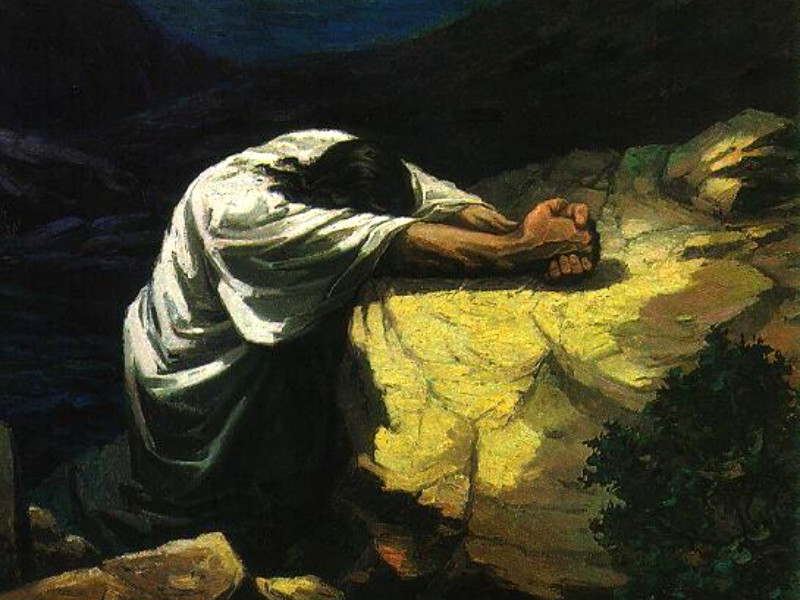
When Were You Saved?

PrayingA couple of weeks ago we took a look at what our Testimony is. Today, I’d like to discuss the question of “When were you saved”. In an effort to answer this question, we will be searching the Scriptures. As we work through this, a question I’d like to ask of you is, “what is the thought driving the question of the moment of salvation?”

What is Salvation? From What are We Saved?

As we have seen already, the ultimate Salvation is from the penalty of Adam’s sin in the Garden. That sin that plunged all of creation into a curse of sin and bound it for judgement and destruction.

Genesis 3:17-24 (ESV)
17 And to Adam [God] said, “Because you have listened to the voice of your wife and have eaten of the tree of which I commanded you, ‘You shall not eat of it,’ cursed is the ground because of you; in pain you shall eat of it all the days of your life; 18 thorns and thistles it shall bring forth for you;and you shall eat the plants of the field. 19 By the sweat of your face you shall eat bread, till you return to the ground, for out of it you were taken; for you are dust, and to dust you shall return.” 20 The man called his wife’s name Eve, because she was the mother of all living. 21 And the Lord God made for Adam and for his wife garments of skins and clothed them. 22 Then the Lord God said, “Behold, the man has become like one of us in knowing good and evil. Now, lest he reach out his hand and take also of the tree of life and eat, and live forever—” 23 therefore the Lord God sent him out from the garden of Eden to work the ground from which he was taken. 24 He drove out the man, and at the east of the garden of Eden he placed the cherubim and a flaming sword that turned every way to guard the way to the tree of life.

Man was forced out of the Garden of Eden, the ground was cursed, and death entered the world (Romans 5:12-14). Sadly, now that sin had laid claim to mankind, things became much, much worse as sin worked its will in our flesh, so all of creation was cursed.

Genesis 6:5-8 (ESV) 5 The Lord saw that the wickedness of man was great in the earth, and that every intention of the thoughts of his heart was only evil continually. 6 And the Lord regretted that he had made man on the earth, and it grieved him to his heart. 7 So the Lord said, “I will blot out man whom I have created from the face of the land, man and animals and creeping things and birds of the heavens, for I am sorry that I have made them.” 8 But Noah found favor in the eyes of the Lord.

Judgement. It is here we see how our sin affects the heart of God. Up until this point in Genesis, we see how sin has affected mankind, and how sin has affected creation. But here, in this passage we see that our sin has grieved the very heart of God. To the point that He regretted making man on the earth, for the weight of their sin and the judgement that was due man for his sin was exceedingly and abundantly great and terrible. But Noah found favor in the eyes of the Lord. God had promised salvation in His judgement on the serpent (Gen 3:15). What follows is our first picture (a foreshadowing) of God’s plan of Salvation for mankind. To highlight that understanding of the text, let’s turn to 1 Peter 3:

1 Peter 3:18-22 (ESV) 18 For Christ also suffered once for sins, the righteous for the unrighteous, that he might bring us to God, being put to death in the flesh but made alive in the spirit, 19 in which he went and proclaimed to the spirits in prison, 20 because they formerly did not obey, when God’s patience waited in the days of Noah, while the ark was being prepared, in which a few, that is, eight persons, were brought safely through water. 21 Baptism, which corresponds to this, now saves you, not as a removal of dirt from the body but as an appeal to God for a good conscience, through the resurrection of Jesus Christ, 22 who has gone into heaven and is at the right hand of God, with angels, authorities, and powers having been subjected to him.

Ultimately, God’s Salvation is from His wrath which we rightly deserve. Christ bore the punishment for our sin so that in Him we are made righteous.

At What Point Was Noah Saved?

Getting back to the topic for the day, think about the flood. Think about Noah. At what point was Noah and his family saved? How you initially answer this question will reflect your fundamental theology. Regardless of your initial answer, I want to encourage you to look at some possible answers based on some of the differing Christian viewpoints regarding the moment of salvation.

  1. When God told Noah and his family to leave the ark. The argument here being that Salvation isn’t complete until the Judgement is fulfilled. God did not permit Noah and his companions to leave the ark until “it was finished”.
    • Genesis 8:15-22 (ESV) 15 Then God said to Noah, 16 “Go out from the ark, you and your wife, and your sons and your sons’ wives with you. 17 Bring out with you every living thing that is with you of all flesh—birds and animals and every creeping thing that creeps on the earth—that they may swarm on the earth, and be fruitful and multiply on the earth.” 18 So Noah went out, and his sons and his wife and his sons’ wives with him. 19 Every beast, every creeping thing, and every bird, everything that moves on the earth, went out by families from the ark. 20 Then Noah built an altar to the Lord and took some of every clean animal and some of every clean bird and offered burnt offerings on the altar. 21 And when the Lord smelled the pleasing aroma, the Lord said in his heart, “I will never again curse the ground because of man, for the intention of man’s heart is evil from his youth. Neither will I ever again strike down every living creature as I have done. 22 While the earth remains, seed time and harvest, cold and heat, summer and winter, day and night, shall not cease.”
  2. When Noah completed the ark according to God’s commandment. God spoke to Noah and commanded Noah to build an ark according to His plan. Noah had to finish the ark, make the provisions commanded of him by God, and then he and his family had to enter the ark when God commanded. Once Noah entered the ark his salvation was assured for the Hand of the Lord was upon the ark.
    • Genesis 7:1-5 (ESV) 7 Then the Lord said to Noah, “Go into the ark, you and all your household, for I have seen that you are righteous before me in this generation. 2 Take with you seven pairs of all clean animals, the male and his mate, and a pair of the animals that are not clean, the male and his mate, 3 and seven pairs of the birds of the heavens also, male and female, to keep their offspring alive on the face of all the earth. 4 For in seven days I will send rain on the earth forty days and forty nights, and every living thing that I have made I will blot out from the face of the ground.” 5 And Noah did all that the Lord had commanded him.
  3. When the Word of God came to Noah, he was saved by God. God, in His regret and grieved heart, saw Noah and called him to be saved so that His Will for creation might be both preserved and fulfilled. In calling to Noah, God already planned to save him and his family and was ready to establish a covenant with Noah and his family.
    • Genesis 6:11-18 (ESV) 11 Now the earth was corrupt in God’s sight, and the earth was filled with violence.12 And God saw the earth, and behold, it was corrupt, for all flesh had corrupted their way on the earth. 13 And God said to Noah, “I have determined to make an end of all flesh, for the earth is filled with violence through them. Behold, I will destroy them with the earth. 14 Make yourself an ark of gopher wood. Make rooms in the ark, and cover it inside and out with pitch. 15 This is how you are to make it: the length of the ark 300 cubits, its breadth 50 cubits, and its height 30 cubits. 16 Make a roof for the ark, and finish it to a cubit above, and set the door of the ark in its side. Make it with lower, second, and third decks. 17 For behold, I will bring a flood of waters upon the earth to destroy all flesh in which is the breath of life under heaven. Everything that is on the earth shall die. 18 But I will establish my covenant with you, and you shall come into the ark, you, your sons, your wife, and your sons’ wives with you.

I believe that neither of these answers is more correct than the other, provided we understand this foreshadowing correctly. The Way of Salvation was provided by God, not Noah. Salvation belongs to the Lord God.

Psalm 3:7-8 (ESV)
7 Arise, O Lord!
Save me, O my God!
For you strike all my enemies on the cheek;
you break the teeth of the wicked.
8 Salvation belongs to the Lord;
your blessing be on your people! Selah

Revelation 7:9-12 (ESV) 9 After this I looked, and behold, a great multitude that no one could number, from every nation, from all tribes and peoples and languages, standing before the throne and before the Lamb, clothed in white robes, with palm branches in their hands, 10 and crying out with a loud voice, “Salvation belongs to our God who sits on the throne, and to the Lamb!” 11 And all the angels were standing around the throne and around the elders and the four living creatures, and they fell on their faces before the throne and worshiped God, 12 saying, “Amen! Blessing and glory and wisdom and thanksgiving and honor and power and might be to our God forever and ever! Amen.”

When Were You Saved?

By now you probably know where I am headed. As long as the Way of Salvation is clear (the Gospel of Jesus Christ) then the “when” might have a few good answers, differing in perspective rather than substance. I will again offer a few Biblical answers of “when” in a manner similar to how we broke down the question of Noah’s salvation from the flood. However, since the account of the flood is a type and shadow of the Way of Salvation, they won’t match exactly.

  1. At the Cross. Since the Way of Salvation was made by Jesus Christ as He bore the punishment for our sin, presenting Himself as the pure and spotless Lamb of God, the final sacrifice, there is no mistaking the Truth of this as an answer to “when” we were saved.
    • John 19:28-30 (ESV) 28 After this, Jesus, knowing that all was now finished, said (to fulfill the Scripture), “I thirst.” 29 A jar full of sour wine stood there, so they put a sponge full of the sour wine on a hyssop branch and held it to his mouth. 30 When Jesus had received the sour wine, he said, “It is finished,” and he bowed his head and gave up his spirit.
    • Hebrews 10:8-14 (ESV) 8 When he said above, “You have neither desired nor taken pleasure in sacrifices and offerings and burnt offerings and sin offerings” (these are offered according to the law),9 then he added, “Behold, I have come to do your will.” He does away with the first in order to establish the second. 10 And by that will we have been sanctified through the offering of the body of Jesus Christ once for all. 11 And every priest stands daily at his service, offering repeatedly the same sacrifices,which can never take away sins. 12 But when Christ had offered for all time a single sacrifice for sins, he sat down at the right hand of God, 13 waiting from that time until his enemies should be made a footstool for his feet. 14 For by a single offering he has perfected for all time those who are being sanctified.
  2. When we first believed in the Gospel of Jesus Christ. Placing ourselves for a moment into the sandals of those gathered on the Day of Pentecost, pierced through the heart by power of the Holy Spirit and the preaching of the Gospel by Peter, we find that moment when we ask, “Brothers, what shall we do?”
    • Acts 2:38-41 (ESV) 38 And Peter said to them, “Repent and be baptized every one of you in the name of Jesus Christ for the forgiveness of your sins, and you will receive the gift of the Holy Spirit. 39 For the promise is for you and for your children and for all who are far off, everyone whom the Lord our God calls to himself.” 40 And with many other words he bore witness and continued to exhort them, saying, “Save yourselves from this crooked generation.” 41 So those who received his word were baptized, and there were added that day about three thousand souls.
  3. At the Resurrection / The Day of Christ’s Return. While the Way of Salvation was completed by Christ on the cross, we must stand until the end to know we will be Saved. Not that we do it by our strength or by our works, but by faith. We must remain in Christ to the end.
    • Revelation 20:4-6 (ESV) 4 Then I saw thrones, and seated on them were those to whom the authority to judge was committed. Also I saw the souls of those who had been beheaded for the testimony of Jesus and for the word of God, and those who had not worshiped the beast or its image and had not received its mark on their foreheads or their hands.They came to life and reigned with Christ for a thousand years. 5 The rest of the dead did not come to life until the thousand years were ended. This is the first resurrection. 6 Blessed and holy is the one who shares in the first resurrection! Over such the second death has no power, but they will be priests of God and of Christ, and they will reign with him for a thousand years.

Conclusion

In the same way that we hold all biblical answers to the question of Noah’s salvation as accurate, we also hold to each of the affirmations of when we are saved. All of this academic search is aimed at one conclusion, that our salvation is an eternal event that should not be pin-pointed to a singular event in time and space. The only moment in time that transcends time is when Jesus declared “It is finished” and died on the cross. That moment transcends time, in that His sacrifice paid for the sin of mankind from the time of Adam to the Day of His return. As such, Christ’s work on the cross is not limited to a one-time application of faith locked into a moment in your brief sojourn through this life. Christ’s work on the cross is timeless and His forgiveness is assured and His atonement for your sin is available today in the same way that it was yesterday. In fact, until the day we finally put off this sinful flesh, we will need to be forgiven of our sin every hour of every day, by the same once-and-for-all act of Christ on the cross.

1 John 1 (ESV) 1 That which was from the beginning, which we have heard, which we have seen with our eyes, which we looked upon and have touched with our hands, concerning the word of life— 2 the life was made manifest, and we have seen it, and testify to it and proclaim to you the eternal life, which was with the Father and was made manifest to us— 3 that which we have seen and heard we proclaim also to you, so that you too may have fellowship with us; and indeed our fellowship is with the Father and with his Son Jesus Christ. 4 And we are writing these things so that our joy may be complete. 5 This is the message we have heard from him and proclaim to you, that God is light, and in him is no darkness at all. 6 If we say we have fellowship with him while we walk in darkness, we lie and do not practice the truth. 7 But if we walk in the light, as he is in the light, we have fellowship with one another, and the blood of Jesus his Son cleanses us from all sin. 8 If we say we have no sin, we deceive ourselves, and the truth is not in us. 9 If we confess our sins, he is faithful and just to forgive us our sins and to cleanse us from all unrighteousness. 10 If we say we have not sinned, we make him a liar, and his word is not in us.


2 Corinthians 6:1-2 (ESV) 6 Working together with him, then, we appeal to you not to receive the grace of God in vain. 2 For he says,

“In a favorable time I listened to you,
and in a day of salvation I have helped you.”
Behold, now is the favorable time; behold, now is the day of salvation.


Luke 9:22-27 (ESV)22 saying, “The Son of Man must suffer many things and be rejected by the elders and chief priests and scribes, and be killed, and on the third day be raised.” 23 And he said to all, “If anyone would come after me, let him deny himself and take up his cross daily and follow me. 24 For whoever would save his life will lose it, but whoever loses his life for my sake will save it. 25 For what does it profit a man if he gains the whole world and loses or forfeits himself? 26 For whoever is ashamed of me and of my words, of him will the Son of Man be ashamed when he comes in his glory and the glory of the Father and of the holy angels. 27 But I tell you truly, there are some standing here who will not taste death until they see the kingdom of God.”

Faith is more important than a date marked on a calendar of a singular prayer or confession. Faith in the Gospel of Jesus Christ is a daily walk of self-denial, repentance, and acceptance of the Grace and Forgiveness of God through the blood of Jesus Christ. Today is the day of Salvation, repent from the works of the flesh, and live by the Spirit. So that when your time on earth is drawing to a close, you will be able to declare what the Apostle Paul wrote in his closing chapter of 2 Timothy:

2 Timothy 4:5-8 (ESV) 5 As for you, always be sober-minded, endure suffering, do the work of an evangelist,fulfill your ministry. 6 For I am already being poured out as a drink offering, and the time of my departure has come. 7 I have fought the good fight, I have finished the race, I have kept the faith. 8 Henceforth there is laid up for me the crown of righteousness, which the Lord,the righteous judge, will award to me on that Day, and not only to me but also to all who have loved his appearing.

May the Lord bless you and keep you until the Day of His return,
In Christ Jesus,
Jorge
Knowledge is Power?

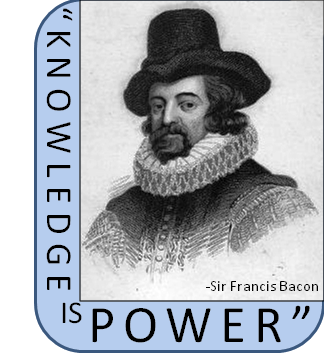
BaconQuoteThis past Labor Day I spent a little over 9 hours on the road unaccompanied. There was a billboard sign promoting some college or university that caught my attention and all it said was “Knowledge is Power”. A quote often attributed to Sir Francis Bacon, one of the so-called “great philosophers” you will undoubtedly study if you take a Philosophy or History of Philosophy class.

The thought that immediately came to mind was, “not all knowledge is power”. So, let’s take this oft-quoted truism and test it against the Word of God.

Did God Actually Say…?

Let’s start with the first appearance of “knowledge” in the Scriptures. For this, we reach all the way back to the Garden of Eden.

Genesis 2:8-9 (ESV) 8 And the Lord God planted a garden in Eden, in the east, and there he put the man whom he had formed. 9 And out of the ground the Lord God made to spring up every tree that is pleasant to the sight and good for food. The tree of life was in the midst of the garden, and the tree of the knowledge of good and evil.

Genesis 2:15-17 (ESV) 15 The Lord God took the man and put him in the garden of Eden to work it and keep it.16 And the Lord God commanded the man, saying, “You may surely eat of every tree of the garden, 17 but of the tree of the knowledge of good and evil you shall not eat, for in the day that you eat of it you shall surely die.”

Genesis 3:1-5 (ESV) 3 Now the serpent was more crafty than any other beast of the field that the Lord God had made. He said to the woman, “Did God actually say, ‘You shall not eat of any tree in the garden’?” 2 And the woman said to the serpent, “We may eat of the fruit of the trees in the garden, 3 but God said, ‘You shall not eat of the fruit of the tree that is in the midst of the garden, neither shall you touch it, lest you die.’” 4 But the serpent said to the woman, “You will not surely die. 5 For God knows that when you eat of it your eyes will be opened, and you will be like God, knowing good and evil.

Genesis 3:22-23 (ESV) 22 Then the Lord God said, “Behold, the man has become like one of us in knowing good and evil. Now, lest he reach out his hand and take also of the tree of life and eat, and live forever—” 23 therefore the Lord God sent him out from the garden of Eden to work the ground from which he was taken.

God forbade Adam to eat of one tree, the tree of the knowledge of good and evil. Satan steps in to tempt Eve to eat of the fruit of that tree, and notice how he did it. He offers Eve a “why” that was a lie. In so doing, he accuses God of withholding power from her. Satan tells her that the reason she is not allowed to eat of the fruit isn’t that she will die; rather, it is so that she will not have the power of knowledge thus keeping her from being like God. What knowledge did Adam and Eve gain from the fruit of the tree? Only the knowledge of evil. Notice the grace of God steps in immediately, in that He made sure to prevent man from eating of the fruit of the tree of Life. Spiritual death happened immediately in the sin. The flesh was defiled by the same sin and would complete the penalty required by sin, complete death. God did not let man live eternally in a cursed and fallen flesh. A way was already made for the redemption of mankind, in the death and resurrection of Jesus Christ; therefore, sinful man was prevented from partaking of the fruit of the tree of Life. Praise God.

Getting back to the knowledge gained, Adam already knew God; therefore, he already knew good. God is the very definition of good. Mark 10:18 (ESV) And Jesus said to him, “Why do you call me good? No one is good except God alone. Now Jesus is God and is also good, but the rich young ruler had not acknowledged Jesus as God; therefore, he had no basis upon which to call Jesus “good”. Which vaults us into the next topic, the Biblical definition of Knowledge that is Power.

Knowledge of Him

If you search the ESV for “knowledge” you get a lot of results, the vast majority of them would seem to support the truism “knowledge is power”; however, as we’ve established, that statement does not reflect truth on its own. There is knowledge that leads to death, as we saw in the garden. The knowledge of evil, of sin, leads to death. Man sinned in the garden, and died, separating us from the only knowledge that has any power, the knowledge of God. Let us look at some of the Biblical passages that clearly define what knowledge we are to be seeking.

2 Chronicles 1:7-13 (ESV) 7 In that night God appeared to Solomon, and said to him, “Ask what I shall give you.” 8 And Solomon said to God, “You have shown great and steadfast love to David my father, and have made me king in his place. 9 O Lord God, let your word to David my father be now fulfilled, for you have made me king over a people as numerous as the dust of the earth. 10 Give me now wisdom and knowledge to go out and come in before this people, for who can govern this people of yours, which is so great?” 11 God answered Solomon, “Because this was in your heart, and you have not asked for possessions, wealth, honor, or the life of those who hate you, and have not even asked for long life, but have asked for wisdom and knowledge for yourself that you may govern my people over whom I have made you king, 12 wisdom and knowledge are granted to you. I will also give you riches, possessions, and honor, such as none of the kings had who were before you, and none after you shall have the like.” 13 So Solomon came from the high place at Gibeon, from before the tent of meeting, to Jerusalem. And he reigned over Israel.

Luke 11:31 (ESV)31 The queen of the South will rise up at the judgment with the men of this generation and condemn them, for she came from the ends of the earth to hear the wisdom of Solomon, and behold, something greater than Solomon is here.

2 Corinthians 2:14-17 (ESV)14 But thanks be to God, who in Christ always leads us in triumphal procession, and through us spreads the fragrance of the knowledge of him everywhere. 15 For we are the aroma of Christ to God among those who are being saved and among those who are perishing, 16 to one a fragrance from death to death, to the other a fragrance from life to life. Who is sufficient for these things? 17 For we are not, like so many, peddlers of God’s word, but as men of sincerity, as commissioned by God, in the sight of God we speak in Christ.

Ephesians 1:16-21 (ESV)16 I do not cease to give thanks for you, remembering you in my prayers, 17 that the God of our Lord Jesus Christ, the Father of glory, may give you the Spirit of wisdom and of revelation in the knowledge of him, 18 having the eyes of your hearts enlightened, that you may know what is the hope to which he has called you, what are the riches of his glorious inheritance in the saints, 19 and what is the immeasurable greatness of his power toward us who believe, according to the working of his great might 20 that he worked in Christ when he raised him from the dead and seated him at his right hand in the heavenly places, 21 far above all rule and authority and power and dominion, and above every name that is named, not only in this age but also in the one to come.

Solomon’s great wisdom and knowledge came directly from God the Father, and from no other place. His sin was in allowing false knowledge, false doctrines, and false gods to take up residence in Israel, through his very own fleshly failings in the taking of brides from other nations and allowing their idolatry. Still we see Jesus teaching in reference to the wisdom of Solomon and immediately declaring that something greater than Solomon was in their midst. That something is Jesus Christ, the very standard of Good and the embodiment of Truth and Knowledge. We see plainly that Paul pointed to the Knowledge of Christ as the key factor for our salvation. For if we fail to accept the Knowledge of the Gospel of Christ, we remain powerlessly dead to sin. Notice also, that Paul separates himself from the peddlers of God’s word, in that only in the Gospel of Jesus Christ, the knowledge of Christ, are we made right with God. Many peddle the scriptures, tossing out verses, twisting God’s words for gain, or for a laugh, or to tempt and lead astray even the elect of God. Satan twisted God’s words in the garden by inserting lies. Satan twisted scripture in his temptation of Jesus in the wilderness. Peddlers of God’s Word. But as Paul said in 2 Corinthians “Thanks be to God” for giving us His Word and for sending us His Holy Spirit so that we might grow in the Knowledge of Christ.

False Knowledge Still Kills

1 Timothy 6:3-21 (ESV)If anyone teaches a different doctrine and does not agree with the sound words of our Lord Jesus Christ and the teaching that accords with godliness, 4 he is puffed up with conceit and understands nothing. He has an unhealthy craving for controversy and for quarrels about words, which produce envy, dissension, slander, evil suspicions, 5 and constant friction among people who are depraved in mind and deprived of the truth, imagining that godliness is a means of gain. 6 But godliness with contentment is great gain, 7 for we brought nothing into the world, and we cannot take anything out of the world. 8 But if we have food and clothing, with these we will be content. 9 But those who desire to be rich fall into temptation, into a snare, into many senseless and harmful desires that plunge people into ruin and destruction. 10 For the love of money is a root of all kinds of evils. It is through this craving that some have wandered away from the faith and pierced themselves with many pangs.

11 But as for you, O man of God, flee these things. Pursue righteousness, godliness, faith, love, steadfastness, gentleness. 12 Fight the good fight of the faith. Take hold of the eternal life to which you were called and about which you made the good confession in the presence of many witnesses. 13 I charge you in the presence of God, who gives life to all things, and of Christ Jesus, who in his testimony before Pontius Pilate made the good confession, 14 to keep the commandment unstained and free from reproach until the appearing of our Lord Jesus Christ, 15 which he will display at the proper time—he who is the blessed and only Sovereign, the King of kings and Lord of lords, 16 who alone has immortality, who dwells in unapproachable light, whom no one has ever seen or can see. To him be honor and eternal dominion. Amen. 17 As for the rich in this present age, charge them not to be haughty, nor to set their hopes on the uncertainty of riches, but on God, who richly provides us with everything to enjoy. 18 They are to do good, to be rich in good works, to be generous and ready to share, 19 thus storing up treasure for themselves as a good foundation for the future, so that they may take hold of that which is truly life.

20 O Timothy, guard the deposit entrusted to you. Avoid the irreverent babble and contradictions of what is falsely called “knowledge,” 21 for by professing it some have swerved from the faith. Grace be with you.

There is only one Truth, our Lord and Savior Jesus Christ. The truism, is misleading. It is often used to suggest that when one obtains knowledge, one obtains power. That isn’t true. For one, the only way to “obtain knowledge” is by grace, through faith, and that not of our selves, it is the gift of God (Ephesians 2). And faith comes through hearing and hearing through the Word of Christ (Romans 10:17). Knowledge is not a power for us to obtain; rather, it is the only way of salvation, the only way that we might be made alive in Christ rather than dead in our sin.

In Jesus Christ our Lord, to God be the glory forever, Amen.
Jorge

Pentecostals|Help Me Help You

helpmehelpyouToday I want to speak to the Pentecostal (and/or) Charismatic audience. If the case for Pentecostalism is truly Biblical, then should we not be fully submitted to Scripture? The 5 Solas of the Reformation serve as a return to the Bible as the only source for Truth. It doesn’t mean that the Protestant denominations fully achieved it, nor does it mean they preserved it, but at least we affirm Sola Scriptura. I grew up as a Christian under the Pentecostal tradition. Sure, the names change and not every Pentecostal denomination calls themselves Pentecostal, but the doctrinal distinctive relating to the Gifts of the Spirit remain.

I’d like to begin by plainly stating that those of the Pentecostal and Reformed camps do a poor job of characterizing each other’s doctrines. Honest research is exceedingly and exhaustively replete with ad hominem attacks, straw-man arguments, and mockery… from both camps.  Both sides engage in some proof-texting while accusing the other of the same. I’ve read a great deal researching Lutheran and Reformed theology from sites like Monergism.com. Pentecostalism isn’t nearly as historic, only dating back to early 1900s, but one resource for that movement’s history is Dixon Pentecostal Research Center. For all of the zealous antagonism between them it can be easy to forget their commonalities: both camps point to the same Jesus Christ as the Way, the Truth, and the Life. Both acknowledge God the Father, God the Son (Jesus), and God the Holy Spirit. Both understand that salvation comes by grace, through faith in the life, death, and resurrection of Jesus Christ, and both hold to the same Bible as the Word of God. There are major differences, and they are not negligible; therefore, we should address them humbly, faithfully, lovingly, and truthfully according to the Written Word of God.

Is the Pentecostal “Speaking in Tongues” the same thing that happened at Pentecost?

No, it isn’t. Pentecostals point to the outpouring of the Holy Spirit that took place on the day of Pentecost, and the filling of the room by the presence of the Holy Spirit is central to their form of worship. Let’s look at what took place at Pentecost just before Peter’s sermon:

Acts 2:1-12 (ESV)
1 When the day of Pentecost arrived, they were all together in one place. 2 And suddenly there came from heaven a sound like a mighty rushing wind, and it filled the entire house where they were sitting. 3 And divided tongues as of fire appeared to them and rested on each one of them. 4 And they were all filled with the Holy Spirit and began to speak in other tongues as the Spirit gave them utterance.

5 Now there were dwelling in Jerusalem Jews, devout men from every nation under heaven. 6 And at this sound the multitude came together, and they were bewildered, because each one was hearing them speak in his own language. 7 And they were amazed and astonished, saying, “Are not all these who are speaking Galileans? 8 And how is it that we hear, each of us in his own native language? 9 Parthians and Medes and Elamites and residents of Mesopotamia, Judea and Cappadocia, Pontus and Asia,10 Phrygia and Pamphylia, Egypt and the parts of Libya belonging to Cyrene, and visitors from Rome, 11 both Jews and proselytes, Cretans and Arabians—we hear them telling in our own tongues the mighty works of God.” 12 And all were amazed and perplexed, saying to one another, “What does this mean?”

The non-Christians (though devout Jews) understood what they were saying. What where they speaking? They were declaring the mighty works of God. They were proclaiming the testimony of God. Some have argued that this miracle was of interpretation, that God opened the ears of the hearers so that they could understand what was being spoken. That doesn’t fit the text. While one of the gifts of the Holy spirit is indeed interpretation of tongues, the Holy Spirit hadn’t fallen on the masses, He filled the saints, the Christians, who were following the Lord’s last instructions before He ascended into Heaven. The miracle here, is in the speaking not in the hearing. Notice in Peter’s sermon when he quotes Joel 2:28-32a:

Acts 2:16-21 (ESV) 16 But this is what was uttered through the prophet Joel:
17 “‘And in the last days it shall be, God declares, that I will pour out my Spirit on all flesh, and your sons and your daughters shall prophesy, and your young men shall see visions, and your old men shall dream dreams; 18 even on my male servants and female servants in those days I will pour out my Spirit, and they shall prophesy. 19 And I will show wonders in the heavens above and signs on the earth below, blood, and fire, and vapor of smoke; 20 the sun shall be turned to darkness
and the moon to blood, before the day of the Lord comes, the great and magnificent day. 21 And it shall come to pass that everyone who calls upon the name of the Lord shall be saved.’

What happened on the day of Pentecost was not how modern-day Pentecostals should claim as “speaking in tongues”, for Peter recognized it as prophecy. What did they prophesy? The mighty works of God. What did Peter preach?

Acts 2:36-40 (ESV)36 Let all the house of Israel therefore know for certain that God has made him both Lord and Christ, this Jesus whom you crucified.” 37 Now when they heard this they were cut to the heart, and said to Peter and the rest of the apostles, “Brothers, what shall we do?” 38 And Peter said to them, “Repent and be baptized every one of you in the name of Jesus Christ for the forgiveness of your sins, and you will receive the gift of the Holy Spirit. 39 For the promise is for you and for your children and for all who are far off, everyone whom the Lord our God calls to himself.” 40 And with many other words he bore witness and continued to exhort them, saying, “Save yourselves from this crooked generation.”

Of whom did Peter bear witness? of Jesus the Christ. What was his exhortation? Repent and be baptized in the Name of Jesus Christ for the forgiveness of sins. The key here is not in some hidden meaning of “other tongues”; rather, in that the others understood what the Holy Spirit was speaking through His disciples, the Word of God, Testimony of God’s greatness, leading to the Testimony of Jesus Christ. As we are told in Revelation 19:10 (ESV), “Then I fell down at his feet to worship him, but he said to me, “You must not do that! I am a fellow servant with you and your brothers who hold to the testimony of Jesus. Worship God.” For the testimony of Jesus is the spirit of prophecy.

Notice that in all of Acts 2, the only thing being taught is the Gospel of Jesus Christ. Everything else in that section is descriptive, a testimony of what God the Holy Spirit did on that day. God moved through His people, to give testimony of His Son, Jesus. If you want to prescribe any Christian doctrine from this text, let it be the testimony of Jesus Christ found in the sermon uttered by Peter who was filled by the Holy Spirit. To God be the glory.

What is the Pentecostal “Speaking in Tongues”?

What the Pentecostal refers to as “speaking in tongues” comes from Paul’s first letter to the Corinthians, chapters 12-14. How does the Apostle Paul describe it? Let’s look briefly in 1 Corinthians 14.

1 Corinthians 14:1-5 (ESV) 1 Pursue love, and earnestly desire the spiritual gifts, especially that you may prophesy. 2 For one who speaks in a tongue speaks not to men but to God; for no one understands him, but he utters mysteries in the Spirit. 3 On the other hand, the one who prophesies speaks to people for their upbuilding and encouragement and consolation. 4 The one who speaks in a tongue builds up himself, but the one who prophesies builds up the church. 5 Now I want you all to speak in tongues, but even more to prophesy. The one who prophesies is greater than the one who speaks in tongues, unless someone interprets, so that the church may be built up.

So, in a sense, the Pentecostal should desire to prophesy as Disciples did on the day of Pentecost. However, that is not to say that every time the tongue fires off in unintelligible speech that they are prophesying. In fact, if there is no interpretation, they are decidedly NOT prophesying, for no one is being built up. Paul goes on to say that if the Holy Spirit doesn’t grant them understanding of what the Spirit is saying, then their mind is unfruitful. Therefore, Paul explains that he prays both with his mind and in his spirit.

Now, here is the part where today’s title comes into play. While I can see in God’s Written Word the basis and the instruction for the Gifts of God the Holy Spirit, I find it difficult argue on your behalf in most cases. Why? Because of the very same abuses Paul was addressing in his letter to the Corinthians. We cannot wave the first half of 1 Corinthians 14 as a banner of justification while simultaneously ignoring the latter portion of the very same chapter.

Help me, Help you.

While I do plan on eventually addressing doctrinal concerns I have with Reformed and Lutheran theology, but given the current state of the visible church and the pervasiveness of Mysticism and False teaching, I need to first address (biblically) the most obvious problems.

1. “Speaking in Tongues” in a loud voice for all of the congregation to hear (sometimes in a microphone) is NOT prophecy without the interpretation. The church is NOT edified by it. God is NOT glorified by it. It only serves to draw attention to the speaker, whose mind is unfruitful if he is not granted the understanding of what was uttered.

1 Corinthians 14:13-19 (ESV) 13 Therefore, one who speaks in a tongue should pray that he may interpret. 14 For if I pray in a tongue, my spirit prays but my mind is unfruitful. 15 What am I to do? I will pray with my spirit, but I will pray with my mind also; I will sing praise with my spirit, but I will sing with my mind also. 16 Otherwise, if you give thanks with your spirit, how can anyone in the position of an outsider say “Amen” to your thanksgiving when he does not know what you are saying? 17 For you may be giving thanks well enough, but the other person is not being built up. 18 I thank God that I speak in tongues more than all of you. 19 Nevertheless, in church I would rather speak five words with my mind in order to instruct others, than ten thousand words in a tongue.

2. Understanding is not a matter of a level of faith; therefore, there is no benefit to pretending you understand what is being uttered without interpretation. It’s not “a faith thing”. Either God is speaking, or He isn’t. We don’t just accept it as the Word of God without testing it against Scripture. The first test is this, “is there an interpretation?”. If there is an interpretation, is it Biblically sound? Does it point to Jesus Christ?

3. Pandemonium, chaos, and sensuality do not bring Glory to God or edify His church.

1 Corinthians 14:26-32 (ESV)26 What then, brothers? When you come together, each one has a hymn, a lesson, a revelation, a tongue, or an interpretation. Let all things be done for building up. 27 If any speak in a tongue, let there be only two or at most three, and each in turn, and let someone interpret. 28But if there is no one to interpret, let each of them keep silent in church and speak to himself and to God. 29 Let two or three prophets speak, and let the others weigh what is said. 30 If a revelation is made to another sitting there, let the first be silent. 31 For you can all prophesy one by one, so that all may learn and all be encouraged, 32 and the spirits of prophets are subject to prophets.

Why did I include sensuality? Well, it’s the only way I can cover things like the “drunk in the spirit” or the “high on Jesus” or the “holy laughter” manifestations. It is a craving for an experience measured by the senses rather than by the Word of God. I’ve witnessed the full gambit of these experiences growing up, and I’ve never seen discernment exercised. I’ve been in church services where the preaching of the Word of God was cancelled due to 3 hour “Praise and Worship”, where the worship was either the same song being played over and over with long instrumentals, or a lot of “spiritual (tongues) worship” is sung or spoken or declared without interpretation. I’ve seen what amounts to “open-mic night” where everyone is claiming to prophesy, well beyond the two or three limitation provided. Sure, some might say “well, that’s why we have special services apart from church”. Paul didn’t say “when you meet on Sunday mornings”, he said “When you come together…”.

4. God the Holy Spirit is not the only spirit; however, He is the only True God. There are evil spirits, as well as the fact that our flesh is sinful and actively works against the Spirit of God. Even within Christians, the war wages on between our flesh and the Holy Spirit (Galatians 5). The ONLY way we know we are hearing from God is by His Written Word. Your emotions are tied to the flesh, and the flesh is weak and sinful. Faith is a gift from God, and comes by hearing the Word of God. God has given us His Written Word. Start there. You cannot skip over the written Word of God and expect to just “know” or “recognize” the voice of God or to feel which spirits are of God and which are of error. You cannot rely on goose bumps… pagan films can elicit the same response. Without interpretation, you have no idea what is being said “in strange tongues”… none; therefore, you have no way of knowing if it is indeed the Holy Spirit or if it is man, or demon. If it is of the Holy Spirit, He will submit to the Written Word of God, for He is unchanging. John 1 tells us that in the beginning the Word was with God, and the Word was God, and the Word became flesh, Jesus Christ. This isn’t “putting God in a box”, this is identifying what might be God by comparing it to what we know is God (His Word). Refusal to submit to Biblical discernment is a HUGE red flag.

5. God will not reveal something of Himself now that He hasn’t already revealed of Himself in Scriptures. When Jesus walked the earth, He fulfilled the Law and the Prophets, and then He established a New Covenant with His Apostles before ascending into Heaven. He granted John the final Revelation and then warned not to add to or take away from that Book. Any prophecy that makes a completely new claim about God, His Son, His Spirit, or His return that cannot be found in Scripture is false. That excludes the vast majority of prophetic visions turned into marketing campaigns for profit we see today. God the Holy Spirit is sovereign, and may grant a word of wisdom, knowledge, or insight for a specific people. Such a word, however, MUST point to Jesus as God and Savior and must be tested to see if it is true. If it doesn’t come to pass IT WAS NOT GOD. If it does come to pass, but the prophet preaches a different gospel, IT IS NOT OF GOD. If it comes true, is biblically sound, and Jesus Christ is glorified, then rejoice in the Word of the Lord and proclaim His kindness and mercy.

6. God’s primary language isn’t KJV. I say this, because I have heard a lot of “prophecy” spoken in King James English despite the speaker NOT quoting scripture. If you are quoting scripture and you’ve memorized most of it in KJV, fine… but if you aren’t quoting Scripture and are speaking words given to you by the Holy Spirit, why the KJV? It would be like an Arabic-English interpreter putting on an Australian accent to let folks know which words he’s translating from Arabic, and then dropping the accent to signify that he’s speaking of his own accord. Just odd. Additionally, just because a scripture was quoted does not mean it’s God providing the prophecy. Satan quoted scripture in his temptation of Jesus Christ. His twisting of scripture was quite subtle compared to what we hear these days. Which brings me to my final point.

7. If the person claiming to be anointed of God, His prophet, His apostle, or messenger demonstrates an inability to rightly handle Scripture, then we have no reason to believe he is speaking prophetically. The Written Word of God IS the Word of God. One who has mishandled the written Word of God cannot be trusted to rightly handle the spoken word of God. Now, God is still God, and He is still sovereign over His gifts and callings. Yes, God opened the mouth of Balaam’s donkey, but the donkey didn’t deliver the Word of the Lord, the Angel of the Lord (Jesus) did.

Lately, I’ve come to realize that the vast majority of the Pentecostal / Charismatic church has lost its way. Before writing this, I spent some time reading through the Way articles from 1906, and saw so much focus and attention on the “gifts” and so little on Jesus Christ. I read through popular charismatic teacher Facebook pages, and saw so very little scripture. Lots of appeals to “trust the spirit” and “experiencing power” and “soaking in His presence” but so very little teaching from the Scriptures. Is that what Paul would support based on his teaching in 1 Corinthians 14?

The reformed camp has its problems, too. If Pentecostals struggle with mysticism and winds of doctrine, then the Reformed struggle with legalism, particularly of the Law ► Gospel ► Law variety. They preach law to convict of sin, then Gospel for the forgiveness of sin, and then burden the Christian with Law to prove themselves “true” Christians. The error in both camps ends is the same, the error of Peter on the water, the error of taking our eyes off of Jesus Christ and placing them on ourselves, our works, or our own righteousness.

This ended up being much longer than I had intended. If you feel I’ve misrepresented Pentecostalism, feel free to contact me. In closing, I leave you with the exhortation of the Apostle Paul in the closing of his first letter.

1 Corinthians 16:13 (ESV) 13 Be watchful, stand firm in the faith, act like men, be strong.

May the Lord Bless you and keep you,
In Jesus Christ our Lord and Savior,
Jorge

The Parable of the Good Samaritan | Law & Gospel

??????????This week I had the good pleasure of hearing 2 sermons on this parable from pastors with whom I was unfamiliar. While one sermon was vastly superior to the other, I gained insight from each and thought this would be a good topic for us to discuss today. From time to time you will see me talk about the need to preach both Law and Gospel. In the today’s church we seem to find some emergent/seeker-driven churches attempting to skip Law and only focus on Gospel. The problem with that (aside from not teaching the full counsel of Scripture) is that without the Law we are not convicted of sin. Without a conviction of sin, we cannot fully appreciate or grasp the Gospel. Other churches tend to err in the other direction. They consider Gospel just what you need to “be born again” and then they teach all Law… this is also dangerous, for the Law convicts us of our sin… and we live in a sinful world and our flesh is sinful. We still sin, and we need the Gospel every day of our lives. For we walk by grace, and we need to be reminded of the power of God’s grace every day of our lives, lest we slip into condemnation for our lack of perfection. Our primary text for today comes from Luke 10, and we will see how a single parable effectively teaches both Law and Gospel. 

The Parable of the Good Samaritan

Luke 10:25-37 (ESV)
25 And behold, a lawyer stood up to put him to the test, saying, “Teacher, what shall I do to inherit eternal life?” 26 He said to him, “What is written in the Law? How do you read it?” 27 And he answered, “You shall love the Lord your God with all your heart and with all your soul and with all your strength and with all your mind, and your neighbor as yourself.” 28 And he said to him, “You have answered correctly; do this, and you will live.”

29 But he, desiring to justify himself, said to Jesus, “And who is my neighbor?” 30 Jesus replied, “A man was going down from Jerusalem to Jericho, and he fell among robbers, who stripped him and beat him and departed, leaving him half dead. 31 Now by chance a priest was going down that road, and when he saw him he passed by on the other side. 32 So likewise a Levite, when he came to the place and saw him, passed by on the other side. 33 But a Samaritan, as he journeyed, came to where he was, and when he saw him, he had compassion. 34 He went to him and bound up his wounds, pouring on oil and wine. Then he set him on his own animal and brought him to an inn and took care of him. 35 And the next day he took out two denarii and gave them to the innkeeper, saying, ‘Take care of him, and whatever more you spend, I will repay you when I come back.’ 36 Which of these three, do you think, proved to be a neighbor to the man who fell among the robbers?” 37 He said, “The one who showed him mercy.” And Jesus said to him, “You go, and do likewise.”

For a little bit of context, Jesus had just pronounced Woes to the cities of Chorazin and Bethsaida for their unbelief and unrepentant hearts. The seventy-two disciples who had been sent out returned praising God and giving a joyful report. Jesus was careful to refocus their excitement away from the fact that the demons were submitted to them and onto the fact that their names had been written Heaven. Jesus then praises God aloud and I think we should look at this portion before diving into the parable.

Luke 10:21-24 (ESV)
21 In that same hour he rejoiced in the Holy Spirit and said, “I thank you, Father, Lord of heaven and earth, that you have hidden these things from the wise and understanding and revealed them to little children; yes, Father, for such was your gracious will. 22 All things have been handed over to me by my Father, and no one knows who the Son is except the Father, or who the Father is except the Son and anyone to whom the Son chooses to reveal him.” 23 Then turning to the disciples he said privately, “Blessed are the eyes that see what you see! 24 For I tell you that many prophets and kings desired to see what you see, and did not see it, and to hear what you hear, and did not hear it.”

And let it be known that we are recipients of that blessing, for by the Grace of God we now have the record of these events in God’s Holy Word, Amen. Look at the excitement in Jesus’ praise. Notice that he turns privately to His disciples to call them blessed. I mention this because I do believe that the events that take place in verse 25 take place soon afterward. Luke doesn’t specify a time-frame, but he does write “and behold” so I think this Lawyer’s test of Jesus came suddenly.

The Lawyer’s test

Now we are not talking about a Lawyer in the sense of a trial lawyer; rather, he was most likely an expert in the Law of Moses. Now, the lawyer was asking Jesus how he might inherit eternal life. Notice, however, that Luke clearly identifies this as a test (ESV) or that he tempted (KJV) Jesus with this question. He was looking for Jesus to give an unlawful answer. What kind of answer was he looking for? We don’t know, because Jesus turned the answer back onto the lawyer, “What is written in the Law? How do you read it”? Let’s look at the answer the Lawyer gives. “You shall love the Lord your God with all your heart and with all your soul and with all your strength and with all your mind, and your neighbor as yourself.” Jesus commends him for his lawful answer to the question and then tells him that if he does that he will live. Jesus confirmed the Law of Moses, and the Lawyer stood convicted by it. Let’s examine 2 portions of the Law related to the mans answer.

Deuteronomy 6:1-5 (ESV) 1 “Now this is the commandment—the statutes and the rules—that the Lord your God commanded me to teach you, that you may do them in the land to which you are going over, to possess it, 2 that you may fear the Lord your God, you and your son and your son’s son, by keeping all his statutes and his commandments, which I command you, all the days of your life, and that your days may be long. 3 Hear therefore, O Israel, and be careful to do them, that it may go well with you, and that you may multiply greatly,as the Lord, the God of your fathers, has promised you, in a land flowing with milk and honey. 4 “Hear, O Israel: The Lord our God, the Lord is one. 5 You shall love the Lord your God with all your heart and with all your soul and with all your might.

Leviticus 19:9-18 (ESV) 9 “When you reap the harvest of your land, you shall not reap your field right up to its edge, neither shall you gather the gleanings after your harvest. 10 And you shall not strip your vineyard bare, neither shall you gather the fallen grapes of your vineyard. You shall leave them for the poor and for the sojourner: I am the Lord your God. 11 “You shall not steal; you shall not deal falsely; you shall not lie to one another.12 You shall not swear by my name falsely, and so profane the name of your God: I am the Lord. 13 “You shall not oppress your neighbor or rob him. The wages of a hired worker shall not remain with you all night until the morning. 14 You shall not curse the deaf or put a stumbling block before the blind, but you shall fear your God: I am the Lord. 15 “You shall do no injustice in court. You shall not be partial to the poor or defer to the great, but in righteousness shall you judge your neighbor. 16 You shall not go around as a slanderer among your people, and you shall not stand up against the life of your neighbor: I am the Lord. 17 “You shall not hate your brother in your heart, but you shall reason frankly with your neighbor, lest you incur sin because of him. 18 You shall not take vengeance or bear a grudge against the sons of your own people, but you shall love your neighbor as yourself: I am the Lord.

Now immediately we are presented with the greatest and second commandments. In Matthew, Jesus was asked what the Greatest Commandment was and His answer to them was the same. Now the first commandment is one that is easier to claim (and harder to disprove) than the second. This lawyer might have been willing to claim ownership of the first law; however, in order to justify himself, clearly he needed a favorable definition of “neighbor”.

The Parable at Face Value | Law

This parable of the good Samaritan simultaneously teaches Law as well as the Gospel. Let us first see how the parable teaches the Law of God. This is how it would most likely initially have been interpreted by the Lawyer and those present at the time.

Luke 10:30-32 (ESV) 30 Jesus replied, “A man was going down from Jerusalem to Jericho, and he fell among robbers, who stripped him and beat him and departed, leaving him half dead. 31 Now by chance a priest was going down that road, and when he saw him he passed by on the other side. 32 So likewise a Levite, when he came to the place and saw him, passed by on the other side.

The hearers of this parable would likely place themselves in the position of either the victim, the Priest, or the Levite. This lawyer probably pictured himself as either the Priest of the Levite due to his level of study and expertise in the Law. At this point in the story, however, it is not clear that what either of these character did was wrong. That might be hard for us to understand but remember, the Law had specific rules regarding cleanliness and the dead. This takes place on the road between Jericho and Jerusalem (city of the Temple). When the scripture describes the man as being “half dead”, it is saying that he appeared to be dead. One would have to inspect him, check on him to determine if he were dead. This presents a Legal dilemma for the Priest and the Levite. Let’s turn for a moment to Levitical Law.

Leviticus 21:1-3 (ESV)
21 And the Lord said to Moses, “Speak to the priests, the sons of Aaron, and say to them, No one shall make himself unclean for the dead among his people, 2 except for his closest relatives, his mother, his father, his son, his daughter, his brother, 3 or his virgin sister (who is near to him because she has had no husband; for her he may make himself unclean).

So, a Priest would not touch a dead person unless it was clearly one of the aforementioned exceptions. The High Priest is afforded no exceptions at all. The Law acknowledges that we are incapable of keeping it, and even specifies purification rituals. Let’s look at those in Numbers.

Numbers 19:11-13 (ESV)
11 “Whoever touches the dead body of any person shall be unclean seven days. 12 He shall cleanse himself with the water on the third day and on the seventh day, and so be clean. But if he does not cleanse himself on the third day and on the seventh day, he will not become clean. 13 Whoever touches a dead person, the body of anyone who has died, and does not cleanse himself, defiles the tabernacle of the Lord, and that person shall be cut off from Israel; because the water for impurity was not thrown on him, he shall be unclean. His uncleanness is still on him.

Yikes. This portion of the Law applies to Priests and Levites, so it includes both passers-by in the parable. Touching a dead body, even to see if he might still be alive, would make them unclean for seven days. They’d have to wash on the 3rd and 7th day to be made clean again and not to defile the Temple of the Lord. In order for the Priest or the Levite to assist the half-dead man, they’d have to be willing to give up their Legal cleanliness, for if the man is dead they would have been made unclean while still not being able to do anything for the dead man. Therefore, they passed by on the other side of the street (probably as a part of tradition) to fully demonstrate their acknowledgement that they must remain clean as they continue walking. “Someone else will take care of it”… someone not baring the responsibility of being a Levite or a Priest. After all, they have important business to attend to, they have a “calling” that does not include touching dead bodies. There are plenty of others who can render aid or bury the dead without jeopardizing their calling. This is Law. Let’s continue.

Luke 10:33-35 (ESV) 33 But a Samaritan, as he journeyed, came to where he was, and when he saw him, he had compassion. 34 He went to him and bound up his wounds, pouring on oil and wine. Then he set him on his own animal and brought him to an inn and took care of him.35 And the next day he took out two denarii and gave them to the innkeeper, saying, ‘Take care of him, and whatever more you spend, I will repay you when I come back.’

Now, the Samaritans weren’t simply a “lower class citizen”, they were outsiders, foreigners, gentiles. They were mixed in blood (due to the Assyrian defeat and occupation of the northern kingdom of Israel) and in religion (they worshiped in the “high places” those that were built to other gods). Remember what the law says about this sort of thing, they are to be cut off. The Samaritans were not granted access to the Temple in Jerusalem. The Samaritans were well aware of where they stood in the eyes of the Jews. This animosity, this separation was lawful. For us to better understand this, let us look to John Chapter 4.

John 4:7-9 (ESV) 7 A woman from Samaria came to draw water. Jesus said to her, “Give me a drink.” 8 (For his disciples had gone away into the city to buy food.) 9 The Samaritan woman said to him, “How is it that you, a Jew, ask for a drink from me, a woman of Samaria?” (For Jews have no dealings with Samaritans.)

John 4:19-20 (ESV) 19 The woman said to him, “Sir, I perceive that you are a prophet. 20 Our fathers worshiped on this mountain, but you say that in Jerusalem is the place where people ought to worship.”

John 4:22 (ESV) 22 You worship what you do not know; we worship what we know, for salvation is from the Jews.

Remember, that the man who half-dead in the road is assumed to be a Jew. Jesus merely says “a man” but given the context He wouldn’t need to identify the man as a Jew, for that is the norm. Jesus identified the Levite and the Priest for a specific purpose. He also identifies the Samaritan for a purpose. He is an outsider and regarded as hostile. Jews have no dealing with Samaritans. Yet, this Samaritan had compassion on the half-dead Jew. Forsaking everything he had planned for that day, this man took the time to bandage (to bind up) his wounds, washing and cleansing him with oil and wine, and lifting the man and setting him on his own donkey and taking him to an inn and continued to care for him. Notice, that it isn’t until the next day that the Samaritan leaves his side, but he does so having paid for the inn and securing care and provision for the man while the Samaritan is away. He urges the inn keeper, the designated caregiver, to do what is necessary to care for the man with a promise that he will return and will repay any expense that wasn’t already covered. This Samaritan not only bandaged, washed, anointed, and carried the man out of the street, he brought him to a place of rest having paid the price for him to live and to continue healing.

Luke 10:36-37 (ESV) 36 Which of these three, do you think, proved to be a neighbor to the man who fell among the robbers?” 37 He said, “The one who showed him mercy.” And Jesus said to him, “You go, and do likewise.

Here, we have the Legal answer to the question, “how do I inherit eternal life”? There are no loopholes, no caveats in the law. To love your neighbor as yourself and to love the Lord your God with all your heart, soul, and mind is a high mark, who can pass this test? According to the Law? No one born of Adam. It isn’t enough to be justified in not taking action as in the case of the Levite and the Priest, for in doing so, you fail the commandment of loving your neighbor as yourself.

The Parable of the Samaritan | Gospel

Now, let’s take a slightly different look at this parable… one that likely didn’t resonate with the Apostles until long after these things took place, possibly not until God the Holy Spirit was reminding them of all that Jesus had taught. What if the first man in our story represents all of mankind, who had fallen to robbers and been left for dead? And we being dead in sin and trespasses, were too unclean to be rescued by the Law (Priests and Levites) for its requirements for cleanliness kept it on the far side of the road? What if the Samaritan in this story, is Jesus Christ? Who, having looked upon us in our mortal condition of sin… and loved us enough to bind up our wounds, wash away our iniquities, and pay the price that we could not pay, to enter in His rest. Not only did He pay for our healing, He promised to return again and will pay whatever expenses remained, and he didn’t leave us alone, but left us in the care of the Inn keeper? Let’s look at what the Scriptures say of Jesus Christ.

John 10:9-11 (ESV) 9 I am the door. If anyone enters by me, he will be saved and will go in and out and find pasture. 10 The thief comes only to steal and kill and destroy. I came that they may have life and have it abundantly. 11 I am the good shepherd. The good shepherd lays down his life for the sheep.

Isaiah 53:1-6 (ESV)
53 Who has believed what he has heard from us?
And to whom has the arm of the Lord been revealed?
2 For he grew up before him like a young plant,
and like a root out of dry ground;
he had no form or majesty that we should look at him,
    and no beauty that we should desire him.
3 He was despised and rejected by men;
    a man of sorrows, and acquainted with grief;
and as one from whom men hide their faces
    he was despised, and we esteemed him not.
4 Surely he has borne our griefs
and carried our sorrows;
yet we esteemed him stricken,
smitten by God, and afflicted.
5 But he was pierced for our transgressions;
he was crushed for our iniquities;
upon him was the chastisement that brought us peace,
    and with his wounds we are healed.
6 All we like sheep have gone astray;
we have turned—every one—to his own way;
and the Lord has laid on him
    the iniquity of us all.

John 14:18-19 (ESV) 18 “I will not leave you as orphans; I will come to you. 19 Yet a little while and the world will see me no more, but you will see me. Because I live, you also will live.

Hebrews 9:27-28 (ESV) 27 And just as it is appointed for man to die once, and after that comes judgment, 28 so Christ, having been offered once to bear the sins of many, will appear a second time, not to deal with sin but to save those who are eagerly waiting for him.

Matthew 5:17 (ESV) 17 “Do not think that I have come to abolish the Law or the Prophets; I have not come to abolish them but to fulfill them.

Praise the Lord. The Law of the Lord is perfect, but we who are dead in sin cannot find salvation by works of the Law, because the Law convicts us of our sin and separation from God. I’m sure you felt it as we worked through the legal implications of the Parable. But how beautiful is the Gospel once we’ve been confronted by our sin?

Romans 3:20-26 (ESV)
20 For by works of the law no human being will be justified in his sight, since through the law comes knowledge of sin. 21 But now the righteousness of God has been manifested apart from the law, although the Law and the Prophets bear witness to it— 22 the righteousness of God through faith in Jesus Christ for all who believe. For there is no distinction: 23 for all have sinned and fall short of the glory of God, 24 and are justified by his grace as a gift, through the redemption that is in Christ Jesus, 25 whom God put forward as a propitiation by his blood, to be received by faith. This was to show God’s righteousness, because in his divine forbearance he had passed over former sins. 26 It was to show his righteousness at the present time, so that he might be just and the justifier of the one who has faith in Jesus.

Amen. The beauty and wonder of the Gospel of Jesus Christ is brought into clear focus when we examine the Law and the Prophets. How gracious is our God. How Wonderful is His Gospel.

Revelation 22:10-17 (ESV)
10 And he said to me, “Do not seal up the words of the prophecy of this book, for the time is near. 11 Let the evildoer still do evil, and the filthy still be filthy, and the righteous still do right, and the holy still be holy.”

12 “Behold, I am coming soon, bringing my recompense with me, to repay each one for what he has done. 13 I am the Alpha and the Omega, the first and the last, the beginning and the end.”

14 Blessed are those who wash their robes, so that they may have the right to the tree of life and that they may enter the city by the gates. 15 Outside are the dogs and sorcerers and the sexually immoral and murderers and idolaters, and everyone who loves and practices falsehood.

16 “I, Jesus, have sent my angel to testify to you about these things for the churches. I am the root and the descendant of David, the bright morning star.”

17 The Spirit and the Bride say, “Come.” And let the one who hears say, “Come.” And let the one who is thirsty come; let the one who desires take the water of life without price.

Amen. Come, Lord Jesus, come. May the Lord bless you and keep you,
In Him,
Jorge

Why This List Should Just Go Away

nopeI see this Internet Meme or Poster passed around on Facebook and included in Blogs and church marketing campaigns and it always grieves me. It popped up again twice this week, so I’ve decided it’s time to debunk this message. Now, I am certain that many of you have “liked” or “shared” something of this sort before in social media or in email. I’ve seen it and refrained from commenting on it before. My desire here is not to condemn anyone for sharing something that they thought was good or helpful or even accurate. At first glance, it seems like a good thing, right? I mean, how could encouraging folks that they aren’t beyond God’s reach possibly be bad? I think that such an approach to this meme is innocent enough, but once you look at the details, I think you’ll realize that nothing with these types of errors and falsehood could ever be considered “good”. In fact, there is no redeeming this concept, it is fundamentally flawed in its approach and execution.

I chose this particular iteration because it took the route of placing in a Scripture reference as “fine print” as if to say that the poster is Biblically accurate. We’ll get to that a little later, but I want to address the heart of the problem with this poster first.

Do You Seriously Think God Can’t Use You?

Okay, so right at the start, we are in a bad spot. The person who is thinking, “God can’t use me” needs to be corrected in their thinking. The Bible isn’t about us, it’s about God. The Gospel isn’t about us, or our potential, or whether or not God can use us. So, the person to whom this poster is speaking is already suffering from false doctrine, and a poor understanding of the Gospel. Our salvation isn’t dependent upon what God can use us for… it is wholly and completely dependent upon what Jesus Christ did upon the Cross for us. That He bore our punishment as the final atoning sacrifice so that in Him we are free from our sin, free to serve God, free to love Him.

Genesis 1:1 (ESV) 1 In the beginning, God created the heavens and the earth.

John 1:1-3 (ESV) 1 In the beginning was the Word, and the Word was with God, and the Word was God.2 He was in the beginning with God. 3 All things were made through him, and without him was not any thing made that was made.

We serve a God who created everything out of nothing. Whatever He does, He does by His Will, for His purpose, for His glory. That we get to play any part is by His Grace and Mercy. He doesn’t need anyone or anything to bring about His Purposes.

Another problem with this premise, is it is born out of this “God sees potential in you…” or “God has a destiny for you…” false Gospel narrative. It comes from the notion that God has planned some level of greatness for each Christian. This is heavily marketed to Youth Ministries. I suppose the desire to inspire and motivate young Christians to be faithful to God and to have a desire for good works is a good desire, but this method is abusive. Not everyone is called to be a patriarch or a revolutionary. In all of the Bible, only one person got to be a Moses, a Joshua, a Peter. Moreover, God isn’t limited to only using heroes of the faith, or believers for that matter… He used King Cyrus to restore Jerusalem after the Exile… a pantheist! There are millions of faithful followers of Christ whose names never made history, and that’s okay, so long as their names are written in the Lamb’s Book of Life. The truly frustrating part about this point is that the “fine print” passage of scripture resolves all of this bad teaching if it would just be given proper attention in full context. So, Let’s look at what Paul wrote in 1 Corinthians 1 (we’ll underline the portion that appears on the poster).

1 Corinthians 1:18-31 (ESV)
18 For the word of the cross is folly to those who are perishing, but to us who are being saved it is the power of God. 19 For it is written,

“I will destroy the wisdom of the wise,
and the discernment of the discerning I will thwart.”

20 Where is the one who is wise? Where is the scribe? Where is the debater of this age?Has not God made foolish the wisdom of the world? 21 For since, in the wisdom of God, the world did not know God through wisdom, it pleased God through the folly of what we preach to save those who believe. 22 For Jews demand signs and Greeks seek wisdom, 23 but we preach Christ crucified, a stumbling block to Jews and folly to Gentiles, 24 but to those who are called, both Jews and Greeks, Christ the power of God and the wisdom of God. 25 For the foolishness of God is wiser than men, and the weakness of God is stronger than men.

26 For consider your calling, brothers: not many of you were wise according to worldly standards, not many were powerful, not many were of noble birth. 27 But God chose what is foolish in the world to shame the wise; God chose what is weak in the world to shame the strong; 28 God chose what is low and despised in the world, even things that are not, to bring to nothing things that are, 29 so that no human being might boast in the presence of God. 30 And because of him you are in Christ Jesus, who became to us wisdom from God, righteousness and sanctification and redemption, 31 so that, as it is written, “Let the one who boasts, boast in the Lord.”

The real question isn’t about how many failed people God has used before, it should be about whether or not you believe your sins are covered by the Blood of Jesus. Who are you to question whether or not the blood of Christ has the power to cleanse you of your unrighteousness? Either you’ve accepted the Gospel of Jesus Christ or you haven’t. If you have, accept what the Bible says of you, and “let the one who boasts, boast in the Lord”. If God had ruled anyone out due to their sin, we wouldn’t have the Gospel of Jesus Christ.

Ephesians 2:1-10 (ESV)
2 And you were dead in the trespasses and sins 2 in which you once walked, following the course of this world, following the prince of the power of the air, the spirit that is now at work in the sons of disobedience— 3 among whom we all once lived in the passions of our flesh, carrying out the desires of the body and the mind, and were by nature children of wrath, like the rest of mankind. 4 But God, being rich in mercy,because of the great love with which he loved us, 5 even when we were dead in our trespasses, made us alive together with Christ—by grace you have been saved— 6 and raised us up with him and seated us with him in the heavenly places in Christ Jesus,7 so that in the coming ages he might show the immeasurable riches of his grace in kindness toward us in Christ Jesus. 8 For by grace you have been saved through faith. And this is not your own doing; it is the gift of God, 9 not a result of works, so that no one may boast. 10 For we are his workmanship, created in Christ Jesus for good works,which God prepared beforehand, that we should walk in them.

The answer to “can God really use me” isn’t “well, He’s used a lot worse”. The answer to that question should be, “…if it were about who can be used of God there wouldn’t be anyone left, God would have judged us all long ago. It’s not about what we can do for Him, it’s about what He did for us.”

Artistic License or Falsehood?

Now that we’ve settled that matter, we have a whole different problem to contend with. The laundry list of characters and character flaws that are supposed to demonstrate God’s ability to use us is filled with… well… falsehood. Some of them I’ll accept as Artistic License… but they are still presented in support of a false narrative concerning the Gospel and Christian walk.

  • NOAH WAS A DRUNK Really? Who writes this garbage? He got drunk once and became the first recorded victim of incestuous rape. Let’s look at what the Bible says about Noah.
    • Genesis 6:6-9 (ESV) 6 And the Lord regretted that he had made man on the earth, and it grieved him to his heart. 7 So the Lord said, “I will blot out man whom I have created from the face of the land, man and animals and creeping things and birds of the heavens, for I am sorry that I have made them.” 8 But Noah found favor in the eyes of the Lord. 9 These are the generations of Noah. Noah was a righteous man, blameless in his generation. Noah walked with God.
    • 2 Peter 2:4-10a (ESV) 4 For if God did not spare angels when they sinned, but cast them into hell and committed them to chains of gloomy darkness to be kept until the judgment; 5 if he did not spare the ancient world, but preserved Noah, a herald of righteousness, with seven others, when he brought a flood upon the world of the ungodly; 6 if by turning the cities of Sodom and Gomorrah to ashes he condemned them to extinction, making them an example of what is going to happen to the ungodly; 7 and if he rescued righteous Lot, greatly distressed by the sensual conduct of the wicked 8 (for as that righteous man lived among them day after day, he was tormenting his righteous soul over their lawless deeds that he saw and heard); 9 then the Lord knows how to rescue the godly from trials, and to keep the unrighteous under punishment until the day of judgment,10 and especially those who indulge in the lust of defiling passion and despise authority.
  • ABRAHAM WAS TOO OLD Too old for what? Here we have a shifting sense of the point being conveyed. Are we now saying Abraham was too old for God to use him,ortoo old for Abraham to have a child? Even that is wrong, because he firstfatheredIshamel by Sarah’s slave. So he wasn’t too old for procreation. Even after God gave him the son of promise, Isaac, Abraham lived another 75 years… that’s nearly an entire lifespan for us now.
    • Genesis 17:15-21 (ESV) 15 And God said to Abraham, “As for Sarai your wife, you shall not call her name Sarai, but Sarah shall be her name. 16 I will bless her, and moreover, I will give you a son by her. I will bless her, and she shall become nations; kings of peoples shall come from her.” 17 Then Abraham fell on his face and laughed and said to himself, “Shall a child be born to a man who is a hundred years old? Shall Sarah, who is ninety years old, bear a child?” 18 And Abraham said to God, “Oh that Ishmael might live before you!” 19 God said, “No, but Sarah your wife shall bear you a son, and you shall call his name Isaac. I will establish my covenant with him as an everlasting covenant for his offspring after him. 20 As for Ishmael, I have heard you; behold, I have blessed him and will make him fruitful and multiply him greatly. He shall father twelve princes, and I will make him into a great nation. 21 But I will establish my covenant with Isaac, whom Sarah shall bear to you at this time next year.”
    • Abraham was making excuses and trying to get God to take Ishamel as the son of promise. God refused the request, but made it clear that Ishmael would become a great nation, just outside of His covenant.
  • ISAAC WAS A DAYDREAMER Seriously… whoever came up with this nonsense hasn’t read the Bible. Nowhere in Genesis 22-27 is there any indication of a proclivity for daydreaming, especially not in the sense that this is somehow a character flaw that God needed to overcome. The closest we can come is in Genesis 24 when Abraham sends for a wife for Isaac. In the past chapter, Sarah has died and been buried. This is important to remember since the bulk of 24 tells of events taking place far away from Isaac.
    • Genesis 24:58-67 (ESV) 58 And they called Rebekah and said to her, “Will you go with this man?” She said, “I will go.” 59 So they sent away Rebekah their sister and her nurse, and Abraham’s servant and his men. 60 And they blessed Rebekah and said to her,
      “Our sister, may you become
      thousands of ten thousands,
      and may your offspring possess
      the gate of those who hate him!”61 Then Rebekah and her young women arose and rode on the camels and followed the man. Thus the servant took Rebekah and went his way. 62 Now Isaac had returned from Beer-lahai-roi and was dwelling in the Negeb. 63 And Isaac went out to meditate in the field toward evening. And he lifted up his eyes and saw, and behold, there were camels coming. 64 And Rebekah lifted up her eyes, and when she saw Isaac, she dismounted from the camel 65 and said to the servant, “Who is that man, walking in the field to meet us?” The servant said, “It is my master.” So she took her veil and covered herself. 66 And the servant told Isaac all the things that he had done. 67 Then Isaac brought her into the tent of Sarah his mother and took Rebekah, and she became his wife, and he loved her. So Isaac was comforted after his mother’s death.
    • So where is this Beer-lahai-roi? It is the place where the Word of the Lord came to Hagai, after Sarah had treated her harshly and caused her to flee. It is the name of the well and it means “the well of the Living One who sees me” (Genesis 16 (ESV))
  • JACOB WAS A LIAR I’ll concede this point as “Artistic License”. Yes, Jacob lied, and it didn’t go well for him. Still, Jacob was chosen by God as the heir of Promise over Esau while still in the womb. He lived a hard life, and wrestled with God and walked away with a permanent limp.
  • LEAH WAS UGLY That’s quite a stretch. We know only that her eyes were weak (or soft), and we know that Jacob’s desire was for Rachel. Now, she might have had a lazy eye or poor eyesight, the text doesn’t go into detail, but to say that this means she was ugly is a fabrication. It is also guilty of presenting a false notion that maybe it’s easier for God to work with pretty people, since this list is supposedly about the kinds of character flaws God has overcome so He could use certain people. Rank falsehood.
    • Genesis 16:13-14 (ESV) 13 So she called the name of the Lord who spoke to her, “You are a God of seeing,” for she said, “Truly here I have seen him who looks after me.” 14 Therefore the well was called Beer-lahai-roi; it lies between Kadesh and Bered.
    • It just occurred to me that this might be an attempt to address those Christians who are crippled by ugly duckling syndrome (of which I was for a very long time). Is pointing to Leah really the answer to this false premise? Laban tricked Jacob by swapping daughters for the wedding, and then God opened Leah’s womb before Rachel’s because of Jacob’s treatment of Leah. This is the kind of garbage that comes from trying to inject human reason into Biblical historical narrative and then allegorizing it for today’s “hardships” rather than simply preaching law and Gospel.
  • JOSEPH WAS ABUSED First of all, Joseph was abused because his brothers hated him for giving a bad report of them and for sharing his dreams. Prophetic dreams, given to him by God. But this list isn’t about teaching Biblical truth (clearly), this list is someone’s human attempt to reach hurting Christians by twisting Scripture. All of it under a false premise that somehow we need to believe in ourselves that God can use us. That is a false Gospel. We need only believe in Jesus as the Christ, our atoning sacrifice, our Redeemer, who loved us enough to die on a cross for our sin.
  • MOSES HAD A STUTTERING PROBLEMUhm, No. This is a common myth. First of all, Moses was making excuses and trying to back out of God’s calling.
    • Exodus 4:10-17 (ESV) 10 But Moses said to the Lord, “Oh, my Lord, I am not eloquent, either in the past or since you have spoken to your servant, but I am slow of speech and of tongue.” 11 Then the Lord said to him, “Who has made man’s mouth? Who makes him mute, or deaf, or seeing, or blind? Is it not I, the Lord? 12 Now therefore go, and I will be with your mouth and teach you what you shall speak.” 13 But he said, “Oh, my Lord, please send someone else.” 14 Then the anger of the Lord was kindled against Moses and he said, “Is there not Aaron, your brother, the Levite? I know that he can speak well. Behold, he is coming out to meet you, and when he sees you, he will be glad in his heart. 15 You shall speak to him and put the words in his mouth, and I will be with your mouth and with his mouth and will teach you both what to do. 16 He shall speak for you to the people, and he shall be your mouth, and you shall be as God to him. 17 And take in your hand this staff, with which you shall do the signs.”
    • Acts 7:17-22 (ESV) 17 “But as the time of the promise drew near, which God had granted to Abraham, the people increased and multiplied in Egypt 18 until there arose over Egypt another kingwho did not know Joseph. 19 He dealt shrewdly with our race and forced our fathers to expose their infants, so that they would not be kept alive. 20 At this time Moses was born; and he was beautiful in God’s sight. And he was brought up for three months in his father’s house, 21 and when he was exposed, Pharaoh’s daughter adopted him and brought him up as her own son. 22 And Moses was instructed in all the wisdom of the Egyptians, and he was mighty in his words and deeds.
  • GIDEON WAS AFRAID Yes, yes he was, and rightfully so. However, God called Gideon. I’ll give this one an “Artistic license” pass.
  • SAMSON HAD LONG HAIR AND WAS A WOMANIZER If we are going for the whole “Champions of old had major flaws, too” bit… Solomon wins in the category of womanizer. But are you KIDDING ME with the long hair bit? No really… (I confess, I’m more than a little frustrated by this list) how does this even fit into this list at all. Trying to reach out to the “long-haired hippy” crowd or the “pony-tailed biker gang” by having them equated with Samson? Let’s look at why Samson had long hair, shall we?
    • Judges 13:1-7 (ESV) 1 And the people of Israel again did what was evil in the sight of the Lord, so theLord gave them into the hand of the Philistines for forty years. 2 There was a certain man of Zorah, of the tribe of the Danites, whose name was Manoah. And his wife was barren and had no children. 3 And the angel of the Lord appeared to the woman and said to her, “Behold, you are barren and have not borne children, but you shall conceive and bear a son. 4 Therefore be careful and drink no wine or strong drink, and eat nothing unclean, 5 for behold, you shall conceive and bear a son. No razor shall come upon his head, for the child shall be a Nazirite to God from the womb, and he shall begin to save Israel from the hand of the Philistines.” 6 Then the woman came and told her husband, “A man of God came to me, and his appearance was like the appearance of the angel of God, very awesome. I did not ask him where he was from, and he did not tell me his name, 7 but he said to me, ‘Behold, you shall conceive and bear a son. So then drink no wine or strong drink, and eat nothing unclean, for the child shall be a Nazirite to God from the womb to the day of his death.’”
    • His long hair was commanded by God. I’m going to close out this list with Scripture references only, and we’ll close briefly. Wow… what a horrible meme.
  • RAHAB WAS A PROSTITUTE Yes, before the Israel came and she served Israel. James mentioned her in his teaching James 2:24-26 (ESV).
  • JEREMIAH AND TIMOTHY WERE TOO YOUNG God chose Jeremiah as His Prophet, and Timothy had some of the best training possible since Christ ascended into Heaven. He was discipled by the Apostle Paul, and his Jewish mother and grandmother had taught him the Scriptures from a young age.
  • DAVID HAD AN AFFAIR AND WAS A MURDERER Yes. Internal inconsistency, for by then God had already used him mightily. What makes David special is his heart of repentance, a heart that was after God.
  • ELIJAH WAS SUICIDAL I can’t… ugh… no, this is false. We covered this recently in a CTT post, and you can read the account in 1 Kings 19 (ESV). He felt like he failed God and asked God to kill him (for his perceived error).
  • ISAIAH PREACHED NAKED … any research at all, here?… God told him to do this, just read the text. Isaiah 20 (ESV).
  • JONAH RAN FROM GOD Yes, he did. Because he didn’t want Nineveh to repent, for he knew God would forgive them if they did, and he wanted Nineveh to be judged. Book of Jonah.
  • NAOMI WAS A WIDOW How is this even on this list? This isn’t even remotely a character flaw or a sin.
  • JOB WENT BANKRUPT This is just… I mean I can’t… *sigh*. Book of Job. The steadfastness of Job.
  • PETER DENIED CHRIST Yes. Jesus warned him he’d do it, and it happened. He repented and was restored.
  • THE DISCIPLES FELL ASLEEP WHILE PRAYING Yes, they did… and then they fled when Jesus was arrested.
  • MARTHA WORRIED ABOUT EVERYTHING “everything” is a stretch. Jesus pointed out that Mary had chosen the better thing to focus on (Luke 10:40-42 ESV).
  • THE SAMARITAN WOMAN WAS DIVORCED Yes. But why stop there? She was a Samaritan, She had been married 5 times, and was currently sleeping with a man who was not her husband. And yet, God loved her enough to point out her sin and presented Himself as the source of life.
  • ZACCHEUS WAS TOO SMALL … that’s just petty, even for this list. Why even include him on this list? He was rich.
  • PAUL WAS TOO RELIGIOUS No, he was wrong. He persecuted the church with great zeal out of ignorance. He didn’t realize that Jesus was the Christ until Jesus met him on the road to Damascus. I hate that the seeker-sensitive crowd throws this out as an attack at those like myself who insist on taking everything to the Scriptures, but I digress… this pain is almost over.
  • TIMOTHY HAD AN ULCER Yes, and Paul encouraged him to drink a little wine for his stomach. You see, Timothy was trying to just drink water even though Paul taught at length about the food and drink laws no longer applying. Perhaps Timothy was struggling with religiosity? Let’s face it… we all will struggle with this from time to time.
  • LAZARUS WAS DEAD Yes, and his death was part of God’s plan to demonstrate His Lordship over death and the grave. John 11 (ESV)

This list is not only unnecessary (for the lost or the saved) it is wrong. Bible twisting is evident in the majority of the examples cited, and the aim of the meme shifts in odd ways as the list progresses. Just… stop. This is not what we, the Church, are supposed to be doing to God’s Word. This is NOT faithful stewardship of the Gospel of Jesus Christ. This is falsehood. This is wrong. In closing, let’s look to Paul’s encouragement to Timothy:

2 Timothy 4:1-5 (ESV)
1 I charge you in the presence of God and of Christ Jesus, who is to judge the living and the dead, and by his appearing and his kingdom: 2 preach the word; be ready in season and out of season; reprove, rebuke, and exhort, with complete patience and teaching. 3 For the time is coming when people will not endure sound teaching, but having itching ears they will accumulate for themselves teachers to suit their own passions, 4 and will turn away from listening to the truth and wander off into myths.5 As for you, always be sober-minded, endure suffering, do the work of an evangelist,fulfill your ministry.

May the Lord bless you and keep you,
In Him,
Jorge