Delegation of Authority: Adam

We’ve been spending a great deal of time looking into the Authority of God and His Word, particularly at the Authority of Bible. The Bible declares God as the Sovereign ruler and creator of everything… by His Word. We’ve established that Jesus is the Word of God made flesh, and that He was with God in the beginning, and apart from Him nothing that has come into being has come into being (John 1, NASB), I love that wording! So, in the beginning there was God, His Word, and His Spirit… and all things were created by Him. As Creator, He is undoubtedly Sovereign in His dominion.
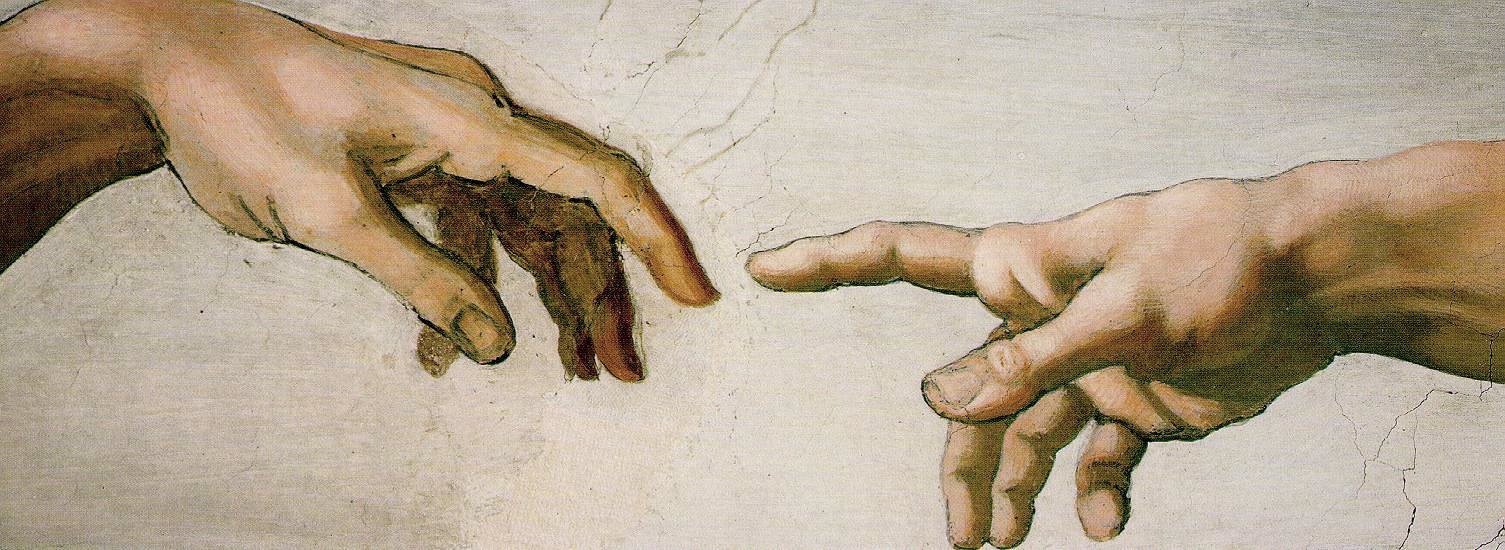
the Hands by Michelangelo

the Hands by Michelangelo

Genesis 1:26-31 (NASB) 26 Then God said, “Let Us make man in Our image, according to Our likeness; and let them rule over the fish of the sea and over the birds of the sky and over the cattle and over all the earth, and over every creeping thing that creeps on the earth.” 27 God created man in His own image, in the image of God He created him; male and female He created them. 28 God blessed them; and God said to them, “Be fruitful and multiply, and fill the earth, and subdue it; and rule over the fish of the sea and over the birds of the sky and over every living thing that moves on the earth.” 29 Then God said, “Behold, I have given you every plant yielding seed that is on the surface of all the earth, and every tree which has fruit yielding seed; it shall be food for you; 30 and to every beast of the earth and to every bird of the sky and to every thing that moves on the earth which has life, I have given every green plant for food”; and it was so. 31 God saw all that He had made, and behold, it was very good. And there was evening and there was morning, the sixth day.

Here we have the first instance of delegated authority. Man, having been formed from the very dust of the Earth, was now delegated authority over the Earth. Man is set to “rule over” everything on earth and in the sky above the earth and in the sea. In the next chapter, we get some specifics on that authority and how that played out for mankind.

Genesis 2:15-17 (NASB) 15 Then the Lord God took the man and put him into the garden of Eden to cultivate it and keep it. 16 The Lord God commanded the man, saying, “From any tree of the garden you may eat freely; 17 but from the tree of the knowledge of good and evil you shall not eat, for in the day that you eat from it you will surely die.”

I have always been fascinated with the garden of Eden. Particularly with the way it is introduced and how the Adam gets placed into it after he is created… and then booted out of it later on as a result of the fall of man. But for now, let us look at the authority and responsibility (the two concepts are inextricably linked, by the way) given to Adam. He was placed into the garden of Eden to cultivate it and keep it. Adam was given a task, and the authority to perform the task was delegated to him. How interesting to see that in the very next verse, we have the first instance of something in all of creation being “not good”. Continue on with me

Genesis 2:18-24(NASB) 18 Then the Lord God said, “It is not good for the man to be alone; I will make him a helper suitable for him.” 19 Out of the ground the Lord God formed every beast of the field and every bird of the sky, and brought them to the man to see what he would call them; and whatever the man called a living creature, that was its name. 20 The man gave names to all the cattle, and to the birds of the sky, and to every beast of the field, but for Adam there was not found a helper suitable for him. 21 So the Lord God caused a deep sleep to fall upon the man, and he slept; then He took one of his ribs and closed up the flesh at that place. 22 The Lord God fashioned into a woman the rib which He had taken from the man, and brought her to the man. 23 The man said,

 “This is now bone of my bones,
And flesh of my flesh;
She shall be called Woman,
Because she was taken out of Man.”

24 For this reason a man shall leave his father and his mother, and be joined to his wife; and they shall become one flesh.

It was not good for the man to be alone. He needed a helper. However, nothing that was formed from the ground was a suitable helper for Adam (sorry, guys… the notion of “man’s best friend” being a dog…simply isn’t biblical 😉 ).  All joking aside, there are some key points I believe being made here.

The first one being that man was already created, and delegated authority and rule over all created things AND he’s been put to work while he was still alone. In his solitude, God saw that it was not good for him to be alone, so He decided man needed a helper. God had a plan the entire time, so the trotting out of all of the created beings before Adam was NOT an exercise of trial-and-error for God. It was for Adam’s benefit that God wanted to demonstrate to him that none of the other created beings were worthy of serving as helper to man. Why is that? Because man was of a different kind from the rest of creation, and man was to be set as ruler over all created beings in the sea, on the earth, and in the sky. For man to fulfill his charge, and execute his authority in ruling over the earth and filling the earth, he needed a helper of his own kind. Therefore, The Lord God fashioned into a woman the rib which He had taken from the man, and brought her to the man. Adam recognized the significance of what the Lord God had done here, which is why God saw fit that we maintain the quote from Adam. Now Adam was no longer alone, and in being joined with his wife, they shall become one flesh, and now they were given the ability to be fruitful and multiply and fill the earth, after their own kind (mankind).

The second point I’d like to make, is that there is no realignment of authority once the woman is created. Adam was already placed in charge, and given the task and its singular parameter (not to eat of the fruit of the tree of knowledge of good an evil, v17) to obey. The authority and responsibility to keep the law was placed upon Adam, before woman was created. Once Adam was given his helper, his wife, the order is not re-given to them. Adam is responsible and it will be Adam who will ultimately be held responsible. That is the nature of authority. So, mankind was created equal, male and female both equal because no other alternative was suitable for Adam. However, within that equality, there is still authority. Woman was created as a helper for man, enabling him to fulfill God’s commandment to man. Woman is equal to man, having been pulled out of his rib and formed to be joined with him. But it is Adam that was given authority.

Even was tempted by the serpent (Gen 3), and was apparently not properly instructed (v3) in the commandment of the Lord God, given to Adam (which was Adam’s responsibility) and she ate the fruit. She then handed it to Adam, and he joined her in her sin. So now what? Who’s in charge now? Remember that we serve an all-powerful, all-knowing, and ever-present God. So God knows exactly what happened, and who was at fault for each act. So, again, the investigation that takes place after the sin is not for God’s sake, but ours. God questions the Adam first, because it was to Adam that He gave the instruction, authority, and responsibility. Having failed to do what is right in the sight of God, Adam sought to escape judgement by assigning blame, interestingly he goes about it cleverly (though foolishly) in trying to get the Lord God to accept blame for having given the woman to Adam. Following the example set before her, she blames the serpent. Notice, none of them lied about what happened, but they both tried to avoid blame. This doesn’t go their way, and we have judgement issued from the bottom up, first the serpent, then the woman, and finally Adam.

Genesis 3:14-15 (NASB) 14 The Lord God said to the serpent,
“Because you have done this,
Cursed are you more than all cattle,
And more than every beast of the field;
On your belly you will go,
And dust you will eat All the days of your life;
15 And I will put enmity Between you and the woman,
And between your seed and her seed;
He shall bruise you on the head,
And you shall bruise him on the heel.”

The Lord God has a plan. God was not caught off-guard, nor was He caught unaware. He knows everything, and here, we see the Lord God declaring that the seed of woman would bruise (or crush) satan’s head, though satan will bruise him on the heel. Why her seed? because it has to be a human, but cannot come from Adam’s seed because it is now dead to sin. This is why the virgin birth is absolutely essential to the Gospel. The broken authority of mankind rests in man, not woman. It was by Adam’s sin that all of mankind fell into darkness, why we are born dead in sin (Romans 5:12-14) in need of a Savior,  Jesus Christ.

Genesis 3:16-18 (NASB) 16 To the woman He said,
“I will greatly multiply Your pain in childbirth,
In pain you will bring forth children;
Yet your desire will be for your husband, And he will rule over you.”

I do not wish to spend a great deal of time on this point, but here we have God’s judgment on woman for her sin. My wife and I are strong believers in natural childbirth, and we believe that God has a plan for every aspect of our lives, including childbirth. Throughout the scriptures, God uses birth pains as an illustration of what is taking place on Earth. We’ve been blessed with 2 beautiful children by natural means. God is good, and He provides,  Hallelujah! Notice the last portion… God is reiterating the roles of authority. Adam and Eve are still equal and when they are joined they are one flesh. But it is the husband who has authority over her. This is important to understanding much of the Gospel of Jesus Christ and the fullness of what He came to redeem, and for what He said He will return.

Genesis 3:17-19 (NASB) 17 Then to Adam He said, “Because you have listened to the voice of your wife, and have eaten from the tree about which I commanded you, saying, ‘You shall not eat from it’;
Cursed is the ground because of you;
In toil you will eat of it
All the days of your life.
18 “Both thorns and thistles it shall grow for you;
And you will eat the plants of the field;
19 By the sweat of your face
You will eat bread,
Till you return to the ground,
Because from it you were taken;
For you are dust,
And to dust you shall return.”

As Paul wrote in Romans 5, and really as the entirety of the Scriptures points out, the state of man is now complete separation from God. But our God is merciful and continually works to redeem His people and to gather all nations unto Him. But you see here that the very ground was cursed by Adam’s sin. What was Adam’s task in the Garden? To cultivate the garden and keep it. Now that very task is marred.  This leads to another issue, that when you are given authority and responsibility over something, you are held accountable for it… and your failures/successes don’t just affect you, but to that over which you are responsible.

God will redeem His creation, but He cannot do it through Adam’s seed, it must be through the seed of the woman, where the Word of God will be made flesh, so that He can redeem His people.  Jesus came to fulfill the Law and the Prophets. Jesus, having lived, died on the cross, and resurrected…has secured all authority in Heaven and Earth. Having paid the ultimate penalty for the sin of mankind, bearing within Himself the death that was required by Adam’s sin, He now is the authority over Heaven and Earth, at the Right Hand of God the Father. Jesus has perfected the relationship between man and Creator and through Him is made the only Way to God.

A common error in modern-day Christianity is to forget that Jesus is still fully man in addition to being fully God. He didn’t lose his perfected body when ascended into Heaven, He still has his perfected body… and He will return for His bride, the Church. I make this point to set up the next: Paul makes it very clear that Jesus Christ maintains absolute authority over the His people. The declaration takes various forms in the New Testament, so let’s look at some of them:

Colossians 1:18 (NASB) 18 [Jesus Christ] is also head of the body, the church; and He is the beginning, the firstborn from the dead, so that He Himself will come to have first place in everything.

1 Corinthians 11:3 (NASB) 3 But I want you to understand that Christ is the head of every man, and the man is the head of a woman, and God is the head of Christ.

Hebrews 4:14-16 (NASB) 14 Therefore, since we have a great high priest who has passed through the heavens, Jesus the Son of God, let us hold fast our confession. 15 For we do not have a high priest who cannot sympathize with our weaknesses, but One who has been tempted in all things as we are, yet without sin. 16 Therefore let us draw near with confidence to the throne of grace, so that we may receive mercy and find grace to help in time of need.

Revelation 19:11-16 (NASB) 11 And I saw heaven opened, and behold, a white horse, and He who sat on it is called Faithful and True, and in righteousness He judges and wages war. 12 His eyes are a flame of fire, and on His head are many diadems; and He has a name written on Him which no one knows except Himself. 13 He is clothed with a robe dipped in blood, and His name is called The Word of God. 14 And the armies which are in heaven, clothed in fine linen, white and clean, were following Him on white horses. 15 From His mouth comes a sharp sword, so that with it He may strike down the nations, and He will rule them with a rod of iron; and He treads the wine-press of the fierce wrath of God, the Almighty. 16 And on His robe and on His thigh He has a name written, “KING OF KINGS, AND LORD OF LORDS.”

I urge you, not to get caught so up modern feminism or misogyny that you miss out on the great picture of Jesus Christ, and the profound depth of God’s love and perfect planning in making for us a way of escape from our own sin. Jesus now fulfills every role of authority that man has messed up: man (second Adam), husband (to His bride, the church), judge, priest, and King. All authority. The Gospel of Jesus Christ is about so much more than just granting you a “get out of hell free” card… It’s about the Greatness of our Lord God. Praise be to God and His son, Jesus.

In Him,
FS
All Scripture is God-breathed…

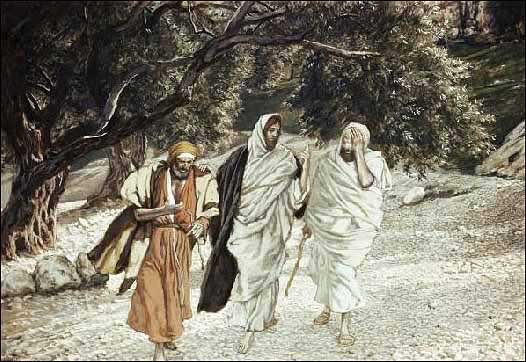
Road to Emmaus  by James J. Tissot

Road to Emmaus
by James J. Tissot

I had hoped to have written today’s post a bit sooner; nevertheless, I am grateful that God has granted me the grace and mercy to share another post on this fine Monday morning. As I have been spending a great deal of time in prayer regarding His plans for my life and my involvement within the local church (each year, twice a year, our local church engages in 21 days of prayer and fasting seeking God’s Will for our fellowship, our families, and our individual walks), this blog has come to mind repeatedly. I am reminded that I am not to take this blog lightly, that I cannot simply post what I like and rely on the first amendment to shield me from these writings. Rather, that as I commit myself to the study of God’s Word, and share here what I learn in the Scriptures, by the Grace of God by His Holy Spirit, that I do so prayerfully and humbly.

In the last post, we started to look at the subject of Biblical submission, that is, submitting to God and His Word in righteousness. Before continuing, I do think it important that we spend time again looking at the authority of the Scriptures. So, consider this a companion to the last post, because one cannot effectively discuss submission, without clearly and completely discussing authority.

Let us begin with the Apostle Paul’s instruction to Timothy, in which he declares:

2 Timothy 3:16 (NASB, emphasis mine) 16 All Scripture is [a]inspired by God and profitable for teaching, for reproof, for correction, for training in righteousness;
Footnote: [a] 2 Timothy 3:16 Lit God-breathed

I don’t normally include the footnotes in these posts; however, I couldn’t find a translation of the this passage that included the literal meaning of the Greek in the text. Every translation I searched included the literal meaning of the Greek as a footnote, and I believe it is important for us to recognize. Now, there is nothing wrong with the word “inspired” here, but I want to examine the literal “God-breathed” for a few moments.

Psalm 33:6 (NASB, emphasis mine) 6 By the word of the Lord the heavens were made, And by the breath of His mouth all their host.

Genesis 2:7 (NASB emphasis mine) 7 Then the Lord God formed man of dust from the ground, and breathed into his nostrils the breath of life; and man became a living being.

So, you see, the connection of all of Scripture to the Breath of God is an important one to maintain. As Paul wrote in Acts 17:28a (KJV), “For in him we live, and move, and have our being;” {oh yeah… I went old-school on that one 😉 }.

I mention this because in the past couple of decades we’ve seen a surge in the number of non-denominational Churches both here and abroad. There is a breaking away from the major hierarchies and set doctrines of these Churches that can be traced back to the reformation of the Roman Catholic Church. No doubt breaking away from false teaching, false doctrine, and corrupt leadership is necessary, but to do so without reconnecting to the authority of Scripture only leaves you floating aimlessly in a sea of organizations of men. Without a firm grasp on the authority of Scriptures, we cannot hope to remain submitted to God in keeping with His word, thus our attempts at reformation degrade into mere rebellion.  I’ve spoken to so many Christians who have left the church because they were hurt, mistreated, or lied to… only to reject all authority and to purpose within their hearts never to submit to “anyone but the Holy Spirit”. But to do so without acknowledging fully the authority of Scriptures is both reckless and rebellious and is a popular snare of the devil in our present culture and age.  It is to this generation that I hope to reach and reaffirm the authority of whole of Scriptures and the Gospel of Jesus Christ. It is why I’m focusing primarily in the New Testament affirmations of the Divine authority of scriptures. Let us continue on then…

I’d like to take a moment to look at one of the coolest accounts of Jesus after His resurrection found in Luke 24. I urge you strongly, to read the whole chapter… and then re-read it. It happens that as the women returned from finding the tomb of Jesus empty, and having been spoken to by Angels of the Lord, and shared their testimony with the disciples, that most did not believe. They were in mourning. Imagine for a moment, that only 3 days ago you saw your mentor, beloved teacher, Savior tortured and killed… you would undoubtedly have clouded judgement as well, would you not? But Peter took off running to see for himself. I love Peter… but that’s not where we are going right now, just setting up the backdrop for begins in verse 13:

Luke 24:13-17 (NASB, emphasis mine) 13 And behold, two of them were going that very day to a village named Emmaus, which was about seven miles from Jerusalem. 14 And they were talking with each other about all these things which had taken place. 15 While they were talking and discussing, Jesus Himself approached and began traveling with them. 16 But their eyes were prevented from recognizing Him. 17 And He said to them, “What are these words that you are exchanging with one another as you are walking?” And they stood still, looking sad.

The “them” in v13 refers to those disciples who heard the testimony of the women who had seen the empty tomb. But why did Jesus not just appear in full glory like, “here I am, BAM”? let’s read on, because the answer to this question is absolutely beautiful…

Luke 24:18-27 (NASB, emphasis mine) 18 One of them, named Cleopas, answered and said to Him, “Are You the only one visiting Jerusalem and unaware of the things which have happened here in these days?” 19 And He said to them, “What things?” And they said to Him, “The things about Jesus the Nazarene, who was a prophet mighty in deed and word in the sight of God and all the people, 20 and how the chief priests and our rulers delivered Him to the sentence of death, and crucified Him. 21 But we were hoping that it was He who was going to redeem Israel. Indeed, besides all this, it is the third day since these things happened. 22 But also some women among us amazed us. When they were at the tomb early in the morning, 23 and did not find His body, they came, saying that they had also seen a vision of angels who said that He was alive. 24 Some of those who were with us went to the tomb and found it just exactly as the women also had said; but Him they did not see.” 25 And He said to them, “O foolish men and slow of heart to believe in all that the prophets have spoken! 26 Was it not necessary for the Christ to suffer these things and to enter into His glory?” 27 Then beginning with Moses and with all the prophets, He explained to them the things concerning Himself in all the Scriptures.

Wow. You see… Jesus wanted His disciples to understand who He was and what had just happened in context of the Scriptures. He later reveals Himself to His disciples… but first, He chose to explain to them what they needed to know about Him… beginning with Moses and with all the prophets… Praise the Lord! While Jesus, being the Son of God, and already the first-born from the grave (resurrected) already bears all Authority in Heaven and Earth, He still chose to demonstrate His authority to His disciples by walking them through the scriptures. If Jesus chose to reveal Himself to His disciples in this manner, then we, too should likewise turn to the whole of Scripture to understand, proclaim, and reveal Jesus, the King of kings, and Lord of lords.

One more example before we close today. Let us return to the Apostle Paul for an example of how we are to share the Gospel as stewards of His word. Lets look at his letter to the Thessalonians. In the opening chapters of this letter, Paul is giving thanks for the faithfulness of the believers. One of the things for which Paul expresses thankfulness is particularly striking:

1 Thessalonians 2:13 (NASB) 13 For this reason we also constantly thank God that when you received the word of God which you heard from us, you accepted it not as the word of men, but for what it really is, the word of God, which also performs its work in you who believe.

So we have here that the Apostle is thankful that the believers accepted their words as the Word of God. But how is it, then, that such Authority could have been given to Paul by these believers? That they would not only accept their words as being of God, but that they “became imitators of the churches of God in Christ Jesus that are in Judea, for you also endured the same sufferings at the hands of your own countrymen…(v14)”. Thankfully, we have the account in Acts to bring us up-to-speed on what took place.

Acts 17:1-4(NASB) Paul at Thessalonica
17 Now when they had traveled through Amphipolis and Apollonia, they came to Thessalonica, where there was a synagogue of the Jews. 2 And according to Paul’s custom, he went to them, and for three Sabbaths reasoned with them from the Scriptures, 3 explaining and giving evidence that the Christ had to suffer and rise again from the dead, and saying, “This Jesus whom I am proclaiming to you is the Christ.” 4 And some of them were persuaded and joined Paul and Silas, along with a large number of the God-fearing Greeks and a number of the leading women.

This Jesus…is the Christ.” Paul reasoned with them from the Scriptures. That is where he derived his authority to preach, proclaiming the Jesus who had stopped him on the road to Damascus was in-fact the Christ. The authority isn’t in the vision, it’s in the Scriptures. Paul’s eyes needed to be opened, just as the eyes of the disciples that were walking on the road to Emmaus needed their eyes to be open.

It is my sincere prayer, that these posts spark a desire in your heart to read these scriptures for yourselves, and to get the full context of each passage. As I read/hear these passages I get a sense of what the disciples shared with one another after Jesus revealed Himself to them.

Luke 24:31-32 (NASB) 31 Then their eyes were opened and they recognized Him; and He vanished from their sight. 32 They said to one another, “Were not our hearts burning within us while He was speaking to us on the road, while He was explaining the Scriptures to us?”

May the Holy Spirit do likewise in your hearts as you search the Scriptures, and submit to the authority of God and His Word.

In Him,
FS

Context of Christmas: from kings to the King of kings

ImageIf it is fitting that we Christians celebrate the Birth of the Jesus (Christmas), then we should endeavor to do so in Truth, the Word of God. It isn’t enough to simply reject the santaism that competes with the message of Jesus, or the materialism that robs us of our peace and joy and even goodwill toward men. I’d like to devote the next few articles to the wonder of the birth of Jesus. Luke 2 and Matthew 2 are wonderful passages chronicling the birth of our Savior, but I’d like to look at this event as the centerpiece of the bible, rather than simply the beginning of the New Testament. This will be my humble attempt at an overview of the Bible in many ways. As such, I will be using a lot more references to scripture (without including the texts here) than I am accustomed. I pray you will find the time to look up the passages referenced for your edification.

Today, I want to look at the significance of title “King of kings”. It is a title of the ultimate supremacy of God over all of the kings of men, and it is a title specifically worn by Jesus in Revelation 19:

Revelation 19:16 (NASB) 16 And on His robe and on His thigh He has a name written, “KING OF KINGS, AND LORD OF LORDS.”

In the Beginning, when God created man, His desire was to be with us. He desired to have us freely choose to love Him, and live in His presence. To do so, we simply needed to obey Him (Gen 2:15-18). Adam failed in that regard, seeking rather to be like God knowing both good and evil. God immediately spared man from eternal separation from Him by removing man from the garden (Gen 3:22-24), and promising to make a way for the redemption of man by the seed of woman (Gen 3:15). As an aside, I’d like to point out that the enmity is between Satan and mankind. We too often falsely elevate Satan to being the opposite God. He is merely “in opposition” to God, but by this time he had already been cast out (defeated) by God. He remains a viscous foe only to created beings (men and angels, and the lesser creatures). We know that he opposed Jesus to the cross, at which point Jesus crushed Satan’s head and gained victory over the darkness. A second victory for God, the first victory for man, for He was both fully God and fully man (the seed of woman, but not of man, for He was born of a virgin. Isaiah 7:14, Matt 1:18-25; John 1:1-4,14).

What follows next is a long succession of mankind demonstrating their desire to do evil, all the while God is reaching out to creation to return to Him. Finally, one man finds favor with God and seeks to serve Him faithfully. God makes a covenant with Abraham:

Genesis 17:1-8 (NASB)
1 Now when Abram was ninety-nine years old, the Lord appeared to Abram and said to him,
“I am God Almighty;
Walk before Me, and be blameless.
2 “I will establish My covenant between Me and you,
And I will multiply you exceedingly.”
3 Abram fell on his face, and God talked with him, saying,
4 “As for Me, behold, My covenant is with you,
And you will be the father of a multitude of nations.
5 “No longer shall your name be called Abram,
But your name shall be Abraham;
For I have made you the father of a multitude of nations. 6 I will make you exceedingly fruitful, and I will make nations of you, and kings will come forth from you. 7 I will establish My covenant between Me and you and your descendants after you throughout their generations for an everlasting covenant, to be God to you and to your descendants after you. 8 I will give to you and to your descendants after you, the land of your sojournings, all the land of Canaan, for an everlasting possession; and I will be their God.”

Notice that God’s promise is to be the God of Abraham’s decedents. Kings will come from him, and a multitude of nations, but God promises He will be their God “throughout their generations for an everlasting covenant”. Again, God’s purpose remains to be our God and to make us fruitful. This takes place roughly 2100 years BC. So then we have Abraham, Isaac, and Jacob (whose name gets changed to Israel in Gen 32:28). This whole time, there are other peoples who worship false gods and have their own kings. God uses Egypt to preserve Israel through a terrible famine, but the Children of Israel tarry too long in their comfort under Pharaoh… a situation that declines rapidly once Joseph dies and a new Pharaoh chooses to treat Israel harshly. And so, God raises up a leader (Moses) from among them, raised within the very house of Pharoah until his exile… an exile where Moses meets God in a burning bush (Exodus 3), and is called by God to rescue God’s chosen people, the children of Israel. God identifies Himself as the God of Abraham, the God of Isaac, and the God of Jacob. He was moving mightily to rescue Israel and honor the covenant. In Exodus 12, God delivers Israel out of Egypt, just as Jesus’ sacrifice delivers us from the kingdom of darkness (1 Cor 5:7; Heb 11:25-28). The exodus beings in roughly 1446 BC.

But Israel would have a terrible time walking in freedom. The generation that was pulled out of Egypt just couldn’t let go of Egypt, it’s rulers or its gods, and for their sin God had to wait for the next generation to lead them into the promised land. Joshua follows God (and so leads Israel) into the promised land… but Israel failed to follow God completely, and as soon as Joshua dies, they chase after false gods and marry foreigners. And so begins a period of raising up judges to rescue Israel from oppression, only to see a period of piece, followed by sin and its consequential oppression once more (the book of Judges and 1 Samuel).

So it continues until the time of Samuel. The story of Samuel is awesome, but that’s for another time. Though Samuel served God faithfully, his sons did not. Samuel appointed his sons as judges over Israel, and they fell into sin, seeking dishonest gain and taking bribes for perverting justice (1 Sam 8). It is at this point that the elders of Israel came to Samuel and demanded that he appoint a king to judge over Israel. This greatly troubled Samuel.

Here in the U.S., we are far removed from having a king. We have a veritable pantheon of elected officials to whom we give great power over us, but we do not have a solid concept of a king. The Israelites had over them the priests, judges, and prophets. Each office was a position of authority over the people of Israel; however, the seat of their authority was firmly established in God. The priests, prophets, and judges were advocates of the people to God. A king is something different. What the Israelites were saying was that they no longer wanted to be judged and ruled over by God or His advocates, they wanted to carve out their own identity, have their own kingdom, patterned more after the kingdoms around them that served false gods. So God gave them over to their desire for a king, with a strong warning of what would come of it (read the remainder of 1 Sam 8). Saul becomes the first king of Israel in roughly 1050 BC.

When Saul sins against God, the Lord leads Samuel to anoint David as King. Now David being a man after God’s own heart (Acts 13:22) serves God mightily and wanted to build for God a Temple. God denies his request (1 Chr 28:3) but David gathers up materials for the Temple that would be built later by Solomon in roughly 970 BC.

1 Chronicles 28:6-7(NASB) 6 [God] said to [David], ‘Your son Solomon is the one who shall build My house and My courts; for I have chosen him to be a son to Me, and I will be a father to him. 7 I will establish his kingdom forever if he resolutely performs My commandments and My ordinances, as is done now.’ (emphasis mine)

Solomon did not keep God’s commandments, and as a result, he was the last king over a unified Israel. Israel was split into 2 kingdoms, “Israel” to the north, and “Judah” to the south. Jerusalem, where the Temple was built, remained the capital city of Judah, and Samaria became the capital of Israel. In 722 BC, the Assyrians invaded Israel and scattered its tribes in exile. These are known as the lost tribes of Israel, because they never again returned to the land of Israel as a people. Their final king was Hosea. Judah lasts a bit longer until approximately 586 BC, when Babylon takes Jerusalem and destroys the Temple. King Nebuchadnezzar takes as captive “some of the sons of Israel, including some of the royal family and of the nobles, youths in whom was no defect, who were good-looking, showing intelligence in every branch of wisdom, endowed with understanding and discerning knowledge, and who had ability for serving in the king’s court; and he ordered him to teach them the literature and language of the Chaldeans” (Daniel 1:3b-4). But not all of Israel was taken to Babylon. Those that remained, suffered greatly. Without a king, without their nobles, best craftsmen leaders, intellectuals… they were left to starve and fend for themselves. The book of Lamentation was written in Judah during the Exile.

Now Cyrus, a Persian king, had conquered all of the kingdoms. The book of Ezra picks begins with a proclemation made by Cyrus:

Ezra 1:1-4 (NASB)
1 Now in the first year of Cyrus king of Persia, in order to fulfill the word of the Lord by the mouth of Jeremiah, the Lord stirred up the spirit of Cyrus king of Persia, so that he sent a proclamation throughout all his kingdom, and also put it in writing, saying:
2 “Thus says Cyrus king of Persia, ‘The Lord, the God of heaven, has given me all the kingdoms of the earth and He has appointed me to build Him a house in Jerusalem, which is in Judah. 3 Whoever there is among you of all His people, may his God be with him! Let him go up to Jerusalem which is in Judah and rebuild the house of the Lord, the God of Israel; He is the God who is in Jerusalem. 4 Every survivor, at whatever place he may live, let the men of that place support him with silver and gold, with goods and cattle, together with a freewill offering for the house of God which is in Jerusalem.’”

Cyrus was a Zoroastrian, so in his mind, he was simply supporting all “good gods” in the epic struggle against the “evil gods”. Aside: How awesome is it that God can use and has used pagans and pantheists to work His Will! But God used Cyrus and the Persian empire to not only put an end to the Exile, but to commission the rebuilding of Jerusalem and the Temple using Persian funding! Ezra and Nehemiah cover the rebuilding of the Temple and Jerusalem. This second temple is dedicated in roughly 516 BC, but Israel does not regain its independence, only it’s Temple and its identity under Persian rule. Alexandar the Great defeats the Persian empire, and the Greeks then rule over Jerusalem beginning roughly 333 BC. The Greek ruler Antiochus Epiphanes reigned over Judah from about 175 BC to about 164 BC and tried to destroy the Jewish religion and copies the Torah. He also defiled the Temple in Jerusalem by making it a temple to Zeus and demanding pigs be sacrificed within the temple (Daniel 11:31-35). The Maccabees revolted and gained some independence until  the Romans took over in 63 BC.

Now the stage is set. The throne of David seems all but abandoned. Israel is but a shadow of what it once was. For nearly 400 years now, the Prophets have been silent… and the people are looking for a Messiah. When the Romans took over, they placed Herod as governor over Jerusalem. He commissioned many an architectural wonder in expanding the Temple Mount (actually enlarging the mountain around the Temple, we’ll discuss this in greater detail later). But many Jews suffered under Herod. He would appoint High Priests in the Temple of his choosing, and should any of them disagree with Herod, He’d remove them and place another. Israel, wanted to be made free. This is why the message of Jesus was so completely difficult for the Jews to accept… especially for those who recognized Him as possibly the Christ:

John 10:22-24 (NASB) 22 At that time the Feast of the Dedication took place at Jerusalem; 23 it was winter, and Jesus was walking in the temple in the portico of Solomon. 24 The Jews then gathered around Him, and were saying to Him, “How long will You keep us in suspense? If You are the Christ, tell us plainly.”

Now that we have established a historical and biblical context for the birth of Jesus, in the next blog I plan on looking at some of the really cool statements made in the Luke and Matthew accounts of the birth of our Savior. We will be looking at prophecies from Daniel and Isaiah for sure. In the meantime, I hope this has been at least interesting for some of you.

May the Lord bless and keep you in His Will,

FS

Related articles

In this world you will have trouble…

trialsWe are currently living in some stressful times. Even if you are blessed by  not being subjected to mainstream “news” media, you’ve undoubtedly heard from friends and family who are concerned about their lives and livelihood in the next several years. As Christians, we have been given the keys to life and living that we can use to reach the lost and the hurting. Unfortunately, there is a lot of false doctrine out there. Perhaps the most damaging, is the idea that if you just have enough faith (and do certain things in that faith) that you will be free from trials, tribulation, persecution, hunger, thirst, and every other imaginable hardship. That is not in keeping with the teaching given to us in the New Testament. Yes, God loves us, and has promised to meet our every need. We serve a sovereign God… He is Lord over everything. Nothing happens that He does not allow to happen. Lets begin with some references from the Gospels:

John 16:3 (NIV)
33 “I have told you these things, so that in me you may have peace. In this world you will have trouble. But take heart! I have overcome the world.”

Jesus stated very plainly that in this world we will have trouble. He is preparing His disciples for what was about to come, and His encouragement wasn’t “but if you have faith, you will be exempted from troubles”… it was “But take heart! I have overcome the world”. But why? Why allow us to face troubles? If God is sovereign, why not simply exempt His faithful followers? Let’s take a look at Peter, one of his star pupils.

Luke 22:31-32 (NIV)
31 “Simon, Simon, Satan has asked to sift all of you as wheat. 32 But I have prayed for you, Simon, that your faith may not fail. And when you have turned back, strengthen your brothers.”

Indeed, we see that we serve a Sovereign God. But there is a reason why God allows the trials to come. Do you know why wheat needs to be sifted? Because not all of it is fitting for consumption. If you don’t sift the wheat, you’ll end up introducing impurities into the food. Notice Jesus’s prayer on Simon’s behalf… “that your faith may not fail”. You see, faith isn’t designed to grant you the power to avoid trouble, its purpose is to sustain you in Him through the trials. These are general truths. In each of our lives, God also has specific goals and purposes in mind for our individual struggles. In this case, He wanted Simon to endure the trial, and when he had recovered from it, he was to strengthen his brothers. God continues to work through His Church in this same fashion. When we go through trials and struggles, God sustains us through it all so that we might give Him praise and thanks and that we might strengthen our brothers and sisters in Christ.

Without taking away a single letter of the Law or of the many promises of God for His Love, Mercy, Provision, and desire to answer prayer, I want to present several examples throughout the new testament of the reality of trials, tribulations, and hardships that we Christians should expect until the day of Christ’s return, or until God the Father has appointed each of us to leave this world. The Apostle Paul included this truth in many of his letters to the churches:

2 Corinthians 7:8-11 (NASB)

For we do not want you to be unaware, brethren, of our affliction which came to us inAsia, that we were burdened excessively, beyond our strength, so that we despaired even of life; 9indeed, we had the sentence of death within ourselves so that we would not trust in ourselves, but in God who raises the dead; 10 who delivered us from so great a peril of death, and will deliver us, He on whom we have set our hope. And He will yet deliver us, 11 you also joining in helping us through your prayers, so that thanks may be given by many persons on our behalf for the favor bestowed on us through the prayers of many.

And this was on a “missions trip” so to speak. This was not an isolated trial or event; rather, it became a way of life for Paul, something he learned to take joy in.

Colossians 1:24 (NASB)
24 Now I rejoice in my sufferings for your sake, and in my flesh I do my share on behalf of His body, which is the church, in filling up what is lacking in Christ’s afflictions.

Paul often wrote of how we are to identify with Christ in His death, resurrection, and ascension. He also recognized that while we walk this earth in our fleshly bodies, we are to share in Christ’s afflictions, for the Church is the Body of Christ, with Christ as the Head of the body (1 Cor 12). Just as Christ endured trials, suffering, and afflictions in obedience to God the Father, how much more so should we endure for His Name sake? But it is a point of rejoicing for Paul. And he was not alone in this view/mindset.

James 1: 2-4 (NASB)

Consider it all joy, my brethren, when you encounter various trials, knowing that the testing of your faith produces endurance. And let endurance have its perfect result, so that you may be perfect and complete, lacking in nothing.

Again, as with Jesus’ plan for Simon (Peter), there is a purpose for the suffering/trials/tribulations. We are perfected in our faith and in our understanding of Christ and the Kingdom of Heaven through our trials. The athlete who never struggles quickly grows weak. The mind that isn’t challenged grows numb. The Christian that does not face hardship will slip into sin and fall away from the faith.

In closing, let us look at what the Apostle Peter had to say:

1 Peter 5:6-11 (NASB)
Therefore humble yourselves under the mighty hand of God, that He may exalt you at the proper time, casting all your anxiety on Him, because He cares for you. Be of sober spirit, be on the alert. Your adversary, the devil, prowls around like a roaring lion, seeking someone to devour. 9But resist him, firm in your faith, knowing that the same experiences of suffering are being accomplished by your brethren who are in the world. 10 After you have suffered for a little while, the God of all grace, who called you to His eternal glory in Christ, will Himself perfect, confirm, strengthen and establish you. 11 To Him be dominion forever and ever. Amen.

In Him,
FS

A time of Thanksgiving in the U.S.

This week, the fourth week of November, we will be celebrating the American Holiday of Thanksgiving. What a wonderful time of gathering together with family and loved ones, to give thanks. Now, this is not a Biblical festival in that it cannot be found in the Bible; nevertheless, it is one that was born in the early days of North American exploration, and has its roots in the right type of soil. Let’s look at how it became an official Holiday:

Pilgrims held their second Thanksgiving celebration in 1623 to mark the end of a long drought that had threatened the year’s harvest and prompted Governor Bradford to call for a religious fast. Days of fasting and thanksgiving on an annual or occasional basis became common practice in other New England settlements as well. During the American Revolution, the Continental Congress designated one or more days of thanksgiving a year, and in 1789 George Washington issued the first Thanksgiving proclamation by the national government of the United States; in it, he called upon Americans to express their gratitude for the happy conclusion to the country’s war of independence and the successful ratification of the U.S. Constitution. His successors John Adams and James Madison also designated days of thanks during their presidencies.

In 1817, New York became the first of several states to officially adopt an annual Thanksgiving holiday; each celebrated it on a different day, however, and the American South remained largely unfamiliar with the tradition. In 1827, the noted magazine editor and prolific writer Sarah Josepha Hale—author, among countless other things, of the nursery rhyme “Mary Had a Little Lamb”—launched a campaign to establish Thanksgiving as a national holiday. For 36 years, she published numerous editorials and sent scores of letters to governors, senators, presidents and other politicians. Abraham Lincoln finally heeded her request in 1863, at the height of the Civil War, in a proclamation entreating all Americans to ask God to “commend to his tender care all those who have become widows, orphans, mourners or sufferers in the lamentable civil strife” and to “heal the wounds of the nation.” He scheduled Thanksgiving for the final Thursday in November, and it was celebrated on that day every year until 1939, when Franklin D. Roosevelt moved the holiday up a week in an attempt to spur retail sales during the Great Depression. Roosevelt’s plan, known derisively as Franksgiving, was met with passionate opposition, and in 1941 the president reluctantly signed a bill making Thanksgiving the fourth Thursday in November. (History.com, accessed 11/25/13 emphasis mine)

The early Pilgrims came to the New World in search of land they could call their own, and a place where they were free to practice their faith, rather than be forced to observe the faith of the State. In many way, we still struggle with these 2 things here in the U.S. Only now, unlike before, the attacks are mostly on the Christian faith above all else. Why is that? Because the world hates Jesus. Am I being melodramatic or pessimistic? No. I’m simply quoting scripture:

John 15:18-27 (NASB)

18 “If the world hates you, you know that it has hated Me before it hated you. 19 If you were of the world, the world would love its own; but because you are not of the world, but I chose you out of the world, because of this the world hates you. 20 Remember the word that I said to you, ‘A slave is not greater than his master.’ If they persecuted Me, they will also persecute you; if they kept My word, they will keep yours also. 21 But all these things they will do to you for My name’s sake, because they do not know the One who sent Me. 22 If I had not come and spoken to them, they would not have sin, but now they have no excuse for their sin. 23 He who hates Me hates My Father also. 24 If I had not done among them the works which no one else did, they would not have sin; but now they have both seen and hated Me and My Father as well. 25 But they have done this to fulfill the word that is written in their Law, ‘They hated Me without a cause.’26 “When the Helper comes, whom I will send to you from the Father, that is the Spirit of truth who proceeds from the Father, He will testify about Me, 27and you will testify also, because you have been with Me from the beginning.

There is much that can be said (and, in fact, is being said all over social media) about the decline of American Culture, and the fact that this nation has completely lost sight of the principles of God, that is not what this holiday is about. This holiday is about giving Thanks to God for His many blessings, and for His grace and mercy that enables us to weather the storms of life in a fallen world. Don’t let the enemy rob you of your thankfulness to God, or tempt you to complain and murmur. Throughout the Bible, thanksgiving (or thankfulness) is expressed through Praise. In fact, in many cases, it is out of our thankfulness to God that we are commanded to praise Him.

Colossians 3:12-17 (NASB)

12 So, as those who have been chosen of God, holy and beloved, put on a heart of compassion, kindness, humility, gentleness and patience; 13 bearing with one another, and forgiving each other, whoever has a complaint against anyone; just as the Lord forgave you, so also should you. 14 Beyond all these things put on love, which is the perfect bond of unity. 15 Let the peace of Christ rule in your hearts, to which indeed you were called in one body; and be thankful. 16 Let the word of Christ richly dwell within you, with all wisdom teaching and admonishing one another with psalms and hymns and spiritual songs, singing with thankfulness in your hearts to God. 17 Whatever you do in word or deed, do all in the name of the Lord Jesus, giving thanks through Him to God the Father. (emphasis mine)

We are commanded to live in a continual state of thankfulness to God. So this holiday fits well with that command. Sure there is room to slip (gluttony, strife, ungratefulness, envy, debt, etc.) but that is always there. Let us turn our hearts to God. Remember the trials He has brought you through this year. If you are currently in a struggle, perhaps now is the time for fasting and prayer… in the same way that Governor Bradford recognized the need to seek His Face. Remember the widows, the orphans, and the poor this Thanksgiving. Now is also a time to thank God for the provision that will carry us through the winter months into a new spring. If after all of this you are still finding it hard to give thanks to God… then I pray that you will soften your heart to the things of God, and repent of your bitterness, unforgiveness, and stubbornness. The Word is very clear that God disciplines those He loves (Heb12:6), and digging in your heels or stiffening your neck only makes it worse for you.

In closing, I thought it would be cool to share Psalms 9:

Psalm 9 (NASB)
A Psalm of Thanksgiving for God’s Justice.  For the choir director; on Muth-labben. A Psalm of David.

1 I will give thanks to the Lord with all my heart;
I will tell of all Your wonders.
I will be glad and exult in You;
I will sing praise to Your name, O Most High.

When my enemies turn back,
They stumble and perish before You.
For You have maintained my just cause;
You have sat on the throne judging righteously.
You have rebuked the nations, You have destroyed the wicked;
You have blotted out their name forever and ever.
6 The enemy has come to an end in perpetual ruins,
And You have uprooted the cities;
The very memory of them has perished.

But the Lord abides forever;
He has established His throne for judgment,
And He will judge the world in righteousness;
He will execute judgment for the peoples with equity.
9 The Lord also will be a stronghold for the oppressed,
A stronghold in times of trouble;
10 And those who know Your name will put their trust in You,
For You, O Lord, have not forsaken those who seek You.

11 Sing praises to the Lord, who dwells in Zion;
Declare among the peoples His deeds.
12 For He who requires blood remembers them;
He does not forget the cry of the afflicted.
13 Be gracious to me, O Lord;
See my affliction from those who hate me,
You who lift me up from the gates of death,
14 That I may tell of all Your praises,
That in the gates of the daughter of Zion
I may rejoice in Your salvation.
15 The nations have sunk down in the pit which they have made;
In the net which they hid, their own foot has been caught.
16 The Lord has made Himself known;
He has executed judgment.
In the work of his own hands the wicked is snared. Higgaion Selah.

17 The wicked will return to Sheol,
Even all the nations who forget God.
18 For the needy will not always be forgotten,
Nor the hope of the afflicted perish forever.
19 Arise, O Lord, do not let man prevail;
Let the nations be judged before You.
20 Put them in fear, O Lord;
Let the nations know that they are but men. Selah.

May the Lord bless you and keep you in His Will.

In Him,
FS