Social Gospel? You keep using that word…

GospelIf I may be a bit blunt… I’m tired of reading/hearing about the so-called “social gospel”. There is no “social gospel”. There is only the Gospel of Jesus Christ. Let’s begin by reminding ourselves of what “Gospel” means and where the term comes from:

From Bible.org:
The term gospel is found ninety-nine times in the NASB and ninety-two times in the NET Bible. In the Greek New Testament, gospel is the translation of the Greek noun euangelion (occurring 76 times) “good news,” and the verb euangelizo„ (occurring 54 times), meaning “to bring or announce good news.” Both words are derived from the noun angelos, “messenger.” In classical Greek, an euangelos was one who brought a message of victory or other political or personal news that caused joy. In addition, euangelizomai (the middle voice form of the verb) meant “to speak as a messenger of gladness, to proclaim good news.”Further, the noun euangelion became a technical term for the message of victory, though it was also used for a political or private message that brought joy.

So what is this “Social Gospel” people keep talking about? Does the Bible speak some good news about society or the world being made better by the Church? That we don’t need to preach on sin or repentance; rather, we should just “live out the Christian” life and the world will simply bow its knee under the superior living of the Church? Is that the good news? That Christians will “change the world”? Not even remotely. I believe the roots of this “social gospel” thing to be decided anti-christian, because it de-emphasizes the preaching of Law and Gospel and instead burdens people with law-only living and universalism (allowing others to remain in their false theology as long as they live outwardly godly lives). But is it even remotely Biblical?

The first point I’d like to address is this whole “befriend the world to earn the right to share the Gospel” nonsense. I’d like to jump straight to the book of James, since it is fresh in my mind after our last CTT post. I’m going to be hopping a little bit through James, but I want to remind the reader that the Book of James begins by addressing the purpose of trials and tribulation (debunking “prosperity doctrine”) and then to address strongly those who profess empty faith while living worldly lives. We see him state this quite plainly in the first chapter:

James 1:19-27 (ESV) 19 Know this, my beloved brothers: let every person be quick to hear, slow to speak, slow to anger; 20 for the anger of man does not produce the righteousness of God. 21 Therefore put away all filthiness and rampant wickedness and receive with meekness the implanted word, which is able to save your souls. 22 But be doers of the word, and not hearers only, deceiving yourselves. 23 For if anyone is a hearer of the word and not a doer, he is like a man who looks intently at his natural face in a mirror. 24 For he looks at himself and goes away and at once forgets what he was like. 25 But the one who looks into the perfect law, the law of liberty, and perseveres, being no hearer who forgets but a doer who acts, he will be blessed in his doing. 26 If anyone thinks he is religious and does not bridle his tongue but deceives his heart, this person’s religion is worthless. 27 Religion that is pure and undefiled before God, the Father, is this: to visit orphans and widows in their affliction, and to keep oneself unstained from the world.

Notice here that there is to be a separation from the world, such that we are to be kept unstained from the world. James returns to this point again in chapter 4:

James 4:4-5 (ESV) 4 You adulterous people! Do you not know that friendship with the world is enmity with God? Therefore whoever wishes to be a friend of the world makes himself an enemy of God. 5 Or do you suppose it is to no purpose that the Scripture says, “He yearns jealously over the spirit that he has made to dwell in us”?

A major problem with the theology of a “social gospel” is the idea that the world can be “made a better place” by works apart from the Word of God. Jesus, God the Son, didn’t come to fix governments, end wars, make peace, repair the environment and eradicate hunger. The clearest passage of scripture that refutes this “social gospel” can be found in Matthew 10:

Matthew 10:16-42 (ESV) 16 “Behold, I am sending you out as sheep in the midst of wolves, so be wise as serpents and innocent as doves. 17 Beware of men, for they will deliver you over to courts and flog you in their synagogues, 18 and you will be dragged before governors and kings for my sake, to bear witness before them and the Gentiles. 19 When they deliver you over, do not be anxious how you are to speak or what you are to say, for what you are to say will be given to you in that hour. 20 For it is not you who speak, but the Spirit of your Father speaking through you. 21 Brother will deliver brother over to death, and the father his child, and children will rise against parents and have them put to death, 22 and you will be hated by all for my name’s sake. But the one who endures to the end will be saved. 23 When they persecute you in one town, flee to the next, for truly, I say to you, you will not have gone through all the towns of Israel before the Son of Man comes.

24 “A disciple is not above his teacher, nor a servant above his master. 25 It is enough for the disciple to be like his teacher, and the servant like his master. If they have called the master of the house Beelzebul, how much more will they malign those of his household.

26 “So have no fear of them, for nothing is covered that will not be revealed, or hidden that will not be known. 27 What I tell you in the dark, say in the light, and what you hear whispered, proclaim on the housetops. 28 And do not fear those who kill the body but cannot kill the soul. Rather fear him who can destroy both soul and body in hell. 29 Are not two sparrows sold for a penny? And not one of them will fall to the ground apart from your Father. 30 But even the hairs of your head are all numbered. 31 Fear not, therefore; you are of more value than many sparrows. 32 So everyone who acknowledges me before men, I also will acknowledge before my Father who is in heaven, 33 but whoever denies me before men, I also will deny before my Father who is in heaven.

34 “Do not think that I have come to bring peace to the earth. I have not come to bring peace, but a sword. 35 For I have come to set a man against his father, and a daughter against her mother, and a daughter-in-law against her mother-in-law. 36 And a person’s enemies will be those of his own household. 37 Whoever loves father or mother more than me is not worthy of me, and whoever loves son or daughter more than me is not worthy of me. 38 And whoever does not take his cross and follow me is not worthy of me. 39 Whoever finds his life will lose it, and whoever loses his life for my sake will find it. 

40 “Whoever receives you receives me, and whoever receives me receives him who sent me. 41 The one who receives a prophet because he is a prophet will receive a prophet’s reward, and the one who receives a righteous person because he is a righteous person will receive a righteous person’s reward. 42 And whoever gives one of these little ones even a cup of cold water because he is a disciple, truly, I say to you, he will by no means lose his reward.”

That’s rough… direct… and plainly spoken/written. Combine what Jesus told the disciples what they were being sent out for with what He said about the time of His return (Matthew 24), is there really any reason to accept a “social gospel” that suggests that the church will somehow make the world a better place before Christ’s return simply by “living out the Gospel”? Absolutely not. In fact, persecution is coming as a direct result of the world’s hatred of Jesus. We will be forced to either acknowledge Him or deny Him, before the world in their synagogues and before the Gentiles (interesting delineation there, don’t you think?).

How did Paul minister to the Gentiles? Would the Apostle Paul buy into the “social gospel” concept? Let’s look at his first trip to Athens.

Acts 17:16-34 (ESV) 16 Now while Paul was waiting for them[Silas and Timothy] at Athens, his spirit was provoked within him as he saw that the city was full of idols. 17 So he reasoned in the synagogue with the Jews and the devout persons, and in the marketplace every day with those who happened to be there. 18 Some of the Epicurean and Stoic philosophers also conversed with him. And some said, “What does this babbler wish to say?” Others said, “He seems to be a preacher of foreign divinities”—because he was preaching Jesus and the resurrection. 19 And they took him and brought him to the Areopagus, saying, “May we know what this new teaching is that you are presenting?20 For you bring some strange things to our ears. We wish to know therefore what these things mean.” 21 Now all the Athenians and the foreigners who lived there would spend their time in nothing except telling or hearing something new.
Paul Addresses the Areopagus

22 So Paul, standing in the midst of the Areopagus, said: “Men of Athens, I perceive that in every way you are very religious. 23 For as I passed along and observed the objects of your worship, I found also an altar with this inscription, ‘To the unknown god.’ What therefore you worship as unknown, this I proclaim to you. 24 The God who made the world and everything in it, being Lord of heaven and earth, does not live in temples made by man, 25 nor is he served by human hands, as though he needed anything, since he himself gives to all mankind life and breath and everything. 26 And he made from one man every nation of mankind to live on all the face of the earth, having determined allotted periods and the boundaries of their dwelling place, 27 that they should seek God, and perhaps feel their way toward him and find him. Yet he is actually not far from each one of us, 28 for

“‘In him we live and move and have our being’;

as even some of your own poets have said,

“‘For we are indeed his offspring.’

29 Being then God’s offspring, we ought not to think that the divine being is like gold or silver or stone, an image formed by the art and imagination of man. 30 The times of ignorance God overlooked, but now he commands all people everywhere to repent, 31 because he has fixed a day on which he will judge the world in righteousness by a man whom he has appointed; and of this he has given assurance to all by raising him from the dead.”

32 Now when they heard of the resurrection of the dead, some mocked. But others said, “We will hear you again about this.” 33 So Paul went out from their midst. 34 But some men joined him and believed, among whom also were Dionysius the Areopagite and a woman named Damaris and others with them.

Does it seem like Paul was interested in “earning” the right to preach the Gospel to these polytheists? Did he dance around their faith, or their religion, or their doctrine? No. He preached the Gospel both in the synagogue and in the market place, with whomever happened to be there. With their philosophers. And when brought to the Areopagus, he preached the direct and plain Gospel declaring their idols to be false and preached repentance from their ignorance for the coming judgement. I think it is safe to say that the Apostle Paul would take issue with the “social gospel”.

Galatians 1:6-10 (ESV) 6 I am astonished that you are so quickly deserting him who called you in the grace of Christ and are turning to a different gospel— 7 not that there is another one, but there are some who trouble you and want to distort the gospel of Christ. 8 But even if we or an angel from heaven should preach to you a gospel contrary to the one we preached to you, let him be accursed. 9 As we have said before, so now I say again: If anyone is preaching to you a gospel contrary to the one you received, let him be accursed. 10 For am I now seeking the approval of man, or of God? Or am I trying to please man? If I were still trying to please man, I would not be a servant of Christ.

Perhaps the most telling sign that the seeker-sensitive, purpose-driven, social-gospel, emergent relevancy is leading men and women astray is recent news of major denominations giving lip service to unity despite doctrine and the willingness of some churches to redefine sexual immorality in order to maintain friendship with the world. Doctrine matters… it is not a side-issue of what color carpet you think should be in a church.

2 Corinthians 11:1-15 (ESV) 11 I wish you would bear with me in a little foolishness. Do bear with me! 2 For I feel a divine jealousy for you, since I betrothed you to one husband, to present you as a pure virgin to Christ. 3 But I am afraid that as the serpent deceived Eve by his cunning, your thoughts will be led astray from a sincere and pure devotion to Christ.4 For if someone comes and proclaims another Jesus than the one we proclaimed, or if you receive a different spirit from the one you received, or if you accept a different gospel from the one you accepted, you put up with it readily enough. 5 Indeed, I consider that I am not in the least inferior to these super-apostles. 6 Even if I am unskilled in speaking, I am not so in knowledge; indeed, in every way we have made this plain to you in all things.

7 Or did I commit a sin in humbling myself so that you might be exalted, because I preached God’s gospel to you free of charge? 8 I robbed other churches by accepting support from them in order to serve you. 9 And when I was with you and was in need, I did not burden anyone, for the brothers who came from Macedonia supplied my need. So I refrained and will refrain from burdening you in any way. 10 As the truth of Christ is in me, this boasting of mine will not be silenced in the regions of Achaia. 11 And why? Because I do not love you? God knows I do!

12 And what I am doing I will continue to do, in order to undermine the claim of those who would like to claim that in their boasted mission they work on the same terms as we do. 13 For such men are false apostles, deceitful workmen, disguising themselves as apostles of Christ. 14 And no wonder, for even Satan disguises himself as an angel of light. 15 So it is no surprise if his servants, also, disguise themselves as servants of righteousness. Their end will correspond to their deeds.

Does it sound like the Apostle Paul would accept a CEO like lifestyle for preaching the Gospel of Jesus Christ? It doesn’t to me. Did he encourage Timothy or Titus to “live their best life now”?

2 Timothy 3 (ESV) 1 But understand this, that in the last days there will come times of difficulty. 2 For people will be lovers of self, lovers of money, proud, arrogant, abusive, disobedient to their parents, ungrateful, unholy, 3 heartless, unappeasable, slanderous, without self-control, brutal, not loving good, 4 treacherous, reckless, swollen with conceit, lovers of pleasure rather than lovers of God, 5 having the appearance of godliness, but denying its power. Avoid such people. 6 For among them are those who creep into households and capture weak women, burdened with sins and led astray by various passions, 7 always learning and never able to arrive at a knowledge of the truth. 8 Just as Jannes and Jambres opposed Moses, so these men also oppose the truth, men corrupted in mind and disqualified regarding the faith. 9 But they will not get very far, for their folly will be plain to all, as was that of those two men. 10 You, however, have followed my teaching, my conduct, my aim in life, my faith, my patience, my love, my steadfastness, 11 my persecutions and sufferings that happened to me at Antioch, at Iconium, and at Lystra—which persecutions I endured; yet from them all the Lord rescued me. 12 Indeed, all who desire to live a godly life in Christ Jesus will be persecuted, 13 while evil people and impostors will go on from bad to worse, deceiving and being deceived. 14 But as for you, continue in what you have learned and have firmly believed, knowing from whom you learned it 15 and how from childhood you have been acquainted with the sacred writings, which are able to make you wise for salvation through faith in Christ Jesus. 16 All Scripture is breathed out by God and profitable for teaching, for reproof, for correction, and for training in righteousness, 17 that the man of God may be complete, equipped for every good work.

Nope… not to Timothy.

Titus 2 (ESV) 1 But as for you, teach what accords with sound doctrine. 2 Older men are to be sober-minded, dignified, self-controlled, sound in faith, in love, and in steadfastness. 3 Older women likewise are to be reverent in behavior, not slanderers or slaves to much wine. They are to teach what is good, 4 and so train the young women to love their husbands and children, 5 to be self-controlled, pure, working at home, kind, and submissive to their own husbands, that the word of God may not be reviled. 6 Likewise, urge the younger men to be self-controlled. 7 Show yourself in all respects to be a model of good works, and in your teaching show integrity, dignity, 8 and sound speech that cannot be condemned, so that an opponent may be put to shame, having nothing evil to say about us. 9 Bondservants are to be submissive to their own masters in everything; they are to be well-pleasing, not argumentative, 10 not pilfering, but showing all good faith, so that in everything they may adorn the doctrine of God our Savior. 11 For the grace of God has appeared, bringing salvation for all people, 12 training us to renounce ungodliness and worldly passions, and to live self-controlled, upright, and godly lives in the present age, 13 waiting for our blessed hope, the appearing of the glory of our great God and Savior Jesus Christ, 14 who gave himself for us to redeem us from all lawlessness and to purify for himself a people for his own possession who are zealous for good works.

15 Declare these things; exhort and rebuke with all authority. Let no one disregard you.

This one definitely reads better, but Titus is told specifically to preach. There is still renouncing ungodliness and worldly passions, and exhortation and rebuke with all authority. Contrary to popular evangelical myth, Jesus didn’t “hang out with sinners” he ate with them, healed them, called them to repentance, and forgave them. That’s not really “hanging out with” them. That is the work of the ministry, repentance and forgiveness. He had mercy on us, and gave His life as payment for our sin, not that we go on sinning, and let the world continue in its sin without offending them with the spoken Gospel, but that we might proclaim the Gospel of Grace to those who were born dead in their sins and trespasses.

The Gospel of Jesus Christ is that He came to pay the ultimate price of sin on our behalf, so that we will be spared on the final day, when Christ comes to Judge both the Living and the Dead. That is the good news. That through His atoning sacrifice, by His shed blood on the cross and His subsequent resurrection, we have been brought out of darkness and into the Kingdom of Heaven. That when this Earth is finally judged, and the present heaven and earth are destroyed and a God creates a New Heaven and a New Earth… we will be with Him, adopted in Christ as heirs and joint heirs to the Kingdom of God. There is no other “Gospel”.

1 Thessalonians 4:13-18 (ESV) 13 But we do not want you to be uninformed, brothers, about those who are asleep, that you may not grieve as others do who have no hope. 14 For since we believe that Jesus died and rose again, even so, through Jesus, God will bring with him those who have fallen asleep. 15 For this we declare to you by a word from the Lord, that we who are alive, who are left until the coming of the Lord, will not precede those who have fallen asleep. 16 For the Lord himself will descend from heaven with a cry of command, with the voice of an archangel, and with the sound of the trumpet of God. And the dead in Christ will rise first. 17 Then we who are alive, who are left, will be caught up together with them in the clouds to meet the Lord in the air, and so we will always be with the Lord. 18 Therefore encourage one another with these words.

Amen. May the Lord Bless you and keep you,
In Him,
Jorge
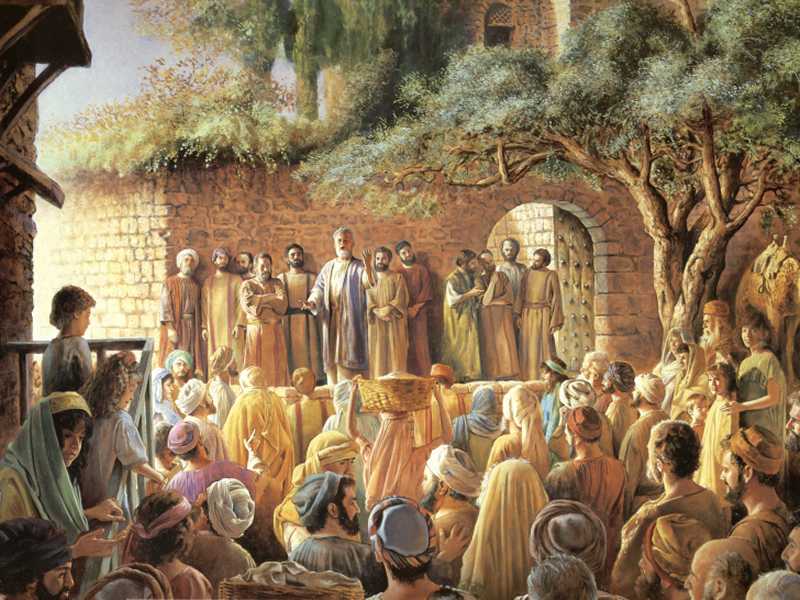
Peter’s first sermon

day-of-pentecost-acts-2-38

I tried to find the original of this image for proper citation, if you know the artist or title of this work please inform me.

I’ve made references to Peter’s first sermon a few times in prior posts, and today I thought it would be awesome to take a look at this first sermon preached by Peter. Our text will be Acts 2. If you’ve been following our bible studies here, you should remember that Acts 2 begins with the promise of God the Holy Spirit being poured out on the day of Pentecost. The Day of Pentecost is not a “new testament” thing, it is in-fact a Jewish celebration of the Feast of Weeks (Leviticus 23:15-22). Pentecost is the Greek word (the fiftieth day) referring to this Hebrew Festival. This festival is particularly important, because it was listed as one of the 3 festivals that all Jewish men were required to appear before the Lord God of Israel (Exodus 34:22-23), which by the time Jesus arrived on the earth, the Lord God had already declared His presence to be made at the Temple in Jerusalem. Therefore, all Jewish men had to make pilgrimage to Jerusalem 3 times a year, one of these times is for the Feast of Weeks, or Pentecost (in Greek). Jews from around the world were in Jerusalem to appear before the Lord God of Israel for Pentecost. It is on this day, that the Promise of God the Holy Spirit as spoken by Jesus Christ, was delivered. The first Gift of God the Holy Spirit manifested is the gift of different tongues/languages so that the men from all over the world would hear the Glory of God proclaimed in their native tongues, not just in Galilean Aramaic. So, Peter’s first sermon was not to Gentiles, it was to Jews. Devout, learned Jews who were observing the Feast of Weeks in keeping with the Law of Moses. These were not strangers to the Law or of the Prophets, they were familiar with the Holy Scriptures. However, in their knowledge, the did not recognize Jesus of Nazareth as the Christ, the Messiah. So, Peter’s first audience was a tough one. Thank God for His Holy Spirit. Now that we’ve set the stage, let us take a look at his sermon:

Acts 2:14-41 (ESV)

14 But Peter, standing with the eleven, lifted up his voice and addressed them: “Men of Judea and all who dwell in Jerusalem, let this be known to you, and give ear to my words. 15 For these people are not drunk, as you suppose, since it is only the third hour of the day. 16 But this is what was uttered through the prophet Joel:

17 “‘And in the last days it shall be, God declares,
that I will pour out my Spirit on all flesh,
and your sons and your daughters shall prophesy,
and your young men shall see visions,
and your old men shall dream dreams;
18 even on my male servants and female servants
in those days I will pour out my Spirit, and they shall prophesy.
19 And I will show wonders in the heavens above
and signs on the earth below,
blood, and fire, and vapor of smoke;
20 the sun shall be turned to darkness
and the moon to blood,
before the day of the Lord comes, the great and magnificent day.
21 And it shall come to pass that everyone who calls upon the name of the Lord shall be saved.’

I just wanted to take a moment to highlight that Peter is quoting from Joel 2:28-32. This prophecy starts in Joel 1:1 and runs throughout the book of Joel. It is all one prophecy. Peter is quoting the portion that rests between the Lord taking pity on His people, and sitting in Judgment over the nations. These are the last days in which we find ourselves, for the Lord had taken pity upon His creation and gave to us the ultimate sacrifice for the remission of sin, the Gospel of Jesus Christ, the Gift of God. We also await the day of His Glorious return, when He will redeem all who have called upon the Name of the Lord and He will sit in Judgment over creation. Why did Peter go to Joel first? Well, clearly the God the Holy Spirit was giving Peter the words to speak in that very hour (as Jesus told the disciples would happen), but notice the entrance into this sermon comes as a response to the accusations against the manifestation of the Gift of the Holy Spirit as mere drunkenness.  The first visit to Scripture is a clear statement of the outpouring of the Holy Spirit as foretold by Joel (who prophesied by the Spirit of God). Peter was also clearly marking the present age, the need for repentance and acceptance of the gift of God and the need to do so before the coming judgement. The book of Joel is not long, and I encourage you to take some time to read through it. However, let us continue for now in Peter’s sermon.

22 “Men of Israel, hear these words: Jesus of Nazareth, a man attested to you by God with mighty works and wonders and signs that God did through him in your midst, as you yourselves know— 23 this Jesus, delivered up according to the definite plan and foreknowledge of God, you crucified and killed by the hands of lawless men. 24 God raised him up, loosing the pangs of death, because it was not possible for him to be held by it. 25 For David says concerning him,

“‘I saw the Lord always before me,
for he is at my right hand that I may not be shaken;
26 therefore my heart was glad, and my tongue rejoiced;
my flesh also will dwell in hope.
27 For you will not abandon my soul to Hades,
or let your Holy One see corruption.
28 You have made known to me the paths of life;
you will make me full of gladness with your presence.’

29 “Brothers, I may say to you with confidence about the patriarch David that he both died and was buried, and his tomb is with us to this day. 30 Being therefore a prophet, and knowing that God had sworn with an oath to him that he would set one of his descendants on his throne, 31 he foresaw and spoke about the resurrection of the Christ, that he was not abandoned to Hades, nor did his flesh see corruption. 32 This Jesus God raised up, and of that we all are witnesses. 33 Being therefore exalted at the right hand of God, and having received from the Father the promise of the Holy Spirit, he has poured out this that you yourselves are seeing and hearing. 34 For David did not ascend into the heavens, but he himself says,

“‘The Lord said to my Lord,
“Sit at my right hand,
35 until I make your enemies your footstool.”’

36 Let all the house of Israel therefore know for certain that God has made him both Lord and Christ, this Jesus whom you crucified.”

37 Now when they heard this they were cut to the heart, and said to Peter and the rest of the apostles, “Brothers, what shall we do?” 38 And Peter said to them, “Repent and be baptized every one of you in the name of Jesus Christ for the forgiveness of your sins, and you will receive the gift of the Holy Spirit. 39 For the promise is for you and for your children and for all who are far off, everyone whom the Lord our God calls to himself.” 40 And with many other words he bore witness and continued to exhort them, saying, “Save yourselves from this crooked generation.” 41 So those who received his word were baptized, and there were added that day about three thousand souls.

Amen. Peter points out that the Jews were guilty of putting Jesus to death, by the hands of lawless men (Romans). Once Peter explained in Scriptures that the Jews were witness to the outpouring of the Holy Spirit, he then moved to identifying Jesus as the Christ. When he quotes from the Psalms of David, he first goes to Psalm 16. I have to be honest, had I read this Psalm without knowing Peter’s interpretation of the Psalm, I wouldn’t have read it as a prophetic Psalm about Jesus. However, Peter makes it clear that since David’s body did see corruption (his body rotted in the grave), it wasn’t about himself that he was speaking; rather, David was referring to the death and resurrection of Jesus Christ. So awesome. The new testament provides us with clear insight into how we should read the old testament to see Jesus (not ourselves, because the bible is not about us).

The next Psalm Peter visits is Psalms 110. Here, however, Peter quotes the introduction to the Psalm. Read the rest of the Psalm, because David is again prophesying of Jesus but he is doing so regarding the Day of Judgement, the Day of Christ’s Return. So, again, we have Peter explaining from scriptures that we find ourselves in the last days, between the salvation of the Lord and His Judgement. Notice, in verse 37, that all who heard these words understood the gravity of what was being taught and their guilt was before them, something they dare not proceed into judgement with, “Brothers, what shall we do?” Peter’s response is great direct and powerful. He also returns to the initial point of the sermon, the outpouring of the Holy Spirit. They don’t have to wait, because they (as are we all) are in the last days when the Spirit of God is poured out.

Peter preaches the Gospel of Jesus Christ from the Scriptures, clearly identifies their sin and need of a Savior (these being folks who follow the Law and the Prophets, not a Godless group of people, but one still perishing nonetheless for they have not yet believed in Jesus as the Christ) and then offers them the Way of escape. He also is quick to relay the promise of God the Holy Spirit. The disciples had just received the very gift that Jesus instructed them to wait for and they knew immediately that this Gift was promised to all who believe and are baptized in the Name of the Lord Jesus Christ.

That same Holy Spirit that gave Peter the words to speak, lives within each of us who call upon the Name of the Lord and have our names written in the Lamb’s book of life. We may not move as powerfully in the Holy Spirit, but I think that is due to a lack of knowledge of the Scriptures, and poor discipleship. Peter walked with the Son of God for years. That’s powerful discipleship. We have a great deal of it, but we don’t have all of what Jesus did (John 21:25), so we don’t have the fullness by which the 12 Apostles were taught. Remember in John 14:26 that the Holy Spirit is promised to both teach and remind them of all that Jesus had said to them. That is critical for us to have the New Testament written, but also as a promise to us that He will remind us of His Word that we have buried in our hearts (Psalms 119:9-16).

Brothers and sisters, please become life-long students of the Word of God. Pray in the Spirit, always, AND edify your mind by drinking in the written Word of God.  If you look around the web, you’ll see that gallop estimates that 40% of Americans attend church daily. However, a Hartford Institute of Religion study indicates that only half of those are telling the truth. But that is only the tip of the iceberg, so to speak. If 20% attend church weekly, how much of each service is actually devoted to studying and exegeting properly the Word of God? If the typical Sunday morning service runs from 10:30am to Noon, with the first 45 minutes of a concert, 10 minutes of announcements, intro videos, skits, collecting of tithe/offerings, that leaves roughly 30 minutes for a sermon. Now, what if the sermon is geared more toward sloganeering of a self-help book, or casting the vision of the pastor rather than teaching the text of the Bible? It can become all to easy to lose sight of the Word of God even while conducting the business of church. I pray your church experience is nothing like what I’ve detailed above. Still, even if that 1.5 hrs of Sunday Morning church were devoted to biblical study, it wouldn’t be enough. That is why I am so eager to share what I am studying throughout the week, and am so excited that you are reading here today. Even if you disagree with everything I write, at least you are reading the Word of God that is copy-and-pasted into these posts and hopefully following the external links to bible references. 😉

In closing, I’d like to echo Paul’s benediction from 2 Thessalonians 3:16 (ESV) “Now may the Lord of peace himself give you peace at all times in every way. The Lord be with you all.”

In Him,
Jorge

God the Holy Spirit | His Gifts

doveWhile this post isn’t exactly a “part 4” of a series dedicated to the Person of God the Holy Spirit, I wasn’t comfortable concluding that series without taking the time to discuss the Gifts of God the Holy Spirit as laid out by the Apostle Paul in his letter to the church at Corinth. Once again, I’d like to emphasize that I am not following any guides or commentaries in this series, this is simply how I read the Scriptures and what I feel is the simplest, most direct interpretation of the written Word. The following 2 statements of faith, however, must be accepted as fundamental truths for this discussion to have any real meaning:

  • The inerrancy of the Bible as the Word of God. In it we find that which God has revealed of Himself, His Nature, His Will, and His Love for us. While we cannot claim (nor should we) to know and explain everything about God (for we are only created beings) we can (and must) aim to know what He has given to us to know about Him, that which He has chosen to reveal about Himself by giving us His Word and His Spirit.
  • The Trinity. There is only One God. He exists eternally as 3 distinct persons, God the Father, God the Son Jesus Christ, and God the Holy Spirit.

If this is your first visit to the blog and you feel you’d like to read the rest of the series, I encourage you to follow the links on the Welcome page. In this series, we’ve looked at the working of God the Holy Spirit filling men and women of faith throughout Scripture (Old and New Testaments). It was not an exhaustive look by any means, but I just wanted to present the case that being filled with God the Holy Spirit was not a completely new concept to the New Testament Jews. The only thing that changed in the New Covenant, is that Jesus promised to pour out the Holy Spirit onto all who believed and were baptized in His Name, not just select few as He did before the cross. We took a close look at how Luke highlighted the work of the person of God the Holy Spirit while working with God the Son Jesus Christ. An attentive reading of the book of Luke will show that Luke took great care to prepare us for what we would see in the Book of Acts. Finally, we looked at the fulfillment of the promise Jesus made to send God the Holy Spirit to those who believed and were baptized. We see the Holy Spirit empowering the early church. In our conclusion to Part 3, I was heavily burdened to draw attention to a crucial element of doctrine, the Gifts of God the Holy Spirit are of God, not of men.

Let us begin our study in 1 Corinthians 12:

1 Corinthians 12 (ESV)
1 Now concerning spiritual gifts, brothers, I do not want you to be uninformed. 2 You know that when you were pagans you were led astray to mute idols, however you were led. 3 Therefore I want you to understand that no one speaking in the Spirit of God ever says “Jesus is accursed!” and no one can say “Jesus is Lord” except in the Holy Spirit.

What an interesting way to open this topic, don’t you think? Remember that Paul is talking to Gentiles, so he needs to cover all of the bases. While they had already received the Gospel of Jesus Christ, and were believers and no doubt had the Scriptures taught to them, this is all still new. The Jews grew up honoring the Sabbath, keeping (or attempting to) the Law and studying the Prophets and the Psalms. We Gentiles did not (sadly, many of us whose testimony is that we grew up in the church, still fall woefully short of studying the Scriptures of even the lost Jews) thus we are exceedingly grateful for the Grace of God working through His Apostle Paul. Notice here that he begins by reminding them that when they were pagans they were led astray to mute idols. While the rational argument against the worship of mute idols, made by men is one Paul engages in frequently, he makes it clear here that this discussion is less on the idol, and more on what led them astray to the idols. No one speaking in the Spirit of God ever says “Jesus is accursed”... is our first lesson here in Spiritual discernment. Paul is not interested in providing a completely lesson on identifying each evil spirit by which men might speak; rather, he’s clearly defining a means of identifying one who is speaking in the Spirit of God. But Paul isn’t just speaking of his own here. Let us look first to the Law

Deuteronomy 13:1-4 (ESV)  1 “If a prophet or a dreamer of dreams arises among you and gives you a sign or a wonder, 2 and the sign or wonder that he tells you comes to pass, and if he says,‘Let us go after other gods,’ which you have not known, ‘and let us serve them,’ 3 you shall not listen to the words of that prophet or that dreamer of dreams. For the Lord your God is testing you, to know whether you love the Lord your God with all your heart and with all your soul. 4 You shall walk after the Lord your God and fear him and keep his commandments and obey his voice, and you shall serve him and hold fast to him.

I believe that Paul is explaining Spiritual Discernment in 1 Corinthians 12 as it was already laid out in the Law (Deu 13). Notice here that the test is not of whether the man is speaking of his own will (that test can be found in Deuteronomy 18:18-22); rather the Lord God is talking about a false prophet/dreamer whose sign or wonder comes to pass. If a sign or wonder comes to pass but the individual points to anyone other than God (the Father, the Son, or the Holy Spirit) the individual is a false prophet who is listening to unclean spirits, the spirit of error,or the doctrines of demons. Jesus also warned that we shouldn’t also be wary of false christs in Mark 13:21-22, “And then if anyone says to you, ‘Look, here is the Christ!’ or ‘Look, there he is!’ do not believe it. For false christs and false prophets will arise and perform signs and wonders, to lead astray, if possible, the elect.” So, it is not enough for someone to just use the Name of Jesus Christ, if who they teach is not the real Jesus Christ, God the Son (Islam, Mormonism, Jehovah’s Witness, etc…). Let us continue in 1 Cor 12:

1 Corinthians 12:4-13 (ESV) 4 Now there are varieties of gifts, but the same Spirit; 5 and there are varieties of service, but the same Lord; 6 and there are varieties of activities, but it is the same God who empowers them all in everyone. 7 To each is given the manifestation of the Spirit for the common good. 8 For to one is given through the Spirit the utterance of wisdom, and to another the utterance of knowledge according to the same Spirit, 9 to another faith by the same Spirit, to another gifts of healing by the one Spirit, 10 to another the working of miracles, to another prophecy, to another the ability to distinguish between spirits, to another various kinds of tongues, to another the interpretation of tongues. 11 All these are empowered by one and the same Spirit, who apportions to each one individually as He wills. 12 For just as the body is one and has many members, and all the members of the body, though many, are one body, so it is with Christ. 13 For in one Spirit we were all baptized into one body—Jews or Greeks, slaves or free—and all were made to drink of one Spirit.

I truly believe that the Apostle Paul is trying to make it absolutely clear that regardless of the manifestation of God the Holy Spirit, it is all empowered by Him as He wills. It is not about us, or even about the Apostles, it is all about God the Holy Spirit. We are all baptized in One Spirit and made to drink of One Spirit… God the Holy Spirit. There is only one God the Holy Spirit. Any manifestation that is not of God the Holy Spirit is either falsified by the flesh (illusion, deception, fraud, vanity,presumption) or of unclean spirits, more commonly known as demons (again, 1 John 4:1-4). I believe that a blanket prohibition on these manifestations serves as a prohibition on God the Holy Spirit working in these ways among His people. I’ll revisit this view later on, for now let us continue.

1 Corinthians 12:14-31 (ESV) 14 For the body does not consist of one member but of many. 15 If the foot should say, “Because I am not a hand, I do not belong to the body,” that would not make it any less a part of the body. 16 And if the ear should say, “Because I am not an eye, I do not belong to the body,” that would not make it any less a part of the body. 17 If the whole body were an eye, where would be the sense of hearing? If the whole body were an ear, where would be the sense of smell? 18 But as it is, God arranged the members in the body, each one of them, as he chose. 19 If all were a single member, where would the body be? 20 As it is, there are many parts, yet one body. 21 The eye cannot say to the hand, “I have no need of you,” nor again the head to the feet, “I have no need of you.” 22 On the contrary, the parts of the body that seem to be weaker are indispensable, 23 and on those parts of the body that we think less honorable we bestow the greater honor, and our unpresentable parts are treated with greater modesty, 24 which our more presentable parts do not require. But God has so composed the body, giving greater honor to the part that lacked it, 25 that there may be no division in the body, but that the members may have the same care for one another. 26 If one member suffers, all suffer together; if one member is honored, all rejoice together. 27 Now you are the body of Christ and individually members of it. 28 And God has appointed in the church first apostles, second prophets, third teachers, then miracles, then gifts of healing, helping, administrating, and various kinds of tongues. 29 Are all apostles? Are all prophets? Are all teachers? Do all work miracles? 30 Do all possess gifts of healing? Do all speak with tongues? Do all interpret? 31 But earnestly desire the higher gifts.
And I will show you a still more excellent way.

What we see here is a discussion of a wide array of problems that can arise out of a selfish or self-centered misunderstanding of the Gifts of God the Holy Spirit. The very first lie Paul addresses here is the, “Since I don’t move in that way I must not really be a part of the Body of Christ” lie. How does this play out? I happens a lot in even the most biblical of Pentecostal/Charismatic churches. Many feel that since they do not speak in tongues or have not spoken a word of wisdom, knowledge, or prophecy that maybe they aren’t really in the Body of Christ, or worse, that they aren’t truly saved. This is a lie of the enemy. Paul immediately flips the coin and demonstrates the utter fallacy of telling someone else that since he is not manifesting the same Spiritual Gifts (gifts, not fruit) that somehow he isn’t really a member of the Body of Christ. Relying solely on a particular manifestation to determine his membership in the Body of Christ is insidious because it is not judging the fruit of the Spirit; rather, it is judging him by a Gift of God the Holy Spirit who chooses at His discretion how He will move in each individual. So, if you’ve decided that speaking in tongues is required proof of salvation, you are adding to the Scriptures, for no such determination can be found in Scripture. If you’ve decided that speaking in tongues was only for the Apostles, you’ve made the same error, for no such connection is in scripture. God the Holy Spirit determines His gifts. We are told to judge them by their fruit, and to test the spirit behind the person to see if they are of God the Holy Spirit.

That last statement is important. Paul began this discussion with discernment. Once it is clear that God the Holy Spirit is working, then he addressed the need to keep focused on the fact that regardless of the service or gift or manifestation, it is God who is working, not men. We also see that as a body of believers, not everyone will serve the same functions or even look the same, yet we are all part of the same body and necessary. It is not up to the body to decide who belongs or who serves which function, that is up to God. Thus far, we’ve been able to demonstrate bad theology regarding the Gifts of the Spirit, but now Paul wants to address the heart of the issue. I believe, that at the heart of what Paul is addressing here in Corinth, is a body of believers who have drifted in the faith away from the Greatest Commandments to comparing their spirituality based on the gifts of the spirit. What is that more excellent way? Love. 1 Corinthians 13 is devoted to the centrality of love as the foundation for the Law and the Prophets. If you’ve not read our discussion of Christian Relationships, I recommend doing so very soon. If you’ve never read 1 Cor 13, please take a few minutes to read through it now before continuing on to Ch 14.

Before we get into chapter 14, let’s at least acknowledge that of the Gifts of God the Holy Spirit, the most feared, mocked, maligned and faked, copied, counterfeited gifts are Prophecy and Tongues. Few have any problem with knowledge, wisdom, faith, or even healing (though I hear many who reject that God heals anymore). How interesting that Paul, by the guidance of God the Holy Spirit, dedicated the next chapter to these Gifts.

1 Corinthians 14 (ESV) 1 Pursue love, and earnestly desire the spiritual gifts, especially that you may prophesy. 2 For one who speaks in a tongue speaks not to men but to God; for no one understands him, but he utters mysteries in the Spirit. 3 On the other hand, the one who prophesies speaks to people for their upbuilding and encouragement and consolation. 4 The one who speaks in a tongue builds up himself, but the one who prophesies builds up the church. 5 Now I want you all to speak in tongues, but even more to prophesy. The one who prophesies is greater than the one who speaks in tongues, unless someone interprets, so that the church may be built up.

With love as both the foundation AND the goal, we are told to earnestly desire the spiritual gifts, especially that we may prophesy.  In Luke 11:13, Jesus tells us to ask God the Father for the Gift of the Holy Spirit. Based on what we’ve seen in chapter 12, we know that we are to look to God the Holy Spirit for these gifts. Why does Paul want everyone to speak in tongues? Does he want people to speak in foreign languages fluently without studying them? Well, that would be awesome, but that is not really the context he set up here. He has already established that he is talking about those who speak in tongues building up himself and speaking to God uttering the mysteries in the Spirit… for no one understands him. This isn’t the miraculous instant-Rosetta-Stone of languages we saw in Acts 2 that Paul is talking about here. Notice also that within this context, tongues with interpretation are equal to prophesy; tongues without interpretation is inferior to prophecy, since the church isn’t built up by tongues without interpretation the way it is with prophecy. Let us continue…

1 Corinthians 14:13-25 (ESV) 13 Therefore, one who speaks in a tongue should pray that he may interpret. 14 For if I pray in a tongue, my spirit prays but my mind is unfruitful. 15 What am I to do? I will pray with my spirit, but I will pray with my mind also; I will sing praise with my spirit, but I will sing with my mind also. 16 Otherwise, if you give thanks with your spirit, how can anyone in the position of an outsider say “Amen” to your thanksgiving when he does not know what you are saying? 17 For you may be giving thanks well enough, but the other person is not being built up. 18 I thank God that I speak in tongues more than all of you. 19 Nevertheless, in church I would rather speak five words with my mind in order to instruct others, than ten thousand words in a tongue. 20 Brothers, do not be children in your thinking. Be infants in evil, but in your thinking be mature. 21 In the Law it is written, “By people of strange tongues and by the lips of foreigners will I speak to this people, and even then they will not listen to me, says the Lord.” 22 Thus tongues are a sign not for believers but for unbelievers, while prophecy is a sign not for unbelievers but for believers. 23 If, therefore, the whole church comes together and all speak in tongues, and outsiders or unbelievers enter, will they not say that you are out of your minds? 24 But if all prophesy, and an unbeliever or outsider enters, he is convicted by all, he is called to account by all, 25 the secrets of his heart are disclosed, and so, falling on his face, he will worship God and declare that God is really among you.

Another command, that those who speak in a tongue should pray that he may interpret. That, however, is up to God the Holy Spirit. So what does Paul do? He prays with his spirit and his mind also, he sings praises with his spirit and sings with his mind also. Notice, he doesn’t abandon speaking in a tongue that is unintelligible. He trusts that God the Holy Spirit who dwells in him is faithful and just to activate his spirit in prayer to God (not men), while Paul also praises God and prays to God in his mind. And he does this more than all of those to whom he is writing this letter. Settle that in your hearts, because we are about to shift gears a bit in verse 19. Nevertheless… while all of what he said is absolutely true, in church, he’d rather speak five words of instruction than 10,000 words that will only benefit him in prayer to God. The gathering of believers is not about catching up on your personal prayer time, it’s about building up the Body of Christ. Primarily through the reading of God’s Word, but also through the ministering of the Gifts of the Holy Spirit that are given for the Body of Christ. While his focus has shifted now to start thinking less about our individual moving in the Gifts of the Holy Spirit, Paul has not yet established any rules, he is merely highlighting the needs of the body are different from the needs of the individual members. As an Apostle of Jesus Christ, Paul does establish in his letters the order and structure of the church (Titus, 1 & 2 Timothy bear it out extensively), but in the interest of time now I want to stay focused on the order of service as far as Tongues and Prophecy are concerned. Let us continue on…

1 Corinthians 14:26-33 (ESV) 26 What then, brothers? When you come together, each one has a hymn, a lesson, a revelation, a tongue, or an interpretation. Let all things be done for building up. 27 If any speak in a tongue, let there be only two or at most three, and each in turn, and let someone interpret. 28 But if there is no one to interpret, let each of them keep silent in church and speak to himself and to God. 29 Let two or three prophets speak, and let the others weigh what is said. 30 If a revelation is made to another sitting there, let the first be silent. 31 For you can all prophesy one by one, so that all may learn and all be encouraged, 32 and the spirits of prophets are subject to prophets. 33 For God is not a God of confusion but of peace.

I’d like to make mention of a couple of observations. Here, it seems Paul isn’t just talking about praying in tongues and being overheard, he’s talking about someone launching into speech as though it were a “Thus says the Lord” prophecy. The idea here is that there will be an interpretation and the Body of Christ edified. If that doesn’t happen, then the speaker got carried away and was simply being disorderly. The spirits of the prophets are subject to the prophets serves as a reminder that God the Holy Spirit isn’t in the business of creating confusion in the church, so the prophet can wait for his turn to share what God the Holy Spirit has to say. When we gather together, there should be a hymn, a lesson, a revelation, a tongue &  interpretation or a prophecy for the edification of the Body. In order, so that all can be encouraged by what God the Holy Spirit has to say. But remember, again, that there is only One God the Holy Spirit. God gives the utterances, the messages, and manifestations. God is a God of peace. If the speaking in tongues and prophesying devolve into frenzied chaos, that is either the work of the flesh or of unclean spirits. Test the spirits, and weigh what is said. I’d also like to highlight, that verse 32 applies also to speaking in tongues. If you don’t have an interpretation. The speaking of unintelligible tongues is for praying to God, not for edifying the Body of Christ. There is no benefit or need to do so loudly. God the Father hears the prayers from your Spirit as well as your Mind, so unless God the Holy Spirit is compelling you to proclaim something specific in another tongue with the interpretation, or asking you to speak so that another can interpret, keep your prayer language quiet as you pray with your mind and your spirit just as Paul said he did in verse 15. I’d like to close this post by looking a how Paul closed this discussion on Tongues and Prophecy:

1 Corinthians 14:39-40 (ESV) So, my brothers, earnestly desire to prophesy, and do not forbid speaking in tongues. But all things should be done decently and in order.

All things should be done decently and in order. This is not a prohibition on prophesy nor tongues. While it is absolutely true that nothing will be added to Scripture, that does not mean that God the Holy Spirit does not still give prophesies, tongues, interpretations, or any other of the gifts we’ve discussed in God’s Word. We know that God the Holy Spirit is unchanging, and that His role is to point us to God the Son Jesus Christ, and who gives us access to the Throne of God the Father. Refusing the gifts of the Holy Spirit to avoid “getting carried away” or the task of discernment is not unlike rejecting music to avoid sensuality. Sure you can get buy without music, but why not discipline yourself so that you can enjoy the gift of music in your life? Similarly, while God the Holy Spirit is Sovereign over His Gifts, why not allow Him to move in your life as He Wills, rather than force him to only use you to speak English? I know you will be spending daily devotional time in prayer and reading Scripture, so allow the Holy Spirit freedom in your life. Test the spirits always, but know that the Holy Spirit is God and the Spirit of God will not lead you astray. God is so very good, and His Gifts are His to give to those whom He saved, by grace, through faith, and that not of ourselves, it is the Gift of God.

May the Lord bless and keep you,
In Him,
Jorge

God the Holy Spirit | Part 3

doveWelcome back to part 3! Today, I want to take a good look at the Promise of God the Holy Spirit fulfilled to in Acts and what the Apostles taught regarding the Gift of the Holy Spirit. I’d like to reiterate that I am not following any denominational quick-guide on the Holy Spirit. I shall endeavor to simply share what I’ve read in the Scriptures. I maintain 2 fundamental statements of faith as the basis for this discussion:

  • The inerrancy of the Bible as the Word of God. In it we find that which God has revealed of Himself, His Nature, His Will, and His Love for us. While we cannot claim (nor should we) to know and explain everything about God (for we are only created beings) we can (and must) aim to know what He has given to us to know about Him, that which He has chosen to reveal about Himself by giving us His Word and His Spirit.
  • The Trinity. There is only One God. He exists eternally as 3 distinct persons, God the Father, God the Son Jesus Christ, and God the Holy Spirit.

In the last post, we ended by taking a look at the Great Commission as recorded in Matthew 28 and Mark 16. I neglected, however, to share that Luke included a Great Commission as well.

Luke 24:44-49 (ESV) 44 Then he said to them, “These are my words that I spoke to you while I was still with you, that everything written about me in the Law of Moses and the Prophets and the Psalms must be fulfilled.” 45 Then he opened their minds to understand the Scriptures, 46 and said to them, “Thus it is written, that the Christ should suffer and on the third day rise from the dead, 47 and that repentance and forgiveness of sins should be proclaimed in his name to all nations, beginning from Jerusalem. 48 You are witnesses of these things. 49 And behold, I am sending the promise of my Father upon you. But stay in the city until you are clothed with power from on high.”

Personally, I think the reason we don’t have a grandiose declaration of the Great Commission here in Luke, is that he isn’t quite finished writing. He didn’t need to belabor the point here at the end of the Gospel, since he was going to share how the Great Commission was carried out by the early church. Notice here that we still have all of the elements of the Great commission, that Jesus is the Messiah, the Christ who suffered and died and rose on the third day and that the repentance and forgiveness of sins in Jesus Name would be preached to all nations beginning in Jerusalem. Let’s pick up from this thought in Acts

Acts 1:4-8 (ESV) 4 And while staying with them he ordered them not to depart from Jerusalem, but to wait for the promise of the Father, which, he said, “you heard from me; 5 for John baptized with water, but you will be baptized with the Holy Spirit not many days from now.” 6 So when they had come together, they asked him, “Lord, will you at this time restore the kingdom to Israel?” 7 He said to them, “It is not for you to know times or seasons that the Father has fixed by his own authority. 8 But you will receive power when the Holy Spirit has come upon you, and you will be my witnesses in Jerusalem and in all Judea and Samaria, and to the end of the earth.”

Acts 2:1-15 (ESV) 1 When the day of Pentecost arrived, they were all together in one place. 2 And suddenly there came from heaven a sound like a mighty rushing wind, and it filled the entire house where they were sitting. 3 And divided tongues as of fire appeared to them and rested on each one of them. 4 And they were all filled with the Holy Spirit and began to speak in other tongues as the Spirit gave them utterance. 5 Now there were dwelling in Jerusalem Jews, devout men from every nation under heaven. 6 And at this sound the multitude came together, and they were bewildered, because each one was hearing them speak in his own language. 7 And they were amazed and astonished, saying, “Are not all these who are speaking Galileans? 8 And how is it that we hear, each of us in his own native language? 9 Parthians and Medes and Elamites and residents of Mesopotamia, Judea and Cappadocia, Pontus and Asia, 10 Phrygia and Pamphylia, Egypt and the parts of Libya belonging to Cyrene, and visitors from Rome, 11 both Jews and proselytes, Cretans and Arabians—we hear them telling in our own tongues the mighty works of God.” 12 And all were amazed and perplexed, saying to one another, “What does this mean?” 13 But others mocking said, “They are filled with new wine.” 14 But Peter, standing with the eleven, lifted up his voice and addressed them: “Men of Judea and all who dwell in Jerusalem, let this be known to you, and give ear to my words. 15 For these people are not drunk, as you suppose, since it is only the third hour of the day…[9 a.m.]

This is amazing. I’m going to pause here to let you know that we will be skipping through Peter’s sermon for now (I do plan on revisiting because it is just such a wonderful sermon!) so that we can remain focused on the Gift of the Holy Spirit promised by Jesus Christ. Notice here that there are more places listed than there are Apostles at this time. Notice also that each hearer (of which 3,000 would be saved and baptized) heard praises of God in his own foreign language, something that wasn’t done. Since the Law and the Prophets were for the Children of Israel, why would it need to ever be translated into Gentile tongues? Galileans were not exactly known for their scholarly achievements, so any thought that these men were trained in language simply wouldn’t have been entertained. In fact, the very idea that this was the result of drunkenness is in itself a bit absurd. I struggle to understand a drunken person speaking English, much less a language I would recognize to be beyond the knowledge of the drunk. Nevertheless, Peter sets them straight and immediately begins preaching the Gospel of Jesus Christ. Let’s jump to the conclusion of his sermon.

Acts 2:32-39 (ESV) 32 This Jesus God raised up, and of that we all are witnesses. 33 Being therefore exalted at the right hand of God, and having received from the Father the promise of the Holy Spirit, he has poured out this that you yourselves are seeing and hearing. 34 For David did not ascend into the heavens, but he himself says,
“‘The Lord said to my Lord,
“Sit at my right hand,
35 until I make your enemies your footstool.”’
36 Let all the house of Israel therefore know for certain that God has made him both Lord and Christ, this Jesus whom you crucified.” 37 Now when they heard this they were cut to the heart, and said to Peter and the rest of the apostles, “Brothers, what shall we do?” 38 And Peter said to them, “Repent and be baptized every one of you in the name of Jesus Christ for the forgiveness of your sins, and you will receive the gift of the Holy Spirit. 39 For the promise is for you and for your children and for all who are far off, everyone whom the Lord our God calls to himself.”

I find the inclusion of this last portion telling. The promise of the Holy Spirit is not limited to the Apostles. The promise of the Holy Spirit was for all who would believe the Gospel of Jesus Christ. Indeed, it is an integral part of the Gospel. Matthew worded the Great Commission to include the Holy Spirit in the baptism into all who would become disciples. One baptism, in the Name of the Father, the Son, and of the Holy Spirit. Remember in the first post also, that when the Spirit of God fell on Saul who was anointed as the first king of Israel he prophesied? And the terminology used for the Holy Spirit moving in David is that the Holy Spirit “rushed” on David? Interesting how all of the elements come together in the first outpouring of the Holy Spirit to all who believe. This is not the work of men, but of God the Holy Spirit. Don’t lose sight of that. Many did, and many still do today, but don’t you do it, dear reader. Remember that the whole of Scriptures isn’t about you or me, but about God the Father, God the Son Jesus, and God the Holy Spirit. Yes, friend, this is about God the Holy Spirit moving as a precious promised Gift from Jesus Christ our Lord and Savior, for everyone whom the Lord our God calls to Himself.

Now, I urge you to continue reading through Acts (or restart after finishing this blog post) to see very clearly the boldness and the clarity of scriptures granted to the Apostles by God the Holy Spirit to stand firm in the face of judgment and preach the Gospel of Jesus Christ. Seriously, better sermons you will never witness… and not just from the Apostles. Check out Stephen, a deacon, filled with the Holy Spirit and the wisdom and boldness granted him through the Holy Spirit (Acts 6-7). However, right now I want to focus on the importance of preaching the Gospel completely.

After Stephen’s death a great persecution arose on the Church in Jerusalem and the believers (minus the Apostles) scattered throughout Judea and Samaria. Now Philip was preaching the Gospel of Jesus Christ, he was filled with the Holy Spirit who was performing many signs and wonders through Philip, leading many to believe.

Acts 8:9-24 (ESV) 9 But there was a man named Simon, who had previously practiced magic in the city and amazed the people of Samaria, saying that he himself was somebody great. 10 They all paid attention to him, from the least to the greatest, saying, “This man is the power of God that is called Great.” 11 And they paid attention to him because for a long time he had amazed them with his magic. 12 But when they believed Philip as he preached good news about the kingdom of God and the name of Jesus Christ, they were baptized, both men and women. 13 Even Simon himself believed, and after being baptized he continued with Philip. And seeing signs and great miracles performed, he was amazed. 14 Now when the apostles at Jerusalem heard that Samaria had received the word of God, they sent to them Peter and John, 15 who came down and prayed for them that they might receive the Holy Spirit, 16 for he had not yet fallen on any of them, but they had only been baptized in the name of the Lord Jesus. 17 Then they laid their hands on them and they received the Holy Spirit. 18 Now when Simon saw that the Spirit was given through the laying on of the apostles’ hands, he offered them money, 19 saying, “Give me this power also, so that anyone on whom I lay my hands may receive the Holy Spirit.” 20 But Peter said to him, “May your silver perish with you, because you thought you could obtain the gift of God with money! 21 You have neither part nor lot in this matter, for your heart is not right before God. 22 Repent, therefore, of this wickedness of yours, and pray to the Lord that, if possible, the intent of your heart may be forgiven you. 23 For I see that you are in the gall of bitterness and in the bond of iniquity.” 24 And Simon answered, “Pray for me to the Lord, that nothing of what you have said may come upon me.”

Now, often this passage is used as a proof-text for those who believe that the speaking in tongues (and for some even prophecy) was granted only to the Apostles and those who had direct contact with them. If we looked at this passage alone and allowed someone to fill in several blanks, I could see that being a very persuasive argument. However, nowhere in the underlined portion do I see it plainly stated that Simon was wrong to ask for something that was only for the Apostles. It isn’t what he was asking for that was wrong, it was that his heart (motive) was not right before God. So much so, that Peter wasn’t sure if repentance would be possible for him. We didn’t cover it, but Peter saw God strike down Ananias and Sapphira for attempting to steal from the Holy Spirit (chapter 5). Also, at the end of the chapter, we see the Holy Spirit use Philip in a way we don’t have recorded of the Apostles… the Spirit of the Lord carried Philip away from Gaza to Azotus. How many times have you thought or even prayed, “okay Lord, please instantly move me from here to there as you did Philip”? I will not venture a guess as to why these believers had not yet received the Gift of the Holy Spirit. I think it is important that we see that it sometimes didn’t happen immediately.

Now, the majority of Acts 10 is God working on the Apostle Peter to bring deeper understanding of the very Gospel he preached, that God was indeed bringing in Gentiles. It’s a wonderful story (especially for us Gentiles), but I want to pick up at the beginning of his sermon to Cornelius (a Gentile)

Acts 10:34-48 (ESV) 34 So Peter opened his mouth and said: “Truly I understand that God shows no partiality, 35 but in every nation anyone who fears him and does what is right is acceptable to him. 36 As for the word that he sent to Israel, preaching good news of peace through Jesus Christ (he is Lord of all), 37 you yourselves know what happened throughout all Judea, beginning from Galilee after the baptism that John proclaimed: 38 how God anointed Jesus of Nazareth with the Holy Spirit and with power. He went about doing good and healing all who were oppressed by the devil, for God was with him. 39 And we are witnesses of all that he did both in the country of the Jews and in Jerusalem. They put him to death by hanging him on a tree, 40 but God raised him on the third day and made him to appear, 41 not to all the people but to us who had been chosen by God as witnesses, who ate and drank with him after he rose from the dead. 42 And he commanded us to preach to the people and to testify that he is the one appointed by God to be judge of the living and the dead. 43 To him all the prophets bear witness that everyone who believes in him receives forgiveness of sins through his name.” 44 While Peter was still saying these things, the Holy Spirit fell on all who heard the word. 45 And the believers from among the circumcised who had come with Peter were amazed, because the gift of the Holy Spirit was poured out even on the Gentiles. 46 For they were hearing them speaking in tongues and extolling God. Then Peter declared, 47 “Can anyone withhold water for baptizing these people, who have received the Holy Spirit just as we have?” 48 And he commanded them to be baptized in the name of Jesus Christ. Then they asked him to remain for some days.

Their hearts were ready. The pump was clearly primed by the Holy Spirit (God had already spoken to Cornelius in a vision to send for Simon-Peter) because they believed the Gospel even while it was being preached! And the Gift of the Holy Spirit fell on these Gentiles in the same way it fell on the Apostles. Now it would be some time until the fullness of this revelation of the new covenant would be made official (the topical focus of the letter to the Galatians), but in Chapter 11, we see Peter bring this good news of just how far the Gospel will go to save (truly to the ends of the earth for all nations and every tribe and every nation). I would also like to caution against tying the Gift of the Holy Spirit to the Apostles, rather than to the Holy Spirit. So far, the gifts of the Holy Spirit were as much a sign to the Apostles as they were to others, because the Holy Spirit is God, not some parlor trick. Skipping ahead to chapter 15, we see the fruit of Peter’s witness to the Gentiles in the Jerusalem Council. The Elders declare that the yoke of the covenant of Abraham (circumcision) and the Law of Moses should not be tied to the Gospel of Jesus Christ to the Gentiles. Since the Law of Moses is still being read in synagogues throughout the land, they encouraged Gentile believers to abstain from food sacrificed to idols, sexual immorality, from blood, and food from strangled animals.  I believe that from this letter to the believers in Antioch the Holy Spirit then guided Paul to address it more completely to the Galatians, for they had been lead astray by those from the circumcision party (teaching that to be saved, all had to be circumcised into the covenant of Abraham).

Okay, so lets look at one more instance. In Acts 18, we are introduced to Apollos who was preaching in Ephesus that Jesus was the Christ, though he only knew the baptism of John. When Priscilla and Aquila heard him, they took him aside and explained to him the way of God more accurately, and then sent him off to Jerusalem to continue preaching. Paul arrives in Ephesus (as Apollos is in Corinth) run into some disciples. Let’s pick up the story in Acts 19:

Acts 19:1-10 (ESV) 19 And it happened that while Apollos was at Corinth, Paul passed through the inland country and came to Ephesus. There he found some disciples. 2 And he said to them, “Did you receive the Holy Spirit when you believed?” And they said, “No, we have not even heard that there is a Holy Spirit.” 3 And he said, “Into what then were you baptized?” They said, “Into John’s baptism.” 4 And Paul said, “John baptized with the baptism of repentance, telling the people to believe in the one who was to come after him, that is, Jesus.” 5 On hearing this, they were baptized in the name of the Lord Jesus. 6 And when Paul had laid his hands on them, the Holy Spirit came on them, and they began speaking in tongues and prophesying. 7 There were about twelve men in all. 8 And he entered the synagogue and for three months spoke boldly, reasoning and persuading them about the kingdom of God. 9 But when some became stubborn and continued in unbelief, speaking evil of the Way before the congregation, he withdrew from them and took the disciples with him, reasoning daily in the hall of Tyrannus. 10 This continued for two years, so that all the residents of Asia heard the word of the Lord, both Jews and Greeks.

A couple of notes here. First, while Apollos was teaching from the Scriptures that Jesus was the Christ, the baptism was that of John the Baptist. This is probably one of the things Apollos was corrected in. One question I like to ask whenever I read this passage is, “what prompted Paul to ask the question?” I think it is a fair question to ask of the Holy Spirit yourselves, so I’m not going to dive into what I think might have been at play here. Suffice it to say that since they had received an incomplete Gospel and Baptism, Paul shared the full Gospel, and as they heard it they were baptized in the Name of Jesus and then Paul laid hands on them so that they can receive the Gift of the Holy Spirit, and they began speaking in tongues and prophesying. Interesting how this played out, but again, I want to emphasize that if you are looking for a formula or a system, you’ve already  missed it. The Holy Spirit is a person. Look to God, not to a formula, or ritual.

Remember Luke 11:13 (ESV) “If you then, who are evil, know how to give good gifts to your children, how much more will the heavenly Father give the Holy Spirit to those who ask Him!

Now, I’ve gone beyond my intended word limit, but I think that is as it should be. So far, we’ve managed to look at God the Holy Spirit as both a Person of the Trinity and a Promised Gift sent by Jesus Christ (God the Son) after He ascended to the right hand of God the Father in Heaven. I’ve done my best to simply share what I see in the Scriptures. If the Lord Wills, the next post we will take a look together at Paul’s instructions regarding the gifts of the Holy Spirit. This is a topic that greatly divides the church today as far as doctrine goes. No legitimate doctrine of faith denies the Trinity or that the Holy Spirit is God, or that the Holy Spirit dwells within all those who believe in the Gospel. I say that with great confidence, because if you don’t teach properly these basic truths regarding the Holy Spirit, then the God you teach is not the God plainly described in the Bible. However, what we will be discussing next is not the Gift or Promise of God the Holy Spirit to all who believe; rather, the gifts given by the Holy Spirit to those in whom He dwells, the body of Christ. We will be looking specifically at 1 Corinthians 12 and 14, Paul’s instructions to the church in Corinth.

May the Lord bless and keep you,
In Him,
Jorge

All Scripture is God-breathed…

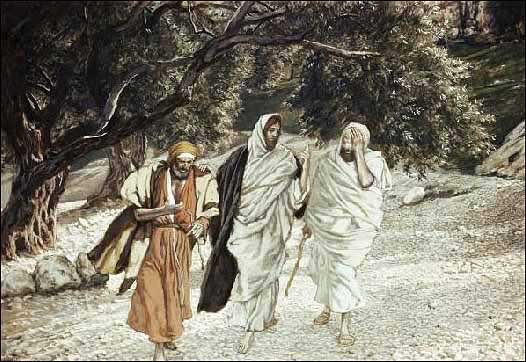
Road to Emmaus  by James J. Tissot

Road to Emmaus
by James J. Tissot

I had hoped to have written today’s post a bit sooner; nevertheless, I am grateful that God has granted me the grace and mercy to share another post on this fine Monday morning. As I have been spending a great deal of time in prayer regarding His plans for my life and my involvement within the local church (each year, twice a year, our local church engages in 21 days of prayer and fasting seeking God’s Will for our fellowship, our families, and our individual walks), this blog has come to mind repeatedly. I am reminded that I am not to take this blog lightly, that I cannot simply post what I like and rely on the first amendment to shield me from these writings. Rather, that as I commit myself to the study of God’s Word, and share here what I learn in the Scriptures, by the Grace of God by His Holy Spirit, that I do so prayerfully and humbly.

In the last post, we started to look at the subject of Biblical submission, that is, submitting to God and His Word in righteousness. Before continuing, I do think it important that we spend time again looking at the authority of the Scriptures. So, consider this a companion to the last post, because one cannot effectively discuss submission, without clearly and completely discussing authority.

Let us begin with the Apostle Paul’s instruction to Timothy, in which he declares:

2 Timothy 3:16 (NASB, emphasis mine) 16 All Scripture is [a]inspired by God and profitable for teaching, for reproof, for correction, for training in righteousness;
Footnote: [a] 2 Timothy 3:16 Lit God-breathed

I don’t normally include the footnotes in these posts; however, I couldn’t find a translation of the this passage that included the literal meaning of the Greek in the text. Every translation I searched included the literal meaning of the Greek as a footnote, and I believe it is important for us to recognize. Now, there is nothing wrong with the word “inspired” here, but I want to examine the literal “God-breathed” for a few moments.

Psalm 33:6 (NASB, emphasis mine) 6 By the word of the Lord the heavens were made, And by the breath of His mouth all their host.

Genesis 2:7 (NASB emphasis mine) 7 Then the Lord God formed man of dust from the ground, and breathed into his nostrils the breath of life; and man became a living being.

So, you see, the connection of all of Scripture to the Breath of God is an important one to maintain. As Paul wrote in Acts 17:28a (KJV), “For in him we live, and move, and have our being;” {oh yeah… I went old-school on that one 😉 }.

I mention this because in the past couple of decades we’ve seen a surge in the number of non-denominational Churches both here and abroad. There is a breaking away from the major hierarchies and set doctrines of these Churches that can be traced back to the reformation of the Roman Catholic Church. No doubt breaking away from false teaching, false doctrine, and corrupt leadership is necessary, but to do so without reconnecting to the authority of Scripture only leaves you floating aimlessly in a sea of organizations of men. Without a firm grasp on the authority of Scriptures, we cannot hope to remain submitted to God in keeping with His word, thus our attempts at reformation degrade into mere rebellion.  I’ve spoken to so many Christians who have left the church because they were hurt, mistreated, or lied to… only to reject all authority and to purpose within their hearts never to submit to “anyone but the Holy Spirit”. But to do so without acknowledging fully the authority of Scriptures is both reckless and rebellious and is a popular snare of the devil in our present culture and age.  It is to this generation that I hope to reach and reaffirm the authority of whole of Scriptures and the Gospel of Jesus Christ. It is why I’m focusing primarily in the New Testament affirmations of the Divine authority of scriptures. Let us continue on then…

I’d like to take a moment to look at one of the coolest accounts of Jesus after His resurrection found in Luke 24. I urge you strongly, to read the whole chapter… and then re-read it. It happens that as the women returned from finding the tomb of Jesus empty, and having been spoken to by Angels of the Lord, and shared their testimony with the disciples, that most did not believe. They were in mourning. Imagine for a moment, that only 3 days ago you saw your mentor, beloved teacher, Savior tortured and killed… you would undoubtedly have clouded judgement as well, would you not? But Peter took off running to see for himself. I love Peter… but that’s not where we are going right now, just setting up the backdrop for begins in verse 13:

Luke 24:13-17 (NASB, emphasis mine) 13 And behold, two of them were going that very day to a village named Emmaus, which was about seven miles from Jerusalem. 14 And they were talking with each other about all these things which had taken place. 15 While they were talking and discussing, Jesus Himself approached and began traveling with them. 16 But their eyes were prevented from recognizing Him. 17 And He said to them, “What are these words that you are exchanging with one another as you are walking?” And they stood still, looking sad.

The “them” in v13 refers to those disciples who heard the testimony of the women who had seen the empty tomb. But why did Jesus not just appear in full glory like, “here I am, BAM”? let’s read on, because the answer to this question is absolutely beautiful…

Luke 24:18-27 (NASB, emphasis mine) 18 One of them, named Cleopas, answered and said to Him, “Are You the only one visiting Jerusalem and unaware of the things which have happened here in these days?” 19 And He said to them, “What things?” And they said to Him, “The things about Jesus the Nazarene, who was a prophet mighty in deed and word in the sight of God and all the people, 20 and how the chief priests and our rulers delivered Him to the sentence of death, and crucified Him. 21 But we were hoping that it was He who was going to redeem Israel. Indeed, besides all this, it is the third day since these things happened. 22 But also some women among us amazed us. When they were at the tomb early in the morning, 23 and did not find His body, they came, saying that they had also seen a vision of angels who said that He was alive. 24 Some of those who were with us went to the tomb and found it just exactly as the women also had said; but Him they did not see.” 25 And He said to them, “O foolish men and slow of heart to believe in all that the prophets have spoken! 26 Was it not necessary for the Christ to suffer these things and to enter into His glory?” 27 Then beginning with Moses and with all the prophets, He explained to them the things concerning Himself in all the Scriptures.

Wow. You see… Jesus wanted His disciples to understand who He was and what had just happened in context of the Scriptures. He later reveals Himself to His disciples… but first, He chose to explain to them what they needed to know about Him… beginning with Moses and with all the prophets… Praise the Lord! While Jesus, being the Son of God, and already the first-born from the grave (resurrected) already bears all Authority in Heaven and Earth, He still chose to demonstrate His authority to His disciples by walking them through the scriptures. If Jesus chose to reveal Himself to His disciples in this manner, then we, too should likewise turn to the whole of Scripture to understand, proclaim, and reveal Jesus, the King of kings, and Lord of lords.

One more example before we close today. Let us return to the Apostle Paul for an example of how we are to share the Gospel as stewards of His word. Lets look at his letter to the Thessalonians. In the opening chapters of this letter, Paul is giving thanks for the faithfulness of the believers. One of the things for which Paul expresses thankfulness is particularly striking:

1 Thessalonians 2:13 (NASB) 13 For this reason we also constantly thank God that when you received the word of God which you heard from us, you accepted it not as the word of men, but for what it really is, the word of God, which also performs its work in you who believe.

So we have here that the Apostle is thankful that the believers accepted their words as the Word of God. But how is it, then, that such Authority could have been given to Paul by these believers? That they would not only accept their words as being of God, but that they “became imitators of the churches of God in Christ Jesus that are in Judea, for you also endured the same sufferings at the hands of your own countrymen…(v14)”. Thankfully, we have the account in Acts to bring us up-to-speed on what took place.

Acts 17:1-4(NASB) Paul at Thessalonica
17 Now when they had traveled through Amphipolis and Apollonia, they came to Thessalonica, where there was a synagogue of the Jews. 2 And according to Paul’s custom, he went to them, and for three Sabbaths reasoned with them from the Scriptures, 3 explaining and giving evidence that the Christ had to suffer and rise again from the dead, and saying, “This Jesus whom I am proclaiming to you is the Christ.” 4 And some of them were persuaded and joined Paul and Silas, along with a large number of the God-fearing Greeks and a number of the leading women.

This Jesus…is the Christ.” Paul reasoned with them from the Scriptures. That is where he derived his authority to preach, proclaiming the Jesus who had stopped him on the road to Damascus was in-fact the Christ. The authority isn’t in the vision, it’s in the Scriptures. Paul’s eyes needed to be opened, just as the eyes of the disciples that were walking on the road to Emmaus needed their eyes to be open.

It is my sincere prayer, that these posts spark a desire in your heart to read these scriptures for yourselves, and to get the full context of each passage. As I read/hear these passages I get a sense of what the disciples shared with one another after Jesus revealed Himself to them.

Luke 24:31-32 (NASB) 31 Then their eyes were opened and they recognized Him; and He vanished from their sight. 32 They said to one another, “Were not our hearts burning within us while He was speaking to us on the road, while He was explaining the Scriptures to us?”

May the Holy Spirit do likewise in your hearts as you search the Scriptures, and submit to the authority of God and His Word.

In Him,
FS