CTT | You Say Calvinism, I Hear Gospel?

CTTToday’s Completing The Thought (CTT) post is a reaction to some comments I read in social media a few weeks ago. At two separate times in two different threads from two different people came the comment “When you say Calvinism, I hear Gospel”. Both threads were calling Calvinism into question, so there is a sense of defensiveness at play here, but we are going to address this statement here today. The short answer is, “you understand neither Calvinism nor the Gospel”.

Calvinism

Let’s begin with a definition of Calvinism from the folks at CARM:

Calvinism is a theological system of Christian interpretation initiated by John Calvin. It emphasizes predestination and salvation. The five points of Calvinism were developed in response to the Arminian position (See Arminianism). Calvinism teaches:

1) Total depravity: that man is touched by sin in all parts of his being: body, soul, mind, and emotions;

2) Unconditional Election: that God’s favor to Man is completely by God’s free choice and has nothing to do with Man. It is completely undeserved by Man and is not based on anything God sees in man (Eph. 1:1-11);

3) Limited atonement: that Christ did not bear the sins of every individual who ever lived but instead only bore the sins of those who were elected into salvation (John 10:11, 15);

4) Irresistible grace: that God’s call to someone for salvation cannot be resisted;

5) Perseverance of the saints: that it is not possible to lose one’s salvation (John 10:27-28).

It is a system of Christian interpretation of Scriptures. It isn’t “the Gospel”. It directly affects how one reads the Gospel and probably heavily impacts how one preaches the Gospel, but Calvinism is not “the Gospel”. Calvinism is a framework that elevates the sovereignty of God above all of His other attributes. It’s goal was to guard Christians against the works-based salvation of the Roman Catholic Church as well as some of other doctrines that were sliding into open-theism.

To demonstrate how Calvinism is a framework of interpretation, let us look at John 3:16.

John 3:16-18 (ESV) “For God so loved the world, that he gave his only Son, that whoever believes in him should not perish but have eternal life. For God did not send his Son into the world to condemn the world, but in order that the world might be saved through him. Whoever believes in him is not condemned, but whoever does not believe is condemned already, because he has not believed in the name of the only Son of God.

The non-Calvinists read this verse as indicating that the atonement was for all and that anyone who believes in Jesus will be granted eternal life. They use this verse as a call or a plea for all to believe in Him so that you can have eternal life.

The Calvinist sees this verse not as an open call to belief, but a reflection of the separation from those who will believe (due to unconditional election, irresistible grace, and perseverance of the saints) in Him from those who will not believe. Also, that God’s giving of His Son was not for those who are unconditionally reprobate (unbelieving); rather, this gift of atonement was limited only to those who were pre-destined to believe in Christ.

Same verse, different frameworks of interpretation. Now, to determine which one is “better” depends on how you matrix passages and how far you go to resolve mysteries. The point of this post isn’t to promote or refute Calvinism… the point of this post is to keep the concepts of “The Gospel of Jesus Christ” and “Calvinism” separate. John Calvin wasn’t an Apostle of Jesus Christ.

The Gospel of Jesus Christ

1 Corinthians 15:1-11 (ESV) | The Resurrection of Christ

Now I would remind you, brothers, of the gospel I preached to you, which you received, in which you stand, and by which you are being saved, if you hold fast to the word I preached to you—unless you believed in vain.

For I delivered to you as of first importance what I also received: that Christ died for our sins in accordance with the Scriptures, that he was buried, that he was raised on the third day in accordance with the Scriptures, and that he appeared to Cephas, then to the twelve. Then he appeared to more than five hundred brothers at one time, most of whom are still alive, though some have fallen asleep. Then he appeared to James, then to all the apostles. Last of all, as to one untimely born, he appeared also to me. For I am the least of the apostles, unworthy to be called an apostle, because I persecuted the church of God. But by the grace of God I am what I am, and his grace toward me was not in vain. On the contrary, I worked harder than any of them, though it was not I, but the grace of God that is with me. Whether then it was I or they, so we preach and so you believed.

Ephesians 2:1-10 (ESV) | By Grace Through Faith

And you were dead in the trespasses and sins in which you once walked, following the course of this world, following the prince of the power of the air, the spirit that is now at work in the sons of disobedience— among whom we all once lived in the passions of our flesh, carrying out the desires of the body and the mind, and were by nature children of wrath, like the rest of mankind. But God, being rich in mercy, because of the great love with which he loved us,even when we were dead in our trespasses, made us alive together with Christ—by grace you have been saved— and raised us up with him and seated us with him in the heavenly places in Christ Jesus, so that in the coming ages he might show the immeasurable riches of his grace in kindness toward us in Christ Jesus. For by grace you have been saved through faith. And this is not your own doing; it is the gift of God, not a result of works, so that no one may boast. For we are his workmanship, created in Christ Jesus for good works,which God prepared beforehand, that we should walk in them.

Ephesians 3:1-12 (ESV) | The Mystery of the Gospel Revealed

For this reason I, Paul, a prisoner for Christ Jesus on behalf of you Gentiles—assuming that you have heard of the stewardship of God’s grace that was given to me for you, how the mystery was made known to me by revelation, as I have written briefly. When you read this, you can perceive my insight into the mystery of Christ, which was not made known to the sons of men in other generations as it has now been revealed to his holy apostles and prophets by the Spirit. This mystery is that the Gentiles are fellow heirs, members of the same body, and partakers of the promise in Christ Jesus through the gospel.

Of this gospel I was made a minister according to the gift of God’s grace, which was given me by the working of his power. To me, though I am the very least of all the saints, this grace was given, to preach to the Gentiles the unsearchable riches of Christ, and to bring to light for everyone what is the plan of the mystery hidden for ages in God who created all things, so that through the church the manifold wisdom of God might now be made known to the rulers and authorities in the heavenly places. This was according to the eternal purpose that he has realized in Christ Jesus our Lord, in whom we have boldness and access with confidence through our faith in him.

These are clear passages for answering the question of “What is the Gospel?”, but there are many more passages we can look to in the New Testament. I stuck with Paul’s writing primarily because of what we see him write to the Galatians.

Galatians 1:6-9 (ESV) | No Other Gospel

I am astonished that you are so quickly deserting him who called you in the grace of Christ and are turning to a different gospel— not that there is another one, but there are some who trouble you and want to distort the gospel of Christ. But even if we or an angel from heaven should preach to you a gospel contrary to the one we preached to you, let him be accursed. As we have said before, so now I say again: If anyone is preaching to you a gospel contrary to the one you received, let him be accursed.

The gospel we are to preach is the Gospel of Jesus Christ recorded in Holy Scriptures.

Conclusion

If you are a Christian, you are my brother or sister in the Body of Christ, whether you are Reformed, Lutheran, Baptist, Pentecostal or non-denominational. The primary concern I have is of your understanding of the Gospel of Jesus Christ in light of our sin. There are Christians who reject Calvin, just as there are Christians who can see no other framework of Biblical interpretation outside of Calvin. I think it is important to engage one another in the scriptures to sharpen one another as iron sharpens iron, but let us not err in confusing the Gospel of Jesus Christ with our own frameworks. I urge you not to make the mistake of empty boasting such as what we’ve addressed today. There are both Calvinists and non-Calvinists who remain faithful to the Preaching of the Gospel of Jesus Christ. The litmus is the Gospel they preach.

Amen.
In Christ Jesus,
Jorge

CTT | Stand Firm and Hold onto the Traditions…

CTTToday’s Completing The Thought (CTT) post is a bit of reflection on the traditions we hold in our local churches. Let us begin with the passage supporting Traditions in the Church followed by some discussion of traditions we see today. I think the greater context of this passage coming immediately after Paul reminds the church of Christ’s return and the man of lawlessness is important to understanding the implications of having a right understanding of keeping traditions.

2 Thessalonians 2 (ESV)
The Man of Lawlessness

Now concerning the coming of our Lord Jesus Christ and our being gathered together to him, we ask you, brothers, not to be quickly shaken in mind or alarmed, either by a spirit or a spoken word, or a letter seeming to be from us, to the effect that the day of the Lord has come. Let no one deceive you in any way. For that day will not come, unless the rebellion comes first, and the man of lawlessness is revealed, the son of destruction, who opposes and exalts himself against every so-called god or object of worship, so that he takes his seat in the temple of God, proclaiming himself to be God. Do you not remember that when I was still with you I told you these things? And you know what is restraining him now so that he may be revealed in his time. For the mystery of lawlessness is already at work. Only he who now restrains it will do so until he is out of the way. And then the lawless one will be revealed, whom the Lord Jesus will kill with the breath of his mouth and bring to nothing by the appearance of his coming. The coming of the lawless one is by the activity of Satan with all power and false signs and wonders, 10 and with all wicked deception for those who are perishing, because they refused to love the truth and so be saved. 11 Therefore God sends them a strong delusion, so that they may believe what is false, 12 in order that all may be condemned who did not believe the truth but had pleasure in unrighteousness.

Stand Firm

13 But we ought always to give thanks to God for you, brothers beloved by the Lord, because God chose you as the firstfruits to be saved, through sanctification by the Spirit and belief in the truth. 14 To this he called you through our gospel, so that you may obtain the glory of our Lord Jesus Christ.15 So then, brothers, stand firm and hold to the traditions that you were taught by us, either by our spoken word or by our letter.

16 Now may our Lord Jesus Christ himself, and God our Father, who loved us and gave us eternal comfort and good hope through grace, 17 comfort your hearts and establish them in every good work and word.

Now, we do not have the spoken word of the Apostles, what we have is the written words of the Apostles (or spoken words that have been written and preserved by God the Holy Spirit). The pastoral epistles serve as our blueprint and guidance for church leadership, for offices within the church, and the call to preach Law and Gospel. We are taught how to pray, the importance of confession and repentance, forgiving our brothers in Christ, dealing with the unbelieving world. We are clearly instructed in baptism and the Lord’s Supper. Yet in all of these things and in many more, we run into some serious differences in the traditions observed by denominations and local church bodies.

Evaluate Traditions Objectively in God’s Word

Not all traditions are good. How do we determine which traditions are good and which are not? The first step is to identify origins… and they should originate in God’s Word. There is some bad teaching out there that suggests that the Gospel can redeem pagan practices and make them fitting for Worship. God eliminated such rationale in Deuteronomy 12, which was recently the topic of a sermon by Dr. James White.

Deuteronomy 12:29-32 (ESV) | Warning Against Idolatry

29 “When the Lord your God cuts off before you the nations whom you go in to dispossess, and you dispossess them and dwell in their land, 30 take care that you be not ensnared to follow them, after they have been destroyed before you, and that you do not inquire about their gods, saying, ‘How did these nations serve their gods?—that I also may do the same.’ 31 You shall not worship the Lord your God in that way, for every abominable thing that the Lord hates they have done for their gods, for they even burn their sons and their daughters in the fire to their gods. 32  “Everything that I command you, you shall be careful to do. You shall not add to it or take from it.

There are also traditions that have a form of godliness, and come from a seemingly historically pious origins, but are merely the commandments of men.

Mark 7:1-13 (ESV) | Traditions and Commandments

Now when the Pharisees gathered to him, with some of the scribes who had come from Jerusalem, they saw that some of his disciples ate with hands that were defiled, that is, unwashed. (For the Pharisees and all the Jews do not eat unless they wash their hands properly, holding to the tradition of the elders,and when they come from the marketplace, they do not eat unless they wash.And there are many other traditions that they observe, such as the washing ofcups and pots and copper vessels and dining couches.) And the Pharisees and the scribes asked him, “Why do your disciples not walk according to the tradition of the elders, but eat with defiled hands?” And he said to them, “Well did Isaiah prophesy of you hypocrites, as it is written,

“‘This people honors me with their lips,
    but their heart is far from me;
in vain do they worship me,
    teaching as doctrines the commandments of men.’

You leave the commandment of God and hold to the tradition of men.” And he said to them, “You have a fine way of rejecting the commandment of God in order to establish your tradition! 10 For Moses said, ‘Honor your father and your mother’; and, ‘Whoever reviles father or mother must surely die.’11 But you say, ‘If a man tells his father or his mother, “Whatever you would have gained from me is Corban”’ (that is, given to God)— 12 then you no longer permit him to do anything for his father or mother, 13 thus making void the word of God by your tradition that you have handed down. And many such things you do.”

The Pharisees added to the Law their own explications, claiming it was a parallel oral Law given to Moses but meant only for the Priests to understand and to pass on, creating an elite class of enlightened God’s chosen ones. Jesus rebuked them strongly, plainly, and repeatedly for this error. But these traditions didn’t simply disappear after the Resurrection and Ascension of Christ. Paul had to address such commandments of men in his letter to the Colossians.

Colossians 2:16-23 (ESV) | Let No One Disqualify You

16 Therefore let no one pass judgment on you in questions of food and drink, or with regard to a festival or a new moon or a Sabbath. 17 These are a shadow of the things to come, but the substance belongs to Christ. 18 Let no one disqualify you, insisting on asceticism and worship of angels, going on in detail about visions, puffed up without reason by his sensuous mind, 19 and not holding fast to the Head, from whom the whole body, nourished and knit together through its joints and ligaments, grows with a growth that is from God. 20 If with Christ you died to the elemental spirits of the world, why, as if you were still alive in the world, do you submit to regulations 21 “Do not handle, Do not taste, Do not touch” 22 (referring to things that all perish as they are used)—according to human precepts and teachings? 23 These have indeed an appearance of wisdom in promoting self-made religion and asceticism and severity to the body, but they are of no value in stopping the indulgence of the flesh.

Colossians 3:1-6 (ESV) | Put On the New Self

If then you have been raised with Christ, seek the things that are above, where Christ is, seated at the right hand of God. Set your minds on things that are above, not on things that are on earth. For you have died, and your life is hidden with Christ in God. When Christ who is your life appears, then you also will appear with him in glory. Put to death therefore what is earthly in you: sexual immorality, impurity, passion, evil desire, and covetousness, which is idolatry. On account of these the wrath of God is coming.

So, you see that when the occasion arises where the traditions of men start to undermine the Gospel of Jesus Christ, we have a problem. Even if these traditions come from the former things: questions of food and drink, festival, new moon, or Sabbath. Now, is observing these former statues a sin of itself? No, just like ritual washing of the hands before a meal isn’t a sin. Undermining the Gospel for the sake of these is the sin. What shall we say about traditions that are not commandments? In as much as the one observing the tradition is encouraged in the faith once delivered to the saints, as long as he/she is doing so for the Glory of God the Father, God the Son, and God the Holy Spirit, it is an act of worship done in faith and pleasing to God.

When Our Faith-Based Traditions Don’t Blend

As long as the traditions being observed are not objectively sinful or undermining the Gospel of Jesus Christ, then we have clear instruction from the Apostle Paul in his letter to the Romans.

Romans 14 (ESV) | Do Not Pass Judgment on One Another

As for the one who is weak in faith, welcome him, but not to quarrel over opinions. One person believes he may eat anything, while the weak person eats only vegetables. Let not the one who eats despise the one who abstains, andlet not the one who abstains pass judgment on the one who eats, for God has welcomed him. Who are you to pass judgment on the servant of another? It is before his own master that he stands or falls. And he will be upheld, for the Lord is able to make him stand.

One person esteems one day as better than another, while another esteems all days alike. Each one should be fully convinced in his own mind. The one who observes the day, observes it in honor of the Lord. The one who eats, eats in honor of the Lord, since he gives thanks to God, while the one who abstains, abstains in honor of the Lord and gives thanks to God. For none of us lives to himself, and none of us dies to himself. For if we live, we live to the Lord, and if we die, we die to the Lord. So then, whether we live or whether we die, we are the Lord’s. For to this end Christ died and lived again, that he might be Lord both of the dead and of the living.

Why do you pass judgment on your brother? Or you, why do you despise your brother? For we will all stand before the judgment seat of God; for it is written,

“As I live, says the Lord, every knee shall bow to me,
    and every tongue shall confess to God.”

So then each of us will give an account of himself to God.

Do Not Cause Another to Stumble

Therefore let us not pass judgment on one another any longer, but rather decide never to put a stumbling block or hindrance in the way of a brother. I know and am persuaded in the Lord Jesus that nothing is unclean in itself, but it is unclean for anyone who thinks it unclean. For if your brother is grieved by what you eat, you are no longer walking in love. By what you eat, do not destroy the one for whom Christ died. So do not let what you regard as good be spoken of as evil. For the kingdom of God is not a matter of eating and drinking but of righteousness and peace and joy in the Holy Spirit. Whoever thus serves Christ is acceptable to God and approved by men. So then let us pursue what makes for peace and for mutual upbuilding.

Do not, for the sake of food, destroy the work of God. Everything is indeed clean, but it is wrong for anyone to make another stumble by what he eats. It is good not to eat meat or drink wine or do anything that causes your brother to stumble. The faith that you have, keep between yourself and God. Blessed is the one who has no reason to pass judgment on himself for what he approves. But whoever has doubts is condemned if he eats, because the eating is not from faith. For whatever does not proceed from faith is sin.

Conclusion

I know it’s an academic no-no to bring in a new topic in a “conclusion” paragraph, but I’d like to challenge those of you who attend non-denominational churches to reevaluate your position on traditions. You have them, too. In some cases, inventing new traditions is itself a tradition… all too often these “new” traditions simple come from whatever can be found in the end-cap of your local “Christian bookstore”. We all have traditions. The traditions taught in the New Testament are essential for the Church to stand firm in the last days and guard against the man of lawlessness and the great apostasy. But whenever and wherever the topic of Church tradition arises… it must ever and always be submitted to the teaching of God-Breathed and all-sufficient Scriptures.

Romans 15:1-7 (ESV) | The Example of Christ

We who are strong have an obligation to bear with the failings of the weak, and not to please ourselves. Let each of us please his neighbor for his good, to build him up. For Christ did not please himself, but as it is written, “The reproaches of those who reproached you fell on me.” For whatever was written in former days was written for our instruction, that through endurance and through the encouragement of the Scriptures we might have hope. May the God of endurance and encouragement grant you to live in such harmony with one another, in accord with Christ Jesus, that together you may with one voice glorify the God and Father of our Lord Jesus Christ. Therefore welcome one another as Christ has welcomed you, for the glory of God.

Amen.
In Christ Jesus,
Jorge

Heart of Worship – More Than Emotion

trebleclefIn our DiM posts, we come down hard on the focus on emotionalism that permeates Evangelical Christian Music. It is the biggest problem with so-called Worship music being pushed by Bethel, Hillsong, Vineyard, and even Integrity Music. While visiting a small local church-plant recently, I realized that something needs to be said of why this genre of music is so compelling, especially to growing churches, and to recognize its well-intentioned though misapplied reasoning. The idea being that if we can stir our hearts to experience a deeply felt emotional love for God, then we are worshiping God with our hearts and that is pleasing to Him. The intent of “worshiping God with our emotions” sounds good, but it is misguided and carnal.

The Summation of the Law

I think it best to begin at the beginning, so let us remember the Law of God. Jesus was asked what is the great commandment in the Law. Let’s see His answer below:

Matthew 22:36-40 (ESV)

“Teacher, which is the great commandment in the Law?” And he said to him,“You shall love the Lord your God with all your heart and with all your soul and with all your mind. This is the great and first commandment. And a second is like it: You shall love your neighbor as yourself. On these two commandments depend all the Law and the Prophets.

Now, modern-day evangelicalism likes to confuse this summation of the Law (on these two commandments depend all the Law…) for the Gospel. “Love God, Love Neighbor” is not the Gospel of Jesus Christ… it is the Law. None of us live up to this law. Only Jesus Christ fulfilled this Law. The Gospel of Jesus Christ is that our entrance into the Kingdom of Heaven will be by His fulfillment of the Law imputed to us by Grace, through Faith in Jesus Christ. Does this mean the Law is no of no use to us? Absolutely not! Let’s look at what Paul puts together in Eph 2:8-10:

Ephesians 2:8-10 (ESV)

For by grace you have been saved through faith. And this is not your own doing; it is the gift of God, not a result of works, so that no one may boast.10 For we are his workmanship, created in Christ Jesus for good works, which God prepared beforehand, that we should walk in them.

By Grace, through faith, we are His workmanship created in Christ Jesus for good works that God prepared for us to walk in. How do we know what is a good work? The Law. So you see, while no amount of law-keeping can grant saving faith… Faith received as a Gift of God will lead us into good works prepared in Christ Jesus. This is the focus of the book of James, that a faith that does not lead us into good works in Christ Jesus is not true faith.

James 1:19-27 (ESV) | Hearing and Doing the Word

19 Know this, my beloved brothers: let every person be quick to hear, slow to speak, slow to anger; 20 for the anger of man does not produce the righteousness of God. 21 Therefore put away all filthiness and rampant wickedness and receive with meekness the implanted word, which is able to save your souls22 But be doers of the word, and not hearers only, deceiving yourselves. 23 For if anyone is a hearer of the word and not a doer, he is like a man who looks intently at his natural face in a mirror. 24 For he looks at himself and goes away and at once forgets what he was like. 25 But the one who looks into the perfect law, the law of liberty, and perseveres, being no hearer who forgets but a doer who acts, he will be blessed in his doing. 26 If anyone thinks he is religious and does not bridle his tongue but deceives his heart, this person’s religion is worthless. 27 Religion that is pure and undefiled before God, the Father, is this: to visit orphans and widows in their affliction, and to keep oneself unstained from the world.

James 2:14-26 (ESV) | Faith Without Works Is Dead

14 What good is it, my brothers, if someone says he has faith but does not have works? Can that faith save him? 15 If a brother or sister is poorly clothed and lacking in daily food, 16 and one of you says to them, “Go in peace, be warmed and filled,” without giving them the things needed for the body, what good is that? 17 So also faith by itself, if it does not have works, is dead.

18 But someone will say, “You have faith and I have works.” Show me your faith apart from your works, and I will show you my faith by my works. 19 You believe that God is one; you do well. Even the demons believe—and shudder! 20 Do you want to be shown, you foolish person, that faith apart from works is useless? 21 Was not Abraham our father justified by works when he offered up his son Isaac on the altar? 22 You see that faith was active along with his works, and faith was completed by his works; 23 and the Scripture was fulfilled that says, “Abraham believed God, and it was counted to him as righteousness”—and he was called a friend of God. 24 You see that a person is justified by works and not by faith alone. 25 And in the same way was not also Rahab the prostitute justified by works when she received the messengers and sent them out by another way? 26 For as the body apart from the spirit is dead, so also faith apart from works is dead.

You don’t get true faith by doing good deeds, you get it by hearing the Word of Christ (Rom 10:12-17) and receiving with meekness the implanted word (Matt 13:23 ESV). It is the Word of God that produces faith, and that faith should produce fruit. How much fruit will depend on your maturity and the extend to which you’ve died to your flesh, because until the Great Day of Christ’s return we continue to walk in bodies of sinful flesh and have been charged to take up our crosses daily.

Notice the focus in the Apostolic teaching is on faith, not on emotion. Neither Paul nor James calls Christians to whipping up an emotional experience of love. Our flesh has its own definition of “love”, and the world usually focuses on the feel-good emotion or physical displays of affection. God defines Love differently:

1 Corinthians 13:4-8 (ESV) Love is patient and kind; love does not envy or boast; it is not arrogant or rude. It does not insist on its own way; it is not irritable or resentful; it does not rejoice at wrongdoing, but rejoices with the truth. Love bears all things, believes all things, hopes all things, endures all things. Love never ends. As for prophecies, they will pass away; as for tongues, they will cease; as for knowledge, it will pass away.

Love isn’t an emotion; love is a Character trait, a fruit of the Spirit of God. Emotions come and go… Love never ends. Where do emotions fit in the fruit of the Spirit of God? Self-control.

Our Hearts of Flesh

Let’s talk about the condition of the heart of mankind. To put it bluntly, our hearts are wicked, idolatrous, and adulterous. We are in-fact defiled by what flows from our sinful hearts.

Matthew 15:10-20 (ESV) | What Defiles a Person

And he called the people to him and said to them, “Hear and understand: it is not what goes into the mouth that defiles a person, but what comes out of the mouth; this defiles a person.” Then the disciples came and said to him, “Do you know that the Pharisees were offended when they heard this saying?” He answered, “Every plant that my heavenly Father has not planted will be rooted up. Let them alone; they are blind guides. And if the blind lead the blind, both will fall into a pit.” But Peter said to him, “Explain the parable to us.” And he said, “Are you also still without understanding? Do you not see that whatever goes into the mouth passes into the stomach and is expelled? But what comes out of the mouth proceeds from the heart, and this defiles a person.For out of the heart come evil thoughts, murder, adultery, sexual immorality, theft, false witness, slander. These are what defile a person. But to eat with unwashed hands does not defile anyone.”

Romans 1:18-25 (ESV) | God’s Wrath on Unrighteousness

For the wrath of God is revealed from heaven against all ungodliness and unrighteousness of men, who by their unrighteousness suppress the truth. For what can be known about God is plain to them, because God has shown it to them. For his invisible attributes, namely, his eternal power and divine nature, have been clearly perceived, ever since the creation of the world, in the things that have been made. So they are without excuse. For although they knew God, they did not honor him as God or give thanks to him, but they became futile in their thinking, and their foolish hearts were darkened. Claiming to be wise, they became fools, and exchanged the glory of the immortal God for images resembling mortal man and birds and animals and creeping things. Therefore God gave them up in the lusts of their hearts to impurity, to the dishonoring of their bodies among themselves, because they exchanged the truth about God for a lie and worshiped and served the creature rather than the Creator, who is blessed forever! Amen.

Now, when the Spirit of the Living God regenerates us by the Grace of God, granting us saving faith in Jesus Christ our Lord and Savior, our flesh yet remains and must be daily crucified in repentance until the Day of the Return of our Lord Jesus Christ. Do we have the power to change our sinful hearts? No. King David knew this, and spent a great deal of time in prayer asking the Lord to change his heart. Probably the most prominent expression of this Truth, that we need God to cleanse our hearts, is Psalm 51.

Can We Worship With Our Emotions?

When we read through the Old Testament prescriptions for Worship, we see sacrifices, statutes, and ordinances for the People of God keep in Worship of the One True God. Many like to point to the exuberant praise of King David before Lord in 2 Samuel 6:16-23. Clearly, David’s worship was received by the Lord, and Michal was made barren for her judgement against David. But we don’t see Jesus or His disciples demonstrating such worship in the New Testament. I point this out, not to say that such worship is off-limits, but to make a point that worship remains, even when such emotional exuberance is missing or subdued. In fact, had David’s heart NOT been in the right place, his exuberance would not have been received as worship. There will be times when your emotions fall in line with your worship… and it is awesome. However, there are times when our emotions will fly completely against our worship, such as when Abraham was told to offer his son Isaac as a sacrifice of worship to God. If the key to right worship were found in the emotions, Abraham would have failed. Praise be to the God of Abraham, Isaac, and Jacob, that our emotions are not the key to right worship; rather, it is by faith that our worship can be pleasing in His sight.

Hebrews 11:4-6 (ESV) By faith Abel offered to God a more acceptable sacrifice than Cain, through which he was commended as righteous, God commending him by accepting his gifts. And through his faith, though he died, he still speaks. By faith Enoch was taken up so that he should not see death, and he was not found, because God had taken him. Now before he was taken he was commended as having pleased God. And without faith it is impossible to please him, for whoever would draw near to God must believe that he exists and that he rewards those who seek him.

How Do We Worship With Our Hearts?

Firstly, we need to adjust our understanding of what the Scriptures mean when our hearts are being referenced. It isn’t just your emotions. Your heart is the core of your being. David charged his son to value Wisdom in Proverbs 2. Let’s take a look at how he references the heart.

Proverbs 2:1-15 (ESV) | The Value of Wisdom

My son, if you receive my words
    and treasure up my commandments with you,
making your ear attentive to wisdom
    and inclining your heart to understanding;
yes, if you call out for insight
    and raise your voice for understanding,
if you seek it like silver
    and search for it as for hidden treasures,
then you will understand the fear of the Lord
    and find the knowledge of God.
For the Lord gives wisdom;
    from his mouth come knowledge and understanding;
he stores up sound wisdom for the upright;
    he is a shield to those who walk in integrity,
guarding the paths of justice
    and watching over the way of his saints.
Then you will understand righteousness and justice
    and equity, every good path;
10 for wisdom will come into your heart,
    and knowledge will be pleasant to your soul;
11 discretion will watch over you,
    understanding will guard you,
12 delivering you from the way of evil,
    from men of perverted speech,
13 who forsake the paths of uprightness
    to walk in the ways of darkness,
14 who rejoice in doing evil
    and delight in the perverseness of evil,
15 men whose paths are crooked,
    and who are devious in their ways.

The thrust of the first several proverbs is growing in Wisdom, Knowledge, and Understanding so that the man of God will walk in the paths of righteousness. That growth comes from inclining the heart to understanding, and seeking the wisdom of God and receiving that wisdom in the heart. David isn’t just talking about emotions, he’s talking about studying, memorizing, meditating, and walking in the Word of God.

Conclusion

When it comes to corporate worship, our focus should NOT be on our emotions; rather, it should be on the Word of the Lord. Whether or not we feel that ‘puppy-love’ gushing of euphoria… we are called to worship God in Spirit and in Truth. The songs we sing, the confessions of our mouth, should be in accordance with Scripture. The world knows how to manipulate emotions… and the evangelicalism has attempted to short-cut maturity in spiritual growth by focusing on emotional manipulation disguised as “worship”. Such carnal focus only serves the worshiper’s felt needs and does not edify the church. Singing songs about how you are dancing, singing, crying, embracing, and worshiping doesn’t actually lead to Worship. There are no short-cuts… it’s time to get back to the heart of worship.

Romans 12:1-2 (ESV) | A Living Sacrifice

12 I appeal to you therefore, brothers, by the mercies of God, to present your bodies as a living sacrifice, holy and acceptable to God, which is your spiritual worship. Do not be conformed to this world, but be transformed by the renewal of your mind, that by testing you may discern what is the will of God, what is good and acceptable and perfect.

Faith in Christ Jesus gets you there… not emotion. May the Grace of God abound to you, so that having all sufficiency in all things at all times, you may abound in every good work. Amen.

In Christ Jesus,
Jorge

CTT | Don’t Narcigete Your Church, Either

CTTToday’s Completing The Thought (CTT) post should be fairly short. If you’ve been following this blog for a while, I trust you are familiar with exegesis and eisegesis. If you are not familiar with narcigesis, it is the conflation of narcissism and eisegesis.  There is a great definition of Narcisgesis available at Apprising.org, the work of the late Ken Silva.

NARCIGESIS [nahr- si -jee’ -sis]

[(From: narcissus; 1540–50; < Latin < Greek nárkissos plant name, traditionally connected, by virtue of plant’s narcotic effects, with nárkç numbness, torpor; probably from a pre-Gk. Aegean word, but associated with Gk. narke “numbness” (see narcotic) because of the plant’s sedative effect.) (From: eisegesis; 1890–95; < Greek eisḗgesis, equivalent to eis- into + ( h ) çge- (stem of hçgeîsthai to lead) + -sis -sis {C19: from Greek eisinto, in + -egesis, as in exegesis}.)]

Common Examples of Narcigesis

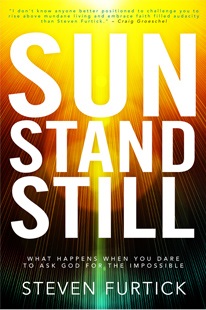
furtickWe’ll start out simply with Steven Furtick. If you want a case-study on how NOT to exegete a passage of scripture but instead narcigete it, go to any book written by Furtick, or sermon preached by him. The dude wrote an entire book (and sold lots of church bible-study paraphernalia) and preached several sermons based on the narcigesis of Joshua 10:12. One. Verse.

Joshua 10:12 (ESV) At that time Joshua spoke to the Lord in the day when the Lord gave the Amorites over to the sons of Israel, and he said in the sight of Israel, “Sun, stand still at Gibeon, and moon, in the Valley of Aijalon.”

Furtick then encouraged Christians that they should all pray “Sun stand still” prayers. It wasn’t a prayer, we are never taught to pray that way, God had already promised Joshua that battle, and the text itself in (verse 14) clearly states this was a unique and isolated event.

But even if you haven’t heard of Steven Furtick, I’m sure you’ve heard Hillsong’s “Oceans (where feet may fail)”, right? That song narcigetes the story of Jesus walking on the water, suggesting that God is asking each of us to walk on water. He isn’t. Many times the Story of God defeating Goliath is told in such a way that the listener plays the role of David and needs to find his 5 smooth stones, or master a skill in his “down time” doing menial tasks of watching sheep until “such a time” as the LORD would call them to use their skill (sling) to defeat the Goliath in their lives…. see where this is going? Narcegisis points to people… the Scriptures point to Jesus Christ, Son of the Living God.

The heroes of the Old Testament point us to the Messiah, God’s Anointed One, Jesus Christ. While we should seek to emulate their faith (Hebrews 11), their actions are not always commendable, nor are they a prescription for getting the same results they got. Because their actions didn’t make them chosen, their actions didn’t curry the favor of God, it was their faith. And faith doesn’t come by copying the actions of one of the heroes in the Bible, faith comes from hearing the Word of Christ (Romans 10:17). We’ve said it many times, don’t read yourself into the heroes of the Old Testament. Read yourself into the sinner that needs the Savior, sure… but not at the expense of missing the Truth of Scripture when Jesus rebuked the Pharisees by telling them, “For if you believed Moses, you would believe me; for he wrote of me.” (John 5:30-47)

Corporate Narcigesis

It happens with churches, too. The most common area where I see this happen, is whenever a church does “a series in Acts”. This isn’t always the case, but it happens a lot more than you’d think. Even in churches claiming to engage in expository preaching. Yes, it is possible to work through a text verse by verse and still engage in Narcigesis… by having a preacher chase rabbit trails and share personal or even corporate anecdotes throughout a sermon. Even if a passage is read aloud in-context at the beginning, a preacher looking to “deepen the congregation’s understanding of the passage” can engage in narcigesis by skipping around proof-texting verses to emphasis a point that isn’t even being made by the text. In the Book of the Acts of the Apostles, many a small church preacher will read in Acts 2 how 3,000 men were added to the church and how more were being added every day and think that the key to being a blessed church is to grow in numbers. Others will look at the miracles God performed for the lame beggar in Acts 3 and think that the reason the church isn’t seeing such miracles is that we don’t have men of great faith (dare I say audacious) like Peter and John, or that we aren’t all of one heart and soul (ch 4:32) so as a church we need to focus on being more Unified and then the church will be blessed. These are all false-readings. Let’s look at how Luke introduced his work.

Acts 1:1-8 (ESV) | The Promise of the Holy Spirit

In the first book, O Theophilus, I have dealt with all that Jesus began to do and teach, until the day when he was taken up, after he had given commands through the Holy Spirit to the apostles whom he had chosen. He presented himself alive to them after his suffering by many proofs, appearing to them during forty days and speaking about the kingdom of God. And while staying with them he ordered them not to depart from Jerusalem, but to wait for the promise of the Father, which, he said, “you heard from me;for John baptized with water, but you will be baptized with the Holy Spirit not many days from now.” So when they had come together, they asked him, “Lord, will you at this time restore the kingdom to Israel?” He said to them, “It is not for you to know times or seasons that the Father has fixed by his own authority. But you will receive power when the Holy Spirit has come upon you, and you will be my witnesses in Jerusalem and in all Judea and Samaria, and to the end of the earth.”

Yes, we call the book the Acts of the Apostles… but their acts, clearly defined by Jesus, were to be witnesses of Him. When the Apostles cast lots to select a replacement for Judas Iscariot, they narrowed the field to only those who were fellow witnesses from the beginning. The Apostle Paul was an undisputed witness of Jesus, since his encounter with Jesus produced immediate repentance. Jesus began the work, and He continued the work through His Apostles who were promised the gift of the Holy Spirit. The Promise of the Holy Spirit wasn’t limited to them:

Acts 2:38-41 (ESV)

38 And Peter said to them, “Repent and be baptized every one of you in the name of Jesus Christ for the forgiveness of your sins, and you will receive the gift of the Holy Spirit. 39 For the promise is for you and for your children and for all who are far off, everyone whom the Lord our God calls to himself. 40 And with many other words he bore witness and continued to exhort them, saying,“Save yourselves from this crooked generation.” 41 So those who received his word were baptized, and there were added that day about three thousand souls.

Had Peter done anything special to earn his calling? No. Was Peter the head of the church? No. Christ is the Head of His Church, and He gave us His Apostles, the last of whom was the Apostle Paul. Don’t read your church into these texts hoping to discover some formula for building a successful church… men do not build Christ’s Church. Peter rejected these notions even as he addressed the men of Jerusalem after God miraculously healed a 40-yr old lame beggar

Acts 3:1-16 (ESV) | The Lame Beggar Healed

Now Peter and John were going up to the temple at the hour of prayer, the ninth hour. And a man lame from birth was being carried, whom they laid daily at the gate of the temple that is called the Beautiful Gate to ask alms of those entering the temple. Seeing Peter and John about to go into the temple, he asked to receive alms. And Peter directed his gaze at him, as did John, and said, “Look at us.” And he fixed his attention on them, expecting to receive something from them. But Peter said, “I have no silver and gold, but what I do have I give to you. In the name of Jesus Christ of Nazareth, rise up and walk!” And he took him by the right hand and raised him up, and immediately his feet and ankles were made strong. And leaping up he stood and began to walk, and entered the temple with them, walking and leaping and praising God.And all the people saw him walking and praising God, 10 and recognized him as the one who sat at the Beautiful Gate of the temple, asking for alms. And they were filled with wonder and amazement at what had happened to him.

Peter Speaks in Solomon’s Portico

11 While he clung to Peter and John, all the people, utterly astounded, ran together to them in the portico called Solomon’s. 12 And when Peter saw it he addressed the people: “Men of Israel, why do you wonder at this, or why do you stare at us, as though by our own power or piety we have made him walk?13 The God of Abraham, the God of Isaac, and the God of Jacob, the God of our fathers, glorified his servant Jesus, whom you delivered over and denied in the presence of Pilate, when he had decided to release him. 14 But you denied the Holy and Righteous One, and asked for a murderer to be granted to you, 15 and you killed the Author of life, whom God raised from the dead. To this we are witnesses. 16 And his name—by faith in his name—has made this man strong whom you see and know, and the faith that is through Jesus has given the man this perfect health in the presence of you all.

Conclusion

We need to start scrutinizing the rabbit trails and personal anecdotes that have overrun our sermons and bible studies. The occasional anecdote can be helpful in as much as it points to the Scriptures. Too often, however, these anecdotes merely engage the audience in a bit of humor, or tend to highlight the creation rather than the Creator. This needs to stop. It is my sincere belief that the vast majority of those who are guilty of this form of narcigesis do so honestly; meaning they are so caught up in poor methodology and worldly ecclesiology that they’ve bought into the lie that it is up to them to make the Word of God relevant for their hearers. Men, if you start to recognize these trends in your pastor’s sermons… remain humble and gracious, and grant him the benefit of the doubt and ask to speak with him. Women, first speak with your husband and ask him to speak to the Pastor. If you are an unwed woman, ask to speak with the pastor’s wife or the wife of an elder. To everyone, walk in grace and humility, and engage the text, the Word of God. Trust in God the Holy Spirit to open the eyes and ears of His servants. They are your overseers, after all, and they will have to give account for their stewardship.

Romans 15:1-7 (ESV) | The Example of Christ

We who are strong have an obligation to bear with the failings of the weak, and not to please ourselves. Let each of us please his neighbor for his good, to build him up. For Christ did not please himself, but as it is written, “The reproaches of those who reproached you fell on me.” For whatever was written in former days was written for our instruction, that through endurance and through the encouragement of the Scriptures we might have hope. May the God of endurance and encouragement grant you to live in such harmony with one another, in accord with Christ Jesus, that together you may with one voice glorify the God and Father of our Lord Jesus Christ. Therefore welcome one another as Christ has welcomed you, for the glory of God.

Amen.
In Christ Jesus,
Jorge

CTT | Submission to Authority

CTTToday’s Completing The Thought (CTT) post will be an examination of the scriptures regarding submission to authority in light of what is currently going on with KY County Clerk Kim Davis and what will soon take center-stage with Oregon Judge Vance Day. Please keep these national events in mind and in your prayers, because the visible church is about to be tested here in the US and we need to be ready.

This is a topic that was addressed in detail by both the Apostle Paul in his letter to the Romans, and by the Apostle Peter. Please notice that in both cases, the instructions for submission to authority come after the teaching for what it means to live as Christians.

Let us begin with looking at Paul’s instruction to the Romans. For the sake of establishing context, let us begin in Chapter 12, verse 9.

Romans 12:9-21 (ESV) | Marks of the True Christian

Let love be genuine. Abhor what is evil; hold fast to what is good. 10 Love one another with brotherly affection. Outdo one another in showing honor. 11 Do not be slothful in zeal, be fervent in spirit, serve the Lord. 12 Rejoice in hope, be patient in tribulation, be constant in prayer. 13 Contribute to the needs of the saints and seek to show hospitality. 14 Bless those who persecute you; bless and do not curse them. 15 Rejoice with those who rejoice, weep with those who weep. 16 Live in harmony with one another. Do not be haughty, but associate with the lowly. Never be wise in your own sight. 17 Repay no one evil for evil, but give thought to do what is honorable in the sight of all. 18 If possible, so far as it depends on you, live peaceably with all. 19 Beloved, never avenge yourselves, but leave it to the wrath of God, for it is written, “Vengeance is mine, I will repay, says the Lord.” 20 To the contrary, “if your enemy is hungry, feed him; if he is thirsty, give him something to drink; for by so doing you will heap burning coals on his head.”21 Do not be overcome by evil, but overcome evil with good.

Romans 13:1-7 (ESV) | Submission to the Authorities

13 Let every person be subject to the governing authorities. For there is no authority except from God, and those that exist have been instituted by God.Therefore whoever resists the authorities resists what God has appointed, and those who resist will incur judgment. For rulers are not a terror to good conduct, but to bad. Would you have no fear of the one who is in authority? Then do what is good, and you will receive his approval, for he is God’s servant for your good. But if you do wrong, be afraid, for he does not bear the sword in vain. For he is the servant of God, an avenger who carries out God’s wrath on the wrongdoer. Therefore one must be in subjection, not only to avoid God’s wrath but also for the sake of conscience. For because of this you also pay taxes, for the authorities are ministers of God, attending to this very thing. Pay to all what is owed to them: taxes to whom taxes are owed, revenue to whom revenue is owed, respect to whom respect is owed, honor to whom honor is owed.

Notice the hard instructions come before the mention of authority? I mean, really… the truly tough instructions on loving our enemy, blessing our enemy, and not taking vengeance on our enemy apply to all of our walk. Does this mean that every governing authority has the right to dictate to us our theology, morality, and understanding of God’s Word? Absolutely not. It does mean that if we pay taxes, we follow the laws of men that don’t lead us into sin, and we submit when their laws place us into custody. Let us look at how Paul walked this out.

Acts 23:1-5 (ESV)

23 And looking intently at the council, Paul said, “Brothers, I have lived my life before God in all good conscience up to this day.” And the high priest Ananias commanded those who stood by him to strike him on the mouth. Then Paul said to him, “God is going to strike you, you whitewashed wall! Are you sitting to judge me according to the law, and yet contrary to the law you order me to be struck?” Those who stood by said, “Would you revile God’s high priest?”And Paul said, “I did not know, brothers, that he was the high priest, for it is written, ‘You shall not speak evil of a ruler of your people.’”

Paul wasn’t wrong, what Ananias had commanded was indeed contrary to the law. However, Ananias was indeed the high priest, and Paul paid him due respect and honor for the authority he held. Paul wasn’t wrong. Ananias wasn’t right. However, Paul knew what was written, and that Paul was not to speak evil of a ruler of his people. If you read through the accounts in Acts, Paul remains imprisoned here despite not being guilty of breaking any laws of Rome nor of the Jews. Though Paul is innocent, he remains submitted to their authority to detain him. Why did Paul submit to wrongful imprisonment? Luke records for us why:

Acts 23:11 (ESV) 11 The following night the Lord stood by him and said, “Take courage, for as you have testified to the facts about me in Jerusalem, so you must testify also in Rome.”

Paul is eventually put to death in Rome. He spends years in prison, writing letters to the churches, letters we now hold as God-Breathed scriptures. Paul did not capitulate to the opinions of men regarding Godliness or the Gospel. Yet he was submitted to the governing authorities. I have to be honest, how the peddlers of the prosperity gospel get away with their false teaching is beyond me, except that they never allow their victims to read the New Testament in context. Let’s take a look at what Paul includes in the introduction to his letter to the church in Philippi.

Philippians 1:12-26 (ESV)

The Advance of the Gospel

12 I want you to know, brothers, that what has happened to me has really served to advance the gospel, 13 so that it has become known throughout the whole imperial guard and to all the rest that my imprisonment is for Christ.14 And most of the brothers, having become confident in the Lord by my imprisonment, are much more bold to speak the word without fear. 15 Some indeed preach Christ from envy and rivalry, but others from good will.16 The latter do it out of love, knowing that I am put here for the defense of the gospel. 17 The former proclaim Christ out of selfish ambition, not sincerely but thinking to afflict me in my imprisonment. 18 What then? Only that in every way, whether in pretense or in truth, Christ is proclaimed, and in that I rejoice.

To Live Is Christ

Yes, and I will rejoice, 19 for I know that through your prayers and the help of the Spirit of Jesus Christ this will turn out for my deliverance, 20 as it is my eager expectation and hope that I will not be at all ashamed, but that with full courage now as always Christ will be honored in my body, whether by life or by death. 21 For to me to live is Christ, and to die is gain. 22 If I am to live in the flesh, that means fruitful labor for me. Yet which I shall choose I cannot tell.23 I am hard pressed between the two. My desire is to depart and be with Christ, for that is far better. 24 But to remain in the flesh is more necessary on your account. 25 Convinced of this, I know that I will remain and continue with you all, for your progress and joy in the faith, 26 so that in me you may have ample cause to glory in Christ Jesus, because of my coming to you again.

Did you catch that comment in verse 20? It was Paul’s eager expectation and hope that he will not be at all ashamed… he was praying for courage so that in his body, whether by life or by death, Christ will be honored. May we have the same clarity of mind and confidence in Jesus Christ our Lord when we face such trials and tribulation.

Now, let us look to how the Apostle Peter taught this matter in his letter.

1 Peter 2:1-12 (ESV) | A Living Stone and a Holy People

So put away all malice and all deceit and hypocrisy and envy and all slander.Like newborn infants, long for the pure spiritual milk, that by it you may grow up into salvation— if indeed you have tasted that the Lord is good. As you come to him, a living stone rejected by men but in the sight of God chosen and precious, you yourselves like living stones are being built up as a spiritual house, to be a holy priesthood, to offer spiritual sacrifices acceptable to God through Jesus Christ. For it stands in Scripture:

“Behold, I am laying in Zion a stone,
    a cornerstone chosen and precious,
and whoever believes in him will not be put to shame.”

So the honor is for you who believe, but for those who do not believe,

“The stone that the builders rejected
    has become the cornerstone,”

and

“A stone of stumbling,
    and a rock of offense.”

They stumble because they disobey the word, as they were destined to do.

But you are a chosen race, a royal priesthood, a holy nation, a people for his own possession, that you may proclaim the excellencies of him who called you out of darkness into his marvelous light. 10 Once you were not a people, but now you are God’s people; once you had not received mercy, but now you have received mercy. 11 Beloved, I urge you as sojourners and exiles to abstain from the passions of the flesh, which wage war against your soul. 12 Keep your conduct among the Gentiles honorable, so that when they speak against you as evildoers, they may see your good deeds and glorify God on the day of visitation.

Peter comes into this chapter with a reminder of the Gospel, of the distinction between those who believe and those who do not. Finally, Peter charges Christians to be a people for God’s own possession, that we may proclaim the excellencies of Him who called us out of darkness. He urges us to abstain from the passions of the flesh… and he calls us sojourners and exiles. From what? From this world in which we still live but are no longer a part. Peter charges us to keep our conduct honorable, so that when we are accused as evildoers, they’ll see our good deeds and glorify God on the day of visitation. Notice that Peter isn’t promising that if we keep our conduct honorable everyone will like us.

1 Peter 2:18-25 (ESV) |  Submission to Authority

13 Be subject for the Lord’s sake to every human institution, whether it be to the emperor as supreme, 14 or to governors as sent by him to punish those who do evil and to praise those who do good. 15 For this is the will of God, that by doing good you should put to silence the ignorance of foolish people. 16 Live as people who are free, not using your freedom as a cover-up for evil, but living as servants of God. 17 Honor everyone. Love the brotherhood. Fear God. Honor the emperor.

18 Servants, be subject to your masters with all respect, not only to the good and gentle but also to the unjust. 19 For this is a gracious thing, when, mindful of God, one endures sorrows while suffering unjustly. 20 For what credit is it if, when you sin and are beaten for it, you endure? But if when you do good and suffer for it you endure, this is a gracious thing in the sight of God. 21 For to this you have been called, because Christ also suffered for you, leaving you an example, so that you might follow in his steps. 22 He committed no sin, neither was deceit found in his mouth. 23 When he was reviled, he did not revile in return; when he suffered, he did not threaten, but continued entrusting himself to him who judges justly. 24 He himself bore our sins in his body on the tree, that we might die to sin and live to righteousness. By his wounds you have been healed. 25 For you were straying like sheep, but have now returned to the Shepherd and Overseer of your souls.

It should be noted that when Peter is talking about the emperor as supreme, Peter was martyred during the reign of Nero, an active persecutor of Christians. And from where did Peter draw his instruction to the saints? From the example of Jesus Christ our Lord and Savior.  Peter then brings it right back around to the Gospel of Jesus Christ. Jesus, the Son of the Living God, had done NOTHING wrong, yet He submitted even unto death, a horrible death on the cross for our sins, and for God’s Glory.

Conclusion

The Gospel of Jesus Christ can never be the occasion for rebellion and lawlessness. We don’t get to use the Gospel as a reason to overthrow our government in a coup. It is not the role of the church to take over the government. Neither is it a mandate for Christians to run and hide when the law of the land criminalizes Christianity or the Word of God. We are called to stand, in submission to authority, while testifying of our Lord and Savior Jesus Christ. A time will come when such submission will mean imprisonment for most Christians. The day will come when what is happening to Pastor Saeed Abedini in Iran is happening here. This world is passing away, nothing will remain. All will be brought to an end, and then the Judgement. Those who by grace through faith are part of the Resurrection, we shall see the new heaven and the new earth. Do not place your hope in this temporal life. Instead, let us place our hope where the Apostle Peter placed his.

1 Peter 1:3-9 (ESV) | Born Again to a Living Hope

Blessed be the God and Father of our Lord Jesus Christ! According to his great mercy, he has caused us to be born again to a living hope through the resurrection of Jesus Christ from the dead, to an inheritance that is imperishable, undefiled, and unfading, kept in heaven for you, who by God’s power are being guarded through faith for a salvation ready to be revealed in the last time.In this you rejoice, though now for a little while, if necessary, you have been grieved by various trials, so that the tested genuineness of your faith—more precious than gold that perishes though it is tested by fire—may be found to result in praise and glory and honor at the revelation of Jesus Christ. Though you have not seen him, you love him. Though you do not now see him, you believe in him and rejoice with joy that is inexpressible and filled with glory, obtaining the outcome of your faith, the salvation of your souls.

Amen.
In Christ Jesus,
Jorge