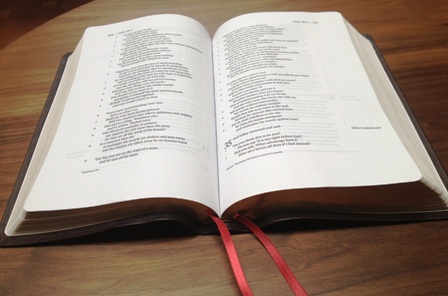
CTT | Do you do well to be Angry?

Jonah 4:1-4 (ESV) | Jonah’s Anger and the Lord‘s Compassion

But it displeased Jonah exceedingly, and he was angry. And he prayed to the Lord and said, “O Lord, is not this what I said when I was yet in my country? That is why I made haste to flee to Tarshish; for I knew that you are a gracious God and merciful, slow to anger and abounding in steadfast love, and relenting from disaster. Therefore now, O Lord, please take my life from me, for it is better for me to die than to live.” And the Lord said, “Do you do well to be angry?”

It’s such a simple question.   God is addressing His sulking prophet, Jonah, and rhetorically asking him, “Do you do well to be angry?” Why was Jonah angry? Let’s look at what happens in chapter 3, to see if we can grasp what it was that had Jonah angry enough to forfeit his very life.

Jonah 3 (ESV)Jonah Goes to Nineveh

Then the word of the Lord came to Jonah the second time, saying, “Arise, go to Nineveh, that great city, and call out against it the message that I tell you.” So Jonah arose and went to Nineveh, according to the word of the Lord. Now Nineveh was an exceedingly great city, three days’ journey in breadth.Jonah began to go into the city, going a day’s journey. And he called out, “Yet forty days, and Nineveh shall be overthrown!” And the people of Nineveh believed God. They called for a fast and put on sackcloth, from the greatest of them to the least of them.

Notice the wording here… it doesn’t say they believed Jonah… the people of Nineveh believed God. Jonah was preaching the Word of the Lord.

Jonah 3 | The People of Nineveh Repent

The word reached the king of Nineveh, and he arose from his throne, removed his robe, covered himself with sackcloth, and sat in ashes. And he issued a proclamation and published through Nineveh, “By the decree of the king and his nobles: Let neither man nor beast, herd nor flock, taste anything. Let them not feed or drink water, but let man and beast be covered with sackcloth, and let them call out mightily to God. Let everyone turn from his evil way and from the violence that is in his hands. Who knows? God may turn and relent and turn from his fierce anger, so that we may not perish.”

10 When God saw what they did, how they turned from their evil way, God relented of the disaster that he had said he would do to them, and he did not do it.

God relented… He did not bring about disaster upon them because of their repentance by faith. Why do I say faith? Because they believed the Word of God spoken through the prophet Jonah. The people of Nineveh believed God, by faith, and turned from (repented) their evil way, and God forgave them and relented. And that is what displeased Jonah exceedingly, and made him angry.

Do you do well to be angry?

Jonah strongly reminds God, of why he ran in the first place. Jonah wasn’t afraid of Nineveh, and he had no doubt of God’s ability to destroy Nineveh. Jonah knew full-well it was God who caused the storm to attack the boat and he knew that God was responsible for the fish… but he also knew of God’s Mercy and Grace. He knew that if Nineveh believed the Word of God and repented, that God would show mercy. He knew it… and He didn’t want Nineveh spared. Nineveh was guilty… her walls were painted with graphic murals of her king’s torturous treatment of captives. Justice demanded Nineveh’s destruction. Jonah demanded justice. He was so angry that God relented, that Jonah decided he’d rather die than live with the knowledge that Nineveh had repented at his preaching and been forgiven.

Jonah 4:5-11 (ESV)

Jonah went out of the city and sat to the east of the city and made a booth for himself there. He sat under it in the shade, till he should see what would become of the city. Now the Lord God appointed a plant and made it come up over Jonah, that it might be a shade over his head, to save him from his discomfort. So Jonah was exceedingly glad because of the plant. But when dawn came up the next day, God appointed a worm that attacked the plant, so that it withered. When the sun rose, God appointed a scorching east wind,and the sun beat down on the head of Jonah so that he was faint. And he asked that he might die and said, “It is better for me to die than to live.” But God said to Jonah, “Do you do well to be angry for the plant?” And he said, “Yes, I do well to be angry, angry enough to die.” 10 And the Lord said, “You pity the plant, for which you did not labor, nor did you make it grow, which came into being in a night and perished in a night. 11 And should not I pity Nineveh, that great city, in which there are more than 120,000 persons who do not know their right hand from their left, and also much cattle?”

What right does Jonah have to be angry at God for sparing a repentant Nineveh? None. Jonah doesn’t have the right. He is in no way entitled to this anger. He is angry at God for His mercy and grace to the people of Nineveh. And that same God shows him mercy and grace in this rebuke. Nineveh’s faith wanes and she is later destroyed by God (Book of Nahum)… but for now, God extends grace and delays justice.

Matthew 12:38-42 (ESV) | The Sign of Jonah

38 Then some of the scribes and Pharisees answered him, saying, “Teacher, we wish to see a sign from you.” 39 But he answered them, An evil and adulterous generation seeks for a sign, but no sign will be given to it except the sign of the prophet Jonah. 40 For just as Jonah was three days and three nights in the belly of the great fish, so will the Son of Man be three days and three nights in the heart of the earth. 41 The men of Nineveh will rise up at the judgment with this generation and condemn it, for they repented at the preaching of Jonah, and behold, something greater than Jonah is here. 42 The queen of the South will rise up at the judgment with this generation and condemn it, for she came from the ends of the earth to hear the wisdom of Solomon, and behold, something greater than Solomon is here.

God is still extending Grace and Mercy… this time coming to perform an act of mercy far greater than was witnessed by Jonah. Jesus came to bear the full brunt of God’s wrath on the cross… in our place. The Pharisees lacked faith, and Jesus told them they would be condemned by the men of Nineveh who repented.

We, too, struggle with forgiveness, don’t we? We insist on earning our forgiveness… paying penance, “making things right”. Is it not because we fail to understand the gravity of our sin, of our wrong, of our guilt? Surely this is the case, because we who long for forgiveness for ourselves seem awfully keen to withhold forgiveness from others. Sure, we’ll forgive, but Justice must be served! We are entitled to closure… to satisfaction that justice has been served and that the wrongs have been made right… right?

Matthew 18:21-35 (ESV) | The Parable of the Unforgiving Servant

21 Then Peter came up and said to him, “Lord, how often will my brother sin against me, and I forgive him? As many as seven times?” 22 Jesus said to him,“I do not say to you seven times, but seventy-seven times.

23 “Therefore the kingdom of heaven may be compared to a king who wished to settle accounts with his servants. 24 When he began to settle, one was brought to him who owed him ten thousand talents. 25 And since he could not pay, his master ordered him to be sold, with his wife and children and all that he had, and payment to be made. 26 So the servant fell on his knees, imploring him, ‘Have patience with me, and I will pay you everything.’ 27 And out of pity for him, the master of that servant released him and forgave him the debt. 28 But when that same servant went out, he found one of his fellow servants who owed him a hundred denarii, and seizing him, he began to choke him, saying, ‘Pay what you owe.’ 29 So his fellow servant fell down and pleaded with him, ‘Have patience with me, and I will pay you.’ 30 He refused and went and put him in prison until he should pay the debt. 31 When his fellow servants saw what had taken place, they were greatly distressed, and they went and reported to their master all that had taken place. 32 Then his master summoned him and said to him, ‘You wicked servant! I forgave you all that debt because you pleaded with me. 33 And should not you have had mercy on your fellow servant, as I had mercy on you?’34 And in anger his master delivered him to the jailers, until he should pay all his debt.35 So also my heavenly Father will do to every one of you, if you do not forgive your brother from your heart.”

For a laborer, a talent was about a year’s wages. 10,000 year’s wages was forgiven him. A denarius was about a day’s wage… He couldn’t see fit to forgive the debt of 100 day’s wages in light of having been forgiven 10,000 years worth of debt.

Dear Christian… do you do well to be angry? Is there any sin your brother, sister, or neighbor can commit against you that compares to eternity? Do you think you have the right to insist on justice over forgiveness on behalf of another?

Matthew 6:7-15 (ESV)

“And when you pray, do not heap up empty phrases as the Gentiles do, for they think that they will be heard for their many words. Do not be like them,for your Father knows what you need before you ask him. Pray then like this:

“Our Father in heaven,
hallowed be your name.
10 Your kingdom come,
your will be done,
    on earth as it is in heaven.
11 Give us this day our daily bread,
12 and forgive us our debts,
    as we also have forgiven our debtors.
13 And lead us not into temptation,
    but deliver us from evil.

14 For if you forgive others their trespasses, your heavenly Father will also forgive you, 15 but if you do not forgive others their trespasses, neither will your Father forgive your trespasses.

The world speaks with confidence of things it doesn’t understand. The world demands Justice while it rejects the God of creation. We who are called in Jesus’ Name, out of the darkness and into the Light of the Gospel of Jesus Christ, we know better than to demand Justice over Mercy and Grace. At least, we should. You see, Justice comes from the One who also extends Mercy. Jonah wasn’t seeking really seeking Justice to be poured out on Nineveh… he wanted vengeance.

Do you do well to be angry?

In Christ Jesus,
Jorge

Friday Sermon | Genesis 12 via Romans 3 and 4 by Pastor Chris Rosebrough

churchToday’s sermon comes from the Adult Sunday School taught at Kongsvinger Lutheran Church. I think more Churches should return to the concept of an adult Bible Study for exegetical study of scripture. Particularly those Churches stuck in the “topical study” mindset for Sunday Service. Pastor Chris Rosebrough is working through the Old Testament following what he refers to as the crimson thread (the Lineage) of the Promised Messiah, Jesus Christ. Today’s lesson will serve to demonstrate how we allow the New Testament to bring clarity and understanding for the Old Testament.

Lesson Audio

Lesson Text

Romans 3 (ESV)

God’s Righteousness Upheld

Then what advantage has the Jew? Or what is the value of circumcision?Much in every way. To begin with, the Jews were entrusted with the oracles of God. What if some were unfaithful? Does their faithlessness nullify the faithfulness of God? By no means! Let God be true though every one were a liar, as it is written,

“That you may be justified in your words,
    and prevail when you are judged.”

But if our unrighteousness serves to show the righteousness of God, what shall we say? That God is unrighteous to inflict wrath on us? (I speak in a human way.) By no means! For then how could God judge the world? But if through my lie God’s truth abounds to his glory, why am I still being condemned as a sinner? And why not do evil that good may come?—as some people slanderously charge us with saying. Their condemnation is just.

No One Is Righteous

What then? Are we Jews any better off? No, not at all. For we have already charged that all, both Jews and Greeks, are under sin, 10 as it is written:

“None is righteous, no, not one;
11     no one understands;
    no one seeks for God.
12 All have turned aside; together they have become worthless;
    no one does good,
    not even one.”
13 “Their throat is an open grave;
    they use their tongues to deceive.”
“The venom of asps is under their lips.”
14     “Their mouth is full of curses and bitterness.”
15 “Their feet are swift to shed blood;
16     in their paths are ruin and misery,
17 and the way of peace they have not known.”
18     “There is no fear of God before their eyes.”

19 Now we know that whatever the law says it speaks to those who are under the law, so that every mouth may be stopped, and the whole world may be held accountable to God. 20 For by works of the law no human being will be justified in his sight, since through the law comes knowledge of sin.

The Righteousness of God Through Faith

21 But now the righteousness of God has been manifested apart from the law, although the Law and the Prophets bear witness to it— 22 the righteousness of God through faith in Jesus Christ for all who believe. For there is no distinction:23 for all have sinned and fall short of the glory of God, 24 and are justified by his grace as a gift, through the redemption that is in Christ Jesus, 25 whom God put forward as a propitiation by his blood, to be received by faith. This was to show God’s righteousness, because in his divine forbearance he had passed over former sins. 26 It was to show his righteousness at the present time, so that he might be just and the justifier of the one who has faith in Jesus.

27 Then what becomes of our boasting? It is excluded. By what kind of law? By a law of works? No, but by the law of faith. 28 For we hold that one is justified by faith apart from works of the law. 29 Or is God the God of Jews only? Is he not the God of Gentiles also? Yes, of Gentiles also, 30 since God is one—who will justify the circumcised by faith and the uncircumcised through faith. 31 Do we then overthrow the law by this faith? By no means! On the contrary, we uphold the law.

Romans 4 (ESV)

Abraham Justified by Faith

What then shall we say was gained by Abraham, our forefather according to the flesh? For if Abraham was justified by works, he has something to boast about, but not before God. For what does the Scripture say? “Abraham believed God, and it was counted to him as righteousness.” Now to the one who works, his wages are not counted as a gift but as his due. And to the one who does not work but believes in him who justifies the ungodly, his faith is counted as righteousness, just as David also speaks of the blessing of the one to whom God counts righteousness apart from works:

“Blessed are those whose lawless deeds are forgiven,
    and whose sins are covered;
blessed is the man against whom the Lord will not count his sin.”

Is this blessing then only for the circumcised, or also for the uncircumcised?For we say that faith was counted to Abraham as righteousness. 10 How then was it counted to him? Was it before or after he had been circumcised? It was not after, but before he was circumcised. 11 He received the sign of circumcision as a seal of the righteousness that he had by faith while he was still uncircumcised. The purpose was to make him the father of all who believe without being circumcised, so that righteousness would be counted to them as well, 12 and to make him the father of the circumcised who are not merely circumcised but who also walk in the footsteps of the faith that our father Abraham had before he was circumcised.

The Promise Realized Through Faith

13 For the promise to Abraham and his offspring that he would be heir of the world did not come through the law but through the righteousness of faith.14 For if it is the adherents of the law who are to be the heirs, faith is null and the promise is void. 15 For the law brings wrath, but where there is no law there is no transgression.

16 That is why it depends on faith, in order that the promise may rest on grace and be guaranteed to all his offspring—not only to the adherent of the law but also to the one who shares the faith of Abraham, who is the father of us all,17 as it is written, “I have made you the father of many nations”—in the presence of the God in whom he believed, who gives life to the dead and calls into existence the things that do not exist. 18 In hope he believed against hope, that he should become the father of many nations, as he had been told, “So shall your offspring be.” 19 He did not weaken in faith when he considered his own body, which was as good as dead (since he was about a hundred years old), or when he considered the barrenness of Sarah’s womb. 20 No unbelief made him waver concerning the promise of God, but he grew strong in his faith as he gave glory to God, 21 fully convinced that God was able to do what he had promised. 22 That is why his faith was “counted to him as righteousness.” 23 Butthe words “it was counted to him” were not written for his sake alone, 24 but for ours also. It will be counted to us who believe in him who raised from the dead Jesus our Lord, 25 who was delivered up for our trespasses and raised for our justification.

Genesis 12 (ESV)

The Call of Abram

12 Now the Lord said to Abram, “Go from your country and your kindred and your father’s house to the land that I will show you. And I will make of you a great nation, and I will bless you and make your name great, so that you will be a blessing. I will bless those who bless you, and him who dishonors you I will curse, and in you all the families of the earth shall be blessed.”

So Abram went, as the Lord had told him, and Lot went with him. Abram was seventy-five years old when he departed from Haran. And Abram took Sarai his wife, and Lot his brother’s son, and all their possessions that they had gathered, and the people that they had acquired in Haran, and they set out to go to the land of Canaan. When they came to the land of Canaan, Abrampassed through the land to the place at Shechem, to the oak of Moreh. At that time the Canaanites were in the land. Then the Lord appeared to Abram and said, “To your offspring I will give this land.” So he built there an altar to theLord, who had appeared to him. From there he moved to the hill country on the east of Bethel and pitched his tent, with Bethel on the west and Ai on the east. And there he built an altar to the Lord and called upon the name of theLord. And Abram journeyed on, still going toward the Negeb.

Abram and Sarai in Egypt

10 Now there was a famine in the land. So Abram went down to Egypt to sojourn there, for the famine was severe in the land. 11 When he was about to enter Egypt, he said to Sarai his wife, “I know that you are a woman beautiful in appearance, 12 and when the Egyptians see you, they will say, ‘This is his wife.’ Then they will kill me, but they will let you live. 13 Say you are my sister, that it may go well with me because of you, and that my life may be spared for your sake.” 14 When Abram entered Egypt, the Egyptians saw that the woman was very beautiful. 15 And when the princes of Pharaoh saw her, they praised her to Pharaoh. And the woman was taken into Pharaoh’s house. 16 And for her sake he dealt well with Abram; and he had sheep, oxen, male donkeys, male servants, female servants, female donkeys, and camels.

17 But the Lord afflicted Pharaoh and his house with great plagues because of Sarai, Abram’s wife. 18 So Pharaoh called Abram and said, “What is this you have done to me? Why did you not tell me that she was your wife? 19 Why did you say, ‘She is my sister,’ so that I took her for my wife? Now then, here is your wife; take her, and go.” 20 And Pharaoh gave men orders concerning him, and they sent him away with his wife and all that he had.

Church History | “What drove Luther’s Hammer” by Dr. Rod Rosenbladt

Today, I’d like to share a short video and a portion of an article by Dr. Rod Rosenbladt found in “Conversations for a Modern Reformation” Sept./Oct. 2012 Vol. 21 No. 5 Issue of Modern Reformation Magazine.

Rod Rosenbladt – What Drove Luther’s Hammer

[youtube https://youtu.be/0ceYC7xMxEI]

A Renewed Fascination with Monasticism among Evangelicals

I just don’t get it. I don’t understand why so many have become so engrossed and fascinated with the ancient mystics and monastics. Not just Pentecostals like Mike Bickle, Bill Johnson, and Chuck Swindoll, but even Baptists like Dallas Willard and Presbyterians like Tim Keller. I don’t get it… have we completely lost sight of the Reformation? Do we not understand the 5 Solas of the Reformation, particularly that of Sola Scriptura?

Excerpt from the Article (via Modern Reformation)

Luther the Monk

Medieval monasticism reflected the deepest insight of the Roman Church concerning the relation of the holy God to man the sinner. In the last analysis, a holy, righteous, and just God could have fellowship with and could accept only a holy, just, and good man. But how could such a God of perfection accept a sinful man as his own? The real problem was to make a man sufficiently holy, so that his acceptance by God, if not certain, was at least highly probable. As Bainton explains, “[Luther] set himself to the pursuit of holiness. Monasticism constituted such a quest; Luther looked upon the cloister as the higher righteousness.”

His teachers, following the Bible, taught that God demanded absolute righteousness (as in Matthew 5:48, “Be ye perfect”). People needed to love God absolutely and their neighbors as themselves; and they should have the unshakable faith of Abraham, who was willing to sacrifice his son—hence the demand that the monk fulfill all the laws and commands of God, including poverty, chastity, and obedience.

The life of a monk was terribly hard, but people of Luther’s day “knew” that it was pleasing to God. Its benefits were “certain.” Were the monastics aware of the great gulf between God and man? Absolutely! They also knew that the fluctuation between despair and hope, between unbearable demand and partial fulfillment, would produce doubts and spiritual torment in many of the good brothers—but this served to keep them from complacency and self-righteousness. Once their sinfulness was fully exposed, there were ample ways to reassure the weak in times of trouble. At the center of this assurance was the sacrament of penance. The sinner confessed to a priest, was forgiven (absolved), and then performed penitential acts that completed the process. People were to repent in a fully contrite manner—not for the purpose of saving themselves. But Luther knew that in the midst of this most crucial act, he was at his most selfish. He confessed his sins and performed his penance out of the intensely human instinct to save his own skin. Yet because of the human tendency to sin, one could hardly confess enough. This critical issue remained vivid in Luther’s mind. He later commented, “If one were to confess his sins in a timely manner, he would have to carry a confessor in his pocket!”

When Luther tried to avail himself of this comfort, it failed to produce the desired results: “Yet my conscience would never give me assurance, but I was always doubting and said ‘You did not perform that correctly. You were not contrite enough. You left that out of your confession.'” How then could he stand before God?

Monasticism provided a variety of ways in which man could wash away his sin and improve his spiritual estate. The monk could fast, pray, meditate, perform Mass, beat his body, and engage in other physical/spiritual exercises. Through this, the body and pride would be defeated.

In addition to an acute sense of the holiness of God, Luther had a brutally honest picture of himself as a creature. He knew all too well that it is easy for man to see himself “in the best possible light.” Man is usually willing to forgive himself and then rest assured that God has also forgiven him. “So long as one does the best that is in him,” man is sure it is enough. But Luther was too sensitive to be satisfied with such “answers.” What Luther saw was a self-centered sinful man holding sway under the pretense of monastic holiness. So serious were the mounting struggles that Luther began to think he may be one of those predestined for damnation.

A critical moment came when Luther’s superiors ordered him to take his doctorate and become a professor of Bible at Wittenberg University. Although he initially resisted going—”It will be the death of me!”—he finally relented. As one historian famously notes, this command that Luther pursue theological study “was one of the most brilliant or stupid decisions in the history of Latin Christianity.”

Although Luther’s fears and anxieties drove him into the cloister, they only intensified during his time as a monk. But the command to study academic theology meant he could now also investigate his struggles intellectually. He soon acquired his mature self-identity as a professor and a doctor of Sacred Scripture.

This article originally appeared in the “Conversations for a Modern Reformation” Sept./Oct. 2012 Vol. 21 No. 5 edition of Modern Reformation and is reprinted with permission.
For more information about Modern Reformation, visit www.modernreformation.org or call (800) 890-7556. All rights reserved.

Luther lived that life and it wrecked him. All of these present-day teachers seeking to rediscover truths or disciplines from the monastics would do well to remember Luther. There’s no Life in it. Luther would finally be set free from monasticism by God the Holy Spirit opening up Luther’s understanding of the writings of Paul to the Romans. Sola Scriptura is indeed a wonderful concept to hold onto.

Resources on Some Contemplative Practices

Conclusion

Remain vigilant, continue the work of the noble Bereans, and search the scriptures daily to see if what is being said in the Name of God is found in the Word of God.

Romans 11:33-36 (ESV)

33 Oh, the depth of the riches and wisdom and knowledge of God! How unsearchable are his judgments and how inscrutable his ways!

34 “For who has known the mind of the Lord,
or who has been his counselor?”
35 “Or who has given a gift to him
that he might be repaid?”

36 For from him and through him and to him are all things. To him be glory forever. Amen.

Amen, indeed.
In Christ Jesus,
Jorge

Gospel Wednesday | Matthew 12:46-50

bibleLast week, we took a look at the second portion of Matthew 12. I couldn’t quite fit in the last segment of chapter 12, and had intended to simply pick up that section today as we then move on into chapter 13. This transition away from Jesus’ declaration of who He is and His warning against the false teaching of the Pharisees toward His teaching of the masses in Parables is important.

Jesus’ Mother and Brothers

Matthew 12:46-50 (ESV) | Jesus’ Mother and Brothers

46 While he was still speaking to the people, behold, his mother and his brothers stood outside, asking to speak to him. 48 But he replied to the man who told him, “Who is my mother, and who are my brothers?” 49 And stretching out his hand toward his disciples, he said, “Here are my mother and my brothers! 50 For whoever does the will of my Father in heaven is my brother and sister and mother.”

Now, where Matthew shares this account as a transition point in the focus of His preaching (remember, Matthew is making the case of Jesus fulfilling the Messianic Prophecies). He was preaching of Who He is, and now He will be preaching to the people in Parables (in fulfillment of scripture) while also giving clear lessons for His Apostles. Mark’s account follows a different arch, a different focus in the presentation of the Gospel of Jesus Christ. There are enough clues in Mark Chapter 3 to indicate this is the same event, but Mark skips over some things and includes some others. The Gospel according to Mark focuses less on making the case for Jesus being the Promised Messiah, and more on demonstrating His Authority as the Son of God. The Gospel of Mark is an action-packed Gospel of power and compassion of God the Son. With that in mind, let us look to Mark chapter 3 where we see the cross-reference to our Matthew text.

Mark 3:13-35 (ESV) | The Twelve Apostles

13 And he went up on the mountain and called to him those whom he desired, and they came to him. 14 And he appointed twelve (whom he also named apostles) so that they might be with him and he might send them out to preach15 and have authority to cast out demons. 16 He appointed the twelve: Simon (to whom he gave the name Peter); 17 James the son of Zebedee and John the brother of James (to whom he gave the name Boanerges, that is, Sons of Thunder); 18 Andrew, and Philip, and Bartholomew, and Matthew, and Thomas, and James the son of Alphaeus, and Thaddaeus, and Simon the Zealot, 19 and Judas Iscariot, who betrayed him.

20 Then he went home, and the crowd gathered again, so that they could not even eat.21 And when his family heard it, they went out to seize him, for they were saying, “He is out of his mind.”

Blasphemy Against the Holy Spirit

22 And the scribes who came down from Jerusalem were saying, “He is possessed by Beelzebul,” and “by the prince of demons he casts out the demons.” 23 And he called them to him and said to them in parables, “How can Satan cast out Satan? 24 If a kingdom is divided against itself, that kingdom cannot stand. 25 And if a house is divided against itself, that house will not be able to stand. 26 And if Satan has risen up against himself and is divided, he cannot stand, but is coming to an end. 27 But no one can enter a strong man’s house and plunder his goods, unless he first binds the strong man. Then indeed he may plunder his house.

28 “Truly, I say to you, all sins will be forgiven the children of man, and whatever blasphemies they utter, 29 but whoever blasphemes against the Holy Spirit never has forgiveness, but is guilty of an eternal sin” 30 for they were saying, “He has an unclean spirit.”

Jesus’ Mother and Brothers

31 And his mother and his brothers came, and standing outside they sent to him and called him. 32 And a crowd was sitting around him, and they said to him, “Your mother and your brothers are outside, seeking you.” 33 And he answered them, “Who are my mother and my brothers?” 34 And looking about at those who sat around him, he said, “Here are my mother and my brothers! 35 For whoever does the will of God, he is my brother and sister and mother.”

I think it would have been easy for us to come to a skewed and dismissive view of Jesus’ comments regarding his mother and brothers if we only had the account in Matthew. Jesus’ mother and brothers had come to Jesus out of concern for Him, sure, but they sought to bring counsel, even possibly a rebuke, for what He was preaching. Jesus was not out of His mind, He was doing exactly what He was supposed to be doing. Jesus was doing the Will of the Father. Though their earthly concern for Jesus was understandable, and arguably well-intentioned, it was misguided and sinful due to a lack of faith. Jesus would not be counselled against doing the Will of God, nor would He permit being interrupted.

Alistair Begg taught on this passage in Mark a while back (2009) at it has been made available for listening on Truthforlife.org.

https://www.truthforlife.org/resources/sermon/jesus-true-family/

He ends this sermon with such a beautiful picture of the Gospel of Jesus Christ, that by His death and Resurrection the Way was made for us to become heirs and joint heirs with Christ Jesus, to be His brothers and sisters by God’s Grace through faith.

Until Next Week…

Next week, we will start looking at some of Jesus’ parables in Chapter 13. Until then, spend time in the Word and in prayer. The summer is upon us, so enjoy this time with your family, and find ways of maintaining a routine of seeking the Word of God on a regular basis. I will do my best to provide supplemental material on this blog site.

Jude 1:24-25 (ESV) 24 Now to him who is able to keep you from stumbling and to present you blameless before the presence of his glory with great joy, 25 to the only God, our Savior, through Jesus Christ our Lord, be glory, majesty, dominion, and authority, before all time and now and forever. Amen.

In Christ Jesus,
Jorge

DiM | “Something Beautiful” by Steven Curtis Chapman

Today is “Discernment in Music” (DiM) day here at Faithful Stewardship (2 Corinthians 10:4-6 (ESV)).

June 02, 2015. Today we’ll be taking a look at “Something Beautiful” by Steven Curtis Chapman which currently sits at #18 at 20theCountdownMagazine.

We’ll continue using this top 20 song list until I find a better list. Your feedback in this would be greatly appreciated.

I love Steven Curtis Chapman’s writing, music, and ministry. I don’t think this is one of his stronger songs. This is a song of encouragement generally based on the idea that for Believers everything that we think is “bad” will be turned into something “good” by God. This is based on a commonly held interpretation of Romans 8:28 that isn’t quite right. We’ll look at that later. There are some generically positive themes in this song, but the details are a little “off”.

Official Pseudo Video

Lyrics (Partial Lyrics from Air1)

Something Beautiful

I see you sitting over there with your head in your hands
And the mess life’s made of your best laid plans
You really want to shake your fist
But you don’t know who to blame
Well, you can blame yourself or the man upstairs
Or the guy on the screen who says he cares
But all the shame and the blame won’t change a thing
What’s done is done
But grace has just begun

And God says
I’m gonna turn it into something different
I’m gonna turn it into something good
I’m gonna take all the broken pieces
And make something beautiful like only I could
So put it all in the hands of the Father
Give it up, give it all over to
The only One who can turn it into
Something beautiful
Something really beautiful

We know the world got broke when it took the fall
And here we are living in the middle of it all
Longing, waiting for the day when everything’s restored
But the best of the beauty that we get to SEE
While we’re living down here in this “yet to be”
Is to watch God take the most broken things
And to hear Him say
“When I get through, you’re gonna be amazed”

‘Cause I’m gonna turn it into something different
I’m gonna turn it into something good
I’m gonna take all the broken pieces
And make something beautiful like only I could
So put it all in the hands of the Father
Give it up, give it all over to
The only One who can turn it into

Something beautiful
Something beautiful
Something beautiful
Put all the pieces in His hands
And watch Him turn it into something beautiful

God’s gonna turn it into something different
He’s gonna turn it into something good
He’s gonna take all the broken pieces
And make something beautiful like only He could
So put it all in the hands of the Father
Give it up, give it all over to
The only One who can turn it into
Something beautiful
Something really beautiful
Something beautiful
Something really beautiful

Publishing: © 2013 One Blue Petal Music / Primary Wave Brian (BMI) All rights admin. by BMG Rights Management. All rights reserved. Used by permission.
Writer(s): Steven Curtis Chapman

I love Steven Curtis Chapman’s writing, music, and ministry. I look forward to hearing a new song from him on the radio. He has a signature style and is easily recognizable. However, the more I listen to this song, the bigger its problems seem. Is I mentioned in the intro to this post, the premise of this song is based on a common misrepresentation of Romans 8:28. Let’s look at it in its immediate context.

CTT | Romans 8:28

Romans 8:18-30 (ESV) | Future Glory

18 For I consider that the sufferings of this present time are not worth comparing with the glory that is to be revealed to us. 19 For the creation waits with eager longing for the revealing of the sons of God. 20 For the creation was subjected to futility, not willingly, but because of him who subjected it, in hope21 that the creation itself will be set free from its bondage to corruption and obtain the freedom of the glory of the children of God. 22 For we know that the whole creation has been groaning together in the pains of childbirth until now.23 And not only the creation, but we ourselves, who have the firstfruits of the Spirit, groan inwardly as we wait eagerly for adoption as sons, the redemption of our bodies. 24 For in this hope we were saved. Now hope that is seen is not hope. For who hopes for what he sees? 25 But if we hope for what we do not see, we wait for it with patience.

26 Likewise the Spirit helps us in our weakness. For we do not know what to pray for as we ought, but the Spirit himself intercedes for us with groanings too deep for words. 27 And he who searches hearts knows what is the mind of the Spirit, because the Spirit intercedes for the saints according to the will of God.28 And we know that for those who love God all things work together for good, for those who are called according to his purpose.29 For those whom he foreknew he also predestined to be conformed to the image of his Son, in order that he might be the firstborn among many brothers. 30 And those whom he predestined he also called, and those whom he called he also justified, and those whom he justified he also glorified.

To what is the Apostle Paul referring when he talks of the glory that is to be revealed to us? Is he speaking of glory promised us in this life? No. Paul always points to the Resurrection in the Last Day, when Jesus Christ returns in Glory. Paul points to a creation that is subjected to futility, by the sin of Adam. Though we are individually made new by grace through faith in Jesus Christ, the whole of creation remains cursed. It groans for the day of its redemption, just as we (Believers) groan for the redemption of our bodies, when we will be given new and perfect bodies in the resurrection. This is all resurrection, return-of-the-King language. As long as sickness, death, plague, and calamity exist on this earth, in creation, we remain in the not-yet. Paul is pointing to the New Heavens and the New Earth, when all of Creation is finally made right again in Christ Jesus.

Revelation 21:1-8 (ESV) | The New Heaven and the New Earth

Then I saw a new heaven and a new earth, for the first heaven and the first earth had passed away, and the sea was no more. And I saw the holy city, new Jerusalem, coming down out of heaven from God, prepared as a bride adorned for her husband. And I heard a loud voice from the throne saying, “Behold, the dwelling place of God is with man. He will dwell with them, and they will be his people, and God himself will be with them as their God. He will wipe away every tear from their eyes, and death shall be no more, neither shall there be mourning, nor crying, nor pain anymore, for the former things have passed away.” And he who was seated on the throne said, “Behold, I am making all things new.” Also he said, “Write this down, for these words are trustworthy and true.” And he said to me, “It is done! I am the Alpha and the Omega, the beginning and the end. To the thirsty I will give from the spring of the water of life without payment. The one who conquers will have this heritage, and I will be his God and he will be my son.But as for the cowardly, the faithless, the detestable, as for murderers, the sexually immoral, sorcerers, idolaters, and all liars, their portion will be in the lake that burns with fire and sulfur, which is the second death.”

This is the “new” and “the good” that God is working all things for those who are in Him. That is the context of Paul’s writing in Romans 8:28. Does God give good gifts to us here in the temporary? Absolutely, but that is not where we lay our hope, and definitely not where we lay up our treasures. Therefore, whenever someone invokes Romans 8:28 as a blank check from God that every disappointment in this life will be converted into something awesome in this life, know that they are lifting the passage out of its context, twisting the scripture (whether or not they realize they are doing it). We have a wondrous and blessed hope of glory in the Resurrection… it is marvelous and magnificent and it is assured for all who are in Christ Jesus. This Promise is sealed by God the Holy Spirit as a gift to every believer. That is why Paul asserts so strongly that the suffering of this present time are worthless by comparison. Paul was well acquainted with suffering as an Apostle of Jesus Christ. Dear Christian, the focus of Scriptures and the heart of Prophecy is Jesus Christ, not us in this temporal life. Jesus is returning, and His return is our Hope.

Matthew 6:19-21 (ESV) | Lay Up Treasures in Heaven

19 “Do not lay up for yourselves treasures on earth, where moth and rust destroy and where thieves break in and steal, 20 but lay up for yourselves treasures in heaven, where neither moth nor rust destroys and where thieves do not break in and steal. 21 For where your treasure is, there your heart will be also.

Discussion of Song Lyrics

Verse 1. The singer is addressing an individual who has either sinned or experienced hardship or both. It isn’t clear if this is a believer or an unbeliever. We’ll assume for now that Steven intends to address the believer. There is a glaring problem in this verse, though, in how the song deals with ascribing the source of the individual’s problem. Life’s made a mess of your best laid plans? What does that mean? Sin leads to death. Sometimes plans crumble due to sin. Sometimes they crumble because they were sinful in themselves, and sometimes God is the one doing destroying the sinful schemes. As the verse progresses, it seems to lean toward a sin that was committed “you can blame yourselfall the blame and shame won’t change a thing what’s done is done“. What is that? That’s not repentance. At best it is an acceptance that something bad happened, and there’s nothing I can do to change that. Let’s put a sin in there, and see if this logic holds as doctrinally sound. Say the man with his head in his hands has committed adultery and lost his wife and kids as a result. Is there anything he can do to fix any of that or undo any of that? No. Does saying, “I can’t change it, what’s done is done” pass as repentance? No. Does accepting the blame for having committed the adultery fix the marriage after the divorce? No. So, does that make accepting the blame for the sin of adultery a pointless act? Absolutely not. The Gospel of Jesus Christ isn’t that the results of our sins will be erased; rather, that the sins will be forgiven for those who rightly confess that they are indeed sinners in need of a Savior, repent, and believe in the Lord Jesus Christ. I find this verse overly dismissive of the need to rightly confess our sinfulness. While I believe Steven is trying to convey, “There is therefore now no condemnation for those who are in Christ Jesus (Romans 8:1 ESV), you cannot simply skip over confession of sin and repentance from sin and work to alleviate condemnation… because prior to confession, repentance, forgiveness what you are really mitigating is conviction of sin. The purpose of the Law is to identify sin and convict us of our sinfulness. The Law isn’t to be mitigated, its purpose is to push us toward repentance and the Gospel of Jesus Christ, the Only way of Salvation. But in this verse, we minimized personal conviction and are jumping straight to Grace, without repentance. Not good.

Chorus. Does God say that He’s going to take everything we break, every sinful act we’ve committed and turn it into something good? Remember how we discussed the context of Romans 8, Paul is not limiting our Hope to this temporal life. If your sin leads to a wrecked marriage, a wrecked home, there is no guarantee that he’ll take that broken home/marriage and make it into something beautiful in this life. What the Bible does teach, is that for those who are in Him (penitent believers), God will use this life to grow you in Him for His Glory, and in the Resurrection you will definitely be free from all the pain and the hurt caused by sin (by your sin and the sins of this world). In this life, worms and rust will destroy and thieves will steal. Our hope rests in Heaven and the Great Day of Christ’s return. At the end of the chorus, there is a turn in the lyric that is true, and I do want to highlight that. God is the Only One who can turn our lives around, who can forgive our sins, and heal our brokenness. He will DEFINITELY do it when Christ returns, and He does it in many ways, by His Will and His Grace for us in this life, too. He blesses us every day according to His goodness and mercy. Please understand that we do serve a loving, caring, and gracious God. But that isn’t to say that everything will be made new in this life. God is growing us, molding us, and He is willing to use rebuke, reproof, and even hardship to work in us. As a father disciplines his son, so does our Heavenly Father discipline us.

Verse 2. I am disappointed again in the presentation of the sinful state of man. The first 2 lines in this verse present sin as something that happened to the Earth and man just finds himself living in the mess that was made. That is skirting the truth that Adam sinned, and we are born into that sin and bear the guilt of sin. It is our sin. We are simultaneously victim and culprit. We are unholy and unrighteous, deserving of death and destruction for our sin. Creation is cursed because of our sin. But God, in His Great Mercy and Grace, has made a Way for us in the sending of His Only Begotten Son, Jesus, to atone for our sin at the cross, so that by faith we might be made righteous in His Sight, washed clean by the Blood of the Lamb, clothed by His righteousness. If we held this verse in isolation from the rest of the song, I think we’ll see a better reflection of Romans 8… we can at least interpret it in the eternal rather than the temporal sense. Still bothered by the deflection of sin at the start.

The rest of the song plays out the “give it all to God and He’ll fix it” theme. As far as this temporal life goes, sometimes what is broken remains broken by His design for our benefit and for His Glory.

Conclusion

In general, the encouragement to take all of our hurts, fears, tears, sins, and failures to God the Father is true. The suggestion that God will fix everything we break in this life isn’t Scriptural. The fix would be to maintain a heavenly focus, a focus on the Great Day of the Resurrection in Christ Jesus. We need to be presented with the reality that sometimes our best-laid plans were sinful, and that God is the one who destroyed them. This song doesn’t leave room for that as it presents a sort of guarantee that whatever mess “life” has made for you, God will turn it into something beautiful. Vaguely positive, but problematic in its detail. While every good gift in this life and the next come from God, that doesn’t mean we can expect every good gift in this life. God is Sovereign and He is working to build up His Church for His Glory. We will face trials of many kinds, both from the enemy and from our own sinful flesh. We will also be disciplined by a loving Father, and the goal is repentance from a humble spirit and a contrite heart. All of creation indeed groans and awaits the return of our blessed Savior, Jesus Christ. In the meantime, we walk this earth in exile (as the Apostle Peter called in 1 Peter 1), no longer a part of the kingdom of darkness, not yet given our heavenly bodies. We walk by faith, keeping in step with the Holy Spirit, worshiping a Living God and serving our neighbors.

Amen.
In Christ Jesus,
Jorge